
Japan PM Ishiba Aims to Quickly Compile Economic Measures; New Cabinet to Compile Initiatives it Plans to Implement in Next 10 Years
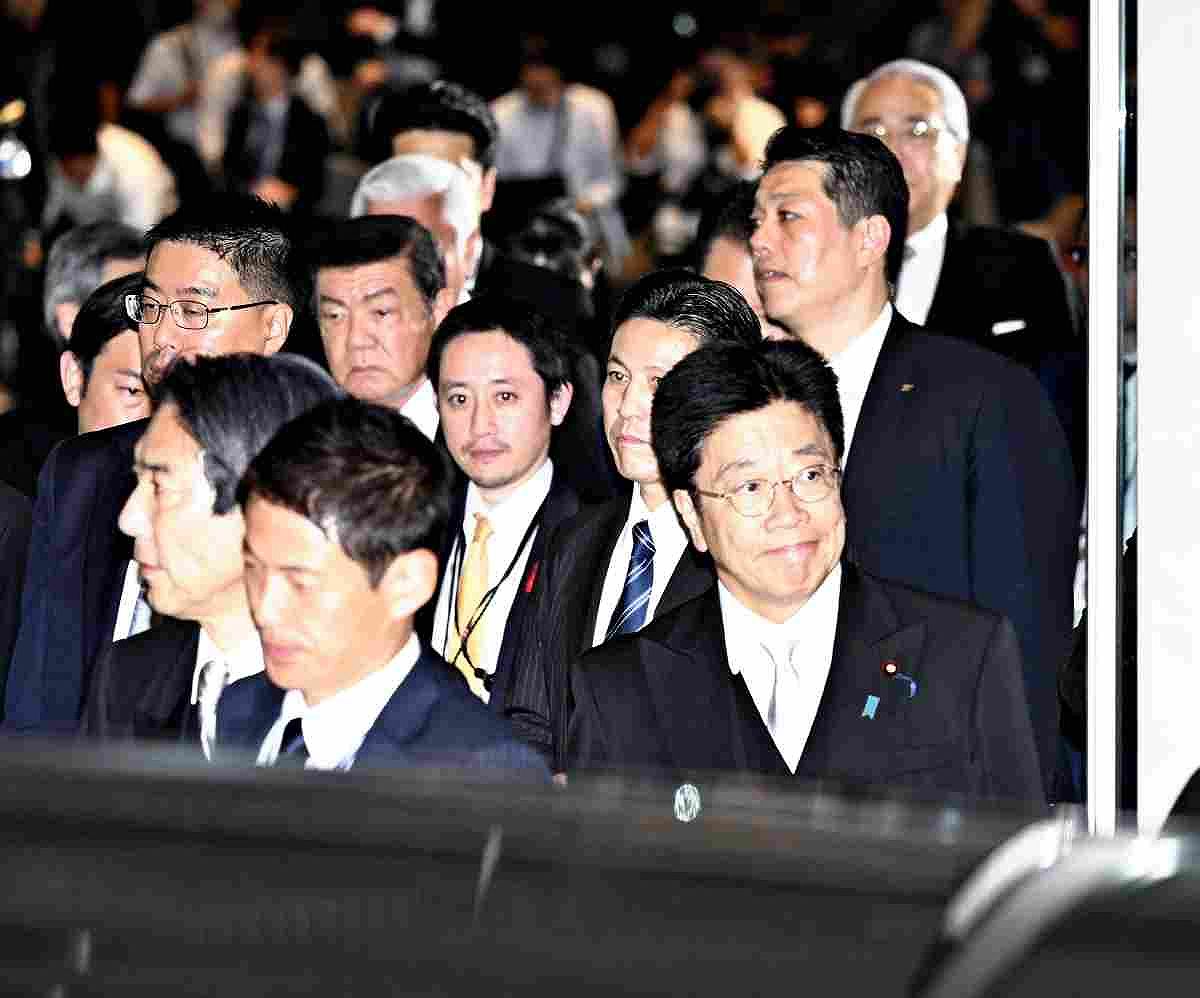
Finance Minister Katsunobu Kato, right front, leaves the Prime Minister’s Office on Tuesday.
17:10 JST, October 2, 2024
Prime Minister Shigeru Ishiba, who took office Tuesday, said he plans to quickly compile economic measures to cope with rising prices.
Ishiba aims to continue the economic policies of his predecessor, former Prime Minister Fumio Kishida, and realize an economy that is driven by wage hikes and active investments.
“I will give instructions to consider economic measures that will help those who are struggling with rising prices,” Ishiba said at a press conference on Tuesday.
He said he intends to include emergency measures such as cash distributions to low-income households into his economic measures.
After compiling the measures, the Ishiba administration intends to quickly compile and pass an extra budget, which will enable the measures to be enacted.
“I will firmly continue the growth strategy that the Kishida administration implemented,” Ishiba said.
“Based on a view that the economy is the foundation of the government’s financial health, I will conduct economic and fiscal management that prioritizes an exit from deflation,” he added.
To prevent the economy from falling into deflation again, sustainable wage hikes are essential.
“I aim to raise the nationwide average minimum wage to ¥1,500 by the end of the 2020s,” Ishiba said.
Ishiba aims to bring forward the Kishida administration’s goal of raising the minimum wage by the mid-2030s.
“I will make Japan an investment superpower,” he said, citing the automobile, semiconductor and agricultural industries as priority fields.
On the revitalization of regional areas, Ishiba said he sees it as a the starting point of economic growth and aims to use that momentum to boost Japanese economy.
The new administration will compile a general outline of initiatives it plans to implement in the next 10 years.
There are also tasks that are inherited from the previous Cabinet, including deciding on the timing of implementing tax hikes for the defense budget.
Attention is also being paid to how the Ishiba administration will handle policies that will require increasing public burden.
Finance Minister Katsunobu Kato, who took the post Tuesday, told reporters that the prime minister instructed him to “conduct fiscal management in an appropriate manner.”
“While trying to exit from deflation, I will have to play a role with great responsibility,” Kato added.


Related Tags

Most Read
Popular articles in the past 24 hours
-

‘Dry Bonsai’ Gives New Life to Withered Trees, Allows Free Artist...
-

McDonald's Japan Raises Prices; Big Mac to Cost ¥500, Double Chee...
-

Nepal Bus Crash Kills 19 People, Injures 25 Including One Japanes...
-
Japan’s Nikkei Stock Average Rises as AI-Related Stocks Shine; Co...
-

Aggression against Ukraine: Malignant Precedent Must Not Be Set t...
-

Joruri Bunraku Narrative Performed in Honor of Donald Keene by La...
-

Astellas Collaborates with Vir to Develop Its Experimental Prosta...
-

Early-Blooming Kawazu Cherry Blossoms Create Sea of Pink at Park ...
Popular articles in the past week
-

Producer Behind Pop Group XG Arrested for Cocaine Possession
-

Japan PM Takaichi’s Cabinet Resigns en Masse
-

Sanae Takaichi Elected Prime Minister of Japan; Keeps All Cabinet...
-

Japan's Govt to Submit Road Map for Growth Strategy in March, PM ...
-

Bus Carrying 40 Passengers Catches Fire on Chuo Expressway; All E...
-

Japan, U.S. Name 3 Inaugural Investment Projects; Reached Agreeme...
-

Riku-Ryu Pair Wins Gold Medal: Their Strong Bond Leads to Major C...
-

Tokyo Skytree's Elevator Stops, Trapping 20 People; All Rescued (...
Popular articles in the past month
-
Producer Behind Pop Group XG Arrested for Cocaine Possession
-
Japan PM Takaichi’s Cabinet Resigns en Masse
-

Japan Institute to Use Domestic Commercial Optical Lattice Clock ...
-

Man Infected with Measles Reportedly Dined at Restaurant in Tokyo...
-

Israeli Ambassador to Japan Speaks about Japan’s Role in the Reco...
-

Videos Plagiarized, Reposted with False Subtitles Claiming ‘Ryuky...
-

Man Infected with Measles May Have Come in Contact with Many Peop...
-

Prudential Life Insurance Plans to Fully Compensate for Damages C...
Top Articles in Politics
-
Japan PM Takaichi’s Cabinet Resigns en Masse
-
Sanae Takaichi Elected Prime Minister of Japan; Keeps All Cabinet Appointees from Previous Term
-
Japan’s Govt to Submit Road Map for Growth Strategy in March, PM Takaichi to Announce in Upcoming Policy Speech
-

LDP Wins Historic Landslide Victory
-

LDP Wins Landslide Victory, Secures Single-party Majority; Ruling Coalition with JIP Poised to Secure Over 300 seats (UPDATE 1)
JN ACCESS RANKING
-
Producer Behind Pop Group XG Arrested for Cocaine Possession
-
Japan PM Takaichi’s Cabinet Resigns en Masse
-
Japan Institute to Use Domestic Commercial Optical Lattice Clock to Set Japan Standard Time
-
Man Infected with Measles Reportedly Dined at Restaurant in Tokyo Station
-
Israeli Ambassador to Japan Speaks about Japan’s Role in the Reconstruction of Gaza