
LDP Wins Landslide Victory, Secures Single-party Majority; Ruling Coalition with JIP Poised to Secure Over 300 seats (UPDATE 1)

Prime Minister Sanae Takaichi smiles following the LDP’s victory at the party headquarters at 9:42 p.m. on Sunday.
21:35 JST, February 8, 2026
The Liberal Democratic Party looked certain to secure a single-party majority in the 51st House of Representatives election on Sunday, according to exit polls jointly conducted by The Yomiuri Shimbun, NHK and Nippon TV-affiliated stations.
The LDP appeared set to take the majority, which is 233 seats of the 465-seat chamber, garnering more than the 198 seats it held before the lower house was dissolved. The ruling coalition of the LDP and the Japan Innovation Party was poised to secure more than 300 seats.
Prime Minister Sanae Takaichi, who is also LDP president, had aimed to win a majority for the ruling coalition. With the election victory, Takaichi is expected to advance policies that she touted in the election campaign, such as measures for “responsible and proactive public finances,” claiming that her administration has obtained a public mandate. The ruling coalition is also likely to strengthen its control over the operation of the Diet.
LDP Secretary General Shunichi Suzuki expressed the party’s intention on Sunday night to advance discussions on reducing the consumption tax on food and beverages for a limited period of two years, as pledged in its campaign promises.
Suzuki made the statement on a TV Tokyo program on the day.
Also, regarding reports of the LDP’s projected landslide victory in the election, Suzuki analyzed the situation as follows. “I believe we received support due to expectations for the responsible proactive fiscal policy that Prime Minister Takaichi aims to pursue, as well as for strengthening defense and diplomatic capabilities.”
Noda hints at resignation
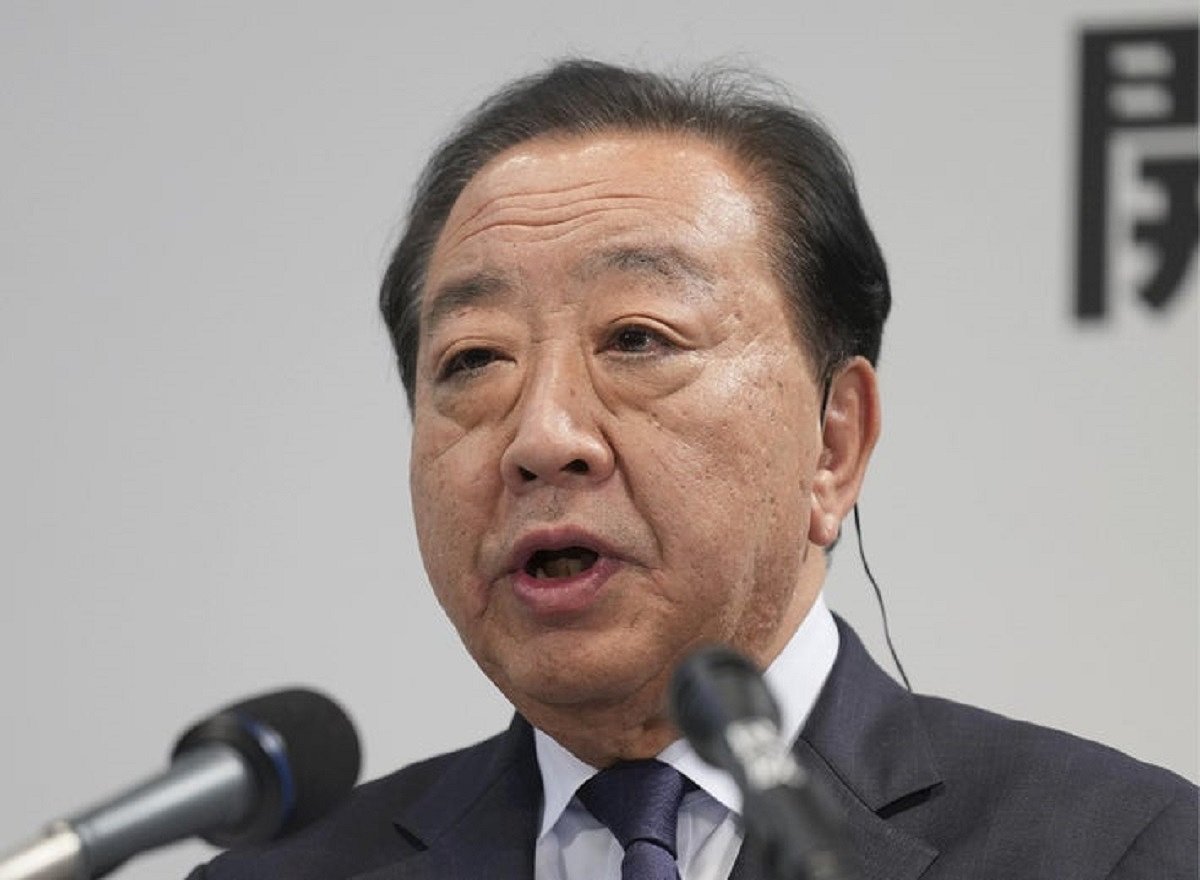
Yoshihiko Noda, co-leader of the Centrist Reform Alliance, answers questions at the vote-counting center in Minato Ward, Tokyo, at 10:02 p.m. on Sunday.
Yoshihiko Noda, coleader of the Centrist Reform Alliance, was asked about stepping down. “I have made up my mind, but I will talk to other party executives as the results are not all out yet,” he said.
This was the first lower house election after Komeito left the ruling coalition with the LDP in October last year and then the JIP joined hands with the LDP. This was also the first national election for Takaichi since taking office. Takaichi made whether the public would endorse her as the prime minister a key issue in the election.
In the opposition camp, the CRA — a new party formed by the Constitutional Democratic Party of Japan and Komeito and now the largest opposition party — seemed likely to fall significantly short of the 167 seats its members held before the lower house was dissolved.
Sanseito and Team Mirai were projected to make gains. Sanseito held two lower house seats before the chamber’s dissolution. Mirai was expected to win its first seats in the lower house.
Sanseito leader Sohei Kamiya said that support for the party in Sunday’s election was not likely to surpass that in last year’s House of Councillors election.
“I gave the previous [national] election a score of about 120 points, but compared to that, I think our score this time is around 75 points,” Kamiya said Sunday night in Shinjuku Ward, Tokyo.
Team Mirai’s leader Takahiro Anno credited his party’s stance on the consumption tax for its projected strong showing in the election.
“On the key issue of consumption tax cuts, we took a different stance from other parties,” Anno said at a press conference in Tokyo on Sunday night. “I believe we may have become the only option for voters [who are against the tax cuts].”
Other parties called for reducing the consumption tax in their campaigns, but Mirai did not include such tax cuts in its platform.
The lower house election was held about one year and three months after the previous election, with a total of 465 seats contested: 289 in single-seat constituencies and 176 in the proportional representation segment. The period from the lower house’s dissolution to the voting and counting was 16 days, the shortest since the end of World War II.
Over 1,200 candidates
A total of 1,284 candidates ran in the House of Representatives election on Sunday. In single-seat constituencies, 1,119 people competed for 289 seats, while the proportional representation segment was contested by 914 candidates.
There were 749 candidates who were registered in both a constituency and the proportional representation race.
Key figures
By winning 243 seats, which is called a “stable majority,” the ruling bloc will be able to hold half of all seats in the lower house’s 17 standing committees and also dominate chairperson posts in all committees.
Before the dissolution of the lower house, the opposition camp had the post of chairperson of the Budget Committee, where battles of words between ruling and opposition parties occur most often.
During street campaign speeches, the prime minister emphasized, “Other parties hold [chairperson posts] in all key committees [in the lower house].”
Winning 261 seats or more would enable the ruling bloc to dominate all committee chairperson posts and also have a majority in all standing committees. This situation is dubbed an “absolute majority.”
Most recently, the LDP under the leadership of then Prime Minister Fumio Kishida realized an absolute majority in the 2021 lower house election.
If the ruling bloc increases the number of seats by 78, the total will reach 310, which is enough for the two-thirds vote needed for initiating amendments to the Constitution in the lower house.
When the upper house votes down or does not vote on a bill within 60 days after it has been passed by the lower house, the bill can be passed by two-thirds or more ballots among attending members in a second vote in the lower house.
Snow affects polling stations
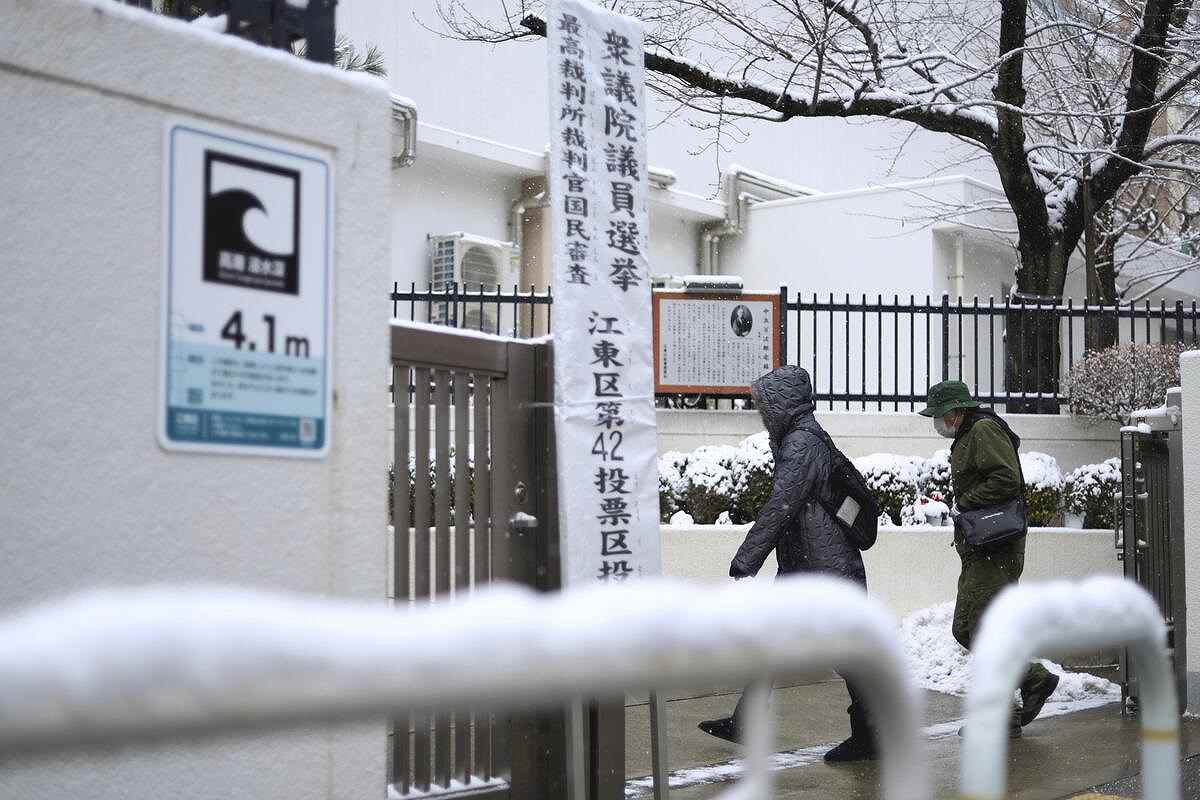
People visits polling stations for the House of Representatives election as snow piles up in Koto Ward, Tokyo, at 8:37 a.m. on Sunday
Heavy snow changed the operating hours at voting stations for the House of Representatives election in Shimane and Tottori prefectures.
The opening of a voting station in Daisen, Tottori Prefecture, was delayed by two hours to 9 a.m. because officials in charge of it could not get there on time.
In Shimane Prefecture, 14 voting stations in Ama and 16 in Okinoshima — both located on remote islands — closed three hours early at 5 p.m.


Related Tags



Most Read
Popular articles in the past 24 hours
-

SoftBank Launches AI Service for Call Centers That Converts Harsh...
-

Tokyo, Many Regions across Japan Hit with Heavy Snow
-
High Chocolate Prices Shake Up Valentine's Lineup at Japan's Depa...
-

Japan’s LDP Set for Landslide Victory, Securing Sole Majority; Ex...
-

Milano Cortina 2026: Japan’s Maruyama Wins Bronze Medal in Women’...
-

Milano Cortina 2026: Japan's Kimura, Kimata Dazzle in Big Air To ...
-

6 Injured, Taken to Hospital After Snow-related Car Collisions in...
-

Avg. Voter Turnout in Japan at 16.05% Nationwide as of 2:00 P.M. ...
Popular articles in the past week
-

Man Infected with Measles May Have Come in Contact with Many Peop...
-

BTS to Hold Comeback Concert in Seoul on March 21; Popular Boy Ba...
-

Israeli Ambassador to Japan Speaks about Japan’s Role in the Reco...
-

Milano Cortina 2026: Japan’s Athletes Arrive in Italy for Milano ...
-
Tokyo Had 65,000 More People Move In Than Out In 2025; Osaka Area...
-

Green Tea Exports Hit Record High in 2025 Amid Growing Demand, Li...
-
Sapporo Snow Festival Opens with 210 Snow and Ice Sculptures at 3...
-

U.N. Plans to Set Safety Regulation Standards on Automated Drivin...
Popular articles in the past month
-

Univ. in Japan, Tokyo-Based Startup to Develop Satellite for Disa...
-

Japan Institute to Use Domestic Commercial Optical Lattice Clock ...
-
JAL, ANA Cancel Flights During 3-day Holiday Weekend due to Blizz...
-

China Eyes Rare Earth Foothold in Malaysia to Maintain Dominance,...
-
Man Infected with Measles May Have Come in Contact with Many Peop...
-

Japan, Qatar Ministers Agree on Need for Stable Energy Supplies; ...
-
Australian Woman Dies After Mishap on Ski Lift in Nagano Prefectu...
-

Japan, Italy to Boost LNG Cooperation; Aimed at Diversifying Japa...
Top Articles in Politics
-
Japan Tourism Agency Calls for Strengthening Measures Against Overtourism
-

Voters Using AI to Choose Candidates in Japan’s Upcoming General Election; ChatGPT, Other AI Services Found Providing Incorrect Information
-

Japan’s Prime Minister: 2-Year Tax Cut on Food Possible Without Issuing Bonds
-
Japan-South Korea Leaders Meeting Focuses on Rare Earth Supply Chains, Cooperation Toward Regional Stability
-

Japanese Government Plans New License System Specific to VTOL Drones; Hopes to Encourage Proliferation through Relaxed Operating Requirements
JN ACCESS RANKING
-
Japan Institute to Use Domestic Commercial Optical Lattice Clock to Set Japan Standard Time
-
China Eyes Rare Earth Foothold in Malaysia to Maintain Dominance, Counter Japan, U.S.
-
Man Infected with Measles May Have Come in Contact with Many People in Tokyo, Went to Store, Restaurant Around When Symptoms Emerged
-
Japan, Qatar Ministers Agree on Need for Stable Energy Supplies; Motegi, Qatari Prime Minister Al-Thani Affirm Commitment to Cooperation
-
Australian Woman Dies After Mishap on Ski Lift in Nagano Prefecture