
Levels of Enthusiasm Differ within Japan’s Ruling Parties on Export of Defense Equipment
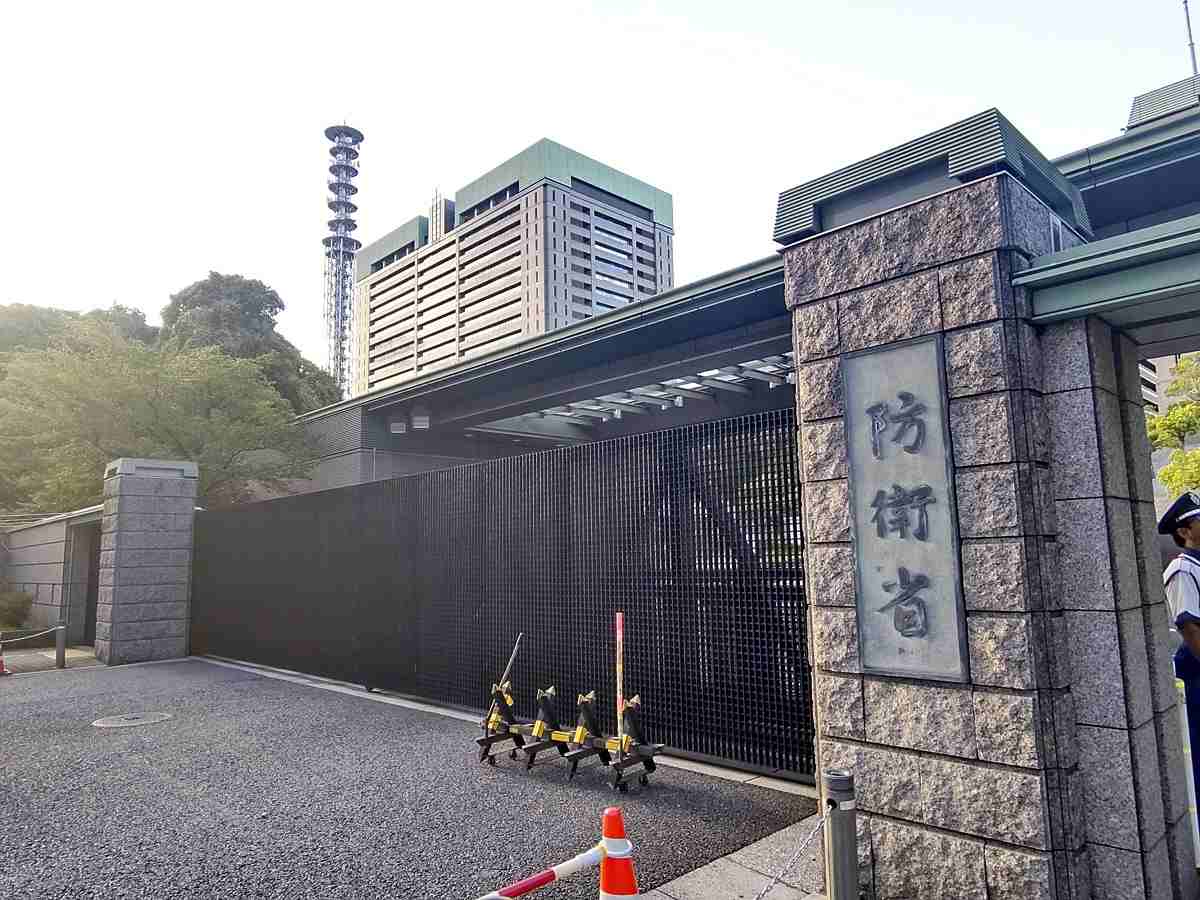
The Defense Ministry head office in Shinjuku Ward, Tokyo
16:55 JST, February 4, 2026
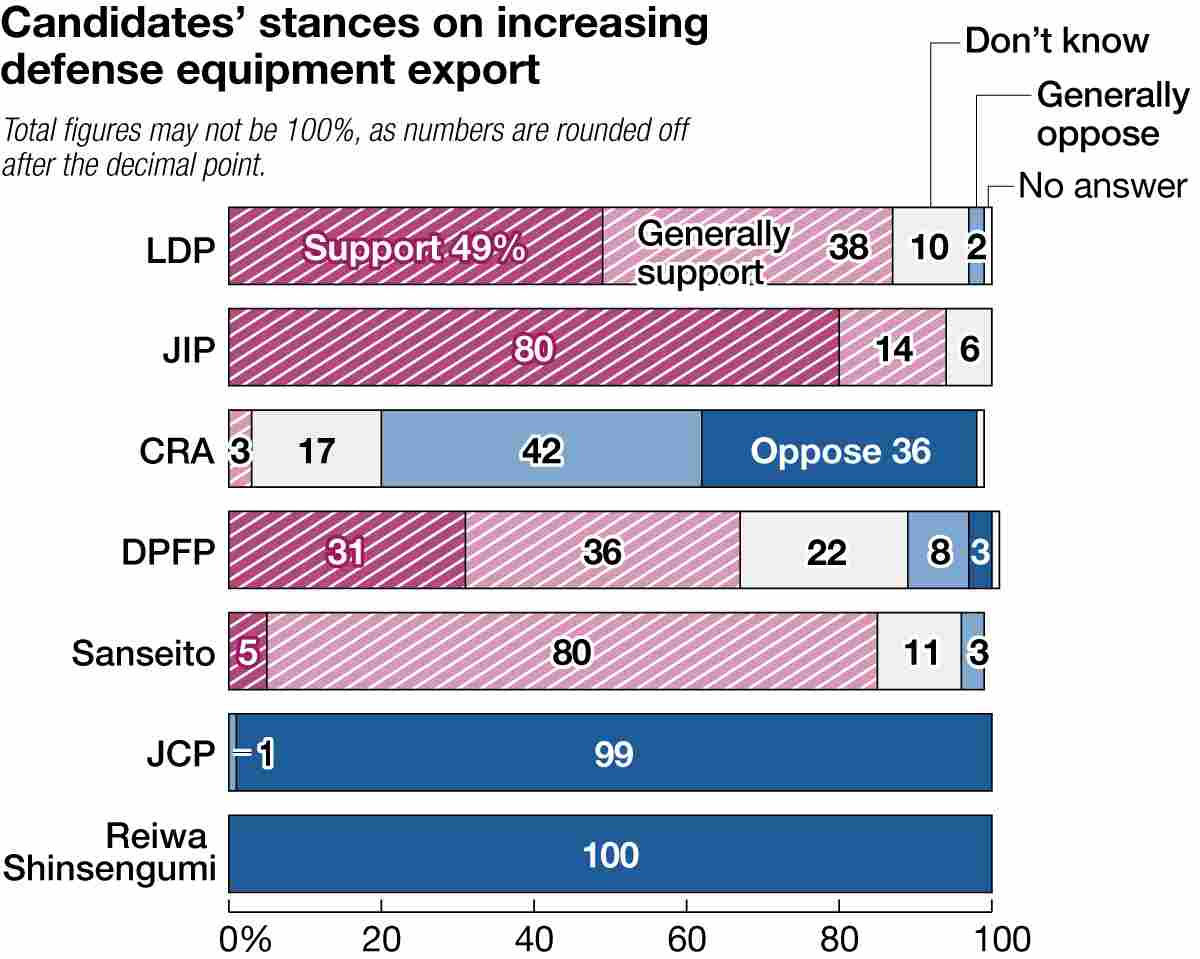
Candidates in the ruling parties differ in enthusiasm on the promotion of Japanese defense equipment exports, according to a recent Yomiuri Shimbun survey on the upcoming House of Representatives election.
About points of contention on which respondents place importance, “diplomacy and national security” was ranked fifth, being cited by 27% of respondents.
Prime Minister Sanae Takaichi, who is also president of the Liberal Democratic Party, intended to make strengthening defense capabilities a major point of contention for this election.
But fewer than 50% of LDP candidates and fewer than 30% of Japan Innovation Party candidates replied that they consider the issue a high priority.
While 80% of JIP candidates supported an increase of defense equipment exports, only 49% of LDP candidates replied so, indicating a complex difference in opinion inside the ruling bloc.
Among LDP candidates, another 38% replied they generally support the plan.
Concerning guidelines for the Three Principles on Transfer of Defense Equipment and Technology overseas, the government and ruling parties aim to abolish the limitations which allow for only five categories of fully assembled equipment to be exported as early as this spring.
The JIP, which vows to play “a role of accelerator” for the Takaichi administration’s policies, wants to abolish most of the conditions restricting defense equipment exports and instead leave decisions to the government’s discretion.
However, many LDP members are considering a certain level of limitations on exports by, for example, strictly screening planned exports.
In contrast, 36% of Centrist Reform Alliance candidates opposed and 42% generally opposed increasing defense exports. CRA candidates have shown strong opposition to Takaichi’s stance on the issue.
Opinions among ruling party candidates also differ over a numerical target of government spending related to national security, including the defense budget.
This fiscal year, the government moved forward with efforts to raise national security expenditures as a percentage of the nation’s gross domestic product to 2% two years earlier than previously scheduled.
While 79% of JIP candidates said the figure should be raised above 2% of GDP, just, 38% of LDP candidates replied so. Fifty-nine percent of LDP candidates and 55% of CRA candidates replied that the percentage should be capped at around 2%.
From now, the government and ruling parties aim to proceed with debates by the end of this year about revising the three national security documents, including the National Security Strategy, as well as the numerical target and how to secure revenue sources.
Securing revenue sources is essential for increasing government spending for national security-related affairs.
Because doing so could result in an increased burden on the people, it seems a large number of candidates replied they aim to keep the status quo.


Related Tags





Most Read
Popular articles in the past 24 hours
-
Seeking Nuclear Waste Site, Japan Eyes Remote Island of Minami-To...
-

Total Lunar Eclipse Visible for Some in Japan, While Clouds Block...
-
Japan Ministry Asks to Conduct Nuclear Waste Disposal-related Sur...
-

WBC to Begin: All the Pieces are in Place for Japan’s Second Stra...
-

Milano Cortina 2026: Ceremony for Winter Paralympic Torch Relay T...
-
Tokyo High Court Upholds Unification Church Dissolution Order; Li...
-

How Trump Assassination Attempts Played into His Decision to Atta...
-

CARTOON OF THE DAY (March 4)
Popular articles in the past week
-
Tokyo Spends Big on Children, Wins Over Parents
-
Japan’s Miura, Kihara Announce Withdrawal from Figure Skating Wor...
-
South Korea Tightens Rules on Foreigners Buying Homes in Seoul Me...
-
BOJ Keeping Eye on Economy and Takaichi's ‘Proactive Fiscal Polic...
-
Tokyo Measles Patient Traveled to Fukuoka Aboard JAL Planes; Susp...
-
Nidec Chairman Resigns Amid Accounting Scandal at Major Japanese ...
-

Strait of Hormuz Closure Shakes Markets; Prolonged Closure Could ...
-
Tourists Ignore Safety Barriers Near Famous Zao ‘Snow Monsters’ i...
Popular articles in the past month
-

Producer Behind Pop Group XG Arrested for Cocaine Possession
-

Japan PM Takaichi’s Cabinet Resigns en Masse
-

Man Infected with Measles Reportedly Dined at Restaurant in Tokyo...
-

Israeli Ambassador to Japan Speaks about Japan’s Role in the Reco...
-

Videos Plagiarized, Reposted with False Subtitles Claiming ‘Ryuky...
-

Prudential Life Insurance Plans to Fully Compensate for Damages C...
-

Woman with Measles Visited Hospital in Tokyo Multiple Times Befor...
-

iPS Treatments Pass Key Milestone, but Broader Applications Far f...
Top Articles in Politics
-
Japan PM Takaichi’s Cabinet Resigns en Masse
-

Sanae Takaichi Elected Prime Minister of Japan; Keeps All Cabinet Appointees from Previous Term
-

Japan’s Govt to Submit Road Map for Growth Strategy in March, PM Takaichi to Announce in Upcoming Policy Speech
-

LDP Wins Landslide Victory, Secures Single-party Majority; Ruling Coalition with JIP Poised to Secure Over 300 seats (UPDATE 1)
-

LDP Wins Historic Landslide Victory
JN ACCESS RANKING
-
Producer Behind Pop Group XG Arrested for Cocaine Possession
-
Japan PM Takaichi’s Cabinet Resigns en Masse
-
Man Infected with Measles Reportedly Dined at Restaurant in Tokyo Station
-
Israeli Ambassador to Japan Speaks about Japan’s Role in the Reconstruction of Gaza
-
Videos Plagiarized, Reposted with False Subtitles Claiming ‘Ryukyu Belongs to China’; Anti-China False Information Also Posted in Japan