
Japanese Defense Ministry Announces Standoff Missile Sites, Seeks ¥8.8 Trillion Budget for Fiscal 2026
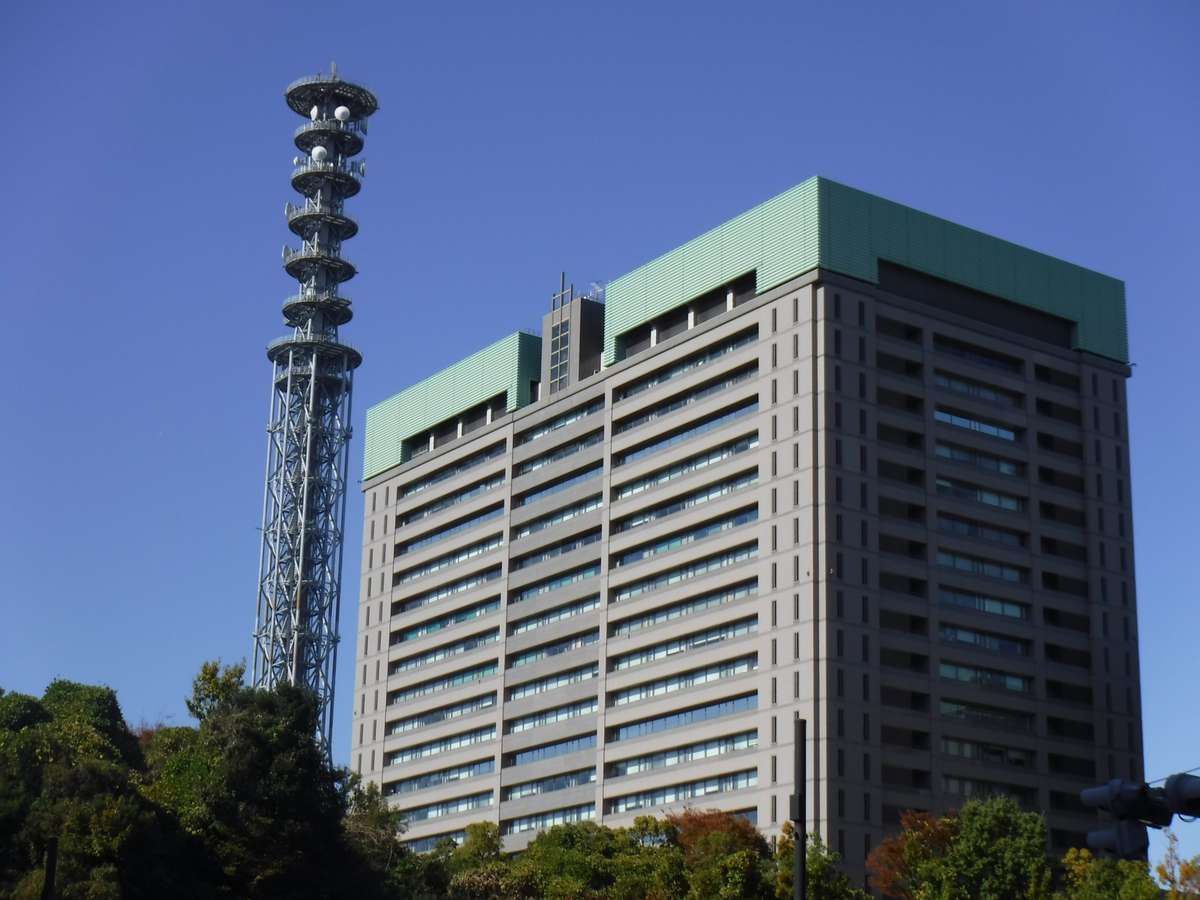
The Defense Ministry in Shinjuku Ward, Tokyo
18:07 JST, August 30, 2025
The Defense Ministry announced Friday four locations where a new model of long-range standoff missiles for counterattacks will be deployed.
The new missiles, which are fired from the ground, will be deployed at Ground Self-Defense Force camps in Hokkaido, Shizuoka, Kumamoto and Miyazaki prefectures.
The ministry also announced its initial budget requests for the fiscal 2026 government budget. The ministry asks for a total of about ¥1.02 trillion for the standoff missile deployments, and the total amount of requested budget for the fiscal year hits the highest ever at about ¥8.85 trillion, up ¥370.6 billion from the budget for this fiscal year.
In addition, the ministry officially decided to convert the Air Self-Defense Force to an “air and space self-defense force” within fiscal 2026.
The deployments of the long-range missiles will be made earlier than initially scheduled to speed up strengthening deterrent power with China and North Korea in mind.
The ground-launched model of the new long-range missiles, an upgraded version of Type 12 surface-to-ship missiles, will have a range of more than 1,000 kilometers.
The new missiles will be deployed at Camp Kengun in Kumamoto Prefecture in fiscal 2025 and at Camp Fuji in Shizuoka Prefecture in fiscal 2027.
Concerning the upgraded new missiles launched from aircraft or ships, deployment will begin in fiscal 2027 instead of the initially planned timing of “fiscal 2028 or later.”
The ship- and aircraft-launched missiles will be operated by the destroyer Teruzuki, whose home port is Maritime Self-Defense Force’s Yokosuka Base in Kanagawa Prefecture, and by F-2 fighters to be deployed to the ASDF’s Hyakuri Base in Ibaraki Prefecture.
Concerning hyper velocity gliding projectiles (HVGPs), which have long ranges and are for defending remote islands, the ministry plans to move the start of deployments forward by one year from fiscal 2026.
By the end of fiscal 2025, HVGPs will be deployed at Camp Fuji. They will also be deployed at Camp Kamifurano in Hokkaido and Camp Ebino in Miyazaki Prefecture in fiscal 2026, when new GSDF units in charge of the HVGPs will be established.
In the ministry’s initial budget request for the fiscal 2026 government budget, the ministry is seeking ¥312.8 billion, the highest ever, for strengthening defense capabilities by utilizing unmanned aerial vehicles.
Of that amount, ¥128.7 billion will be spent mainly for building or improving unmanned water surface vehicles and UAVs flown from ships.
The ministry aims to complete construction of the SHIELD system, which defends coastal regions using drones, by the end of fiscal 2027.
As China is increasingly active in the Pacific Ocean, the ministry plans to launch an office for Pacific defense initiatives which will consider how to manage warning and surveillance activities in the Pacific Ocean.
The ASDF’s capabilities in the space domain will be strengthened, and the conversion of the ASDF to an air and space force will be started.
Also, because China, Russia and some other countries are developing technologies to attack other countries’ satellites, the ministry plans to establish a new SDF unit that will specialize in operations in the space domain.



Most Read
Popular articles in the past 24 hours
-

3,000 Accounts Posting, Spreading Content Critical of Japan on X;...
-

Milano Cortina 2026: Sakamoto Serves as Flag Bearer; Japan Earns ...
-

My Spendthrift Mother Constantly Asks Me for Money
-
A Packed Bus Plunges off a Nepal Highway, Killing 19 and Injuring...
-
Emperor Receives Well-Wishes from Public on His 66th Birthday
-

Dozens of Jewelry, Other Items Stolen After Glass Door, Showcases...
-

1.2 Mil. Rapeseed Flowers Attract Cute Birds, People in Aichi Pre...
-
Mexican Army Kills Leader of Powerful Jalisco New Generation Cart...
Popular articles in the past week
-

Japan PM Takaichi’s Cabinet Resigns en Masse
-

Man Infected with Measles Reportedly Dined at Restaurant in Tokyo...
-

Sanae Takaichi Elected Prime Minister of Japan; Keeps All Cabinet...
-

Japan's Govt to Submit Road Map for Growth Strategy in March, PM ...
-
Bus Carrying 40 Passengers Catches Fire on Chuo Expressway; All E...
-
U.S. Firm to Build Training Hub in Fukushima N-plant for Debris R...
-
Japan, U.S. Name 3 Inaugural Investment Projects; Reached Agreeme...
-

Riku-Ryu Pair Wins Gold Medal: Their Strong Bond Leads to Major C...
Popular articles in the past month
-
Japan PM Takaichi’s Cabinet Resigns en Masse
-

Japan Institute to Use Domestic Commercial Optical Lattice Clock ...
-

Israeli Ambassador to Japan Speaks about Japan’s Role in the Reco...
-
Man Infected with Measles Reportedly Dined at Restaurant in Tokyo...
-

Videos Plagiarized, Reposted with False Subtitles Claiming ‘Ryuky...
-

Man Infected with Measles May Have Come in Contact with Many Peop...
-

Prudential Life Insurance Plans to Fully Compensate for Damages C...
-

Woman with Measles Visited Hospital in Tokyo Multiple Times Befor...
Top Articles in Politics
-
Japan PM Takaichi’s Cabinet Resigns en Masse
-
Sanae Takaichi Elected Prime Minister of Japan; Keeps All Cabinet Appointees from Previous Term
-
Japan’s Govt to Submit Road Map for Growth Strategy in March, PM Takaichi to Announce in Upcoming Policy Speech
-

LDP Wins Historic Landslide Victory
-

LDP Wins Landslide Victory, Secures Single-party Majority; Ruling Coalition with JIP Poised to Secure Over 300 seats (UPDATE 1)
JN ACCESS RANKING
-
Japan PM Takaichi’s Cabinet Resigns en Masse
-
Japan Institute to Use Domestic Commercial Optical Lattice Clock to Set Japan Standard Time
-
Israeli Ambassador to Japan Speaks about Japan’s Role in the Reconstruction of Gaza
-
Man Infected with Measles Reportedly Dined at Restaurant in Tokyo Station
-
Videos Plagiarized, Reposted with False Subtitles Claiming ‘Ryukyu Belongs to China’; Anti-China False Information Also Posted in Japan