
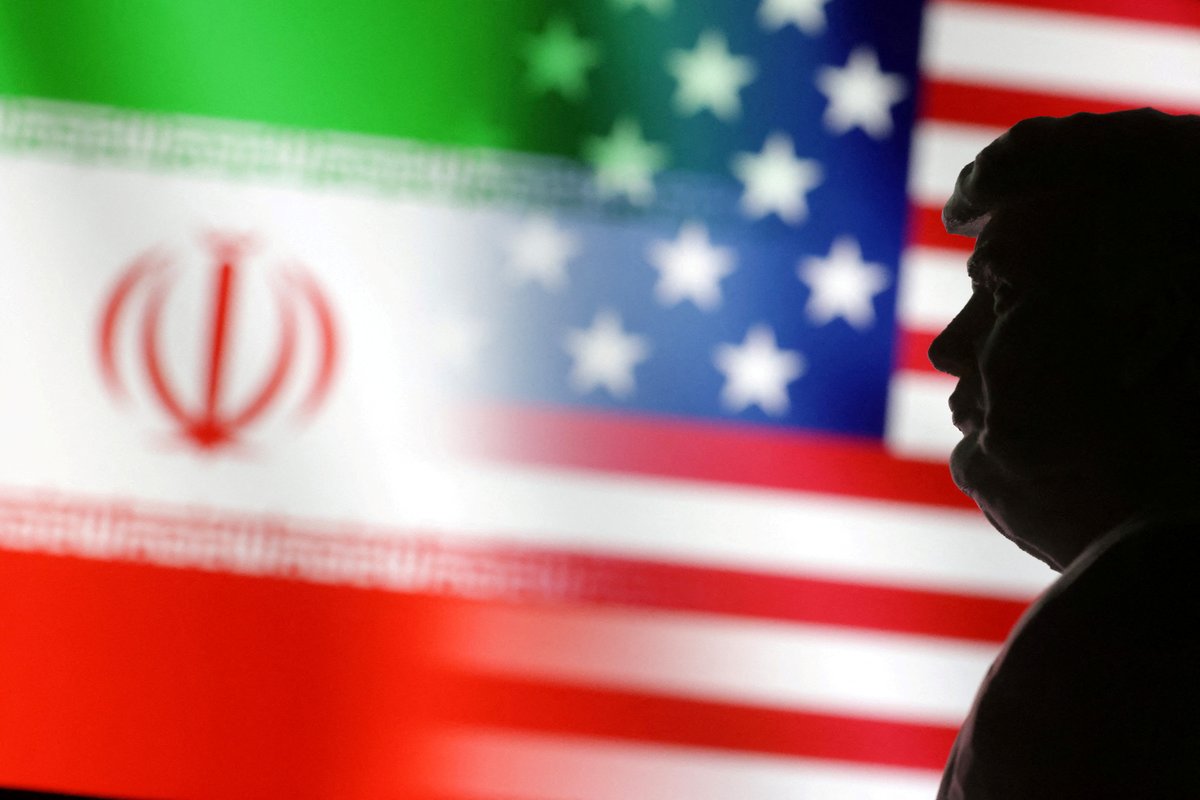
A 3D-printed miniature model of Donald Trump and the U.S. and Iran flags are seen in this illustration taken January 15, 2025.
14:13 JST, April 19, 2025
DUBAI, April 19 (Reuters) – Iran and the United States will hold a new round of nuclear talks in Rome on Saturday to resolve their decades-long standoff over Tehran’s atomic aims, under the shadow of President Donald Trump’s threat to unleash military action if diplomacy fails.
Iran’s Foreign Minister Abbas Araqchi and Trump’s Middle East envoy Steve Witkoff will negotiate indirectly through mediators from Oman, a week after a first round in Muscat that both sides described as constructive.
Tehran has sought to tamp down expectations of a quick deal, after some Iranian officials speculated that sanctions could be lifted soon. Iran’s utmost authority, Supreme Leader Ayatollah Ali Khamenei, said this week he was “neither overly optimistic nor pessimistic”.
For his part, Trump told reporters on Friday: “I’m for stopping Iran, very simply, from having a nuclear weapon. They can’t have a nuclear weapon. I want Iran to be great and prosperous and terrific.”
Trump, who ditched a 2015 nuclear pact between Iran and six powers during his first term in 2018 and reimposed crippling sanctions on Tehran, has revived his “maximum pressure” campaign on Iran since returning to the White House in January.
Washington wants Iran to halt production of highly enriched uranium, which it believes is aimed at building an atomic bomb.
Tehran, which has always said its nuclear programme is peaceful, says it is willing to negotiate some curbs in return for the lifting of sanctions, but wants watertight guarantees that Washington will not renege again as Trump did in 2018.
Since 2019, Iran has breached and far surpassed the 2015 deal’s limits on its uranium enrichment, producing stocks far above what the West says is necessary for a civilian energy programme.
A senior Iranian official, who described Iran’s negotiating position on condition of anonymity, listed Iran’s red lines as never agreeing to dismantle its uranium enriching centrifuges, halt enrichment altogether or reduce its enriched uranium stockpile below levels agreed in the 2015 deal. Iran also rejects negotiating about defence capabilities such as missiles.
While both Tehran and Washington have said they are set on pursuing diplomacy, there is still a wide gap between them on the dispute that has rumbled on for more than two decades.
Witkoff and Araqchi interacted briefly at the end of the first round last week, but officials from the two countries have not held direct negotiations since 2015, and Iran said the Rome talks would also be held indirectly through the Omani mediators.
Russia, a party to Iran’s 2015 nuclear agreement, has offered “to assist, mediate, and play any role” that will be beneficial to Iran and the United States.







Most Read
Popular articles in the past 24 hours
-
BOJ Keeping Eye on Economy and Takaichi's ‘Proactive Fiscal Polic...
-

University of Tsukuba Hospital to Introduce Working Dog Next Year...
-
Record 167 Elementary School Students Harmed Via Social Media in ...
-

Japan’s Hikonyan Cat Mascot to Celebrate 20th Birthday with Party...
-
Japan's Kairos Rocket Set to Launch on Sunday After Delays
-

Humbert Humbert: Husband-Wife Vocal Duo Brings Cheerful Singing t...
-
Nidec Chairman Resigns Amid Accounting Scandal at Major Japanese ...
-

Mizuho to Cut Up to 5,000 Administrative Jobs with AI-Driven Oper...
Popular articles in the past week
-

Producer Behind Pop Group XG Arrested for Cocaine Possession
-

iPS Treatments Pass Key Milestone, but Broader Applications Far f...
-

Tokyo Skytree's Elevator Stops, Trapping 20 People; All Rescued (...
-

Nepal Bus Crash Kills 19 People, Injures 25 Including One Japanes...
-
Milano Cortina 2026: Japanese Gold Medalist Figure Skater Miura S...
-

Japan’s Major Real Estate Firms Expanding Overseas Businesses to ...
-

Milano Cortina 2026: Japanese Figure Skater Kaori Sakamoto’...
-

Reciprocal Tariffs Ruled Illegal: Judiciary Would Not Tolerate Pr...
Popular articles in the past month
-
Producer Behind Pop Group XG Arrested for Cocaine Possession
-

Japan PM Takaichi’s Cabinet Resigns en Masse
-

Japan Institute to Use Domestic Commercial Optical Lattice Clock ...
-

Man Infected with Measles Reportedly Dined at Restaurant in Tokyo...
-

Israeli Ambassador to Japan Speaks about Japan’s Role in the Reco...
-

Videos Plagiarized, Reposted with False Subtitles Claiming ‘Ryuky...
-

Man Infected with Measles May Have Come in Contact with Many Peop...
-

Prudential Life Insurance Plans to Fully Compensate for Damages C...
Top Articles in News Services
-
Survey Shows False Election Info Perceived as True
-
Hong Kong Ex-Publisher Jimmy Lai’s Sentence Raises International Outcry as China Defends It
-

Japan’s Nikkei Stock Average Touches 58,000 as Yen, Jgbs Rally on Election Fallout (UPDATE 1)
-
Japan’s Nikkei Stock Average Falls as US-Iran Tensions Unsettle Investors (UPDATE 1)
-
Trump Names Former Federal Reserve Governor Warsh as the Next Fed Chair, Replacing Powell
JN ACCESS RANKING
-
Producer Behind Pop Group XG Arrested for Cocaine Possession
-
Japan PM Takaichi’s Cabinet Resigns en Masse
-
Man Infected with Measles Reportedly Dined at Restaurant in Tokyo Station
-
Israeli Ambassador to Japan Speaks about Japan’s Role in the Reconstruction of Gaza
-
Videos Plagiarized, Reposted with False Subtitles Claiming ‘Ryukyu Belongs to China’; Anti-China False Information Also Posted in Japan