
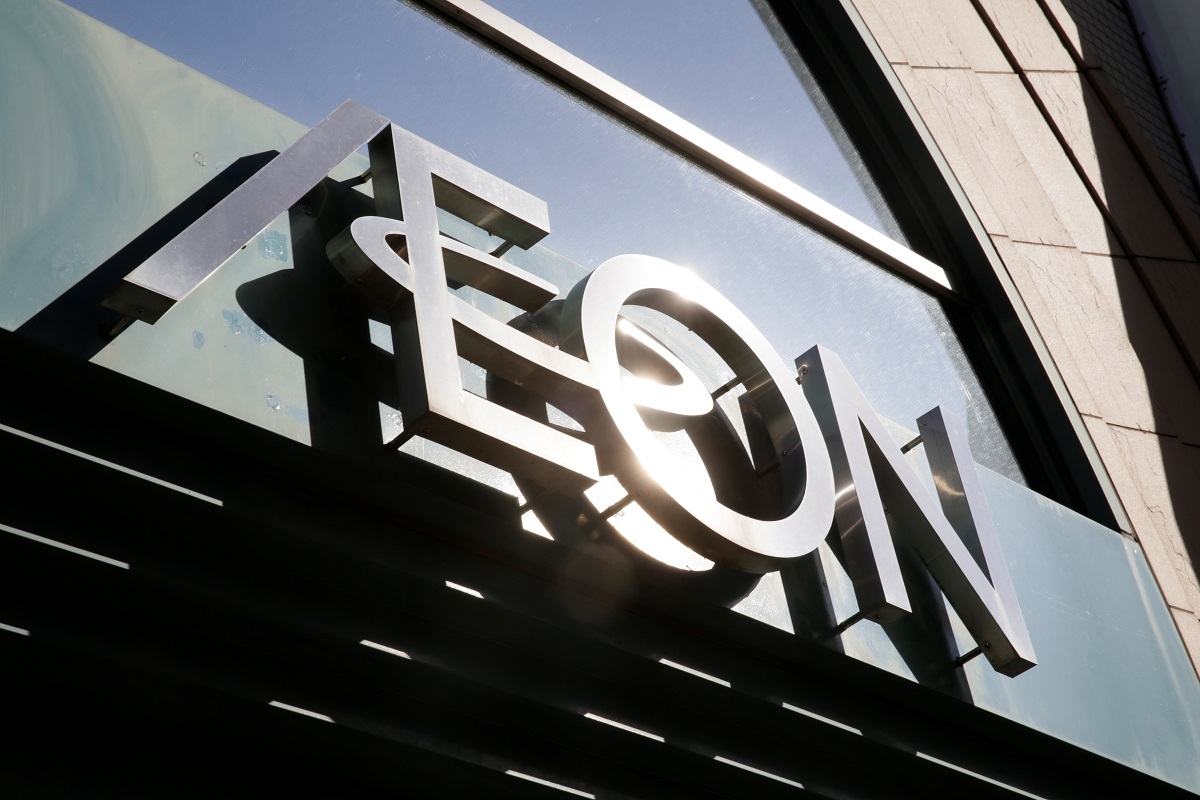
The Aeon logo is seen on a store in Osaka, Japan, October 28, 2018.
18:01 JST, July 1, 2024
Myanmar arrested four executives of supermarket chains, including an official of a Japanese joint venture, for selling rice at inflated prices, state media said on Monday, as the war-torn country’s ruling junta struggles to stabilize its economy.
The impoverished Southeast Asian country has been in turmoil since its military deposed an elected civilian government in February 2021, sparking widespread protests that have morphed into an nationwide armed resistance.
Authorities said they arrested 11 people, including rice traders and officials of mills and retailers, accusing them of inflating prices by 31% to 70% from prescribed levels, the Global New Light of Myanmar newspaper said.
In Tokyo, Japan’s chief cabinet secretary, Yoshimasa Hayashi, said police in Myanmar’s commercial capital of Yangon were questioning a Japanese national.
“The Japanese government intends to continue taking appropriate steps while urging local authorities for his early release,” he told reporters.
Such efforts include maintaining contact with the Japanese citizen’s employer and offering necessary support, he added.
The junta-run Myanmar newspaper said an executive from supermarket chain Aeon Orange, a joint venture between Japan’s Aeon Co and Yangon-based Creation Myanmar, was among those arrested.
A junta spokesman did not respond to a telephone call to seek comment.
An Aeon spokesperson told Reuters that a company employee had been detained in Myanmar, and it was working with the Japanese embassy to get more details.
The owner of a rice mill in Myanmar said many businesses in the sector were struggling because of a mismatch between the official foreign exchange rate and black market rates governing most transactions, such as buying imported fuel and fertilizer.
“It is a loss for us to sell the rice at the government’s standard rate,” he said, speaking on condition of anonymity as the issue is a sensitive one.
“Myanmar still has plenty of rice. This situation has happened because the government wants to restrict the price.”
For years, black market rates for Myanmar’s kyat currency have been significantly higher than the central bank’s reference rate of 2,100 to the dollar.
The currency hit a record black market low of about 4,500 to the dollar in late May, and has since stayed broadly around that level, three foreign exchange traders said.
Amid escalating violence, poverty in Myanmar is more widespread than at any time in the last six years and labor shortages and a depreciating currency have made it harder to do business, the World Bank has said.
Last month, the junta arrested 35 people, cracking down on gold and foreign exchange traders and agents selling foreign real estate, in a bid to prop up the fast-depreciating currency.






Most Read
Popular articles in the past 24 hours
-
BOJ Keeping Eye on Economy and Takaichi's ‘Proactive Fiscal Polic...
-

University of Tsukuba Hospital to Introduce Working Dog Next Year...
-
Record 167 Elementary School Students Harmed Via Social Media in ...
-

Mizuho Bank May Have Lost Data on Thousands of Clients
-

Japan’s Hikonyan Cat Mascot to Celebrate 20th Birthday with Party...
-

Japan's Kairos Rocket Set to Launch on Sunday After Delays
-

Humbert Humbert: Husband-Wife Vocal Duo Brings Cheerful Singing t...
-

Mizuho to Cut Up to 5,000 Administrative Jobs with AI-Driven Oper...
Popular articles in the past week
-

Producer Behind Pop Group XG Arrested for Cocaine Possession
-

iPS Treatments Pass Key Milestone, but Broader Applications Far f...
-

Tokyo Skytree's Elevator Stops, Trapping 20 People; All Rescued (...
-

Nepal Bus Crash Kills 19 People, Injures 25 Including One Japanes...
-

Milano Cortina 2026: Japanese Gold Medalist Figure Skater Miura S...
-

Japan’s Major Real Estate Firms Expanding Overseas Businesses to ...
-

Milano Cortina 2026: Japanese Figure Skater Kaori Sakamoto’...
-

Reciprocal Tariffs Ruled Illegal: Judiciary Would Not Tolerate Pr...
Popular articles in the past month
-
Producer Behind Pop Group XG Arrested for Cocaine Possession
-

Japan PM Takaichi’s Cabinet Resigns en Masse
-

Japan Institute to Use Domestic Commercial Optical Lattice Clock ...
-

Man Infected with Measles Reportedly Dined at Restaurant in Tokyo...
-

Israeli Ambassador to Japan Speaks about Japan’s Role in the Reco...
-

Videos Plagiarized, Reposted with False Subtitles Claiming ‘Ryuky...
-

Man Infected with Measles May Have Come in Contact with Many Peop...
-

Prudential Life Insurance Plans to Fully Compensate for Damages C...
Top Articles in News Services
-
Survey Shows False Election Info Perceived as True
-
Hong Kong Ex-Publisher Jimmy Lai’s Sentence Raises International Outcry as China Defends It
-

Japan’s Nikkei Stock Average Touches 58,000 as Yen, Jgbs Rally on Election Fallout (UPDATE 1)
-
Japan’s Nikkei Stock Average Falls as US-Iran Tensions Unsettle Investors (UPDATE 1)
-

Trump Names Former Federal Reserve Governor Warsh as the Next Fed Chair, Replacing Powell
JN ACCESS RANKING
-
Producer Behind Pop Group XG Arrested for Cocaine Possession
-
Japan PM Takaichi’s Cabinet Resigns en Masse
-
Man Infected with Measles Reportedly Dined at Restaurant in Tokyo Station
-
Israeli Ambassador to Japan Speaks about Japan’s Role in the Reconstruction of Gaza
-
Videos Plagiarized, Reposted with False Subtitles Claiming ‘Ryukyu Belongs to China’; Anti-China False Information Also Posted in Japan