
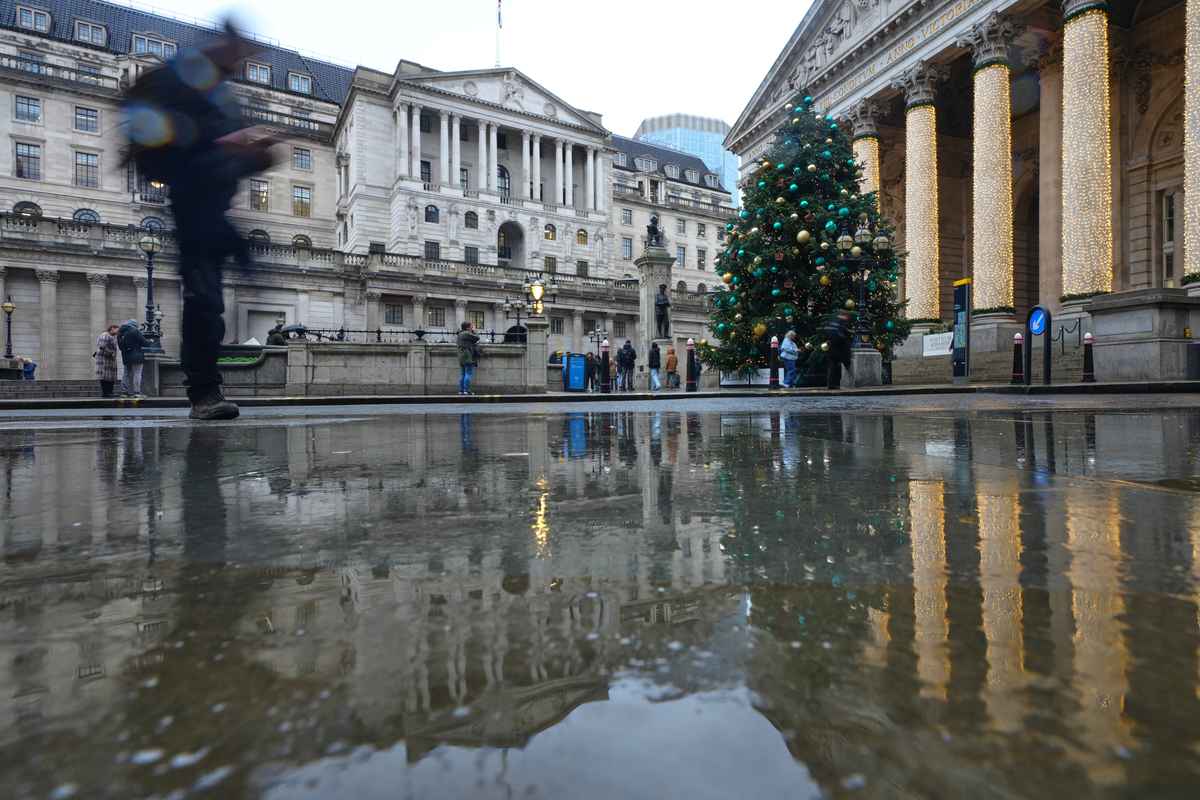
The Bank of England is reflected on a wet pavement in London, as the Monetary Policy Committee (MPC) will publish their decision on interest rates, Thursday, Dec. 18, 2025.
12:04 JST, December 19, 2025
LONDON (AP) — The Bank of England on Thursday cut its key interest rate for the first time in four months as stubbornly high inflation that has plagued British consumers and businesses starts to ease.
The central bank’s policymakers voted 5-4 to reduce the base rate by a quarter of a percentage point to 3.75% on Thursday, the lowest since February 2023.
The move came a day after the Office for National Statistics reported that consumer price inflation slowed to 3.2% in the 12 months through November, from 3.6% a month earlier.
The figure was below the Bank of England’s forecast of 3.4%. That gave policymakers room to cut interest rates in an effort to bolster Britain’s stagnant economy. Statistics released earlier this week showed a weakening jobs market, with the number of job vacancies declining and the unemployment rate rising to 5.1%, the highest since January 2021.
“Unemployment, underemployment and flows from employment to unemployment have all risen,” Bank of England Gov. Andrew Bailey said in a statement. “While I do not yet see conclusive evidence of a sharper downturn in the labor market, we should be vigilant.”
Even so, the bank’s Monetary Policy Committee was divided on whether to cut interest rates, with four members remaining focused on the fight against inflation, which is still well above the Bank of England’s 2% target.
British consumer prices are also rising faster than in other parts of Europe and North America. The inflation rate in the 20 European countries that use the euro currency remained at 2.1% in November. The U.S. inflation rate was 3.0% in September, the latest figures released because of the government shutdown.
Lower interest rates help spur economic growth by reducing borrowing costs, which can lead to increased spending by consumers and boost investment by businesses. But that can also fuel higher prices.
Central bankers have to weigh those competing forces, trying to prevent inflation from eroding the value of earnings and savings without putting an unnecessary brake on economic growth.







Most Read
Popular articles in the past 24 hours
-

Inspection via Micro-Drones Begins at Fukushima No. 1 Nuclear Pla...
-

Japan's DPFP to Join Natl Council Considering Tax Cut Measures
-

China’s National People’s Congress Opens: Military Expansion Cont...
-

Samurai Japan Beats Taiwan in its First World Baseball Classic Ga...
-
Japan, Canada to Launch Strategic Roadmap on Defense, Economic Se...
-

Excited Baseball Fans Gather at Tokyo Dome Ahead of Japan's Openi...
-

Shohei Ohtani Ignites Team Spirit for Samurai Japan's World Baseb...
-

Japan Govt Survey Finds Just 10% of Workers Want Working Hours to...
Popular articles in the past week
-

South Korea Tightens Rules on Foreigners Buying Homes in Seoul Me...
-

Ibaraki Pref.'s 1st Foreign Bus Driver Hired in Tsukuba
-

2 Unpublished Early Novellas by Japan's Kenzaburo Oe Discovered, ...
-

Strait of Hormuz Closure Shakes Markets; Prolonged Closure Could ...
-

Amid Strait of Hormuz Blockade, Shipping Companies Scramble to Ge...
-

Iran Situation: Japan Must Exert Diplomatic Efforts without Merel...
-
Measles Patient Visited Hospital in Bunkyo Ward, Tokyo, Metropoli...
-

North Korea Unveils Image of Kim Jong Un's Teenage Daughter Firi...
Popular articles in the past month
-

Producer Behind Pop Group XG Arrested for Cocaine Possession
-

Japan PM Takaichi’s Cabinet Resigns en Masse
-

Man Infected with Measles Reportedly Dined at Restaurant in Tokyo...
-

Videos Plagiarized, Reposted with False Subtitles Claiming ‘Ryuky...
-

Prudential Life Insurance Plans to Fully Compensate for Damages C...
-

Woman with Measles Visited Hospital in Tokyo Multiple Times Befor...
-

iPS Treatments Pass Key Milestone, but Broader Applications Far f...
-

Sanae Takaichi Elected Prime Minister of Japan; Keeps All Cabinet...
Top Articles in News Services
-
Survey Shows False Election Info Perceived as True
-

Hong Kong Ex-Publisher Jimmy Lai’s Sentence Raises International Outcry as China Defends It
-

Japan’s Nikkei Stock Average Falls as US-Iran Tensions Unsettle Investors (UPDATE 1)
-
Japan’s Nikkei Stock Average Touches 58,000 as Yen, Jgbs Rally on Election Fallout (UPDATE 1)
-
Japan’s Nikkei Stock Average Rises on Tech Rally and Takaichi’s Spending Hopes (UPDATE 1)
JN ACCESS RANKING
-
Producer Behind Pop Group XG Arrested for Cocaine Possession
-
Japan PM Takaichi’s Cabinet Resigns en Masse
-
Man Infected with Measles Reportedly Dined at Restaurant in Tokyo Station
-
Videos Plagiarized, Reposted with False Subtitles Claiming ‘Ryukyu Belongs to China’; Anti-China False Information Also Posted in Japan
-
Prudential Life Insurance Plans to Fully Compensate for Damages Caused by Fraudulent Actions Without Waiting for Third-Party Committee Review