
Autonomous Passenger Ship Connects Mainland with Remote Island in Seto Inland Sea; World’s 1st Commercially Operated Autonomous Vessel
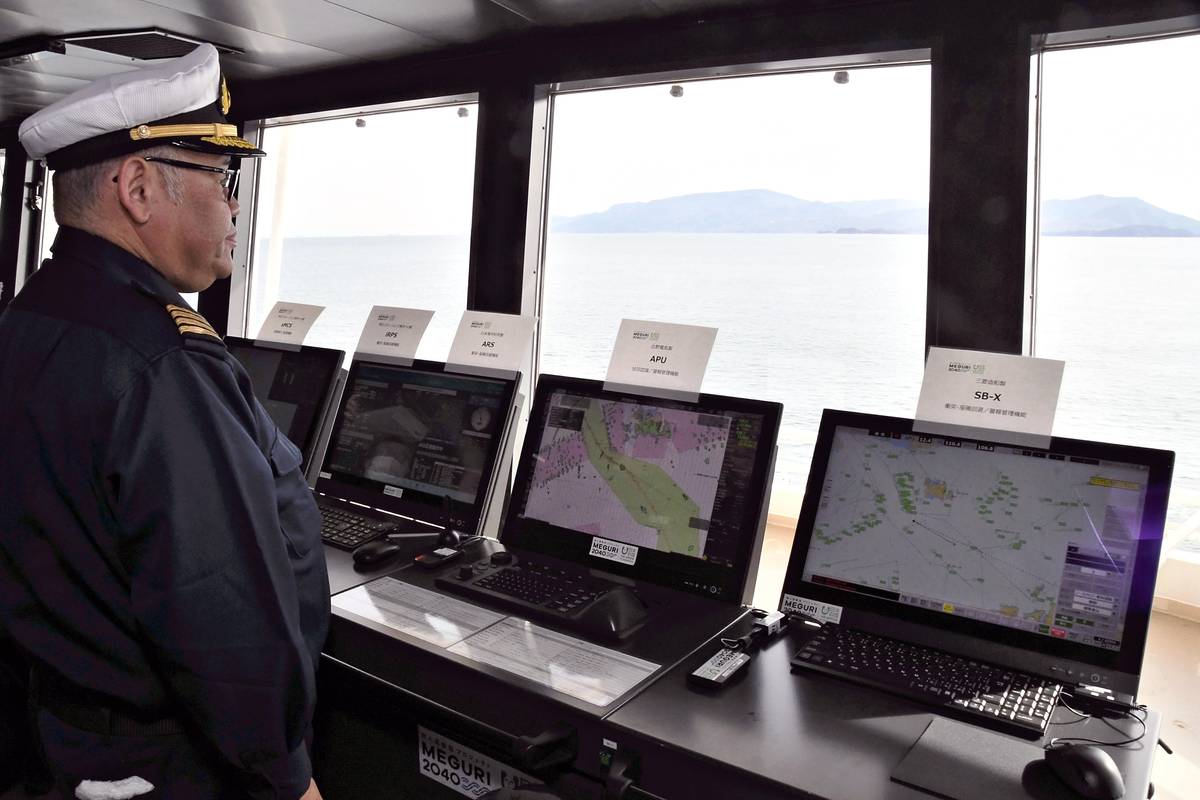
A captain monitors the status of an autonomous navigation on screens installed on the bridge of a ship on Dec. 10 on the Seto Inland Sea.
7:00 JST, January 1, 2026
OKAYAMA — A passenger ship equipped with an autonomous navigation system has begun sailing between Okayama and Shodoshima Island in the Seto Inland Sea.
While there are crew members on board to monitor the trips and respond in emergencies, the technology is expected to help alleviate crew shortages faced by the shipping industry, as well as prevent accidents.
According to the project’s operators, this is the world’s first commercially operated autonomous vessel.
The Olympia Dream Seto detects the locations of other ships using a synthesis of data from an automatic identification system, radar and other equipment. The ferry, which has a capacity of 500 people and is operated by Okayama City-based Ryobi Group, measures 65.56 meters in length and has a gross tonnage of 942 tons.
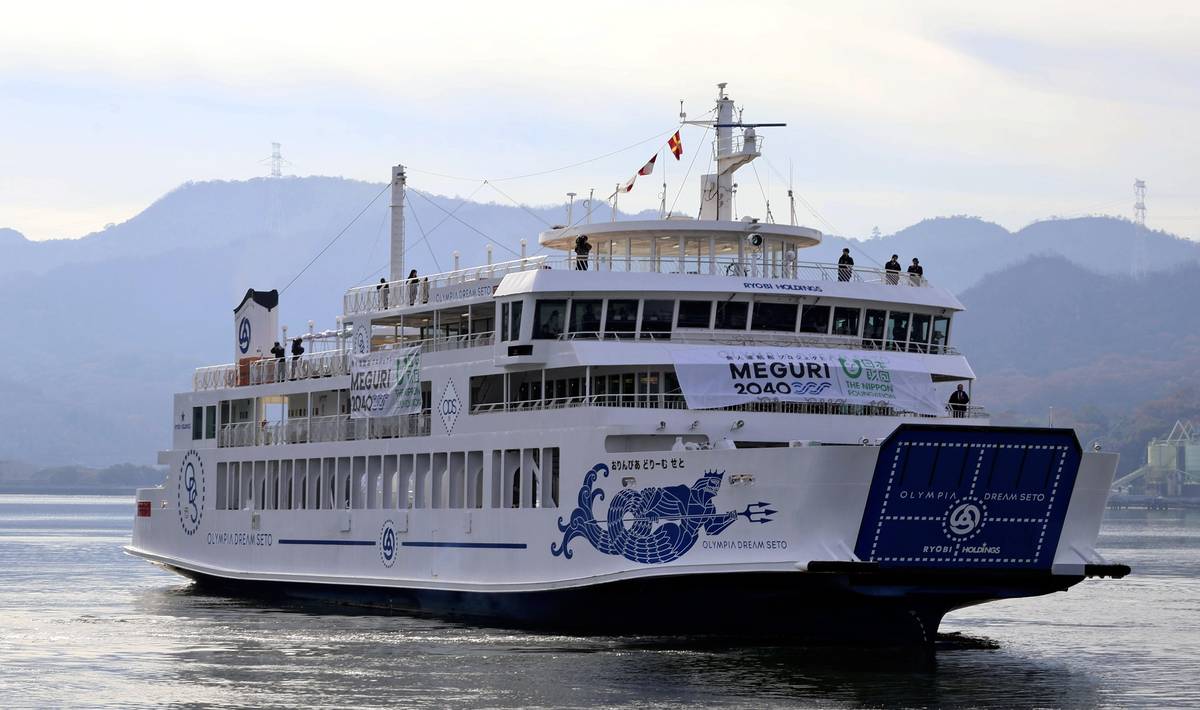
The autonomous ship “Olympia Dream Seto”
The vessel makes four round trips per day between Shin-Okayama Port and Tonosho Port on the island.
The project is backed by a consortium of 53 entities, including The Nippon Foundation and shipbuilding and shipping companies. They have been working on the project since 2020 and have conducted multiple demonstrations.
On Dec. 5, the ship’s autonomous navigation system passed screening by the Land, Infrastructure, Transport and Tourism Ministry.
Eliminating human error
During a demonstration held on Dec. 10, the vessel’s captain only monitored the navigation route and the positions of surrounding ships on a monitor, without touching any controls.
Other ships were intentionally placed in the ferry’s way as obstacles during the demonstration, but Olympia Dream Seto accurately detected their positions using radar and other methods and calculated a safe route to avoid them.
Docking and undocking normally requires the skills and experience of a helmsman, but the ferry performed even that process autonomously.
An official from The Nippon Foundation cited data showing that human error was responsible for 80% of maritime accidents.
“While humans tend to have lapses in concentration, autonomous navigation can maintain a consistent level of performance,” the official said.
The consortium aims to begin operating three other autonomous ships on other routes by March.
“Based on the data we obtain from the commercial operations, we hope to contribute to the creation of international rules for autonomous ships,” said Nippon Foundation Executive Director Mitsuyuki Unno.
Support from land
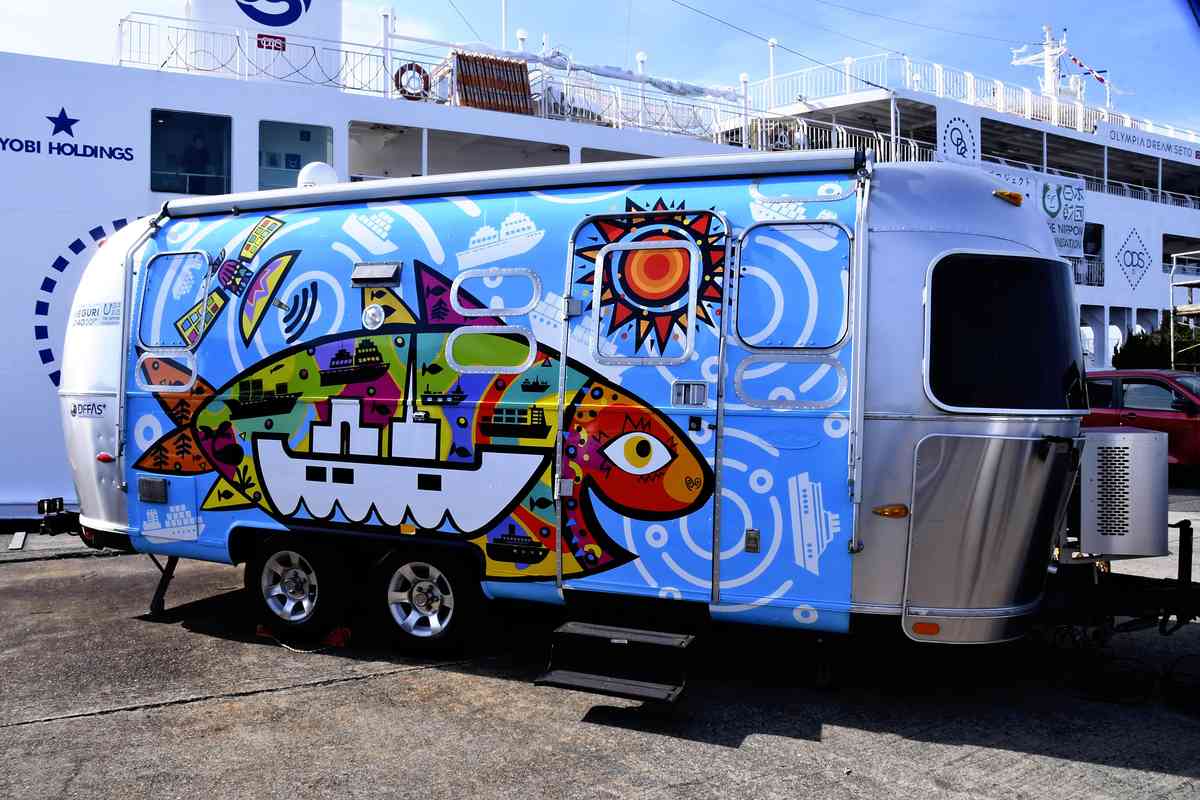
A mobile land-based support center is seen at Shin-Okayama Port in Okayama.
The ship’s autonomous navigation is also supported by the mobile, land-based Fleet Operation Center, which analyzes weather conditions and monitors the ship’s equipment for abnormalities. On the day of the demonstration, the center was deployed at Shin-Okayama Port.
The mobile center is a van with a classical design and a dazzling silver body, but inside it is equipped with several screens that display information like a cockpit.







Most Read
Popular articles in the past 24 hours
-

15 Years since Great East Japan Earthquake: How Can Affected Area...
-

Japan’s Nikkei Stock Average Rise Lifted by AI Stocks, Easing Con...
-
2 Mt. Fuji Hikers Identified as Police Warn People Not to Climb i...
-

Parents in Japan to Get Instagram Notifications When Teens Repeat...
-

Japan’s Mitsui O.S.K. Lines Container Ship Anchored in Persian Gu...
-

CARTOON OF THE DAY (March 11)
-

Tokyo Conference 2026 Opens, Discusses Rebuilding Multilateralism...
-

Samurai Japan Routs Perky Czech Republic Team After Shuto, Muraka...
Popular articles in the past week
-

Ibaraki Pref.'s 1st Foreign Bus Driver Hired in Tsukuba
-

Nippon Life Insurance's U.S. Arm Sues OpenAI Over Legal Assistanc...
-
Govt to Utilize ODA for Ensuring Economic Security; Securing Ener...
-
Amid Strait of Hormuz Blockade, Shipping Companies Scramble to Ge...
-
Japan Govt Survey Finds Just 10% of Workers Want Working Hours to...
-

Beckoning Cats Get Makeover to Fit Modern Lifestyles with Sleek D...
-

Japan's 2nd Round of U.S. Investments May Be Worth Over $100 Bill...
-

Imperial Family Watches World Baseball Classic Game Against Austr...
Popular articles in the past month
-

Producer Behind Pop Group XG Arrested for Cocaine Possession
-

Japan PM Takaichi’s Cabinet Resigns en Masse
-

Man Infected with Measles Reportedly Dined at Restaurant in Tokyo...
-

Videos Plagiarized, Reposted with False Subtitles Claiming ‘Ryuky...
-

iPS Treatments Pass Key Milestone, but Broader Applications Far f...
-

Sanae Takaichi Elected Prime Minister of Japan; Keeps All Cabinet...
-

Nepal Bus Crash Kills 19 People, Injures 25 Including One Japanes...
-

South Korea Tightens Rules on Foreigners Buying Homes in Seoul Me...
Top Articles in Features
-

Tokyo’s New Record-Breaking Fountain Named ‘Tokyo Aqua Symphony’
-

High-Hydration Bread on the Rise, Seeing Increase in Specialty Shops, Recipe Searches
-

Japanese Students Use Traditional Pickle to Create Novel Wagashi Confectionery
-

Heirs to Kyoto Talent: Craftsman Works to Keep Tradition of ‘Kinran’ Brocade Alive Through Initiatives, New Creations
-

My Spendthrift Mother Constantly Asks Me for Money
JN ACCESS RANKING
-
Producer Behind Pop Group XG Arrested for Cocaine Possession
-
Japan PM Takaichi’s Cabinet Resigns en Masse
-
Man Infected with Measles Reportedly Dined at Restaurant in Tokyo Station
-
Videos Plagiarized, Reposted with False Subtitles Claiming ‘Ryukyu Belongs to China’; Anti-China False Information Also Posted in Japan
-
iPS Treatments Pass Key Milestone, but Broader Applications Far from Guaranteed