
Crowdfunding Supports Conservation Efforts at Famous Tokyo Cherry Tree Spot; Chiyoda Ward Sets Up Multiple Plans to Help Maintain Trees
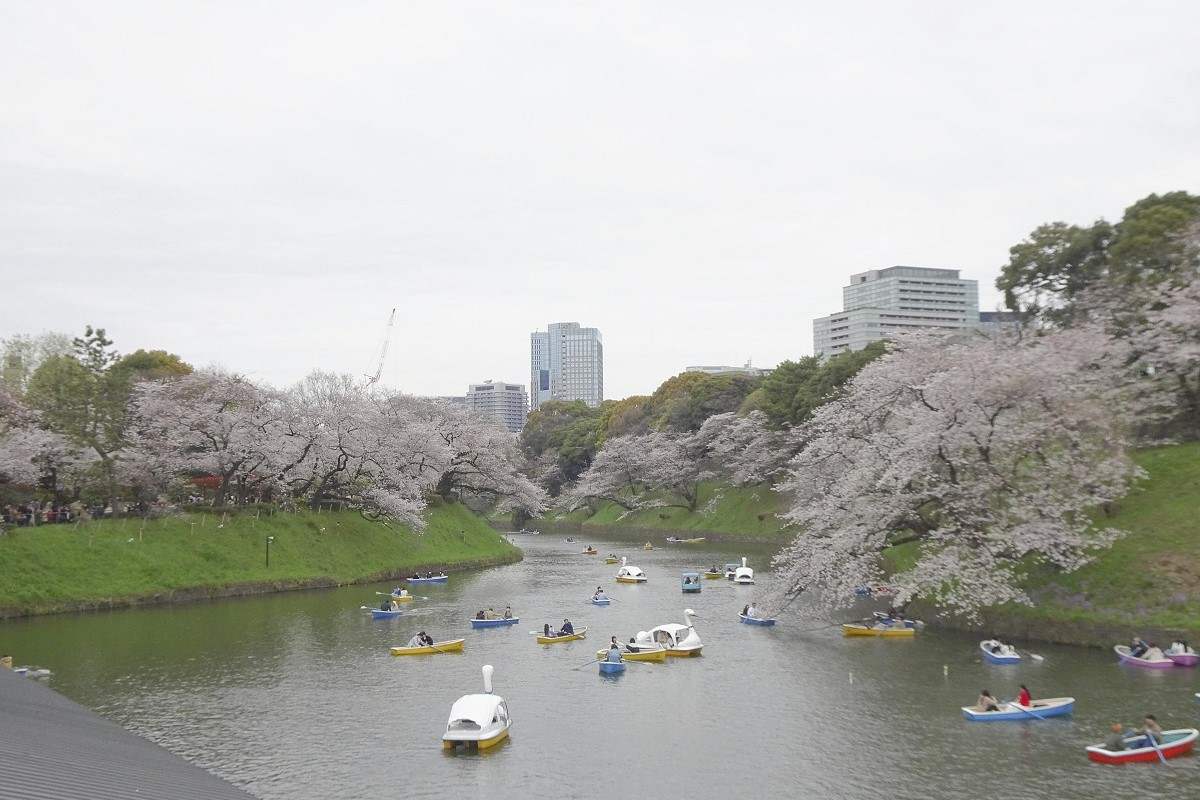
Someiyoshino cherry trees at Chidori-ga-fuchi in full bloom on Friday in Chiyoda Ward, Tokyo
15:14 JST, April 7, 2024
Chidori-ga-fuchi in Chiyoda Ward, one of the most famous spots for viewing cherry blossom trees in Tokyo, needs funding to maintain and protect the area after nearly 70 years since its establishment. The municipal government is asking for support via crowdfunding.
In addition to the crowdfunding site, people donated at the Chiyoda Sakura Festival, which lasted until April 7. The municipal government hopes to pass on the scenic beauty to the next generation.
Someiyoshino, a variety of cherry trees, began to be planted at Chidori-ga-fuchi Green Way around 1955.

Kiyoshi Murase
Kiyoshi Murase, the then mayor of Chiyoda Ward, opened a boat pier along the inner moat of the former Edo Castle for passersby to relax amid their stroll along the moat.
The area, however, looked bleak and desolate, prompting the ward office to plant cheery trees.
At the time, there was no heavy machinery to dig holes available, staff members of the ward office and gardeners planted the trees by hand over several years.
As the trees grew and began to bloom, many people began coming to see the sakura-lined Chidori-ga-fuchi Green Way.
Hiroshi Murase, Kiyoshi’s eldest son, said his father rejoiced at seeing a TV news program showing crowds of people visiting Chidori-ga-fuchi to see the cherry blossoms. He recalls his father, who passed away in 1966, saying, “I am glad that we planted them.”
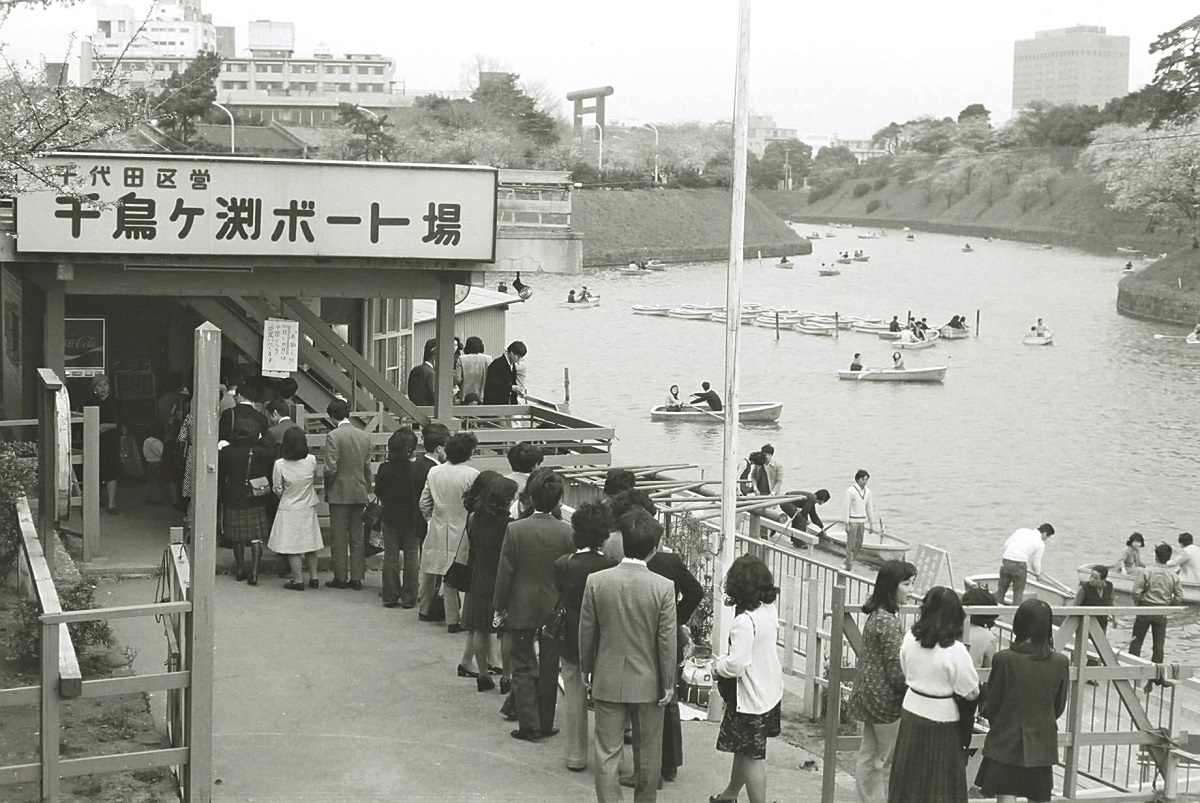
The boat pier in Chidori-ga-fuchi is crowded with people in 1975.
The Chidori-ga-fuchi cherry trees began to show signs of abnormality around the time they turned 50 years old. Their shape changed due to vermin damage caused by the larvae of Synanthedon hector and armillaria root rot.
The trees also suffer from adverse impacts that are particular to being in an urban district, along with having been planted in a narrow and confined area. Their roots are sometimes trampled by an incessant flow of pedestrians.
The ward formulated the Chiyoda Ward Sakura Rehabilitation Plan in 2004, which sets out how to rejuvenate the cherry trees or how to cut them down and replant others if it is deemed difficult to revive them.
In addition, the municipal government established the Sakura Supporters Program to solicit cooperation in the revitalization of the trees, and the Chiyoda Sakura Fund to procure funds for long-term maintenance and management. At the same time, it has asked for donations during the Chiyoda Sakura Festival every year.
During the COVID-19 pandemic, however, the festival was canceled from 2020 to 2022, causing funds to run dry and prompting the municipal government to launch a crowdfunding campaign in 2022.
In this final year of the crowdfunding drive, the campaign is scheduled to run until May 9 on Campfire, a leading crowdfunding website in Japan.
The amount is set at ¥10 million, which is needed for the maintenance and management and such of the cherry trees. Those who donate will receive a gift, which can include a teacup with a motif of cherry blossoms or a bottle of wine.
“Someiyoshino cherry trees are said to have a life span of about 60 years,” said an official of the ward’s roads and parks division. “If managed properly, they can be passed on to the next generation. We would like to conserve this wonderful scenery.”


Related Tags






Most Read
Popular articles in the past 24 hours
-

Power Outage Forces About 980 Passengers in Yokohama to Walk to T...
-

Masako Ikeda, Voice of Maetel in ‘Galaxy Express 999,' Dies at 87
-

Japan Defense Agency to Develop AI Intelligence Analysis System f...
-

Government to Establish ‘Command Center’ for Developing Nuclear P...
-

Oil Reserve Releases: G7 Members Unite against Growing Threat
-

Milano Cortina 2026: Japan’s Momoka Muraoka Takes Silver in...
-

Paw Patrol: Larry Marks 15 Years at 10 Downing Street
-

Moai Statue Shows Lasting Bond Between Miyagi Pref. Town, Easter ...
Popular articles in the past week
-

Japan Figure Skating Legend Yuzuru Hanyu Is Proud Disaster Surviv...
-

Govt to Utilize ODA for Ensuring Economic Security; Securing Ener...
-
15 Measles Patients Confirmed in Tokyo in Past 6 Days; 1 May Have...
-
Massive Sewer Pipe Found Jutting Out of Highway in Osaka
-

Japan Govt to Tighten Requirements to Receive Permanent Residency...
-

Beckoning Cats Get Makeover to Fit Modern Lifestyles with Sleek D...
-
JR Tokai Breaks Ground on Yamanashi Maglev Station; Will Be Part ...
-

Japan's 2nd Round of U.S. Investments May Be Worth Over $100 Bill...
Popular articles in the past month
-

Producer Behind Pop Group XG Arrested for Cocaine Possession
-

Japan PM Takaichi’s Cabinet Resigns en Masse
-

Man Infected with Measles Reportedly Dined at Restaurant in Tokyo...
-

Videos Plagiarized, Reposted with False Subtitles Claiming ‘Ryuky...
-
Japan Figure Skating Legend Yuzuru Hanyu Is Proud Disaster Surviv...
-

iPS Treatments Pass Key Milestone, but Broader Applications Far f...
-

Sanae Takaichi Elected Prime Minister of Japan; Keeps All Cabinet...
-

Nepal Bus Crash Kills 19 People, Injures 25 Including One Japanes...
Top Articles in Features
-

Tokyo’s New Record-Breaking Fountain Named ‘Tokyo Aqua Symphony’
-

High-Hydration Bread on the Rise, Seeing Increase in Specialty Shops, Recipe Searches
-
Japanese Students Use Traditional Pickle to Create Novel Wagashi Confectionery
-

My Spendthrift Mother Constantly Asks Me for Money
-
Tourists Ignore Safety Barriers Near Famous Zao ‘Snow Monsters’ in Japan
JN ACCESS RANKING
-
Producer Behind Pop Group XG Arrested for Cocaine Possession
-
Japan PM Takaichi’s Cabinet Resigns en Masse
-
Man Infected with Measles Reportedly Dined at Restaurant in Tokyo Station
-
Videos Plagiarized, Reposted with False Subtitles Claiming ‘Ryukyu Belongs to China’; Anti-China False Information Also Posted in Japan
-
Japan Figure Skating Legend Yuzuru Hanyu Is Proud Disaster Survivor and Gold Medalist, Vows to Continue Support Efforts