
Japan Tourism / Experience Papermaking World with Ancient Atmosphere Now Accessible via Shinkansen
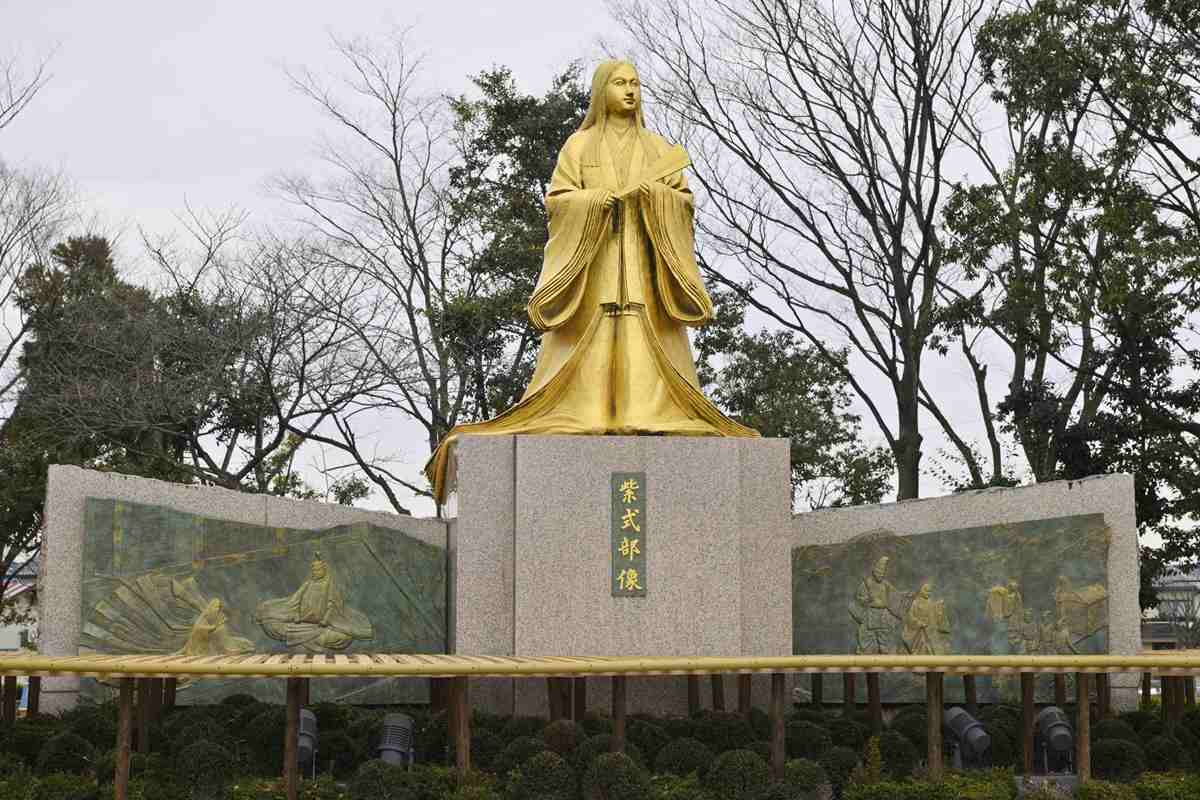
A statue of Murasaki Shikibu stands in Murasaki Shikibu Park.

14:00 JST, March 30, 2024
ECHIZEN, Fukui — A new station located in the middle of rice paddies has opened on the Hokuriku Shinkansen Line, which was recently extended from Kanazawa Station to Tsuruga Station in Fukui Prefecture.
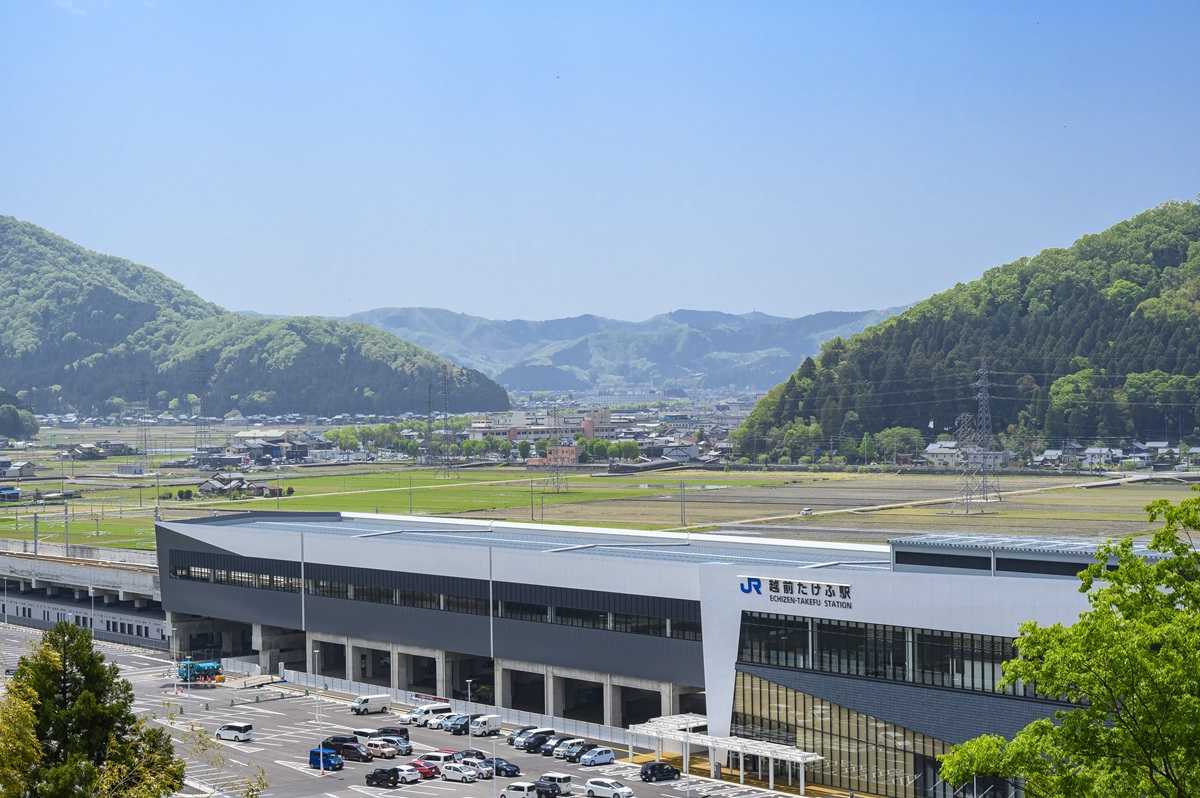
Echizen-Takefu Station on the Hokuriku Shinkansen Line
Among the six stations in the newly extended section, Echizen-Takefu is accessible by only Shinkansen bullet train. The station building was designed using specialties such as paper, joinery and cutlery from Echizen, the city the station is located in.
Washi, a type of traditional Japanese paper, is among those specialties. Echizen is one of the top producers of washi, and paper made there is called Echizen washi. The walls of the waiting room in the station’s concourse are papered with Echizen washi.
I visited Echizen Washi Village to see the craftsmanship that goes into papermaking there.
Echizen Washi Village is an area dotted with several washi-related facilities such as the Paper & Culture Museum, where visitors can learn about the history of washi, and the Papyrus House, where people can try their hand at producing washi. At the Udatsu Paper & Craft Museum, visitors can observe the process of making washi using traditional methods.
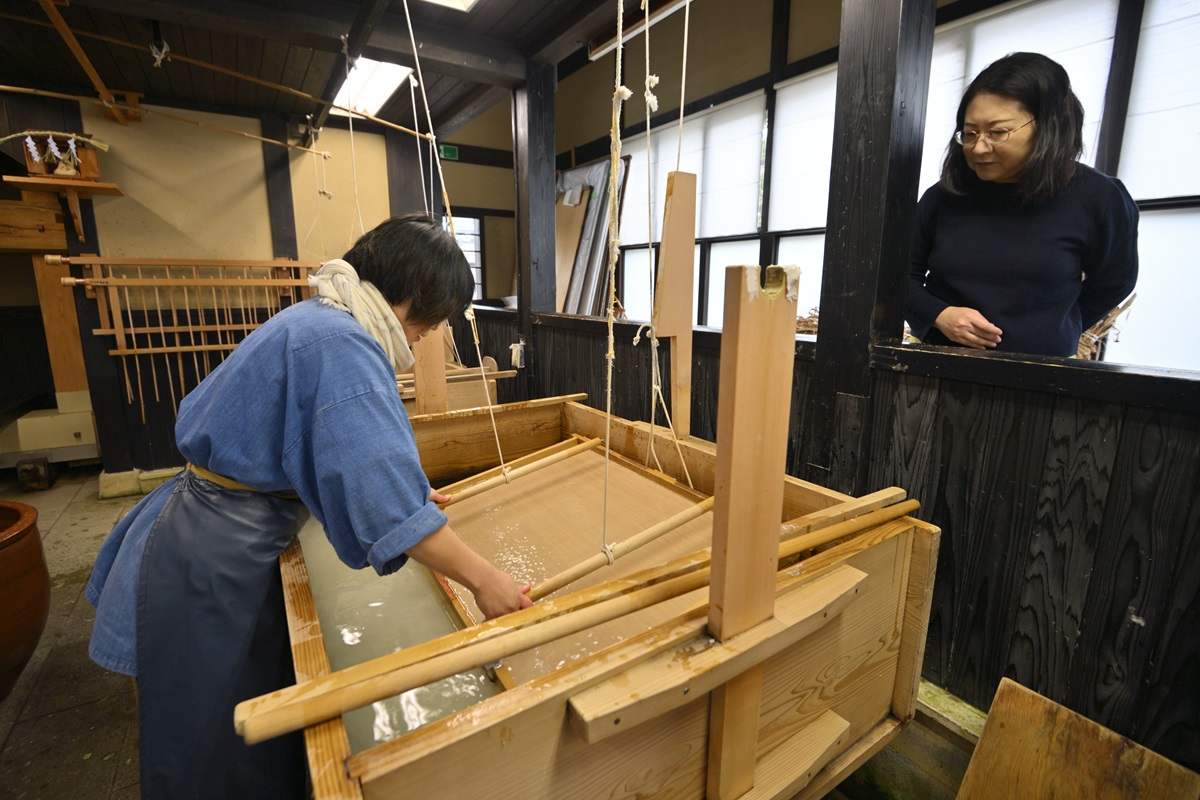
Naho Murata, a traditional artisan, makes washi traditional Japanese paper.
The materials used to make Japanese paper mainly come from three plants: kozo (a type of mulberry tree), mitsumata (Oriental paper bush) and gampi (Diplomorpha sikokiana), a type of flowering plant.
“Each of them has its own characteristics,” said Naho Murata, an artisan who was demonstrating the process of making paper. “For example, kozo’s thick and long fibers create strong paper.”
The raw materials extracted from these plants are mixed in a vat with water and glue that is created using a plant similar to hibiscus. Murata scooped some onto a screen and shook the screen to spread the fibers evenly. The amount of time spent on shaking is said to be judged solely on the appearance of the paper being made. This work is dependent on a craftsperson’s expertise that comes about only through experience.
The Udatsu Paper & Craft Museum is a unique facility in Japan where visitors can observe the entire process of papermaking, from the preparation of the raw materials to making paper and drying it.
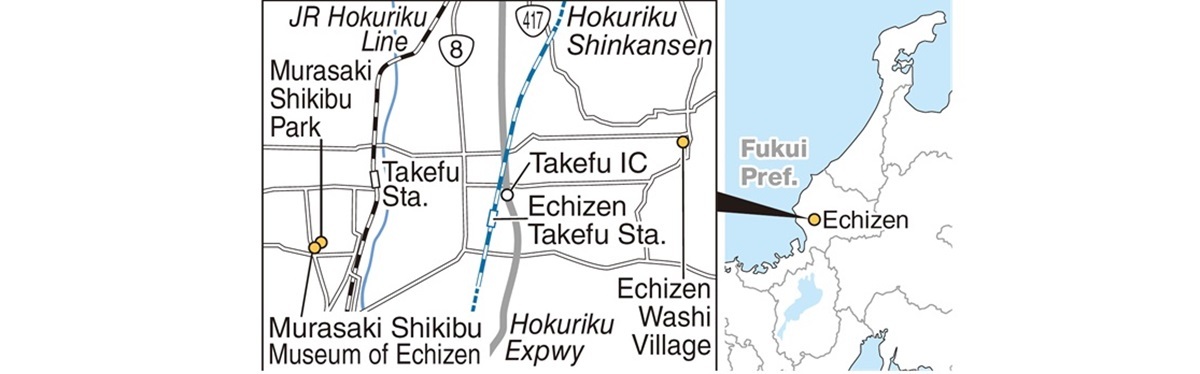
Focus on Murasaki Shikibu
The city of Echizen is drawing special attention this year because Murasaki Shikibu is being featured as the main character in public broadcaster NHK’s iconic historical drama. Murasaki Shikibu is the author of “The Tale of Genji,” which is considered to be the world’s oldest full-length novel, and she once lived in Echizen.
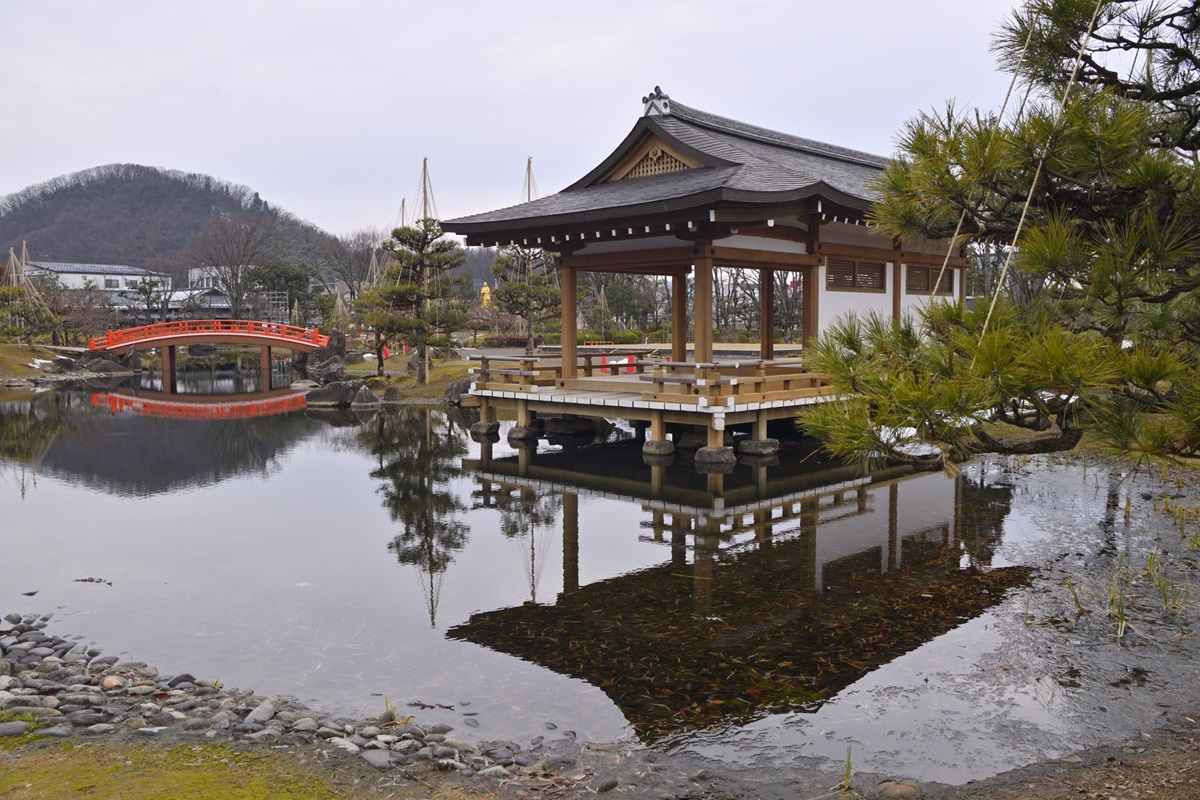
Murasaki Shikibu Park has a garden and pond. Wisteria will be in full bloom from late April through May.
It is said that she spent about a year while in her 20s there following the appointment of her father, Fujiwara no Tametoki, as Echizen-no-Kami, or the lord of present-day Fukui Prefecture excluding its southern part, in 996. There is a statue of her in Murasaki Shikibu Park in the city as well as a reproduction of a garden from the time.
The adjacent Murasaki Shikibu Museum of Echizen details the relationship between the writer and the city via panels and videos. It also has an impressive display of dolls depicting Murasaki Shikibu and others traveling from Kyoto to Echizen. The procession of 46 people is reproduced with dolls made of Echizen washi.
I visited the city before the Hokuriku Shinkansen Line was extended. Next time, I’d like to come by Shinkansen.
Udatsu Paper & Craft Museum
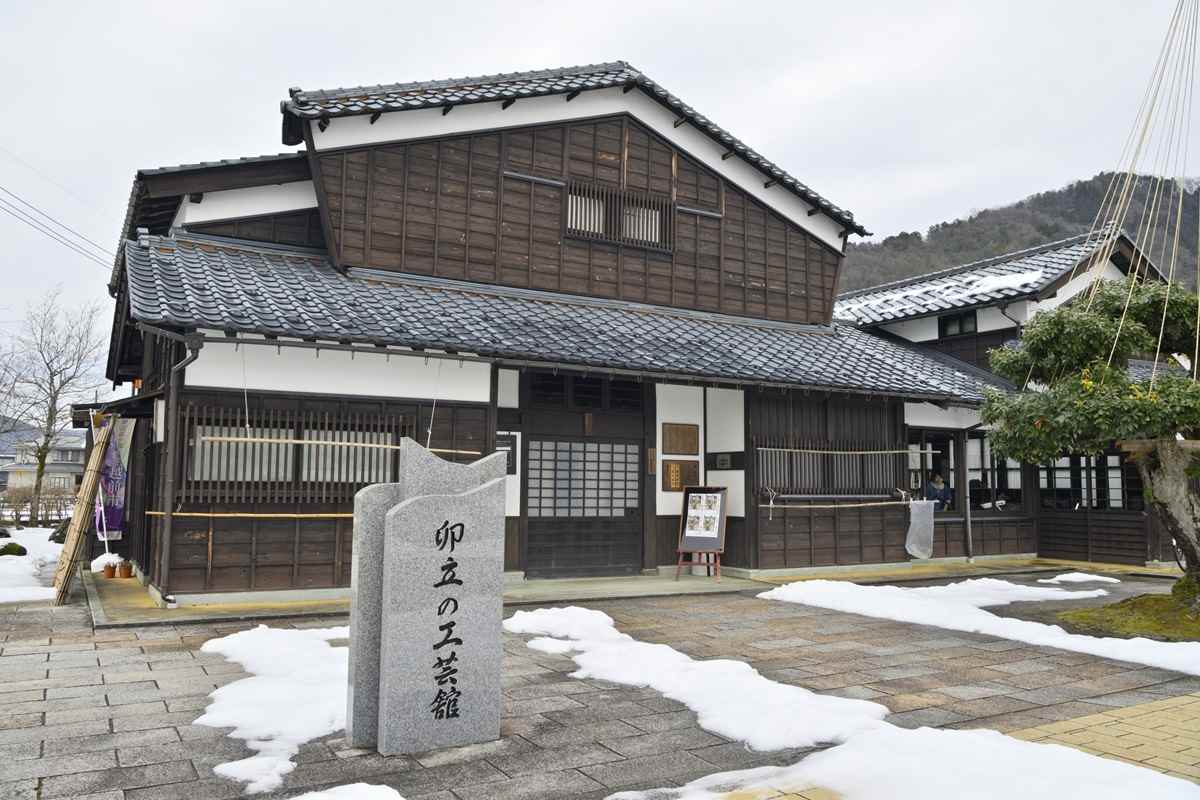
Udatsu Paper & Craft Museum.
Open from 9:30 a.m. to 4:30 p.m. Closed on Tuesdays and the year-end and New Year holiday period. Admission: ¥300, which includes access to the Paper & Culture Museum located in Echizen Washi Village.
Murasaki Shikibu Museum of Echizen
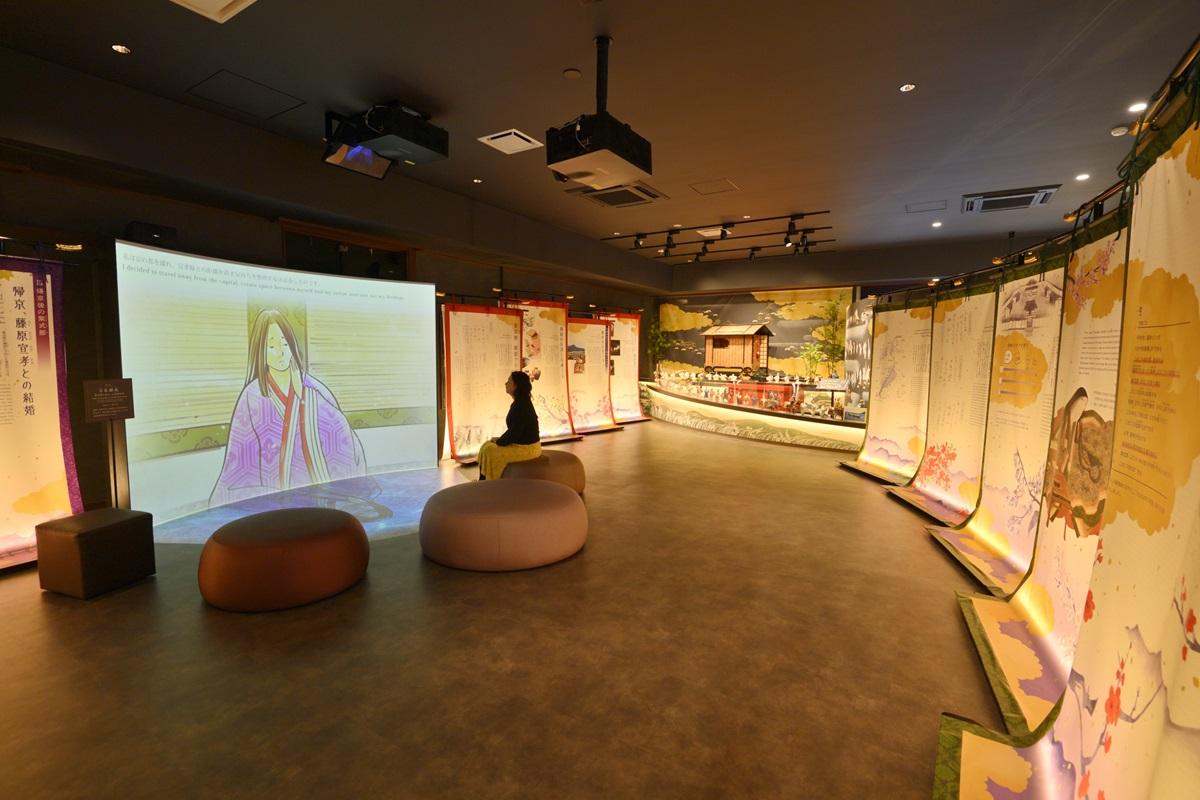
Exhibits at the Murasaki Shikibu Museum of Echizen help visitors learn about Murasaki Shikibu’s biography and her life.
Open from 9 a.m. to 5 p.m. Closed on Mondays — or Tuesday if Monday is a holiday — and the year-end and New Year holiday period. Admission is free. Entry to Murasaki Shikibu Park is unrestricted.
***
Japan Tourism is presented in collaboration with Ryoko Yomiuri Publication, which publishes Ryoko Yomiuri, a monthly travel magazine. If you are interested in the original Japanese version of this story, click here.






Most Read
Popular articles in the past 24 hours
-
Tokyo Skytree's Elevator Stops, Trapping 20 People; All Rescued (...
-

China, India Tapping into Promising African Market; Beijing Annou...
-

Milano Cortina 2026: Miura-Kihara Duo, Other Japanese Figure Skat...
-

Japan’s Major Real Estate Firms Expanding Overseas Businesses to ...
-
‘Storytellers’ Being Dispatched Overseas to Promote Japan; Events...
-

Japan, Pacific Island Nations to Work on Deepening Cooperation
-

Ukrainian Ambassador Closely Watching Japan’s Revision of Defense...
-

Japanese Film, Anymart, Wins Critics’ Award at International Film...
Popular articles in the past week
-

Japan PM Takaichi’s Cabinet Resigns en Masse
-

Man Infected with Measles Reportedly Dined at Restaurant in Tokyo...
-

Sanae Takaichi Elected Prime Minister of Japan; Keeps All Cabinet...
-

Japan's Govt to Submit Road Map for Growth Strategy in March, PM ...
-

Bus Carrying 40 Passengers Catches Fire on Chuo Expressway; All E...
-

Milano Cortina 2026: Figure Skaters Riku Miura, Ryuichi Kihara Pa...
-

Japan, U.S. Name 3 Inaugural Investment Projects; Reached Agreeme...
-

U.S. Firm to Build Training Hub in Fukushima N-plant for Debris R...
Popular articles in the past month
-
Japan PM Takaichi’s Cabinet Resigns en Masse
-

Japan Institute to Use Domestic Commercial Optical Lattice Clock ...
-

Israeli Ambassador to Japan Speaks about Japan’s Role in the Reco...
-
Man Infected with Measles Reportedly Dined at Restaurant in Tokyo...
-

Videos Plagiarized, Reposted with False Subtitles Claiming ‘Ryuky...
-

Man Infected with Measles May Have Come in Contact with Many Peop...
-

Prudential Life Insurance Plans to Fully Compensate for Damages C...
-

Woman with Measles Visited Hospital in Tokyo Multiple Times Befor...
Top Articles in Features
-
Tokyo’s New Record-Breaking Fountain Named ‘Tokyo Aqua Symphony’
-
Sapporo Snow Festival Opens with 210 Snow and Ice Sculptures at 3 Venues in Hokkaido, Features Huge Dogu
-

Tourists Flock to Ice Dome Lodge at Resort in Hokkaido, Japan; Facility Invites Visitors to Sleep on Beds Made of Ice
-
High-Hydration Bread on the Rise, Seeing Increase in Specialty Shops, Recipe Searches
-
Heirs to Kyoto Talent: Craftsman Works to Keep Tradition of ‘Kinran’ Brocade Alive Through Initiatives, New Creations
JN ACCESS RANKING
-
Japan PM Takaichi’s Cabinet Resigns en Masse
-
Japan Institute to Use Domestic Commercial Optical Lattice Clock to Set Japan Standard Time
-
Israeli Ambassador to Japan Speaks about Japan’s Role in the Reconstruction of Gaza
-
Man Infected with Measles Reportedly Dined at Restaurant in Tokyo Station
-
Videos Plagiarized, Reposted with False Subtitles Claiming ‘Ryukyu Belongs to China’; Anti-China False Information Also Posted in Japan