
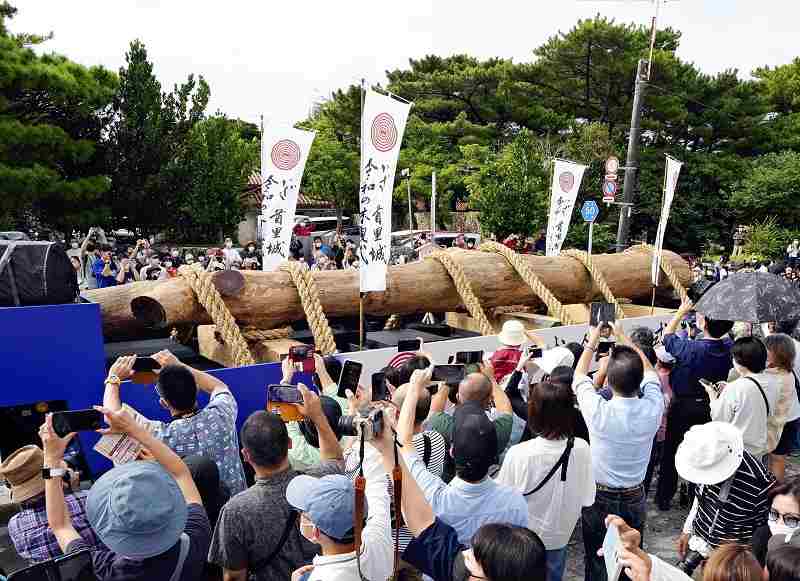
A 9-meter-long log is carried on a trailer toward Shuri Castle by about 140 people as part of a ceremony to commence reconstruction of the main hall on Nov. 3 in Naha. It comes from a tree grown in Kunigami, northern Okinawa, and will be used as a beam of the building.
11:06 JST, November 26, 2022
NAHA — Shuri Castle, the spiritual center of the Okinawan people, is undergoing restoration work. However, the project faces challenges to balance the historical aspects of the wooden structure with the need to prevent the loss of a piece of history.
Shuri Castle has been repeatedly destroyed by fire since the days of the Ryukyu Kingdom, and the majesty of the castle was lost during the Battle of Okinawa in 1945. The castle buildings were reconstructed about 30 years ago, but these were destroyed by a fire that broke out in 2019.
To prevent further disasters, the current reconstruction will include various types of fire protection equipment.
A special surveillance camera will be installed to quickly detect abnormalities that may cause a fire, even at night. The new system will also alert the fire department and unlock the castle gate automatically to allow any fire to be tackled without delay.
A new type of sprinkler will also be installed, with pipes that are constantly filled with water so they can be activated quickly.
However, the restoration committee members insist that the architecture from the Ryukyu Kingdom period needs to be accurately reproduced, so are considering several aspects of the reconstruction. For example, the color of any equipment that is installed on ceilings or walls will be matched to the vermilion used in the main hall. Sprinkler pipes will be hidden in spaces between the roof and the ceiling.
Shuri Castle
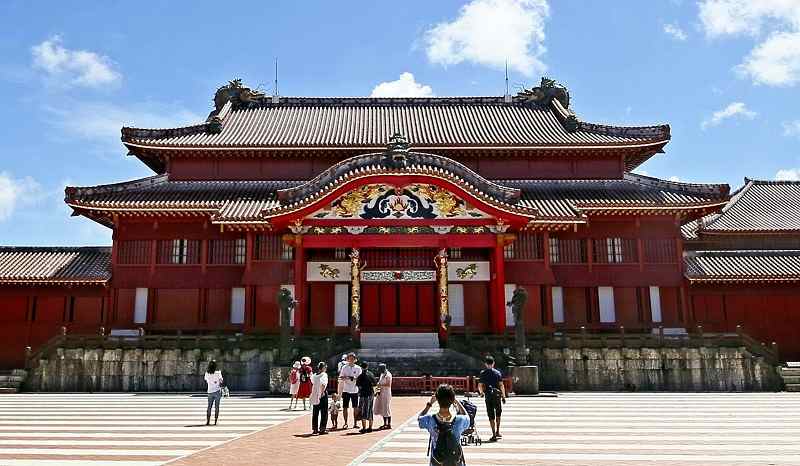
The main hall of Shuri Castle before it was destroyed by fire in 2019.
Shuri Castle is a royal palace that included the administrative headquarters of the Ryukyu Kingdom (1429-1879). It used to be a cultural and artistic center hosting festivals and religious ceremonies. The main hall was designated as a national treasure before World War II, but was destroyed during the war. Restoration work began in 1989, and the castle opened to the public in 1992. In 2000, the ruins of the castle and some other areas were registered by UNESCO as a World Cultural Heritage site.


Related Tags






Most Read
Popular articles in the past 24 hours
-

Ransomware Attacks Hitting Japan's Small, Midsize Firms
-

Japan's Budget on Track for Quick Passage, but Ruling Parties to ...
-

German Journalist Traces Footsteps of Great-Grandfather Who Was P...
-

10 Foreign Tourists Sustain Injuries After Fire at Capsule Hotel ...
-

World Baseball Classic: Venezuela Beats Japan in Nail-biting Back...
-

Rapid Services on JR Chuo Line Suspended; Accident at Kokubunji S...
-

Rapid Services Resume on JR Chuo Line; Suspension Caused by Accid...
-

World Baseball Classic: Red Sox’s Abreu Hits 3-run Homer, Giving ...
Popular articles in the past week
-

Japan Figure Skating Legend Yuzuru Hanyu Is Proud Disaster Surviv...
-

Govt to Utilize ODA for Ensuring Economic Security; Securing Ener...
-
15 Measles Patients Confirmed in Tokyo in Past 6 Days; 1 May Have...
-
Massive Sewer Pipe Found Jutting Out of Highway in Osaka
-

Japan Govt to Tighten Requirements to Receive Permanent Residency...
-
Power Outage Forces About 980 Passengers in Yokohama to Walk to T...
-
JR Tokai Breaks Ground on Yamanashi Maglev Station; Will Be Part ...
-

Parents in Japan to Get Instagram Notifications When Teens Repeat...
Popular articles in the past month
-

Producer Behind Pop Group XG Arrested for Cocaine Possession
-

Japan PM Takaichi’s Cabinet Resigns en Masse
-

Man Infected with Measles Reportedly Dined at Restaurant in Tokyo...
-
Japan Figure Skating Legend Yuzuru Hanyu Is Proud Disaster Surviv...
-

iPS Treatments Pass Key Milestone, but Broader Applications Far f...
-

Sanae Takaichi Elected Prime Minister of Japan; Keeps All Cabinet...
-

South Korea Tightens Rules on Foreigners Buying Homes in Seoul Me...
-

Nepal Bus Crash Kills 19 People, Injures 25 Including One Japanes...
Top Articles in Features
-
Japanese Students Use Traditional Pickle to Create Novel Wagashi Confectionery
-

My Spendthrift Mother Constantly Asks Me for Money
-
Kawazu Cherry Blossoms in Full Bloom in Japan’s Shizuoka Pref.; Festival to Be Held through March 8
-
Tourists Ignore Safety Barriers Near Famous Zao ‘Snow Monsters’ in Japan
-
Tottori: 95-Year-Old Japanese Descendent from Philippines Visits Father’s Grave
JN ACCESS RANKING
-
Producer Behind Pop Group XG Arrested for Cocaine Possession
-
Japan PM Takaichi’s Cabinet Resigns en Masse
-
Man Infected with Measles Reportedly Dined at Restaurant in Tokyo Station
-
Japan Figure Skating Legend Yuzuru Hanyu Is Proud Disaster Survivor and Gold Medalist, Vows to Continue Support Efforts
-
iPS Treatments Pass Key Milestone, but Broader Applications Far from Guaranteed