
Next Federal Reserve Board Chair: Preserving Independence of Monetary Policy Is Vital Priority
17:43 JST, February 1, 2026
U.S. President Donald Trump has been exerting an unprecedented level of pressure for interest rate cuts, jeopardizing the independence of the U.S. Federal Reserve Board.
It is hoped that the Fed’s new chair will firmly maintain the independence of monetary policy, in light of the gravity of the task of stabilizing the U.S. and global economies.
Trump has announced his nomination of former Fed governor Kevin Warsh as the Fed’s next chair. Following his Senate confirmation, Warsh is expected to take office as early as May. His term will be for four years.
Warsh was appointed to the Fed Board of Governors at the young age of 35 in 2006. He is well-versed in the Fed’s policies and operations, having a track record, including experience in the crisis response following the collapse of Lehman Brothers in autumn 2008. He also has extensive experience in both the government and the private financial sector.
The initial front-runner was widely believed to be Kevin Hassett, director of the U.S. National Economic Council, who is known for his strong loyalty to Trump.
However, financial markets were increasingly wary that Hassett would become Trump’s puppet and cause chaos. Trump’s selection of Warsh likely reflected not only Warsh’s extensive expertise but also consideration of these concerns.
Under the dollar-based currency system, the Fed is a key stabilizer for the global economy and international finance. Maintaining confidence in the dollar is also a vital role of the Fed. It is hoped that Warsh will demonstrate his skills.
It is critically important for central banks to remain independent from politics and make policy decisions based on expert judgment. Trump’s pressure on Fed Chair Jerome Powell to cut interest rates is beyond the pale. He has repeatedly insulted Powell and even hinted at firing him.
Shock waves occurred after Powell was put under criminal investigation for allegedly giving false testimony to Congress regarding renovations at the Fed headquarters.
Powell countered, saying that the action “should be seen in the broader context of the administration’s threats and ongoing pressure.” It has become a grave situation, with the heads of central banks around the world, including the European Central Bank, issuing statements supporting Powell.
The U.S. economy is facing a difficult crossroads in deciding whether to prioritize employment and proceed with interest rate cuts or avoid hasty rate cuts to prevent inflation. In January, the Fed forwent rate cuts for the first time in four meetings.
Warsh has indicated a willingness to cut interest rates in recent years, but he used to make remarks that were reluctant toward monetary easing.
With the midterm elections coming in the autumn, curbing inflation should be the administration’s top priority. After assuming the post, it is important for Warsh to make sound judgments by repeatedly and persistently communicating with Trump from the standpoint of an expert while striving to build internal consensus.
(From The Yomiuri Shimbun, Feb. 1, 2026)



Most Read
Popular articles in the past 24 hours
-

Chinese Satellites Pass Over Japan Every 10 Minutes, Monitoring U...
-

Japanese Modernist Artist Koiso’s ‘Long-Lost Masterpiece’ Returns...
-
Espresso Shots, Pricier Wine and an Unbeaten Italy Now Bound for ...
-

M4.4 Earthquake Hits Central Japan’s Gunma Pref.; No Tsunami Expe...
-

Japanese Expert on Arab Cuisine Presents Dish with Whole Fish, Cr...
-

Zelenskiy Says Ukraine Wants Money, Technology in Return for Midd...
-

World Baseball Classic: Venezuela Beats Japan in Nail-biting Back...
-

Rapid Services Resume on JR Chuo Line; Suspension Caused by Accid...
Popular articles in the past week
-

Japan Figure Skating Legend Yuzuru Hanyu Is Proud Disaster Surviv...
-
15 Measles Patients Confirmed in Tokyo in Past 6 Days; 1 May Have...
-
Massive Sewer Pipe Found Jutting Out of Highway in Osaka
-
Japan Govt to Tighten Requirements to Receive Permanent Residency...
-
Power Outage Forces About 980 Passengers in Yokohama to Walk to T...
-
JR Tokai Breaks Ground on Yamanashi Maglev Station; Will Be Part ...
-

Parents in Japan to Get Instagram Notifications When Teens Repeat...
-

Metal Pipe That Protruded 13 Meters Above Ground in Osaka Sinks B...
Popular articles in the past month
-

Producer Behind Pop Group XG Arrested for Cocaine Possession
-

Japan PM Takaichi’s Cabinet Resigns en Masse
-

Man Infected with Measles Reportedly Dined at Restaurant in Tokyo...
-
Japan Figure Skating Legend Yuzuru Hanyu Is Proud Disaster Surviv...
-

iPS Treatments Pass Key Milestone, but Broader Applications Far f...
-

Sanae Takaichi Elected Prime Minister of Japan; Keeps All Cabinet...
-

South Korea Tightens Rules on Foreigners Buying Homes in Seoul Me...
-

Nepal Bus Crash Kills 19 People, Injures 25 Including One Japanes...
Top Articles in Editorial & Columns
-

Riku-Ryu Pair Wins Gold Medal: Their Strong Bond Leads to Major Comeback Victory
-

Reciprocal Tariffs Ruled Illegal: Judiciary Would Not Tolerate President’s High-Handed Approach
-
Japan’s Plan for Investment in U.S.: Aim for Mutual Development by Ensuring Profitability
-
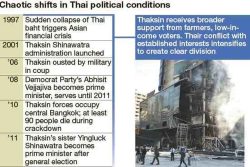
Chronic Issues Erode Thailand’s Economy as Political Confusion Persists, Threatening Terminal Decline in Its Economy
-
Iran Situation: Japan Must Exert Diplomatic Efforts without Merely Standing by
JN ACCESS RANKING
-
Producer Behind Pop Group XG Arrested for Cocaine Possession
-
Japan PM Takaichi’s Cabinet Resigns en Masse
-
Man Infected with Measles Reportedly Dined at Restaurant in Tokyo Station
-
Japan Figure Skating Legend Yuzuru Hanyu Is Proud Disaster Survivor and Gold Medalist, Vows to Continue Support Efforts
-
iPS Treatments Pass Key Milestone, but Broader Applications Far from Guaranteed