
Hakone Ekiden Running Relay Opens Up to More Universities, a Move that may Strengthen Japanese Long-Distance Running
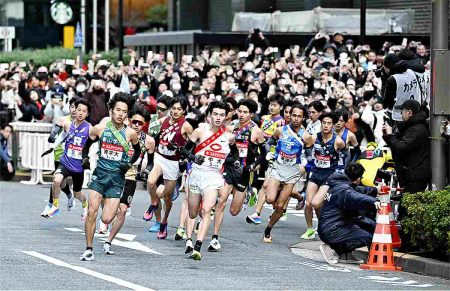
Athletes start the first stage of the 2026 Hakone Ekiden on Jan. 2 in Otemachi, Tokyo.
8:30 JST, January 31, 2026
Watching a live broadcast of the Hakone Ekiden, a long-distance running relay held annually on Jan. 2 and 3, has become a New Year’s tradition in Japan. Reaching its 102nd edition this year, the epic road race among elite college athletes boasts television ratings of around 30% in the Kanto area. This popular sporting event has now embarked on reforms that may benefit Japanese long-distance running as a whole.
Twenty-one university teams participate each year: the top 10 finishers from the previous year’s race, 10 schools that pass the qualifying rounds held every October, and a combined student team of selected athletes whose universities did not qualify. The teams are mainly from universities in the Kanto region around Tokyo, but the new reforms aim to broaden the field.
The course spans 10 stages totaling 217.1 kilometers, running from the Yomiuri Shimbun Building in Otemachi, Tokyo, to the shores of Ashinoko lake in Hakone, Kanagawa Prefecture — and then all the way back. The first day’s outbound leg covers the first five stages from the city to the lake, and the second day’s return leg covers them again in reverse order. A key feature is that the length of each stage is roughly equivalent to a half-marathon. The race uses a light sash called a tasuki instead of a baton, and runners wear it diagonally across their torso as they run.
Particularly exciting and unique are the fifth and sixth stages, which wind along a steep mountain road in Hakone, one of Japan’s premier hot spring resorts. During the Edo period (1603-1867), the mountains of Hakone were called “the most formidable climb in the land” (Tenka no Ken) for travelers on the historic Tokaido road.
Runners on the “mountain-climbing fifth stage” take on this difficult terrain, starting at an elevation of 40 meters, climbing steep slopes, reaching the highest point at 874 meters, and then racing downhill to Ashinoko lake. The sixth stage covers the same ground in reverse, presenting a long downhill run in which the athletes must endure intense impacts on their legs while racing down steep slopes.
This grand and grueling race, Japan’s oldest existing ekiden, was created by Shiso Kanakuri. Kanakuri was Japan’s first Olympian, competing in the men’s marathon at the 1912 Stockholm Olympics. However, in his Olympic debut, he was forced to withdraw unexpectedly due to the intense heat. Having tasted this humiliation, Kanakuri subsequently dedicated his life to developing runners capable of competing on the world stage. In the course of this pursuit, he conceived the Hakone Ekiden.
Preceding the Hakone Ekiden, Japan’s first eki¬den race was held in 1917. The Tokaido Ekiden Foot Race covered approximately 516 kilometers from Kyoto to Tokyo, divided into 23 stages, over a three-day period. The term “ekiden” in the race’s name combined “eki” (station) and “den” (transmission). The second of those two kanji characters alludes to the Edo-period tenma (post horse) system, in which stations were set up along main roads and official documents and cargo were transported by relay using horses and messengers.
The 1917 race pitted an Eastern Japan team against a Western Japan one, with Kanakuri serving as the Eastern team’s anchor runner. Spectators overflowed both sides of the road leading to the finish line at Ueno’s Shinobazu Pond. The welcome was so overwhelming that runners could barely run in a straight line. It was an unexpected frenzy.
This experience convinced Kanakuri that an ekiden event could capture public attention and serve as the ideal training method to cultivate numerous long-distance runners. He then approached university officials, explaining the significance of establishing the ekiden. As a result, four universities — Waseda University, Keio University, Meiji University and Tokyo Higher Normal School (now Tsukuba University) — agreed to participate, and the first Hakone Eki¬den was held in 1920.
Over a century later, fulfilling the core ideal of “From Hakone to the World,” more than 100 runners who experienced the Hakone Ekiden have gone on to compete in the Olympics. The event has also sent over 90 runners to the World Athletics Championships, which began in 1983.
These include Hiromi Taniguchi, a graduate of Nippon Sport Science University, who won the gold medal in the marathon at the championships in Tokyo in 1991. Nobuyuki Sato, a graduate of Chuo University, won the bronze medal in the marathon at the 1999 Seville championships, as did Tsuyoshi Ogata, a graduate of Yamanashi Gakuin University, at the 2005 event in Helsinki.
Among the Japanese athletes competing in men’s long-distance events at recent Olympics and World Athletics Championships, all but a few have participated in the Hakone Ekiden. This event has truly become the gateway for Japanese long-distance runners to soar onto the world stage, just as Kanakuri envisioned.
Live broadcasts by Nippon TV, which began in 1987, significantly boosted the Hakone Ekiden’s profile. With most of Japan taking time off for the New Year’s holiday, the approximately six-hour live broadcasts on Jan. 2 and 3 have fueled the event’s growing popularity year after year. It evolved into one of Japan’s largest sporting events, consistently achieving average viewership ratings of around 30% in the Kanto region.
However, drawbacks associated with the Hakone Ekiden’s prominence also began to be pointed out. The issue was the “concentration of top long-distance talent in the Kanto region.” As the Hakone Ekiden’s popularity soared, the nation’s top high school long-distance runners flocked to universities in the Kanto region. Consequently, the level of universities outside Kanto declined year after year.
Last November, the All Japan University Men’s Ekiden Championship, which determines Japan’s top university team, saw the top 15 spots entirely occupied by Kanto universities. The 16th-place finisher, Kansai University, located in Osaka Prefecture, trailed the 15th-place Kanto team by a staggering 8 minutes and 40 seconds, highlighting the widening gap.
Amid this situation, the organizing body of the Hakone Ekiden announced reform plans for the big race in December 2025. Previously, a “commemorative” ekiden — with an expanded field of teams — was held every five years, but the organizing body has increased the frequency of such expanded races to every four years. Furthermore, they opened the qualifying rounds for commemorative races to universities nationwide. In essence, this is the “nationalization” of the Hakone Ekiden.
Even if commemorative races occur only once every four years, opening participation to all universities nationwide increases the likelihood that non-Kanto universities will embark on serious strengthening programs. Chairman of Hakone Ekiden Management Committee Susumu Hara expressed hope for the development of Japanese long-distance running as a whole: “If more regional universities want to take on the challenge of the Hakone Ekiden, it will contribute to revitalizing their hometowns. More talent aspiring to aim for Hakone will ultimately contribute to the development of Japanese long-distance running.”
The next commemorative race will be the 104th edition in 2028, the year of the Los Angeles Olympics. Coach Tsuyoshi Ogata of Hiroshima University of Economics in Hiroshima Prefecture stated: “No other track and field event garners as much attention as the Hakone Ekiden, boosting enthusiasm among students nationwide. If regional universities genuinely commit to this effort, it would be ideal if it eventually becomes a nationwide annual event.”
Will this reform of “nationalization” every four years lead to permanent nationwide participation? And will it promote the strengthening of Japanese long-distance running as a whole? First, all eyes are on the commitment shown by universities nationwide as they prepare for the 2028 event.
Political Pulse appears every Saturday.
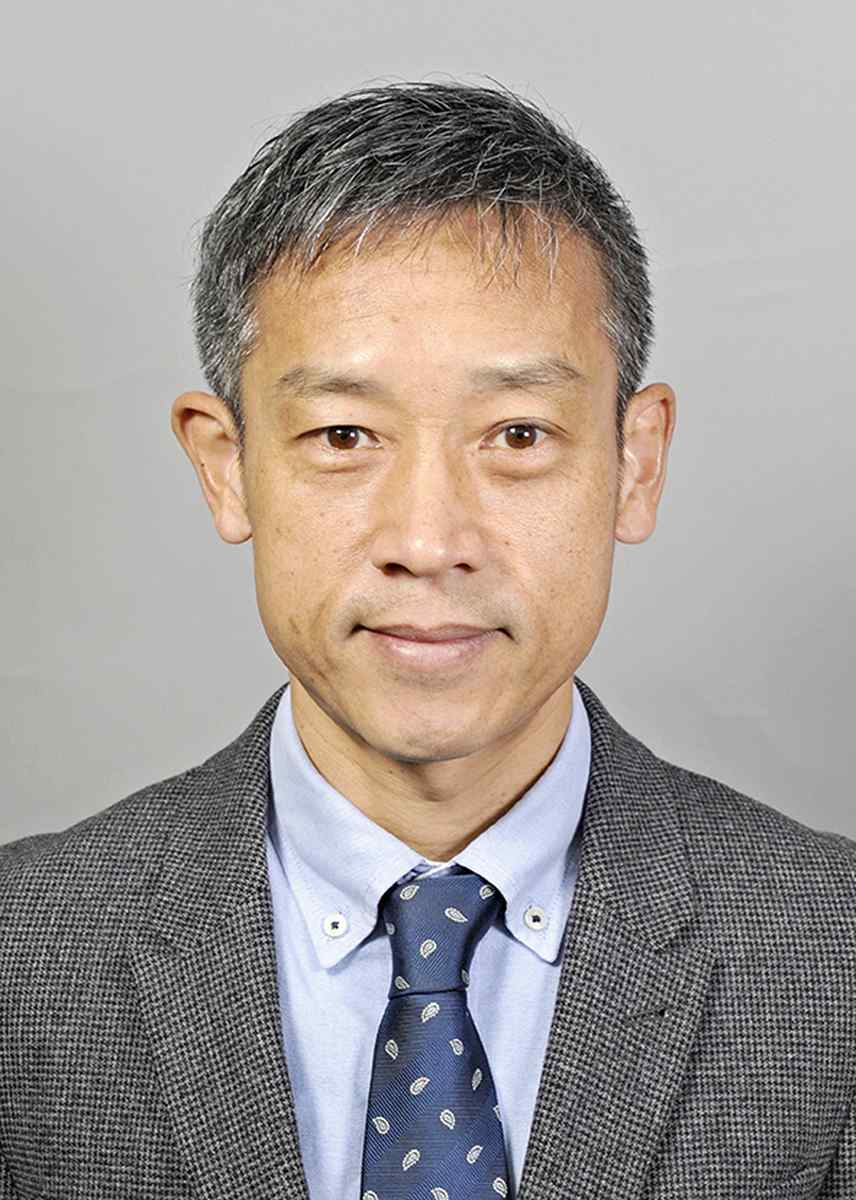
Yuji Kondo
Yuji Kondo is a senior writer in the Sports Department of The Yomiuri Shimbun




Most Read
Popular articles in the past 24 hours
-

10 Foreign Tourists Sustain Injuries After Fire at Capsule Hotel ...
-

World Baseball Classic: Venezuela Beats Japan in Nail-biting Back...
-

Zelenskiy Says Ukraine Wants Money, Technology in Return for Midd...
-
Rapid Services Resume on JR Chuo Line; Suspension Caused by Accid...
-
Rapid Services on JR Chuo Line Suspended; Accident at Kokubunji S...
-

World Baseball Classic: Venezuela Beats Japan in Back-and-Forth Q...
-

World Baseball Classic: Red Sox’s Abreu Hits 3-run Homer, Giving ...
-

Rich Local Ingredients Make Nagato Oden Popular Dish
Popular articles in the past week
-
Japan Figure Skating Legend Yuzuru Hanyu Is Proud Disaster Surviv...
-
15 Measles Patients Confirmed in Tokyo in Past 6 Days; 1 May Have...
-
Massive Sewer Pipe Found Jutting Out of Highway in Osaka
-

Japan Govt to Tighten Requirements to Receive Permanent Residency...
-
Power Outage Forces About 980 Passengers in Yokohama to Walk to T...
-
JR Tokai Breaks Ground on Yamanashi Maglev Station; Will Be Part ...
-

Parents in Japan to Get Instagram Notifications When Teens Repeat...
-
'World's Oldest Bio-Business' Is Japan's Seed Koji Retailing, Mol...
Popular articles in the past month
-

Producer Behind Pop Group XG Arrested for Cocaine Possession
-

Japan PM Takaichi’s Cabinet Resigns en Masse
-

Man Infected with Measles Reportedly Dined at Restaurant in Tokyo...
-
Japan Figure Skating Legend Yuzuru Hanyu Is Proud Disaster Surviv...
-

iPS Treatments Pass Key Milestone, but Broader Applications Far f...
-

Sanae Takaichi Elected Prime Minister of Japan; Keeps All Cabinet...
-

South Korea Tightens Rules on Foreigners Buying Homes in Seoul Me...
-
Nepal Bus Crash Kills 19 People, Injures 25 Including One Japanes...
Top Articles in Editorial & Columns
-

Riku-Ryu Pair Wins Gold Medal: Their Strong Bond Leads to Major Comeback Victory
-

Reciprocal Tariffs Ruled Illegal: Judiciary Would Not Tolerate President’s High-Handed Approach
-
Japan’s Plan for Investment in U.S.: Aim for Mutual Development by Ensuring Profitability
-

Chronic Issues Erode Thailand’s Economy as Political Confusion Persists, Threatening Terminal Decline in Its Economy
-
Iran Situation: Japan Must Exert Diplomatic Efforts without Merely Standing by
JN ACCESS RANKING
-
Producer Behind Pop Group XG Arrested for Cocaine Possession
-
Japan PM Takaichi’s Cabinet Resigns en Masse
-
Man Infected with Measles Reportedly Dined at Restaurant in Tokyo Station
-
Japan Figure Skating Legend Yuzuru Hanyu Is Proud Disaster Survivor and Gold Medalist, Vows to Continue Support Efforts
-
iPS Treatments Pass Key Milestone, but Broader Applications Far from Guaranteed