
Tokyo’s ‘Strawberry War’ Intensifies as Producers Vie to Become ‘Emperor’ of Strawberries
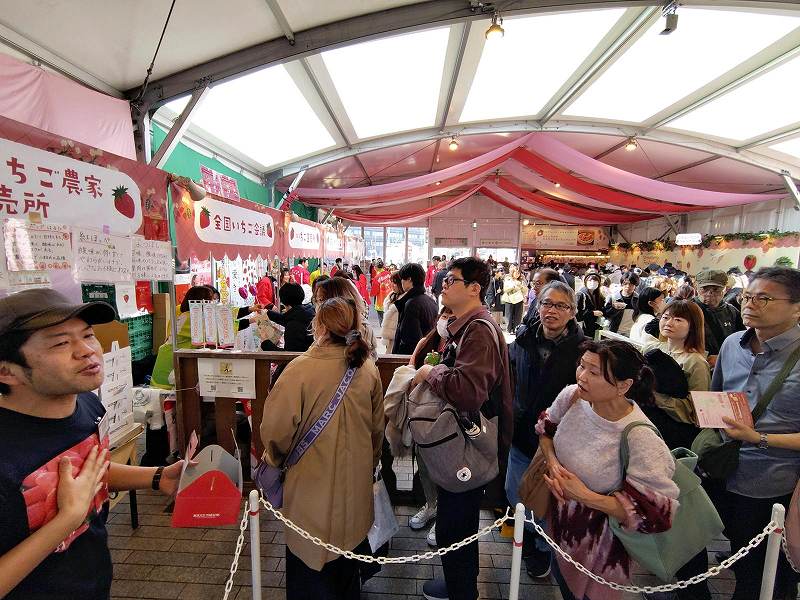
Visitors line up to buy strawberries from various regions at the Yokohama Red Brick Warehouse in Yokohama on Feb. 21.
13:27 JST, February 28, 2026
Major strawberry production regions are in fierce competition to promote their brand of strawberries. With domestic consumption of the fruit declining, they are competing to develop new varieties while sparing no effort to have their brand recognized by urban consumers, enhancing their brand power.
Tochigi Prefecture, known as the “strawberry kingdom,” has cooperated with Ibaraki, Shizuoka and other prefectures to hold events for consumers while Fukuoka Prefecture, which produces high-end strawberries, has held a flashy promotion event in Tokyo’s Ginza district. The situation is beginning to look like an all-out strawberry war.
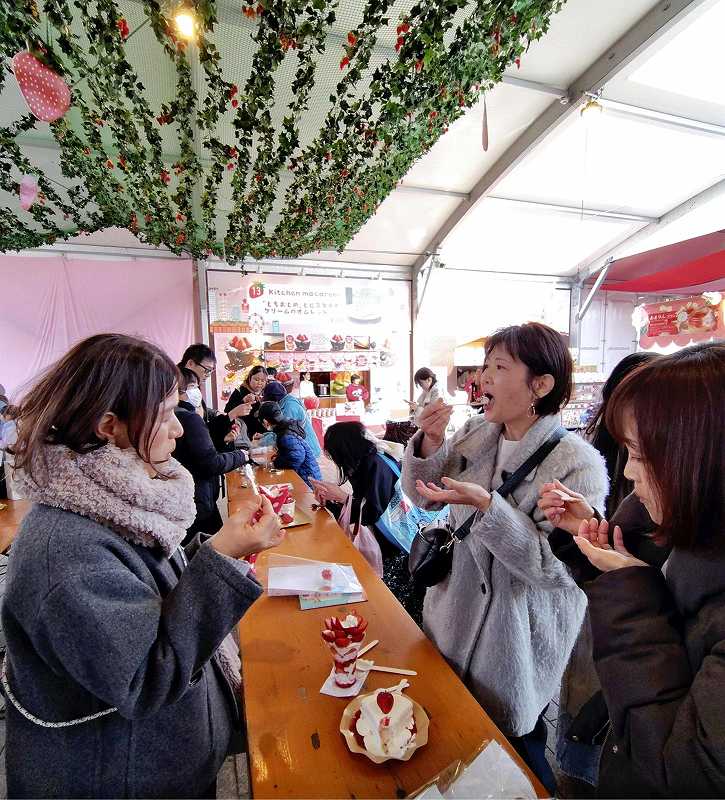
Visitors enjoy cakes, parfaits and crepes using strawberries from various regions at the Yokohama Red Brick Warehouse in Yokohama on Feb. 21.
As part of the Yokohama Strawberry Festival, which started Feb. 5 and will end March 1, various production areas collaborated at an event from Feb. 21-23. Prior to its opening, the director of the Tochigi prefectural government’s agricultural policy department spoke in front of participating representatives. “We may usually be rivals, but let’s work together during these three days to sell, sell, sell strawberries to increase strawberry consumption in Japan,” he said.
The popular strawberry festival attracted about 580,000 visitors last year. Tochigi Prefecture brought its flagship Tochiaika strawberry, aiming to increase its name recognition among consumers through food samples and selling directly to consumers. “The Yokohama Red Brick Warehouse looks great in photos, and we hope that people will talk about Tochiaika on social media,” a prefectural government official said.
Visitors took photos of parfaits and crepes using strawberries from various regions, including Saitama Prefecture’s Amarin variety and compared them with each other. “I came because I wanted to eat sweet strawberries,” said a 36-year-old nurse from Noda, Chiba Prefecture, who visited the event with her family. “I didn’t know there were so many varieties,” she added.
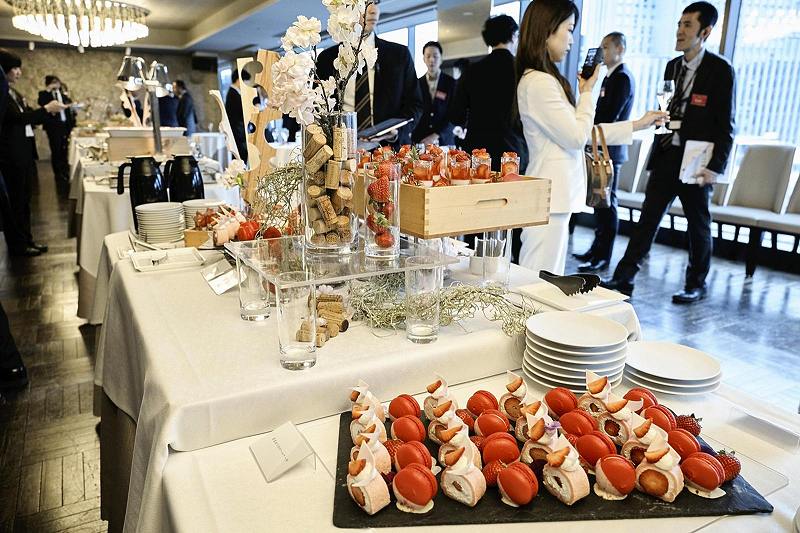
Participants eat various sweets using Amaou strawberries at a promotion event held by Fukuoka Prefecture in Tokyo’s Ginza district.
Domestic strawberry consumption has declined to about 40% of what it was 30 years ago due to various factors including the diversification of tastes. Due to this, Tochigi Prefecture called on the nation’s top 10 strawberry-producing prefectures and created a “national strawberry council” in 2025. It aims increase domestic strawberry consumption by having production areas work together.
Tochiotome strawberries that were the flagship of the prefecture for nearly 30 years have been replaced by Tochiaika, which is a sweeter and firmer variety. The Tochiaika variety has been successful in terms of production, accounting for 90% of strawberry fields in the prefecture. However, it is still not well known among consumers, as evidenced at the festival in Yokohama. Some visitors said things like, “Isn’t Tochigi Prefecture known for its Tochiotome strawberries?”
From January to mid-March this year, the Tochigi prefectural government has held sample tasting and sales events at major station buildings, supermarkets and airports in the Tokyo metropolitan area and the Kansai region. The prefecture has also offered special menu items such as salads and cakes using Tochiaika strawberries. The prefecture has asked influencers and producers of the fruit to help spread the word about Tochiaika strawberries via social media.
On the other hand, Fukuoka Prefecture, the production center of Amaou strawberries, is vying to become the “strawberries kingdom.”
“The competition to develop new varieties is intensifying,” Fukuoka Gov. Seitaro Hattori stressed at an event at the Ginza Six commercial complex in Ginza in late January. “The Amaou variety has been called the ‘king’ for being the highest-priced strawberry for 21 years in a row. Now, we want to make it an ‘emperor.’”
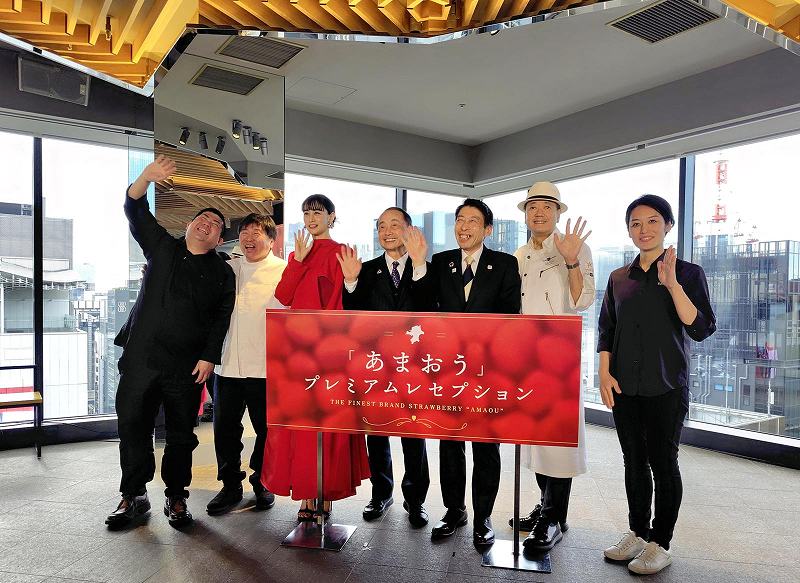
People pose at a promotion event for Fukuoka Prefecture’s Amaou strawberries, attended by famous chefs and celebrities in Chuo Ward, Tokyo, on Jan. 21.
The event was held to promote “Hakata Amaou premium,” the highest grade of Amaou strawberries strictly selected for their sugar content of 11 degrees or higher. Aiming to turn the already established Amaou brand into a premier brand, only about 200 boxes are to be sold at department stores in the Tokyo metropolitan area for more than ¥10,000 per box.
About 100 people participated in the event, including restaurant owners and influencers who were served colorful dishes and cakes using Amaou strawberries. Toshihiko Yoroizuka, a popular patissier invited to the event, said: “Amaou strawberries have a very good balance of sweetness and sourness. While popular strawberry varieties change every 20 years or so, Amaou has maintained its throne for a long time.”
Strawberries are now at their peak for this season.
“This is like a strawberry war. Our biggest rival should be Tochigi Prefecture,” Hattori said to reporters during the event, revealing his true feelings.


Most Read
Popular articles in the past 24 hours
-
Tokyo Spends Big on Children, Wins Over Parents
-

Japan’s Miura, Kihara Announce Withdrawal from Figure Skating Wor...
-
Nidec Chairman Resigns Amid Accounting Scandal at Major Japanese ...
-

Japan's Opposition Parties Largely Absent from Social Security-Re...
-

Hokkaido's Shiretoko Peninsula Offers Unique Drift Ice Walking To...
-

Trump’s Address: Confront the Dead End that Authoritarianism Has ...
-
6 of Japan's Remote Islands to Be Added to Govt List for Priority...
-
JR Kyushu Mulls Using Trains for Concertgoer Lodgings; Performanc...
Popular articles in the past week
-

Producer Behind Pop Group XG Arrested for Cocaine Possession
-

Nepal Bus Crash Kills 19 People, Injures 25 Including One Japanes...
-
Tokyo Skytree's Elevator Stops, Trapping 20 People; All Rescued (...
-
Milano Cortina 2026: Japanese Gold Medalist Figure Skater Miura S...
-

Japan’s Major Real Estate Firms Expanding Overseas Businesses to ...
-

Reciprocal Tariffs Ruled Illegal: Judiciary Would Not Tolerate Pr...
-

Japanese High School Student Aims to Share Kaiten History Through...
-

Milano Cortina 2026: Miura-Kihara Duo, Other Japanese Figure Skat...
Popular articles in the past month
-
Producer Behind Pop Group XG Arrested for Cocaine Possession
-

Japan PM Takaichi’s Cabinet Resigns en Masse
-

Man Infected with Measles Reportedly Dined at Restaurant in Tokyo...
-

Israeli Ambassador to Japan Speaks about Japan’s Role in the Reco...
-

Videos Plagiarized, Reposted with False Subtitles Claiming ‘Ryuky...
-

Man Infected with Measles May Have Come in Contact with Many Peop...
-

Prudential Life Insurance Plans to Fully Compensate for Damages C...
-

Woman with Measles Visited Hospital in Tokyo Multiple Times Befor...
Top Articles in Business
-
Prudential Life Insurance Plans to Fully Compensate for Damages Caused by Fraudulent Actions Without Waiting for Third-Party Committee Review
-

Japan, U.S. Name 3 Inaugural Investment Projects; Reached Agreement After Considerable Difficulty
-
Toyota Motor Group Firm to Sell Clean Energy Greenhouses for Strawberries
-
Japan’s Major Real Estate Firms Expanding Overseas Businesses to Secure Future Growth, Focusing on Europe, U.S., Asia
-

SoftBank Launches AI Service for Call Centers That Converts Harsh Customer Voices into Softer Voices
JN ACCESS RANKING
-
Producer Behind Pop Group XG Arrested for Cocaine Possession
-
Japan PM Takaichi’s Cabinet Resigns en Masse
-
Man Infected with Measles Reportedly Dined at Restaurant in Tokyo Station
-
Israeli Ambassador to Japan Speaks about Japan’s Role in the Reconstruction of Gaza
-
Videos Plagiarized, Reposted with False Subtitles Claiming ‘Ryukyu Belongs to China’; Anti-China False Information Also Posted in Japan