
Fiji Defense Minister: Strategic Competition Puts Pressure on Pacific States to Take Sides
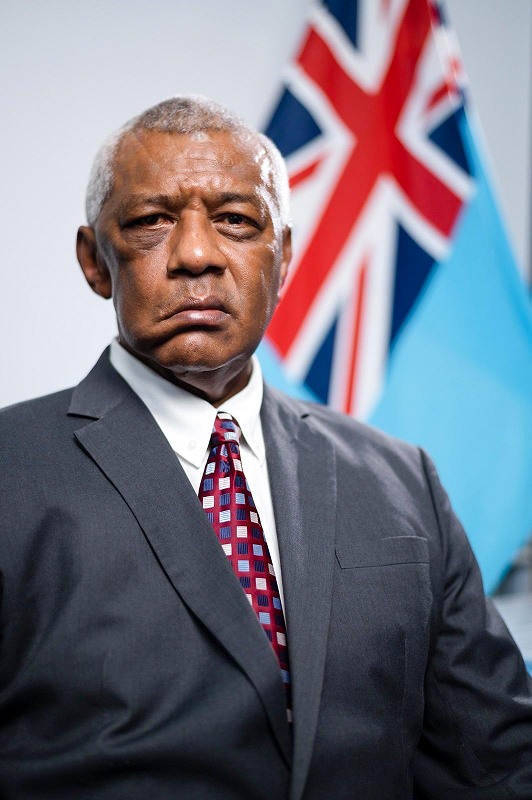
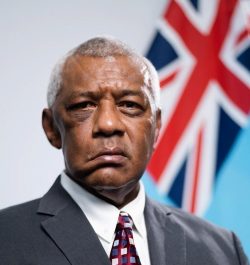
Fiji’s Defence and Veteran Affairs Minister Pio Tikoduadua
16:28 JST, February 22, 2026
The following is excerpted from a written interview with Fiji’s Defence and Veteran Affairs Minister Pio Tikoduadua by The Yomiuri Shimbun.
At the 3rd Japan Pacific Islands Defense Dialogue (JPIDD) in Tokyo, I want practical discussions that improve outcomes on the water and in communities: maritime domain awareness and information sharing, coordinated humanitarian assistance and disaster relief, and stronger interoperability for search and rescue and emergency response. I also want to discuss how partners can support Pacific priorities through capability development, training and maintenance support, not just through equipment.
Fiji faces a mix of traditional and non-traditional security pressures. Key challenges include transnational crime, illicit drugs, illegal fishing, border and maritime enforcement across a very large ocean area, cyber risks and the increasing severity of climate and disaster impacts. We are addressing these through a whole-of-government approach under Fiji’s National Security Strategy 2025-2029, strengthening coordination, improving maritime enforcement and safety systems, and building partnerships that deliver real operational capability.
Across the Pacific, the biggest challenge is that climate and disaster risks are rising while strategic competition is intensifying. That combination strains national capacity and regional unity. The region also faces persistent threats from transnational crime, IUU (illegal, unreported and unregulated) fishing and vulnerabilities in critical infrastructure, including communications and energy. As host of the Pacific Islands Forum Secretariat, Fiji supports a regional security outlook that protects sovereignty, supports unity and keeps the Pacific at the center of Pacific decisions.
Strengthening defense capability
Our approach is capability-based and realistic. We will prioritize maritime surveillance, coastal patrol and response, mobility, engineering and disaster response, and the systems that enable joint operations across our security agencies. We will keep strengthening professional standards, training, maintenance and logistics, because readiness depends on sustainment as much as it depends on new assets. Fiji’s national planning is guided by the National Security Strategy, and our maritime settings are being further strengthened through the development of Fiji’s Maritime Security Strategy.
Fiji contributes through practical cooperation: joint training and exercises, rapid response support during disasters, and peacekeeping experience and professionalism that strengthens regional security culture. We will continue to deepen cooperation with Australia and New Zealand, and with Pacific partners through the Pacific Islands Forum family, focusing on information sharing, coordinated operations and common standards for maritime and disaster response.
Fiji-Japan cooperation
Fiji assesses Japan’s defense cooperation positively because it is focused on capability, safety, and operational needs. Japan’s Official Security Assistance has been structured to strengthen Fiji’s monitoring, surveillance and disaster relief capability through patrol boats and related equipment, and it reflects Japan’s growing commitment to Pacific security needs in a way that is transparent and aligned with our priorities.
I would like to deepen cooperation in three practical areas. First, maritime domain awareness and information sharing, including training and systems support. Second, humanitarian assistance and disaster relief readiness, including search and rescue and medical and logistics support. Third, sustainment and workforce development, including technical training, maintenance support and long-term capability planning, so that the assets we receive remain operational and effective.
China, U.S. in Pacific region
Fiji’s position is simple. We will engage with all partners, including China, where it serves Fiji’s interests, but we will safeguard our sovereignty, our democratic institutions and our national decision making. Fiji has been clear publicly about concerns where foreign security arrangements can create strategic risk or undermine trust and accountability. We will make decisions based on Fiji’s national interest and our regional responsibilities, and we expect all partners to respect Pacific sovereignty and Pacific priorities.
Fiji values long-standing cooperation with the United States, including on security and disaster response, but we also pay close attention to global policy shifts that affect small states. When U.S. strategy places heavier emphasis on the Western Hemisphere, it is natural for Pacific partners to seek clarity on sustained U.S. engagement in the Indo-Pacific. On trade, higher tariffs and uncertainty in major economies can have downstream effects on inflation, shipping costs and growth, which matter for the Pacific. Our approach is to keep working with the United States as a partner, while ensuring Fiji remains resilient through diversified partnerships and strong regional coordination.
Strategic competition increases the pressure on Pacific states to take sides, and it can complicate regional consensus. Fiji’s view is that Pacific unity is not about uniformity. It is about shared principles: sovereignty, transparency, non-coercion and decisions made in the interests of Pacific people. We should strengthen regional mechanisms and norms so that external engagement supports regional priorities rather than fragmenting them.
Japan can play a stabilizing role by staying consistent, practical and respectful of Pacific leadership. I would like Japan to continue supporting maritime safety and enforcement capacity, disaster response readiness and regional institutions, including through training and long-term sustainment support. I also encourage Japan to keep engaging the region through dialogues like JPIDD and to align its security cooperation with Pacific priorities and the region’s shared interest in a stable, open and rules-based environment.


Related Tags




Most Read
Popular articles in the past 24 hours
-
Business Hotels Expanding into Regional Areas in Japan, Aiming to...
-
Milano Cortina 2026: Japan Sees Leap in Olympic Performance Throu...
-

Milano Cortina 2026: Japan's Satoshi Furuno Places 4th in Men's S...
-
Fiji Defense Minister Hopes Japan Will Support Stabilization of P...
-

Milano Cortina 2026: Speed Skater Takagi Finishes 6th in the 1,50...
-
6 Injured at Naked Festival in Japan’s Okayama Prefecture; Police...
-

Milano Cortina 2026: Malinin Highlights Dangers of Social Media i...
-
3rd Japan Pacific Islands Defense Dialogue to Begin in Tokyo on S...
Popular articles in the past week
-

Japan PM Takaichi’s Cabinet Resigns en Masse
-

Man Infected with Measles Reportedly Dined at Restaurant in Tokyo...
-

Sanae Takaichi Elected Prime Minister of Japan; Keeps All Cabinet...
-

Japan's Govt to Submit Road Map for Growth Strategy in March, PM ...
-

Bus Carrying 40 Passengers Catches Fire on Chuo Expressway; All E...
-

Milano Cortina 2026: Figure Skaters Riku Miura, Ryuichi Kihara Pa...
-

Japan, U.S. Name 3 Inaugural Investment Projects; Reached Agreeme...
-
U.S. Firm to Build Training Hub in Fukushima N-plant for Debris R...
Popular articles in the past month
-
Japan PM Takaichi’s Cabinet Resigns en Masse
-

Japan Institute to Use Domestic Commercial Optical Lattice Clock ...
-

Israeli Ambassador to Japan Speaks about Japan’s Role in the Reco...
-
Man Infected with Measles Reportedly Dined at Restaurant in Tokyo...
-

Videos Plagiarized, Reposted with False Subtitles Claiming ‘Ryuky...
-

Man Infected with Measles May Have Come in Contact with Many Peop...
-

Prudential Life Insurance Plans to Fully Compensate for Damages C...
-

Woman with Measles Visited Hospital in Tokyo Multiple Times Befor...
Top Articles in World
-
Israeli Ambassador to Japan Speaks about Japan’s Role in the Reconstruction of Gaza
-
Videos Plagiarized, Reposted with False Subtitles Claiming ‘Ryukyu Belongs to China’; Anti-China False Information Also Posted in Japan
-
North Korea Possibly Launches Ballistic Missile
-
Chinese Embassy in Japan Reiterates Call for Chinese People to Refrain from Traveling to Japan; Call Comes in Wake of ¥400 Mil. Robbery
-
Russia: Visa Required for Visiting Graves in Northern Territories, Lifting of Sanctions Also Necessary
JN ACCESS RANKING
-
Japan PM Takaichi’s Cabinet Resigns en Masse
-
Japan Institute to Use Domestic Commercial Optical Lattice Clock to Set Japan Standard Time
-
Israeli Ambassador to Japan Speaks about Japan’s Role in the Reconstruction of Gaza
-
Man Infected with Measles Reportedly Dined at Restaurant in Tokyo Station
-
Videos Plagiarized, Reposted with False Subtitles Claiming ‘Ryukyu Belongs to China’; Anti-China False Information Also Posted in Japan