
Toilet Vehicles Provide Comfort During Disaster; Vehicles Popular with Evacuees Due to Cleanliness, Comfort
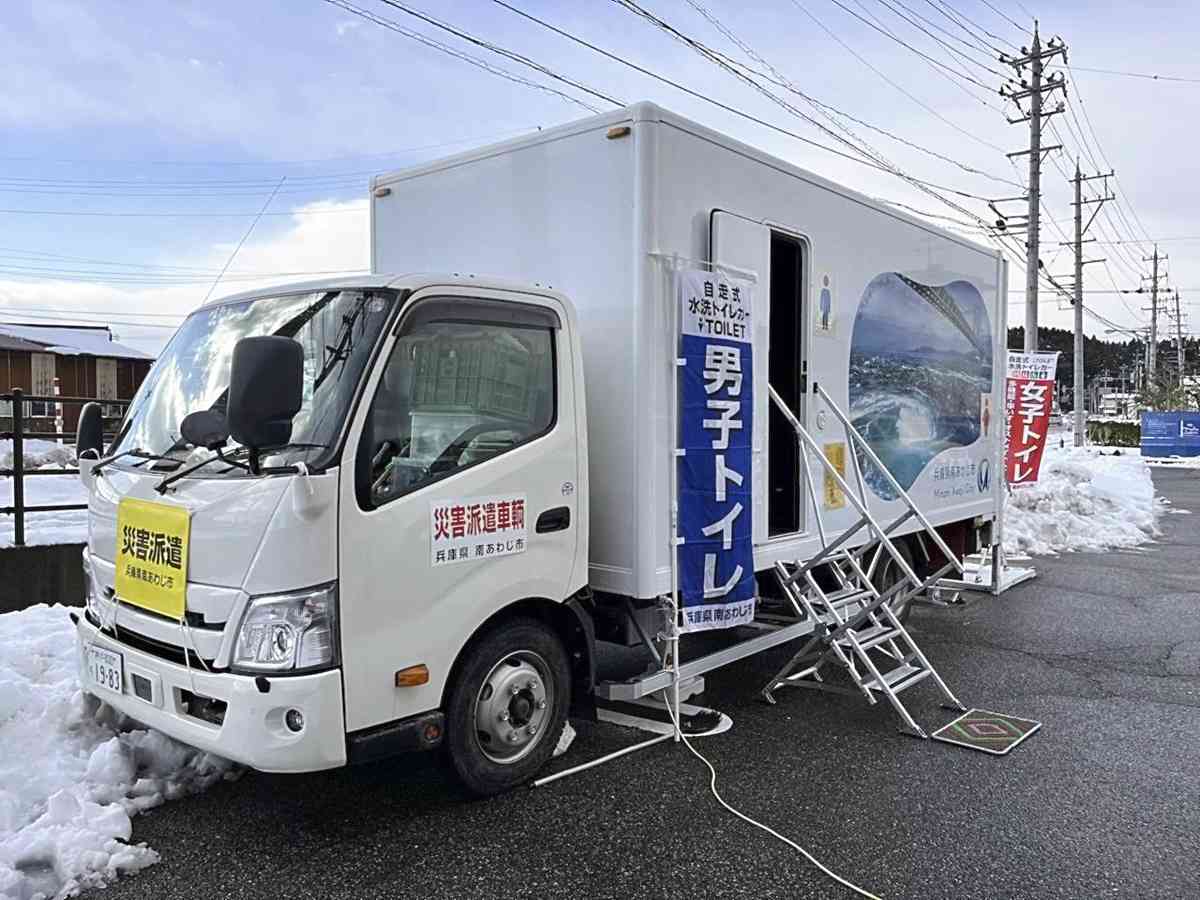
A toilet vehicle owned by the city government of Minami-Awaji, Hyogo Prefecture
12:24 JST, February 16, 2026
SUMOTO, Hyogo — More and more local governments nationwide are introducing vehicles equipped with toilet facilities to be used in evacuation centers during disasters.
The vehicles attracted attention in the wake of the 2024 Noto Peninsula Earthquake. Despite the disaster, the technology, equipped with air conditioning, heaters and heated toilet seats, ensured a comfortable restroom environment.
As of November 2024, only 37 such vehicles had been acquired by local governments across the country, according to a survey conducted by the Cabinet Office.
The central government began subsidizing half of the vehicles’ installation costs in November 2024, which accelerated adoption, with 108 municipalities receiving subsidies for a total of 231 units in fiscal 2024.
According to toilet vehicle manufacturer Montelion Co., annual orders surged in fiscal 2025 from just a few units to about 250 units in around 150 municipalities. The company, which is based in Kurate, Fukuoka Prefecture, is increasing its staff and building new factories to cope with the surge in orders, a company official said.
In preparation for a possible Nankai Trough earthquake, the city of Minami-Awaji in Hyogo Prefecture was quick to acquire a toilet vehicle, purchasing a unit in November 2020 for about ¥15.8 million. The vehicle is equipped with two men’s toilets and two women’s toilets, as well as one for people with particular needs. It was dispatched for about five months to the areas affected by the Noto earthquake.
Municipal governments with toilet vehicles have signed an agreement to dispatch them to each other when a disaster strikes. Minami-Awaji signed the agreement with Uwajima in Ehime Prefecture and Shimabara in Nagasaki Prefecture in 2023. The agreement has now been expanded to include nine municipalities in seven prefectures, including Katano, Osaka Prefecture, and Iwaki, Fukushima Prefecture. Matsuyama, which acquired three toilet vehicles for ¥33 million in total in October, is scheduled to join the agreement by the end of March.
Vital for maintaining health
According to a survey by Japan Toilet Labo, a nonprofit organization based in Tokyo, when the Noto earthquake hit, nearly 90% of people needed to go to the toilet within six hours. However, only one of 10 evacuation centers surveyed had temporary toilets completed within three days, the NPO said.
It is essential to build toilets quickly in the event of a disaster.
Water outages continued in many areas after the earthquake. As a result, toilets at evacuations centers would not flush, which made it very difficult for people to use them.
“Some people ended up cutting back on their fluid intake in an attempt to reduce frequency of going to the toilet, which caused them to suffer from constipation,” said Atsushi Kato, representative director of the NPO, who visited the disaster area.
Reducing water intake increases the risk of myocardial infarction and, in a worst-case scenario, is believed to increase the risk of disaster-related death.
In the two months immediately following the Noto earthquake, around 15 toilet vehicles were sent to affected areas where roads were still intact. The vehicles gained popularity because they were clean and comfortable, with people happily using the toilet comfortably.
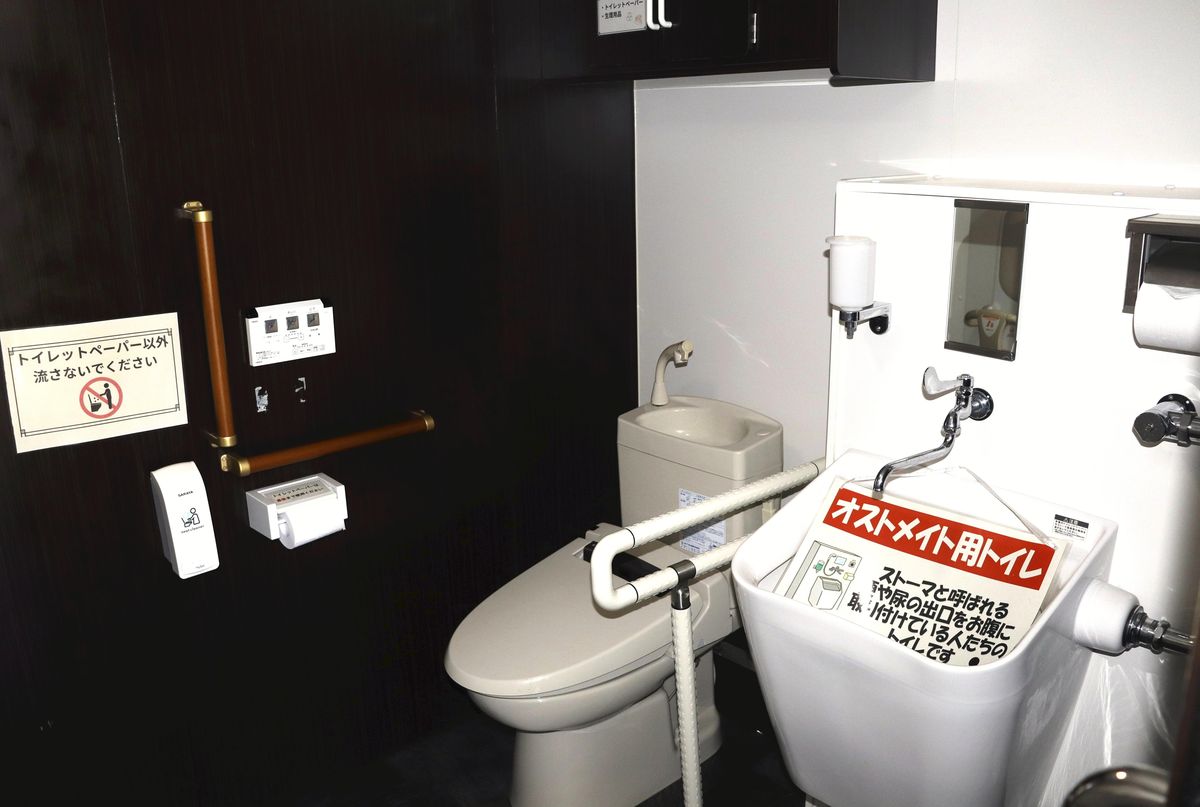
A vehicle equipped with a toilet for people with particular needs in Minami-Awaji, Hyogo Prefecture
Even in normal times
With the cost for acquiring the vehicles being so high, one task is to find ways to utilize them during normal times. Many municipalities are using the vehicles in disaster preparedness awareness events for residents and other events.
In September, a multipurpose toilet vehicle was acquired by the Anan city government in Tokushima Prefecture. The vehicle can also be used to transport people and supplies even during normal times.
Nevertheless, toilet vehicles alone will not be enough to meet the toilet needs of evacuees.
“It’s important to gradually put into place a system where toilet vehicles can be used in combination with temporary and portable toilets,” Kato said.


Related Tags

Most Read
Popular articles in the past 24 hours
-

Warning Issued After Fake Social Media Account Impersonating Nobe...
-

G7 Foreign Ministers Meet for Talks in Munich, Discussing Situati...
-

Milano Cortina 2026: Miho Takagi Won Bronze in Women’s 500-...
-

High-Hydration Bread on the Rise, Seeing Increase in Specialty Sh...
-

Reform of Retrial System: Diet Must Thoroughly Discuss Remedies f...
-

Sony's Entertainment Focus Becomes Even Clearer; Shift Away from ...
-

Milano Cortina 2026: Japan’s Ikuma Horishima Wins Silver in...
-

Milano Cortina 2026: Ren Nikaido Takes ‘Disappointing’ Silver in ...
Popular articles in the past week
-

Prudential Life Insurance Plans to Fully Compensate for Damages C...
-

Woman with Measles Visited Hospital in Tokyo Multiple Times Befor...
-

Woman with No Overseas Travel History Infected with Measles in Na...
-
Measles Patient Flew Between Tokyo, Hokkaido in Late January; Lik...
-

Videos Plagiarized, Reposted with False Subtitles Claiming ‘Ryuky...
-

Milano Cortina 2026: Kokomo Murase Comes Out on Top After Overcom...
-
CRA Leadership Election Will Center on Party Rebuilding; Lower Ho...
-
Crime in Japan Ticks Up for 4th Straight Year
Popular articles in the past month
-

Japan Institute to Use Domestic Commercial Optical Lattice Clock ...
-

Israeli Ambassador to Japan Speaks about Japan’s Role in the Reco...
-

Man Infected with Measles May Have Come in Contact with Many Peop...
-
China Eyes Rare Earth Foothold in Malaysia to Maintain Dominance,...
-
Prudential Life Insurance Plans to Fully Compensate for Damages C...
-
Woman with Measles Visited Hospital in Tokyo Multiple Times Befor...
-
Australian Woman Dies After Mishap on Ski Lift in Nagano Prefectu...
-
Foreign Snowboarder in Serious Condition After Hanging in Midair ...
Top Articles in Society
-
Man Infected with Measles May Have Come in Contact with Many People in Tokyo, Went to Store, Restaurant Around When Symptoms Emerged
-
Woman with Measles Visited Hospital in Tokyo Multiple Times Before Being Diagnosed with Disease
-
Australian Woman Dies After Mishap on Ski Lift in Nagano Prefecture
-
Foreign Snowboarder in Serious Condition After Hanging in Midair from Chairlift in Nagano Prefecture
-
Record-Breaking Snow Cripples Public Transport in Hokkaido; 7,000 People Stay Overnight at New Chitose Airport
JN ACCESS RANKING
-
Japan Institute to Use Domestic Commercial Optical Lattice Clock to Set Japan Standard Time
-
Israeli Ambassador to Japan Speaks about Japan’s Role in the Reconstruction of Gaza
-
Man Infected with Measles May Have Come in Contact with Many People in Tokyo, Went to Store, Restaurant Around When Symptoms Emerged
-
Prudential Life Insurance Plans to Fully Compensate for Damages Caused by Fraudulent Actions Without Waiting for Third-Party Committee Review
-
Woman with Measles Visited Hospital in Tokyo Multiple Times Before Being Diagnosed with Disease