
Inclusive Society / Cultural Barriers Between Japanese, Non-Japanese Made Lower through Musical Activities, Sports
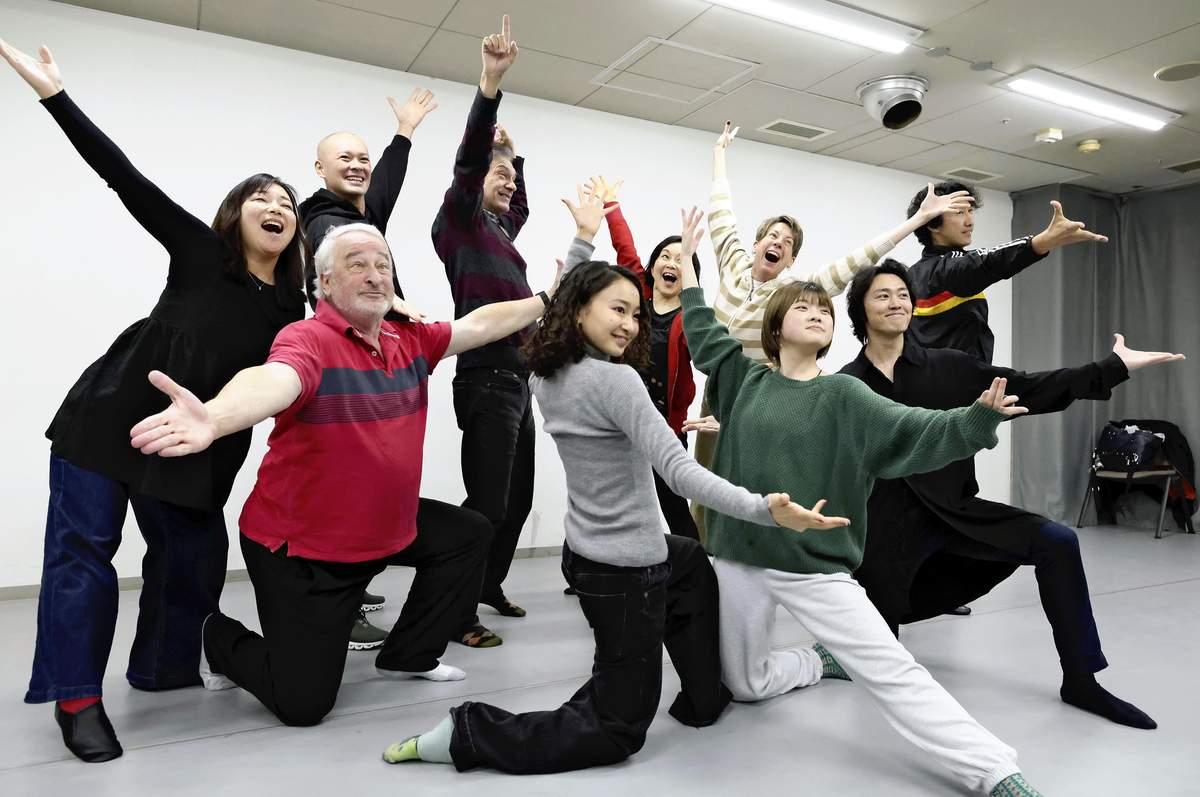
Performers rehearse for a musical about relatable stories for foreign residents in Japan in Nishi Ward, Yokohama.
7:00 JST, January 11, 2026
The number of foreign residents living in Japan is at a record high and continuing to rise. While foreign residents are seen as valuable for the labor force, xenophobic sentiments are spreading on social media. This is the second installment in a series that explores a path toward the coexistence of Japanese and foreigners rather than toward division.
***
Three chicken nuggets and three French fries — this may sound like a fast food order, but it’s not. This is reportedly used as a standard method for foreigners living in Japan to remember the kanji for Shinagawa by visualizing the shapes of familiar foods.
A musical titled “That’s It! Aru-Aru!!,” which features such relatable experiences for foreigners in Japan and the cultural and habitual differences they face, will be performed in Yokosuka, Kanagawa Prefecture, in February. The musical was organized by Kazuko Okamoto, 53, an actor from the city who was previously part of the Shiki Theatre Company, among other companies. About 30 participants, including Americans and Japanese high school students, are rehearsing for the performance.
Okamoto came up with the idea for the musical after learning about a show staged at the Yokosuka Naval Base where performers sing about common experiences in Japan set to the melodies of famous musical songs. She began composing songs in 2017, and the musical was staged for the first time in February last year.
The musical also depicts the struggles of children who have a parent of foreign origin.One of the performers is Sakurako Aisling Hemington, 17, a third-year senior high school student from Yokosuka with a British father and a Japanese mother.
“I’ve been bullied and told I looked different from Japanese people,” she said. “I’ve never talked about my experiences before, but I hope people can relate.”
George Morris, 68, a former member of the United States Navy Band, said performers are able to share their feelings with the audience because the piece is created by people from a variety of backgrounds.
Okamoto said: “If you don’t know about someone well, you might feel scared. If we can know about each other even a little more, maybe we can live with warmer feelings.”
Some Japanese people find it difficult to start conversations with foreigners in daily life, however, cultural, artistic and sports activities — which allow participation beyond language and cultural differences — are opportunities for exchange.
In November, an exchange event was held in Toyota, Aichi Prefecture, between about 40 members of the U18 squad of the J1 League’s Nagoya Grampus and about 30 elementary school students with Brazilian origins from the area. The soccer players planned and ran the event, which was also attended by about 15 Japanese children living in the area.
“Does anyone have a handkerchief?” read the board. For the scavenger hunt at the event, which was held at Homi Junior High School in the city, half of the items on the board were written in Japanese and the rest were in Portuguese.
The players prepared for the exchange by visiting the area, where Brazilians make up about half the population, and learning about the children’s current situation.
The area saw a rapidly increasing number of Brazilian workers, mostly in the auto industry, from around 1990. Due mainly to differences in customs, issues have arose over noise, garbage and other matters. Even today, mutual understanding in the area remains essential.
Nagoya Grampus, which has a training facility in the area, launched a project for Brazilian children in Japan in 2024, in an effort to address issues that come up for multicultural coexistence. The exchange event was held as part of this initiative.
“I initially felt some barriers toward a different culture, but they gradually disappeared as I got to know the children’s situation,” said team captain Yuto Nomura, 18.
Miriam Doi, 64, a second-generation Japanese Brazilian, has a grandchild who took part in the event. She said she experienced discrimination and various barriers when she began living in the country about 30 years ago.
“As I observe the children, I feel like such barriers gradually became lower and smaller,” she said.


Related Tags


Most Read
Popular articles in the past 24 hours
-

Iran Situation: Japan Must Exert Diplomatic Efforts without Merel...
-
Measles Patient Visited Hospital in Bunkyo Ward, Tokyo, Metropoli...
-
2 Unpublished Early Novellas by Japan's Kenzaburo Oe Discovered, ...
-

Prime Minister Sanae Takaichi to Visit Fukushima Pref. on 15th An...
-
Milano Cortina 2026: Japanese Figure Skater Miura Returns to Home...
-
Takayama Among World's Top 10 Most Welcoming Cities for 2026; 2nd...
-
Pass Rate for Overseas Driver's License Conversion Test in Japan ...
-
Former Nomura Securities Employee Given 18-year Prison Sentence f...
Popular articles in the past week
-
Milano Cortina 2026: Japanese Gold Medalist Figure Skater Miura S...
-
Tokyo Spends Big on Children, Wins Over Parents
-
Japan’s Miura, Kihara Announce Withdrawal from Figure Skating Wor...
-

Yokohama to Test Out Renewable-Powered Offshore Floating Data Cen...
-
BOJ Keeping Eye on Economy and Takaichi's ‘Proactive Fiscal Polic...
-
Tokyo Measles Patient Traveled to Fukuoka Aboard JAL Planes; Susp...
-
Japan’s Takaichi Speaks on New U.S. Tariff in Upper House, Says P...
-

South Korea Tightens Rules on Foreigners Buying Homes in Seoul Me...
Popular articles in the past month
-

Producer Behind Pop Group XG Arrested for Cocaine Possession
-

Japan PM Takaichi’s Cabinet Resigns en Masse
-

Man Infected with Measles Reportedly Dined at Restaurant in Tokyo...
-

Israeli Ambassador to Japan Speaks about Japan’s Role in the Reco...
-

Videos Plagiarized, Reposted with False Subtitles Claiming ‘Ryuky...
-

Prudential Life Insurance Plans to Fully Compensate for Damages C...
-

Woman with Measles Visited Hospital in Tokyo Multiple Times Befor...
-

iPS Treatments Pass Key Milestone, but Broader Applications Far f...
Top Articles in Society
-
Producer Behind Pop Group XG Arrested for Cocaine Possession
-
Man Infected with Measles Reportedly Dined at Restaurant in Tokyo Station
-
Woman with Measles Visited Hospital in Tokyo Multiple Times Before Being Diagnosed with Disease
-

Bus Carrying 40 Passengers Catches Fire on Chuo Expressway; All Evacuate Safely
-
Tokyo Skytree’s Elevator Stops, Trapping 20 People; All Rescued (Update 1)
JN ACCESS RANKING
-
Producer Behind Pop Group XG Arrested for Cocaine Possession
-
Japan PM Takaichi’s Cabinet Resigns en Masse
-
Man Infected with Measles Reportedly Dined at Restaurant in Tokyo Station
-
Israeli Ambassador to Japan Speaks about Japan’s Role in the Reconstruction of Gaza
-
Videos Plagiarized, Reposted with False Subtitles Claiming ‘Ryukyu Belongs to China’; Anti-China False Information Also Posted in Japan