
Okayama: Experience Life as a Leprosy Patient Quarantined in Japan’s Seto Inland Sea at Newly Opened Facility
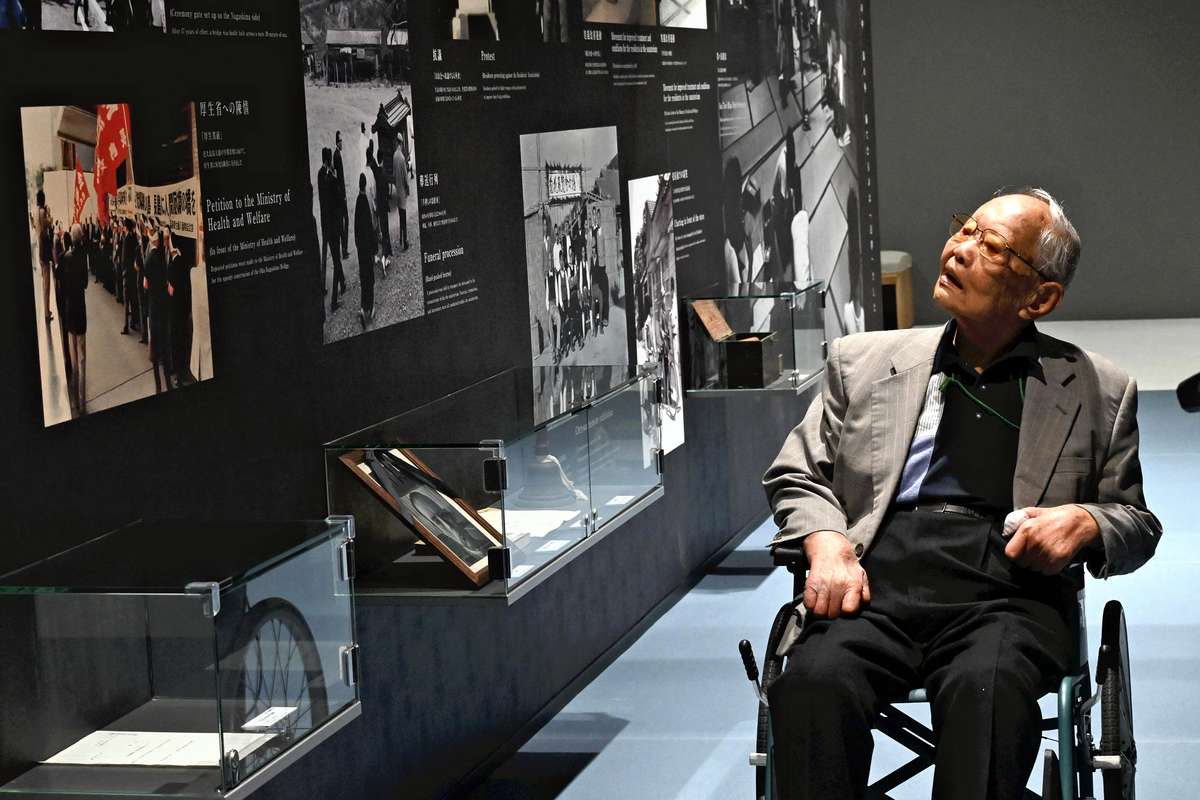
Shinji Nakao looks at the panels on display at Densho Aisei-kan on Nov. 10 in Setouchi, Okayama Prefecture.
11:07 JST, December 27, 2025
SETOUCHI, Okayama — An experience-based facility recently opened that allows visitors to experience how it felt to be a leprosy patient isolated in Japan’s first national leprosy sanatorium on an island in the Seto Inland Sea, in accordance with national law at the time.
Densho Aisei-kan is designed to preserve the memories of residents at the National Sanatorium Nagashima Aisei-en, who have now become too old to share their experiences. The new facility will play a role in passing down the history of this infringement of human rights and ensure such mistakes are never repeated.
“It was a long time before I could think it was beautiful,” said Shinji Nakao, 91, who heads the residents’ association, looking at a large photo panel put up at the entrance of the new facility.
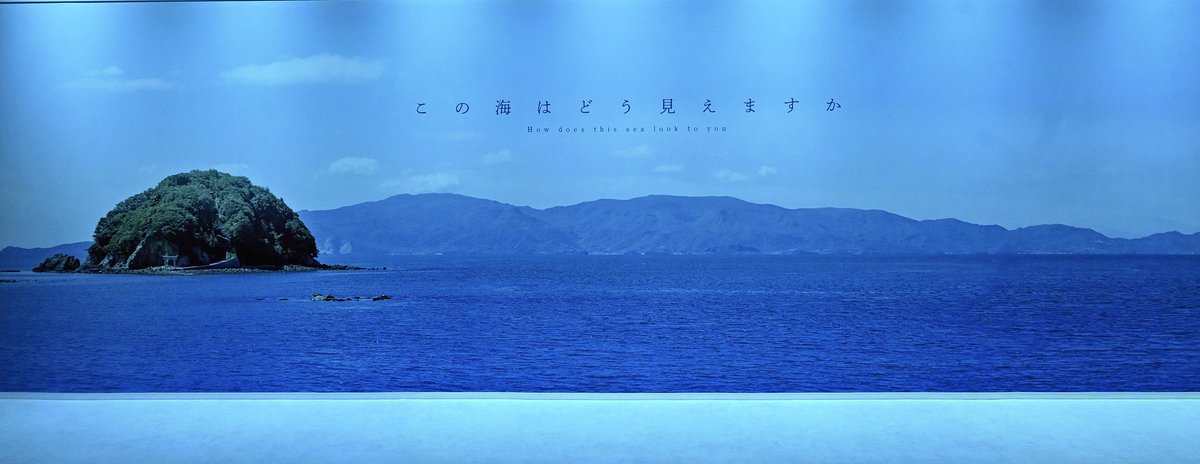
A panel depicting a view of the Seto Inland Sea from National Sanatorium Nagashima Aisei-en.
It is a photo of the Seto Inland Sea seen from the sanatorium.
“It looks beautiful at first glance, but we want visitors to understand that this sea was also a huge ‘wall’ preventing the residents from returning to their hometowns,” Tomohisa Tamura, curator at the Nagashima Aisei-en historical museum, said.
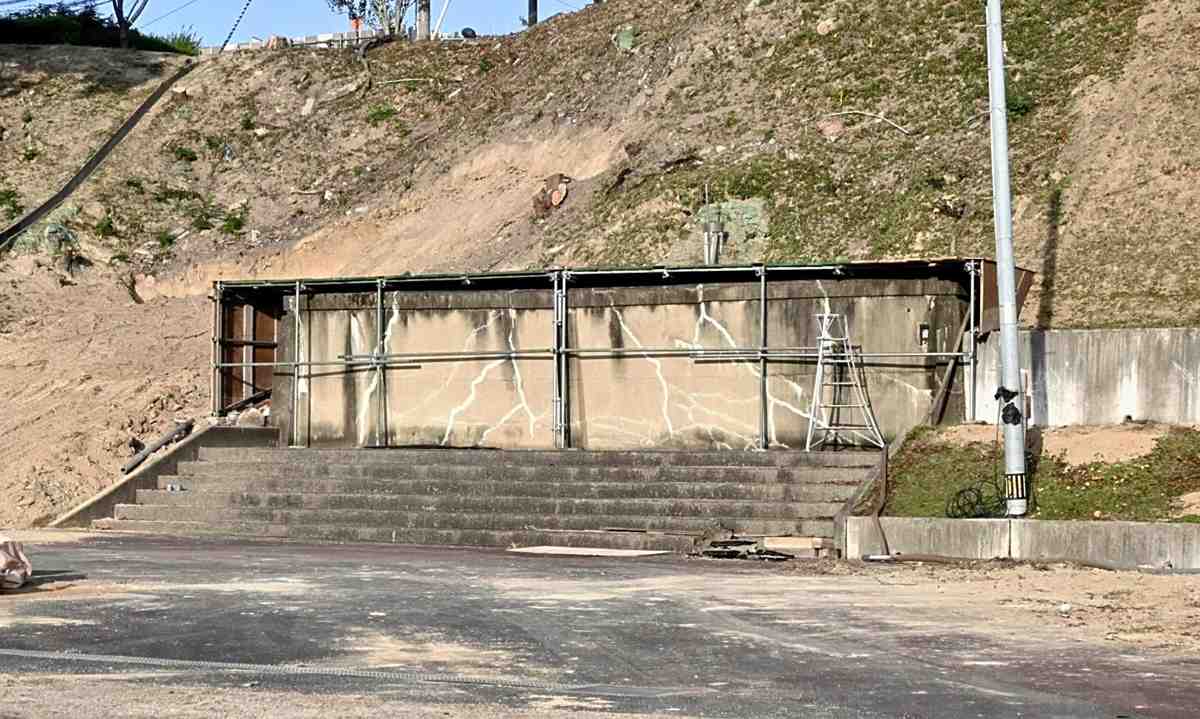
The site of the “dungeon” where residents who attempted to escape and were recaptured were confined.
The historical museum, built in 2003, is housed within the sanatorium and introduces the history of leprosy through preserved video materials and panel displays. Densho Aisei-kan adopts a new theme: Allowing visitors to vicariously experience the lives of the residents.
The impetus for constructing Densho Aisei-kan was the aging of the residents. With the average age of the 67 current residents exceeding 89, opportunities to hear their history directly will soon be lost.
Over the last 25 years, the sanatorium has run a program in which the residents share their experiences, but Nakao is the only storyteller now. As it has become difficult to continue the program, sanatorium staff have been looking for an alternative to residents’ testimonies.
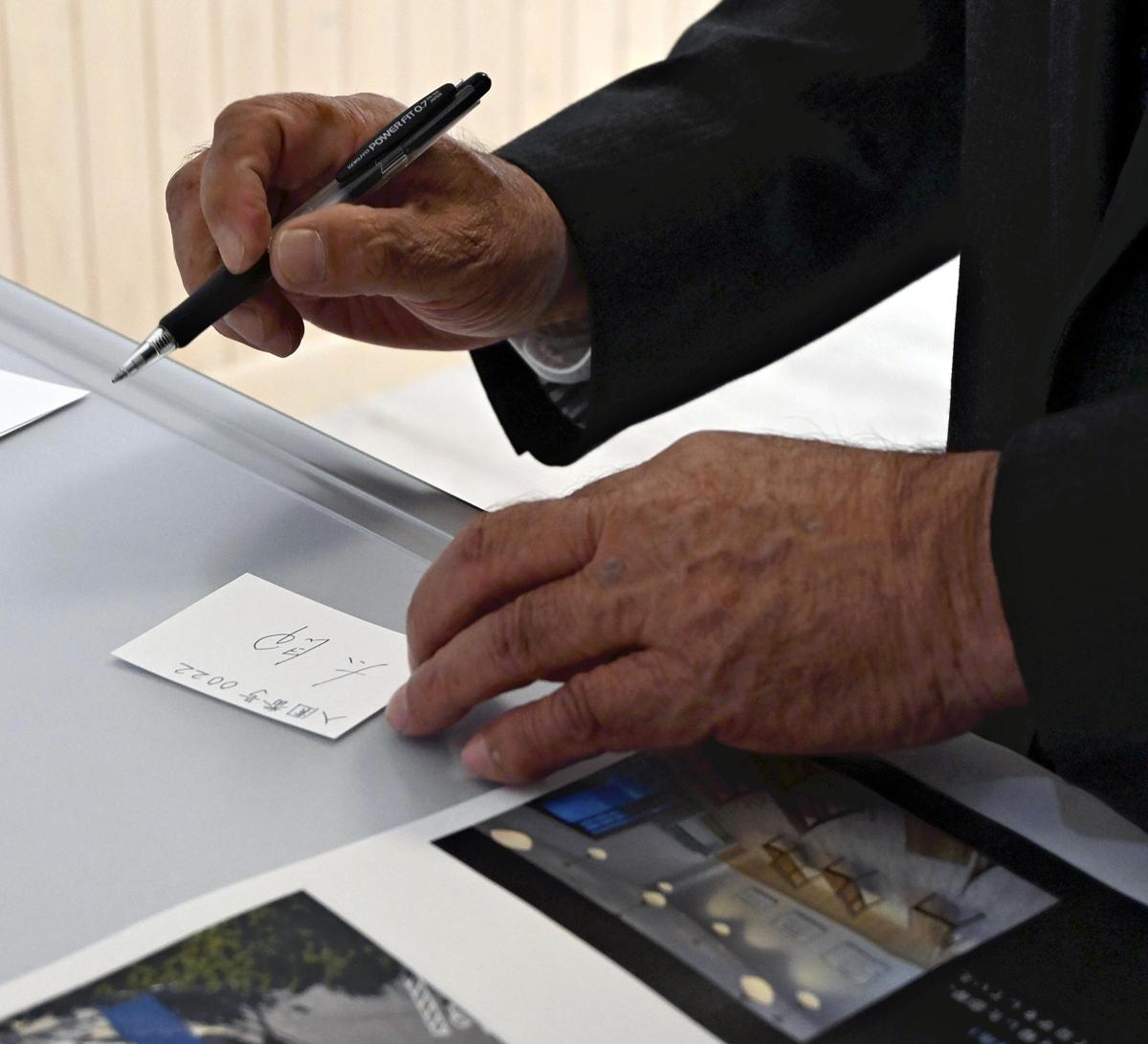
A visitor comes up with a pseudonym and writes it down on a name tag in the “Room of beginnings” section.
At the request of Nakao and others, the museum’s curators spent several years inspecting similar historical museums outside the prefecture and decided to renovate an unused ward at the sanatorium to create an experiential facility.
Passing the large photo panel, visitors enter the “Room of beginnings,” which re-creates part of the confinement area where patients were first taken and disinfected upon arriving on the island.
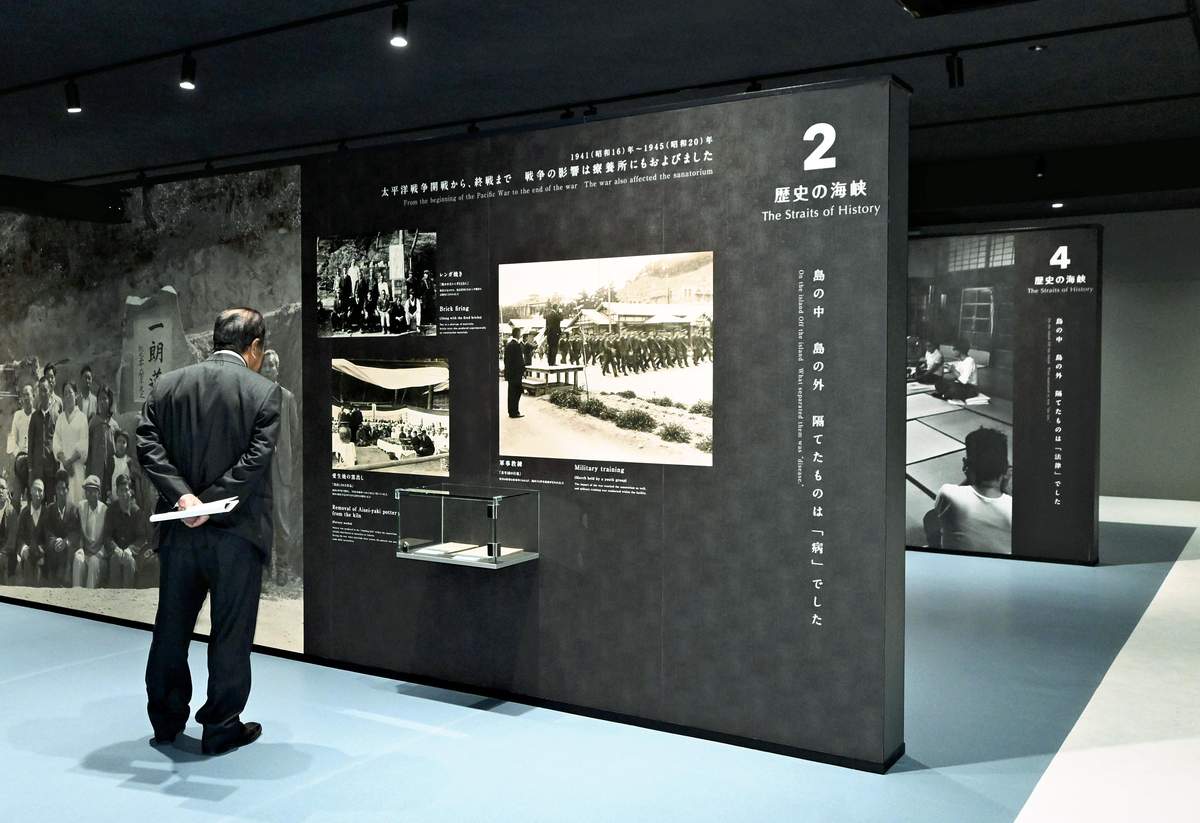
The section called “The Strait of History” contrasts events within the sanatorium and events in society.
In this room, a curator dressed as a nurse asks visitors to come up with their “registration name,” which they would be called within the facility. Visitors write down their registration name on a name tag bearing an admission number — a procedure designed to invoke the feelings of the residents: Some had to use pseudonyms out of fear of discrimination, while others wrote down their real name to stand on their dignity.
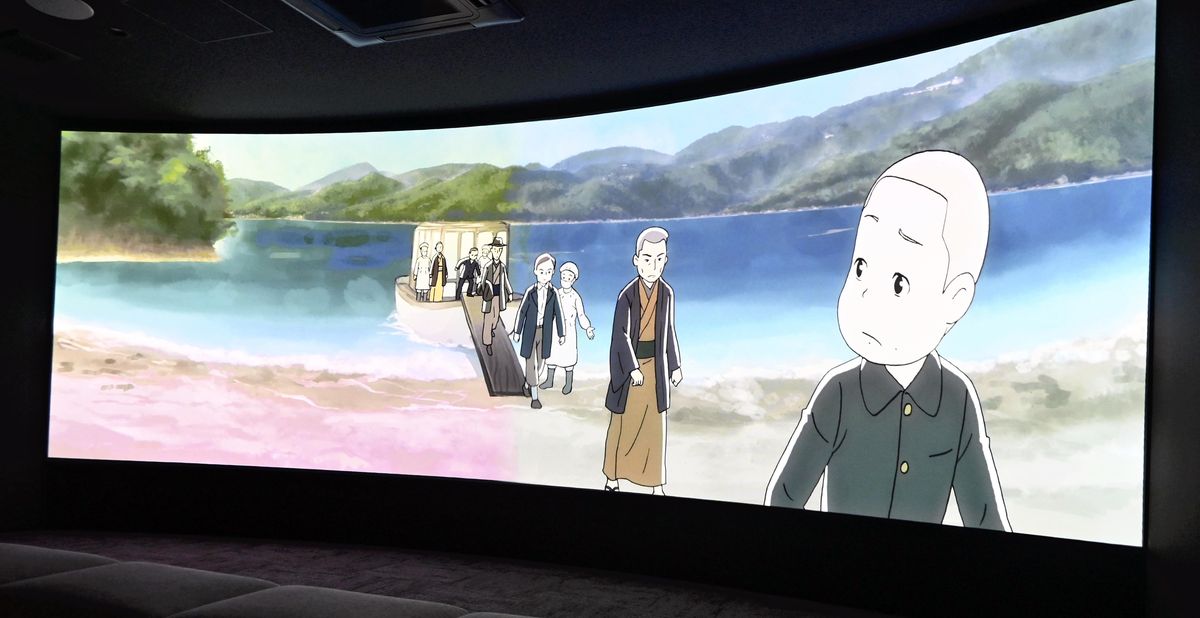
An anime film features a boy with leprosy in the “VR theater.”
The “VR theater: A family’s story” is one of the facility’s highlights. Animated footage is projected onto large screens in three separate rooms, allowing visitors to experience the perspectives of three distinct parties: a boy with leprosy, his family and people around the family. While no headgear is used for this theater, visitors can witness this part of history from a first-person perspective.
The footage depicts a boy, living with his parents and younger sister, who faces discrimination after being diagnosed with leprosy and quarantined in the sanatorium.
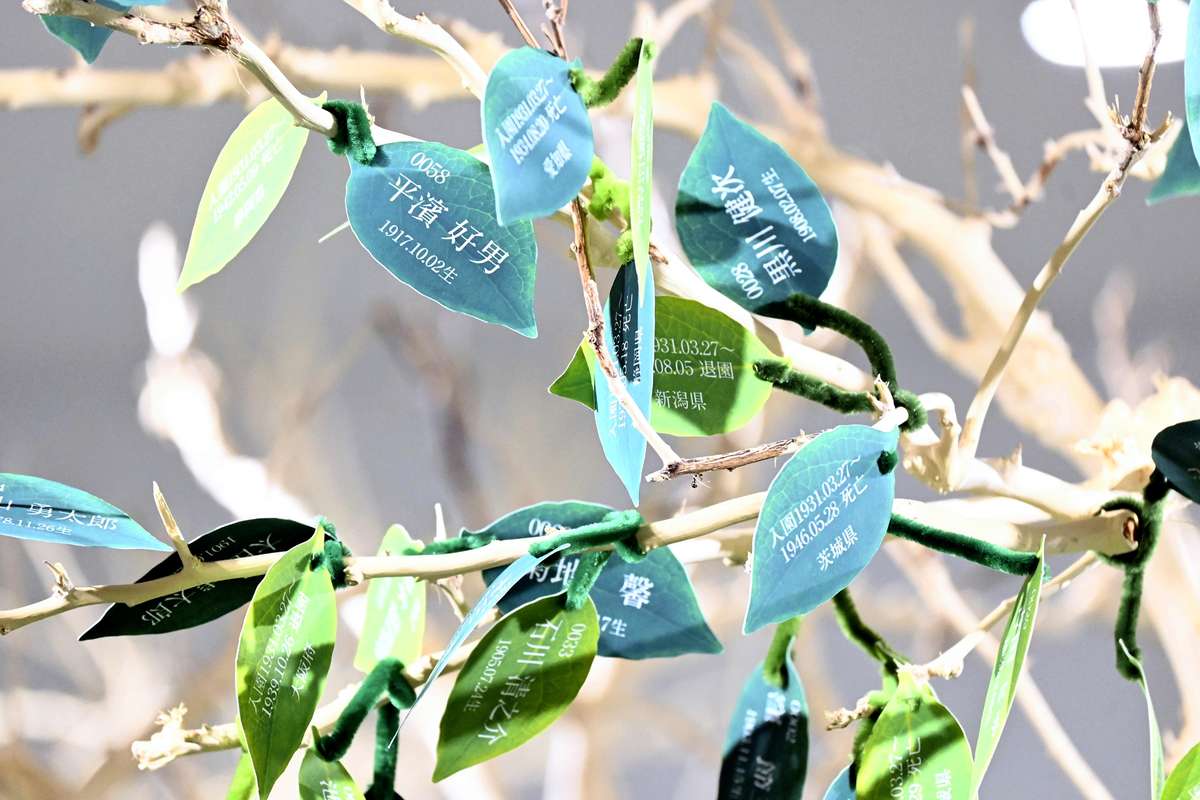
Installations feature leaves bearing the names of residents at the sanatorium as a testament to their lives.
The facility features other exhibition spaces that collect video testimonies from residents or trace the history of infectious diseases throughout human history.
The history of leprosy involves families being forced to send their beloved children to a sanatoriadue to the severe discrimination they faced, and a society that shunned patients and their families out of fear of infection.
“Discrimination has repeated itself even during the COVID-19 pandemic,” Tamura said. “We want visitors to learn in a three-dimensional way about the social structures that give rise to prejudice and discrimination beyond leprosy.”
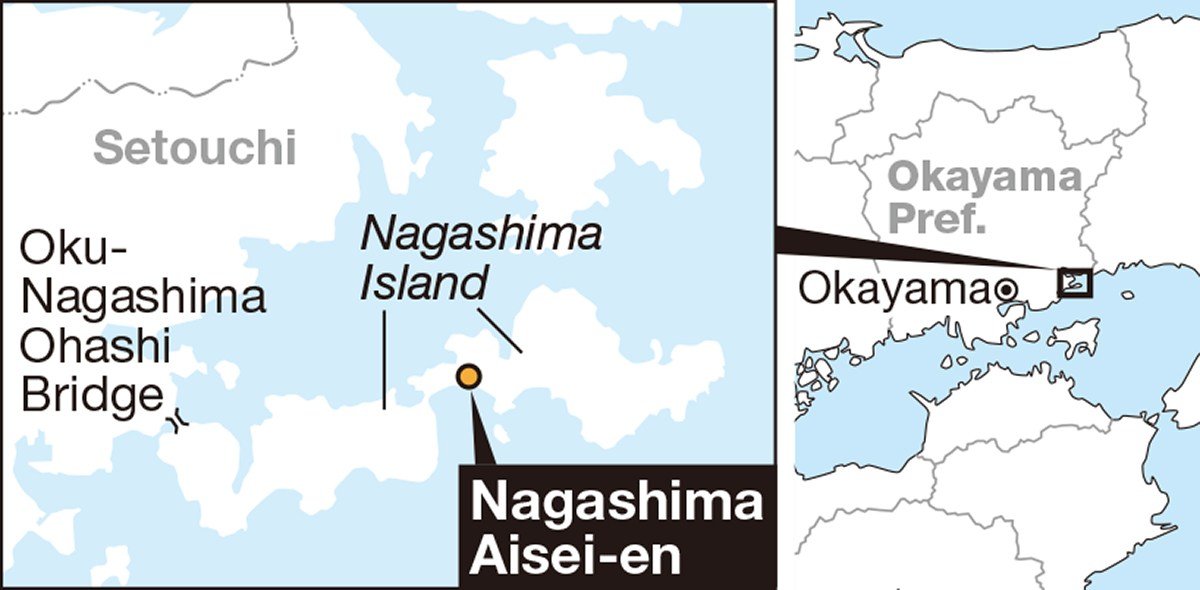
Nagashima Aisei-en
The national sanatorium to isolate leprosy patients opened in 1930 on Nagashima Island in the Seto Inland Sea, now in Setouchi, Okayama Prefecture. In the 1940s, 2,000 people were admitted. It is thought about 7,000 people were admitted over time. November marked the facility’s 95th anniversary.


Related Tags






Most Read
Popular articles in the past 24 hours
-
Survey Shows False Election Info Perceived as True
-

Director Naomi Kawase's New Film Explores Heart Transplants in Ja...
-

Milano Cortina 2026: Japan’s Mari Fukada Wins Gold in Women’s Sno...
-

Milano Cortina 2026: Japan’s Taiga Hasegawa Wins Silver in Men’s ...
-

Mark Zuckerberg Quizzed on Kids' Instagram Use in Social Media Tr...
-

Milano Cortina 2026: Russian Flag and Anthem Set to Return at Nex...
-

CARTOON OF THE DAY (February 19)
-

Paris Prosecutors Open 2 Epstein-Linked Probes and Call on Victim...
Popular articles in the past week
-

Japan PM Takaichi’s Cabinet Resigns en Masse
-

Man Infected with Measles Reportedly Dined at Restaurant in Tokyo...
-

Videos Plagiarized, Reposted with False Subtitles Claiming ‘Ryuky...
-

Sanae Takaichi Elected 105th Prime Minister of Japan; Keeps All C...
-

Japan's Govt to Submit Road Map for Growth Strategy in March, PM ...
-

Milano Cortina 2026: Figure Skaters Riku Miura, Ryuichi Kihara Pa...
-
Tokyo’s New Record-Breaking Fountain Named ‘Tokyo Aqua Symphony’
-
CRA Leadership Election Will Center on Party Rebuilding; Lower Ho...
Popular articles in the past month
-
Japan PM Takaichi’s Cabinet Resigns en Masse
-

Japan Institute to Use Domestic Commercial Optical Lattice Clock ...
-

Israeli Ambassador to Japan Speaks about Japan’s Role in the Reco...
-

Man Infected with Measles May Have Come in Contact with Many Peop...
-
Man Infected with Measles Reportedly Dined at Restaurant in Tokyo...
-

Prudential Life Insurance Plans to Fully Compensate for Damages C...
-

Woman with Measles Visited Hospital in Tokyo Multiple Times Befor...
-
Videos Plagiarized, Reposted with False Subtitles Claiming ‘Ryuky...
Top Articles in Features
-
Sapporo Snow Festival Opens with 210 Snow and Ice Sculptures at 3 Venues in Hokkaido, Features Huge Dogu
-
Tokyo’s New Record-Breaking Fountain Named ‘Tokyo Aqua Symphony’
-

Tourists Flock to Ice Dome Lodge at Resort in Hokkaido, Japan; Facility Invites Visitors to Sleep on Beds Made of Ice
-

High-Hydration Bread on the Rise, Seeing Increase in Specialty Shops, Recipe Searches
-

Maltese Pavilion’s Famous Ftira Bread Now Available in Osaka; Loaves Became Popular during 2025 Osaka-Kansai Expo
JN ACCESS RANKING
-
Japan PM Takaichi’s Cabinet Resigns en Masse
-
Japan Institute to Use Domestic Commercial Optical Lattice Clock to Set Japan Standard Time
-
Israeli Ambassador to Japan Speaks about Japan’s Role in the Reconstruction of Gaza
-
Man Infected with Measles May Have Come in Contact with Many People in Tokyo, Went to Store, Restaurant Around When Symptoms Emerged
-
Man Infected with Measles Reportedly Dined at Restaurant in Tokyo Station