
Noda, Leader of Japan’s Largest Opposition Party, Hits 1 Year in Role After Mixed Results
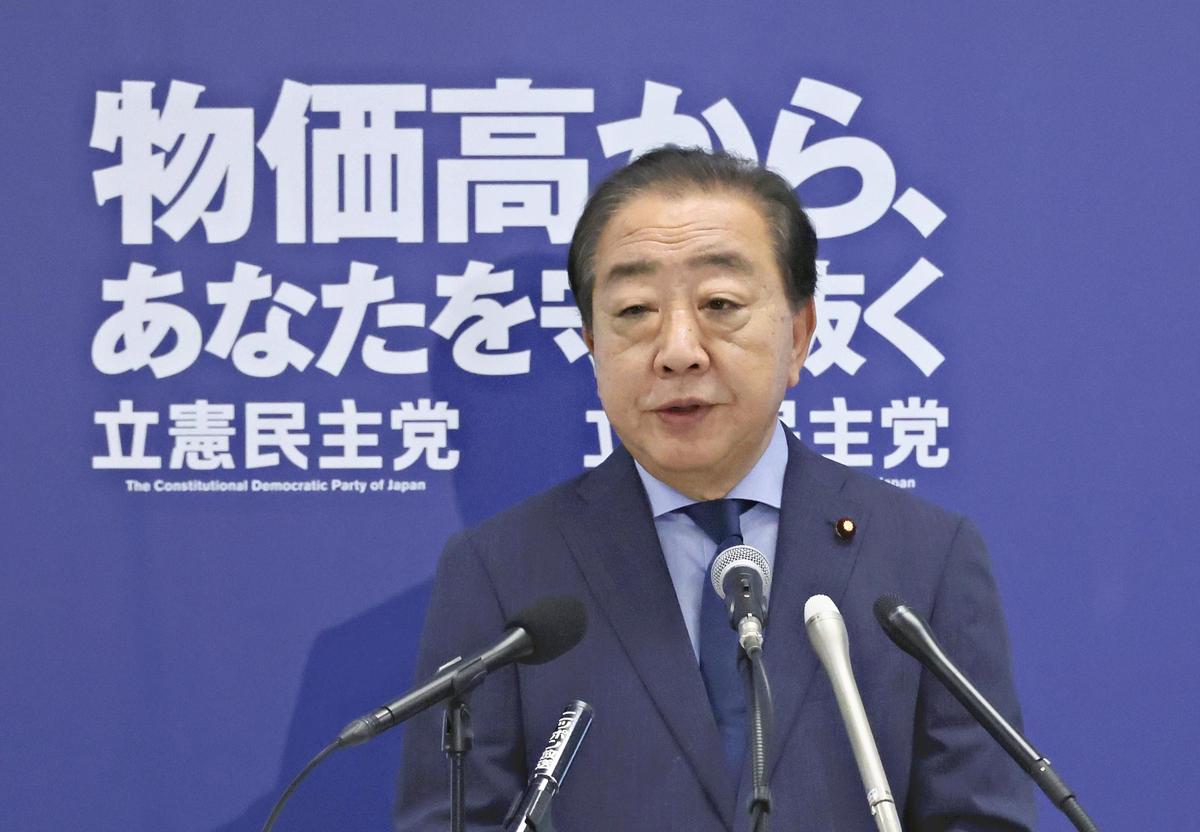
Constitutional Democratic Party of Japan leader Yoshihiko Noda speaks on Aug. 29.
15:22 JST, September 22, 2025
Yoshihiko Noda, leader of the Constitutional Democratic Party of Japan, marked one year in office Tuesday.
Despite the ruling coalition losing their majority in both Diet chambers, the CDPJ as the largest opposition party has only achieved limited policy outcomes through his leadership.
Noda now aims to showcase his ability to execute party policies through direct talks with the ruling parties. This is a marked change from his previous strategy of joining forces with other opposition parties. However, whether this can help the party regain its footing is unclear.
“We have based our approach on alliances within the opposition, but we should have also actively engaged in talks with the ruling parties and pushed harder to realize policies,” Noda told reporters Saturday in Himi, Toyama Prefecture, reflecting on the past year.
Other opposition parties have had more success than the CDPJ in negotiations with the ruling coalition: The Democratic Party for the People secured an increase in the income threshold for the imposition of income tax, and the Japan Innovation Party reached an agreement on its signature policy of free high school tuition.
Noda was elected in last September’s leadership race on expectations that a former prime minister would bring stability. The following month, the CDPJ secured a victory in the House of Representatives election, with its 50-seat increase being a major factor behind the ruling coalition’s failure to maintain its majority in the lower house.
The CDPJ worked with other opposition parties to pass a bill to abolish policy activity expenses, and also made the government shelve its proposal to raise the maximum co-payment limit in the high-cost medical expense benefit system.
Since then, however, the CDPJ seemed to have lost steam, failing to demonstrate the coordination skills needed to keep the opposition coalition in step despite insisting on the alliance. In the July House of Councillors election, the party’s seat count remained flat and it trailed the DPFP and Sanseito in proportional representation votes, resulting in a de facto defeat.
The CDPJ was forced to reshuffle its leadership, including the secretary general, but discontent still smolders within the party. The Yomiuri Shimbun’s nationwide poll conducted in September saw the CDPJ’s support rate stood at 5%, and it sank to third place among opposition parties.
In an effort to regain momentum, Noda has pivoted toward negotiations with the ruling coalition.
He met with Prime Minister Shigeru Ishiba and Komeito leader Tetsuo Saito on Friday and agreed to establish a consultative body to design tax credits with benefits, which would combine consumption tax cuts with benefits. This system had been pledged by the CDPJ in the July upper house election. However, many lawmakers even within the CDPJ view the policy as “a complex issue requiring significant time.”
The departure of Ishiba, with whom Noda is on good terms, is also a blow. The relations between the CDPJ and the Liberal Democratic Party could reset depending on who becomes LDP president.
A shift toward holding negotiations with the ruling parties would cause the CDPJ to distance itself from other opposition parties.
Given the importance of an opposition alliance in times such as a Diet vote on a new prime minister or a no-confidence motion against the Cabinet, Noda told those around him, “Achieving results amid this multi-party landscape is truly difficult.”





Most Read
Popular articles in the past 24 hours
-

6 Injured at Naked Festival in Japan’s Okayama Prefecture; Police...
-

Reciprocal Tariffs Ruled Illegal: Judiciary Would Not Tolerate Pr...
-

Fiji Defense Minister Hopes Japan Will Support Stabilization of P...
-

Space One Delays Launch of No. 3 Kairos Rocket; Company to Announ...
-

Japanese Film, Anymart, Wins Critics’ Award at International Film...
-

India, Brazil Sign Mining Pact As Modi Targets $20 Billion Trade ...
-

3rd Japan Pacific Islands Defense Dialogue to Begin in Tokyo on S...
-

I Am Surprised by My Mother’s Increased Drinking
Popular articles in the past week
-

Japan PM Takaichi’s Cabinet Resigns en Masse
-

Man Infected with Measles Reportedly Dined at Restaurant in Tokyo...
-

Sanae Takaichi Elected Prime Minister of Japan; Keeps All Cabinet...
-

Japan's Govt to Submit Road Map for Growth Strategy in March, PM ...
-

Bus Carrying 40 Passengers Catches Fire on Chuo Expressway; All E...
-

Milano Cortina 2026: Figure Skaters Riku Miura, Ryuichi Kihara Pa...
-

Japan, U.S. Name 3 Inaugural Investment Projects; Reached Agreeme...
-

U.S. Firm to Build Training Hub in Fukushima N-plant for Debris R...
Popular articles in the past month
-
Japan PM Takaichi’s Cabinet Resigns en Masse
-

Japan Institute to Use Domestic Commercial Optical Lattice Clock ...
-

Israeli Ambassador to Japan Speaks about Japan’s Role in the Reco...
-
Man Infected with Measles Reportedly Dined at Restaurant in Tokyo...
-

Videos Plagiarized, Reposted with False Subtitles Claiming ‘Ryuky...
-

Man Infected with Measles May Have Come in Contact with Many Peop...
-

Prudential Life Insurance Plans to Fully Compensate for Damages C...
-

Woman with Measles Visited Hospital in Tokyo Multiple Times Befor...
Top Articles in Politics
-
Japan PM Takaichi’s Cabinet Resigns en Masse
-
Sanae Takaichi Elected Prime Minister of Japan; Keeps All Cabinet Appointees from Previous Term
-
Japan’s Govt to Submit Road Map for Growth Strategy in March, PM Takaichi to Announce in Upcoming Policy Speech
-

LDP Wins Historic Landslide Victory
-

LDP Wins Landslide Victory, Secures Single-party Majority; Ruling Coalition with JIP Poised to Secure Over 300 seats (UPDATE 1)
JN ACCESS RANKING
-
Japan PM Takaichi’s Cabinet Resigns en Masse
-
Japan Institute to Use Domestic Commercial Optical Lattice Clock to Set Japan Standard Time
-
Israeli Ambassador to Japan Speaks about Japan’s Role in the Reconstruction of Gaza
-
Man Infected with Measles Reportedly Dined at Restaurant in Tokyo Station
-
Videos Plagiarized, Reposted with False Subtitles Claiming ‘Ryukyu Belongs to China’; Anti-China False Information Also Posted in Japan