
Upper House Election: LDP, Komeito Face Struggle to Keep Upper House Majority;Many Constituency Races Have Become Close Contests
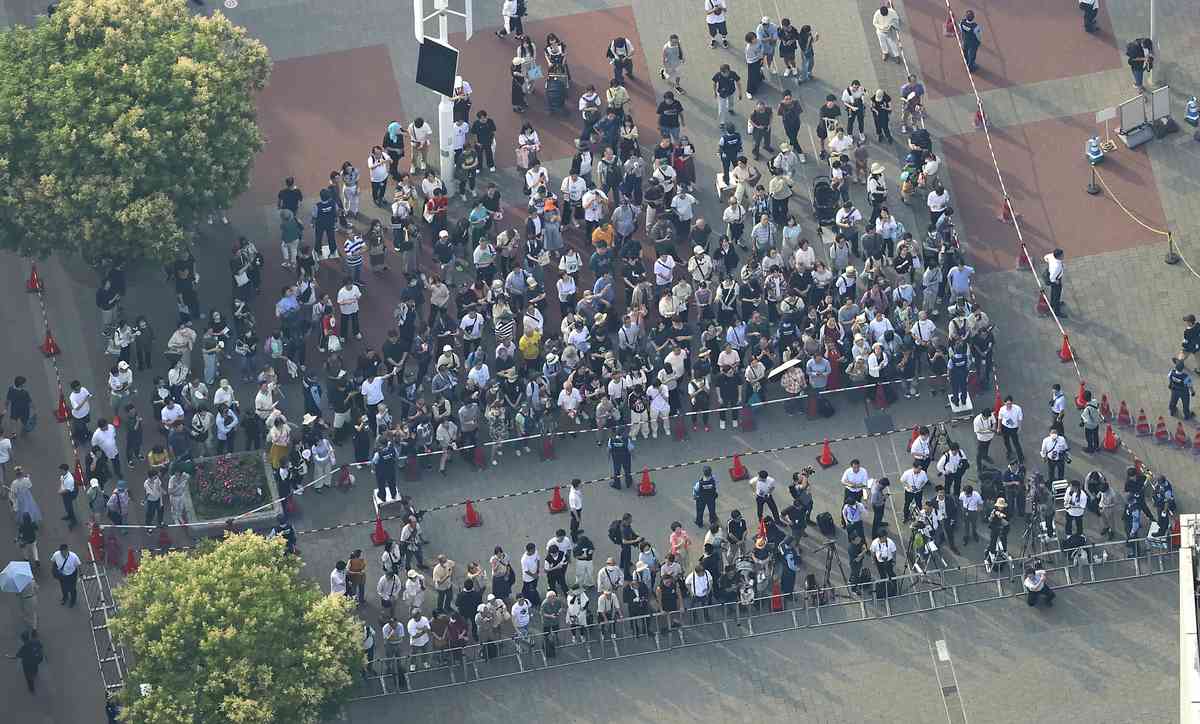
People gather for a House of Councillors election campaign speech in Yokohama on July 6.
18:22 JST, July 16, 2025
The Liberal Democratic Party faces a tough battle in the upcoming House of Councillors election on Sunday, with the LDP and its junior coalition partner Komeito possibly unable to hold onto a majority of seats in the upper house after the election, according to analysis by The Yomiuri Shimbun. The Yomiuri analyzed the final stage of the campaign based on the results of a survey it conducted from Saturday to Tuesday by telephone and internet, along with coverage by its staff writers across the nation.
The analysis shows the LDP faces a tough battle in both the constituency races and the proportional representation segment, and the party is likely to win only over 30 seats. Even considering the seats likely to be won by Komeito, the ruling coalition may fall short of winning the 50 seats needed to maintain a majority in the 248-seat upper house. There are 75 coalition upper house lawmakers whose term of office is not ending this time, meaning that 50 seats would be needed to reach a 125-seat majority.
In Sunday’s election, a total of 125 seats are being contested.
There are 32 constituencies with just one seat being contested, and these are expected to have a great impact on the overall outcome. The LDP holds a clear advantage in only four of those constituencies: the Ishikawa, Fukui and Yamaguchi prefectural constituencies plus the constituency that combines Tottori and Shimane prefectures.
In the early stage of the campaign, the LDP held a lead in seven constituencies, but three — Gunma, Gifu and Nara prefectures — have turned into tight races.
In the Tohoku, Shikoku and Kyushu regions, all constituencies with one seat up for grabs remain fiercely contested.
Among constituencies with more than one seat contested, the LDP is likely to secure at least one seat in most of them, but the situation is tough in Osaka Prefecture. The LDP appears likely to lose some conservative votes to Sanseito, which has fielded candidates in all districts. There is a possibility that the LDP could fall below the 36 seats it secured in 1989 under the Cabinet of Sosuke Uno, its worst-ever upper house election result.
Komeito is on track to fall to its lowest-ever total of nine seats combined in both the constituency races and the proportional representation segment. In the Saitama and Aichi prefectural constituencies, its candidates are lagging behind in close races among packs of leading candidates, including those from Sanseito.
The Constitutional Democratic Party of Japan is running a steady race and has improved its momentum compared to the early stages of the campaign. It is leading in constituencies with just one seat at stake, such as Iwate, Nagano and Mie. And the party is on track to secure a combined 30 seats in both the constituency races and the proportional representation segment.
The Democratic Party for the People is maintaining its momentum and is expected to see a significant increase in seats. It is on track to meet its target of “16 or more seats” in the election, aiming to secure additional seats in both the constituency races and the proportional representation segment.
Sanseito is expected to make a significant leap, potentially securing more than 10 seats. It holds a strong lead in the Tokyo constituency and is intensifying its offensive in such closely contested constituencies as Saitama, Aichi and Osaka. It is also expected to win a significant number of seats in the proportional representation race.
The Japan Innovation Party (JIP) and Reiwa Shinsengumi are both struggling to gain momentum, while the Japanese Communist Party (JCP) has seven members up for reelection but may not win that many seats.
The Conservative Party of Japan (CPJ) is expected to secure several proportional representation seats, while the Social Democratic Party is aiming to secure one seat.
The telephone survey combined interviews conducted by surveyors and automated voice surveys, with 53,406 respondents. The internet survey collected responses from 85,869 users who have accounts in the Yahoo! Japan portal. Thus, the survey had a total of 139,275 respondents. A certain number of respondents did not specify their preferred candidates or parties, leaving the situation fluid.
A total of 350 candidates are contesting 75 seats in constituency races and 172 are vying for the 50 seats in the proportional representation segment. With upper house members serving six-year terms, half of the seats are contested in elections every three years.


Related Tags

Most Read
Most read in the last 24 hours
-

India's Arms Indigenization Quest for Self-Reliance / Desert Dril...
-
Japan Passport Fees Going Down to ¥9,000 in July
-

26-year-old U.S. National Falls While Climbing Mt. Fuji; Accompan...
-

Japanese Side Machida Zelvia Faces Ah-Ahli in Asian Champions Lea...
-

Transfer of Defense Equipment: Increase the Number of Like-minded...
-

Charm of Meiji-Era Poet Takuboku Examined from Viewpoint of Donal...
-

Japan Eyes Trialing Dual-Use Tech Developed by Startups to Promot...
-

CARTOON OF THE DAY (April 24)
Most read in the last 7 days
-
Earthquake Hits Japan's Tohoku Region; 3-meter Tsunami Warning Is...
-

Trump Extends the Ceasefire with Iran but Keeps the Blockade
-

China, South Korea Object to Japanese PM Takaichi's Ritual Offeri...
-

India's Arms Indigenization Quest for Self-Reliance / New Delhi S...
-
Japan to Ban Use of Portable Chargers on Airplanes from April 24,...
-

¥1,000 Coins to Be Issued to Mark Anniversary of Beginning of Jap...
-

Most Serious Cyberattacks against the UK Now from Russia, Iran an...
-

New Challenges Await as Miura-Kihara Retires; Blade Maker, Ex-Coa...
Most read in the last 30 days
-
Earthquake Hits Japan's Tohoku Region; 3-meter Tsunami Warning Is...
-
Police Find Child's Shoe During Search for Missing Boy in Nantan,...
-
Body Found in Nantan, Kyoto Prefecture, During Search for 11-Year...
-
Cherry Blossoms, Rapeseed Flowers Perform Colorful ‘Duet’ in Niig...
-
Trump Extends the Ceasefire with Iran but Keeps the Blockade
-

Olympic Gold Medal-Winning Figure Skaters Riku-Ryu Announce Retir...
-

Nori Prices Surge in Japan Due to Poor Seaweed Production Amid Ri...
-
China, South Korea Object to Japanese PM Takaichi's Ritual Offeri...
Top Articles in Politics
-
India’s Arms Indigenization Quest for Self-Reliance / New Delhi Sticks to Its ‘All-Alignment’ Guns Even after Iran Warship Attack
-
Japan Aims to Enhance Deterrence, Defense Industry by Allowing Exports of Weapons
-

Former Japan PM Murayama’s Farewell Ceremony Held; Former Deputy PM Kono Vows to ‘Carry on Path Toward Peace’
-

Ritsumeikan Asia Pacific University Stripped of Certification for Simplified Visa Procedures Due to Document Failure
-

Japan’s PM Takaichi Seeks to Advance Policies Bearing Her Own ‘Color,’ Eyes Amending Constitution, Building Strong Economy
JN ACCESS RANKING
-
Earthquake Hits Japan’s Tohoku Region; 3-meter Tsunami Warning Issued (Update 1)
-
Police Find Child’s Shoe During Search for Missing Boy in Nantan, Kyoto Prefecture
-
Body Found in Nantan, Kyoto Prefecture, During Search for 11-Year-Old Boy in Area (Update 1)
-
Cherry Blossoms, Rapeseed Flowers Perform Colorful ‘Duet’ in Niigata
-
Trump Extends the Ceasefire with Iran but Keeps the Blockade
Most read in the last 24 hours
-
India's Arms Indigenization Quest for Self-Reliance / Desert Dril...
-
Japan Passport Fees Going Down to ¥9,000 in July
-
26-year-old U.S. National Falls While Climbing Mt. Fuji; Accompan...
-
Japanese Side Machida Zelvia Faces Ah-Ahli in Asian Champions Lea...
-
Transfer of Defense Equipment: Increase the Number of Like-minded...
Most read in the last 7 days
-
Earthquake Hits Japan's Tohoku Region; 3-meter Tsunami Warning Is...
-
Trump Extends the Ceasefire with Iran but Keeps the Blockade
-
China, South Korea Object to Japanese PM Takaichi's Ritual Offeri...
-
India's Arms Indigenization Quest for Self-Reliance / New Delhi S...
-
Japan to Ban Use of Portable Chargers on Airplanes from April 24,...
Most read in the last 30 days
-
Earthquake Hits Japan's Tohoku Region; 3-meter Tsunami Warning Is...
-
Police Find Child's Shoe During Search for Missing Boy in Nantan,...
-
Body Found in Nantan, Kyoto Prefecture, During Search for 11-Year...
-
Cherry Blossoms, Rapeseed Flowers Perform Colorful ‘Duet’ in Niig...
-
Trump Extends the Ceasefire with Iran but Keeps the Blockade