
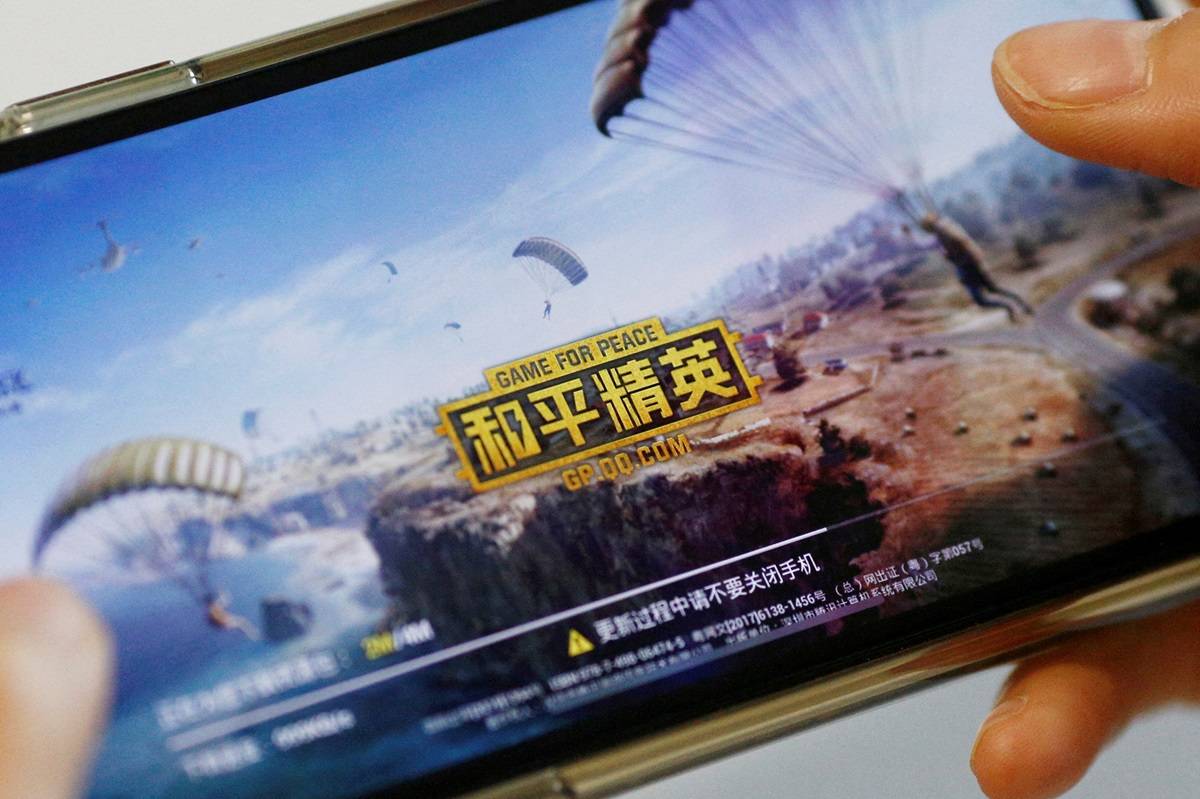
Game for Peace, Tencent’s alternative to the blockbuster video game “PlayerUnknown’s Battlegrounds” (PUBG) in China, is seen on a mobile phone in this illustration picture taken on May 13, 2019.
10:03 JST, December 24, 2023
SHANGHAI (Reuters) — China’s draft online video gaming rules were designed to promote the healthy development of the industry, regulators said on Saturday, adding that the government would further improve the proposed rules after “earnestly studying” public views.
The statement from the press and publications watchdog came a day after China released proposed sweeping rules aimed at curbing spending and time on video games, dealing a blow to the world’s biggest games market and knocking the value of Tencent Holdings 0700.HK, Netease 9999.HK and other gaming stocks.
Under the draft rules, online games will be banned from giving players rewards if they log in every day, if they spend on the game for the first time, or if they spend several times on the game consecutively.
All are common incentive mechanisms in online games.
The draft rules were “designed to safeguard and promote the healthy and prosperous development of the online gaming industry,” the National Press and Publication Administration said in a statement on its website.
The regulator said the government had collected opinions widely during the drafting process, and “soliciting public views for the rules is a process aimed at listening to opinions more broadly, and improving the provisions of the rules.”
Responding to anxiety over the proposed measures, the regulator said it will “earnestly study expressed concerns and views,” and will further amend the rules after absorbing opinions from related government bodies, companies and users.
To restrict excessive spending, the draft rules also require that games must set limits on how much players can top up their digital wallets for in-game spending. Games would also be banned from enabling the speculation and auction of virtual gaming items.
The administration is seeking public comment on the rules by Jan. 22, 2024.





Most Read
Popular articles in the past 24 hours
-
Tokyo Spends Big on Children, Wins Over Parents
-
Japan’s Miura, Kihara Announce Withdrawal from Figure Skating Wor...
-
Japan's Opposition Parties Largely Absent from Social Security-Re...
-

Hokkaido's Shiretoko Peninsula Offers Unique Drift Ice Walking To...
-
Showa-era Towers in Kansai’s Big Cities Become Social Media Sensa...
-

Tourists Ignore Safety Barriers Near Famous Zao ‘Snow Monsters’ i...
-
Tokyo’s ‘Strawberry War’ Intensifies as Producers Vie to Become ‘...
-

Neil Sedaka, The Singer-Songwriter Behind Dozens of Hits of The 1...
Popular articles in the past week
-

Producer Behind Pop Group XG Arrested for Cocaine Possession
-

Nepal Bus Crash Kills 19 People, Injures 25 Including One Japanes...
-

Tokyo Skytree's Elevator Stops, Trapping 20 People; All Rescued (...
-
Milano Cortina 2026: Japanese Gold Medalist Figure Skater Miura S...
-

Japan’s Major Real Estate Firms Expanding Overseas Businesses to ...
-

Reciprocal Tariffs Ruled Illegal: Judiciary Would Not Tolerate Pr...
-

Milano Cortina 2026: Miura-Kihara Duo, Other Japanese Figure Skat...
-
6 Injured at Naked Festival in Japan’s Okayama Prefecture; Police...
Popular articles in the past month
-
Producer Behind Pop Group XG Arrested for Cocaine Possession
-

Japan PM Takaichi’s Cabinet Resigns en Masse
-

Man Infected with Measles Reportedly Dined at Restaurant in Tokyo...
-

Israeli Ambassador to Japan Speaks about Japan’s Role in the Reco...
-

Videos Plagiarized, Reposted with False Subtitles Claiming ‘Ryuky...
-

Man Infected with Measles May Have Come in Contact with Many Peop...
-

Prudential Life Insurance Plans to Fully Compensate for Damages C...
-

Woman with Measles Visited Hospital in Tokyo Multiple Times Befor...
Top Articles in News Services
-
Survey Shows False Election Info Perceived as True
-
Hong Kong Ex-Publisher Jimmy Lai’s Sentence Raises International Outcry as China Defends It
-
Japan’s Nikkei Stock Average Touches 58,000 as Yen, Jgbs Rally on Election Fallout (UPDATE 1)
-
Japan’s Nikkei Stock Average Falls as US-Iran Tensions Unsettle Investors (UPDATE 1)
-
Japan’s Nikkei Stock Average Rises on Tech Rally and Takaichi’s Spending Hopes (UPDATE 1)
JN ACCESS RANKING
-
Producer Behind Pop Group XG Arrested for Cocaine Possession
-
Japan PM Takaichi’s Cabinet Resigns en Masse
-
Man Infected with Measles Reportedly Dined at Restaurant in Tokyo Station
-
Israeli Ambassador to Japan Speaks about Japan’s Role in the Reconstruction of Gaza
-
Videos Plagiarized, Reposted with False Subtitles Claiming ‘Ryukyu Belongs to China’; Anti-China False Information Also Posted in Japan