
South Korea Compensates Former Requisitioned Workers But Four Holdouts Keep Seoul from Achieving Goal
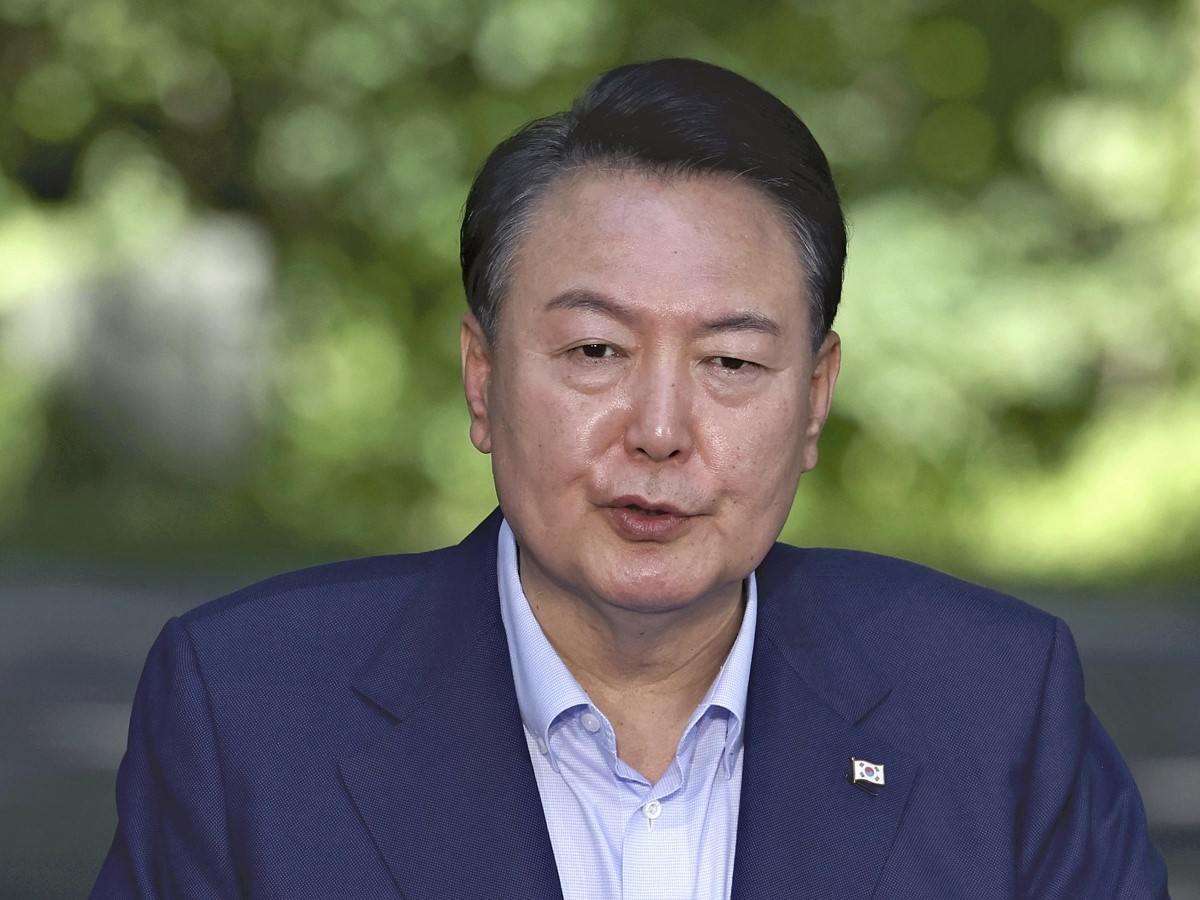
South Korean President Yoon Suk Yeol speaks during a joint press conference at Camp David, Md., on Aug. 18.
6:00 JST, September 7, 2023
SEOUL — Progress is being made in South Korea in resolving the lawsuits surrounding former requisitioned workers from the Korean Peninsula.
More than two-thirds of the plaintiffs have received compensation from a Seoul-affiliated foundation in a plan announced by South Korean President Yoon Suk Yeol in March.
Some plaintiffs have refused to accept the money, however, and some district courts have issued rulings that have slowed down the settlement process. Given these aspects, it will be some time before the situation settles.
The South Korean Supreme Court in 2018 finalized a lower court ruling ordering Japanese companies to pay compensation to the plaintiffs. This became a thorn in the side of relations between Japan and South Korea.
The main pillar of the solution proposed by Yoon’s administration is a third-party compensation scheme. A foundation under the umbrella of the government will pay the plaintiffs compensation equal to the amount that the Japanese companies have been ordered to pay.
Eleven of the 15 plaintiffs have so far accepted the money under the government’s compensation scheme.
Among the plaintiffs, one of the three former requisitioned workers who had refused to accept compensation from the foundation later agreed to accept it. For those who have died, compensation is paid to the bereaved family members.
In July, the Seoul foundation began the process with district courts to deposit an amount equal to the compensation for the four plaintiffs who have yet to accept the money. The government wants the funds disbursed so that it can achieve the objectives of its compensation plan.
The district courts, however, turned down the applications to deposit compensation for the plaintiffs, stating that it was clear that these plaintiffs are opposed to receiving the money.
The courts dismissed objections filed by the foundation, which now intends to appeal.
As the Supreme Court will need to be involved over whether the compensation can be deposited, some observers hold the view that it will take several years for such a decision to arrive.
The Supreme Court’s chief justice will be replaced in the near future and a conservative who is close to Yoon has been nominated as the successor. He is expected to be on the Supreme Court if the nomination is approved by the National Assembly, but opposition parties are expected to oppose the nomination.



Popular Articles
Popular articles in the past 24 hours
-

Japan's Domestic Airlines Get Approval to Coordinate Domestic Fli...
-
Institute in Gifu Prefecture Develops More Colorful Variety of Cy...
-
Osaka Expo Materials Reused and Recycled Around Japan, Exemplifyi...
-
Demolition of Osaka-Kansai Expo’s Symbolic Grand Ring Begins in E...
-

Arrest of Masterminds: Take Step toward Eradication of Anonymous,...
-
Yamagata Shinkansen Service Suspended Between Yamagata, Yonezawa ...
-

Mexico to Kick Off 2026 World Cup against South Africa, Japan to ...
-
Head of Unification Church in Japan to Resign as Court Case Conti...
Popular articles in the past week
-
8 Japanese Nationals Stranded on Indonesia's Sumatra Island
-
Violations of Subcontract Law: Major Automakers Must Eliminate Ol...
-

Trains with Large Spaces for Baby Strollers, Wheelchairs on the R...
-

American Playwright Jeremy O. Harris Arrested in Japan on Alleged...
-
Van Cleef & Arpels Dazzles with Art Deco Artisanry at Tokyo Exhib...
-

Yoshinobu Yamamoto Cheered by Los Angeles Lakers Fans at NBA Game
-
Survey Finds 59% of Japanese Opposed to Actively Accepting Foreig...
-

Japanese Firms Sue U.S. Govt for Return of Collected Tariffs
Popular articles in the past month
-
Govt Plans to Urge Municipalities to Help Residents Cope with Ris...
-
Japan Resumes Scallop Exports to China
-
Japan Prime Minister Takaichi Vows to Have Country Exit Deflation...
-
Essential Services Shortage to Hit Japan's GDP By Up to ¥76 Tril....
-

Japan to Charge Foreigners More for Residence Permits, Looking to...
-
Japan GDP Down Annualized 1.8% in July-Sept.
-

JR East Suica's Penguin to Retire at End of FY2026; Baton to be P...
-
Tokyo's Off Limit Areas Becoming Popular for Tours
"World" POPULAR ARTICLE
-
China Urges Citizens to Refrain from Visiting Japan, Citing Surge of Crimes Against Chinese
-
8 Japanese Nationals Stranded on Indonesia’s Sumatra Island
-
Mozambican Cooking Class Held in Matsuyama, Ehime Pref.; Participants Don Aprons, Bandanas Made from Traditional Mozambique Fabric
-

China Steps Up ‘Wolf Warrior’ Diplomacy Against Japan, Hurling Accusation About Plutonium Stockpile
-
Taiwan’s Lai Calls on China to Exercise Self-Restraint; Says Attack on Japan Endangers Regional Peace and Stability
JN ACCESS RANKING
-
Govt Plans to Urge Municipalities to Help Residents Cope with Rising Prices
-
Japan Prime Minister Takaichi Vows to Have Country Exit Deflation, Closely Monitor Economic Indicators
-
Essential Services Shortage to Hit Japan’s GDP By Up to ¥76 Tril. By 2040
-
Japan to Charge Foreigners More for Residence Permits, Looking to Align with Western Countries
-
Japan GDP Down Annualized 1.8% in July-Sept.