
13:07 JST, January 31, 2022
The government has been working even harder to help Japanese nationals earn executive positions in international organizations. The goal is to obtain a key role in setting international rules by having more executives in the organizations.
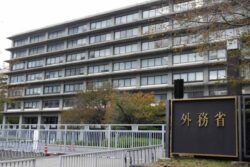
Every year more and more Japanese nationals gain senior posts, such as the title of deputy secretary-general in United Nations-related organizations. There were 50 nationals in the early 2000s who earned a spot, and that rose to 88 at the end of 2020, according to the Foreign Ministry.
U.N. Under-Secretary-General and High Representative for Disarmament Affairs Izumi Nakamitsu and Director-General of the Universal Postal Union Masahiko Metoki are notable figures among them.
However, there are still relatively few Japanese executives compared to Japan’s financial contribution to the United Nations. Japan’s ratio of contributions to the U.N. regular budget for 2021 is the third largest, after the United States and China. However, a report on the number of staff members working in U.N.-related organizations by country of origin compiled in 2020 shows the United States has the most at 3,452, followed by France with 2,377. Japan has 997 employees, the fewest among the Group of Seven countries.
An election for director of the telecommunication standardization bureau of the International Telecommunication Union, a specialized agency of the United Nations, is scheduled for this autumn. The government decided to field Seizo Onoe, former chief technology officer of NTT Docomo Inc., and lobby other countries on Onoe’s behalf.
The government established in November a new system to make it easier for those with experience working for international organizations to find fixed-term jobs in Japan’s central government. To hire fixed-term employees, ministries and agencies previously had to apply to the National Personnel Authority for approval. Such approval is no longer required to hire those who worked for an international organization.
A liaison council of 17 ministries and agencies, including the Foreign Ministry, was also established last year. The council, together with the Cabinet Bureau of Personnel Affairs and others, is discussing strategies to send Japanese nationals to international organizations. It also plans to send young personnel to international organizations, at the government’s expense.
Some countries are recently prioritizing their own interests more than usual when it comes to the World Health Organization’s response to the coronavirus crisis and other issues. Japan would like to contribute to having fair and neutral operations within international organizations by increasing Japanese senior officials in them.




Most Read
Popular articles in the past 24 hours
-
6 Injured at Naked Festival in Japan’s Okayama Prefecture; Police...
-
Fiji Defense Minister Hopes Japan Will Support Stabilization of P...
-

Space One Delays Launch of No. 3 Kairos Rocket; Company to Announ...
-

Milano Cortina 2026: Malinin Highlights Dangers of Social Media i...
-

Reciprocal Tariffs Ruled Illegal: Judiciary Would Not Tolerate Pr...
-

Japanese Film, Anymart, Wins Critics’ Award at International Film...
-
3rd Japan Pacific Islands Defense Dialogue to Begin in Tokyo on S...
-

India, Brazil Sign Mining Pact As Modi Targets $20 Billion Trade ...
Popular articles in the past week
-

Japan PM Takaichi’s Cabinet Resigns en Masse
-

Man Infected with Measles Reportedly Dined at Restaurant in Tokyo...
-

Sanae Takaichi Elected Prime Minister of Japan; Keeps All Cabinet...
-

Japan's Govt to Submit Road Map for Growth Strategy in March, PM ...
-

Bus Carrying 40 Passengers Catches Fire on Chuo Expressway; All E...
-

Milano Cortina 2026: Figure Skaters Riku Miura, Ryuichi Kihara Pa...
-
Japan, U.S. Name 3 Inaugural Investment Projects; Reached Agreeme...
-

U.S. Firm to Build Training Hub in Fukushima N-plant for Debris R...
Popular articles in the past month
-
Japan PM Takaichi’s Cabinet Resigns en Masse
-

Japan Institute to Use Domestic Commercial Optical Lattice Clock ...
-

Israeli Ambassador to Japan Speaks about Japan’s Role in the Reco...
-
Man Infected with Measles Reportedly Dined at Restaurant in Tokyo...
-

Videos Plagiarized, Reposted with False Subtitles Claiming ‘Ryuky...
-

Man Infected with Measles May Have Come in Contact with Many Peop...
-

Prudential Life Insurance Plans to Fully Compensate for Damages C...
-

Woman with Measles Visited Hospital in Tokyo Multiple Times Befor...
Top Articles in Politics
-
Japan PM Takaichi’s Cabinet Resigns en Masse
-
Sanae Takaichi Elected Prime Minister of Japan; Keeps All Cabinet Appointees from Previous Term
-
Japan’s Govt to Submit Road Map for Growth Strategy in March, PM Takaichi to Announce in Upcoming Policy Speech
-

LDP Wins Historic Landslide Victory
-

LDP Wins Landslide Victory, Secures Single-party Majority; Ruling Coalition with JIP Poised to Secure Over 300 seats (UPDATE 1)
JN ACCESS RANKING
-
Japan PM Takaichi’s Cabinet Resigns en Masse
-
Japan Institute to Use Domestic Commercial Optical Lattice Clock to Set Japan Standard Time
-
Israeli Ambassador to Japan Speaks about Japan’s Role in the Reconstruction of Gaza
-
Man Infected with Measles Reportedly Dined at Restaurant in Tokyo Station
-
Videos Plagiarized, Reposted with False Subtitles Claiming ‘Ryukyu Belongs to China’; Anti-China False Information Also Posted in Japan