
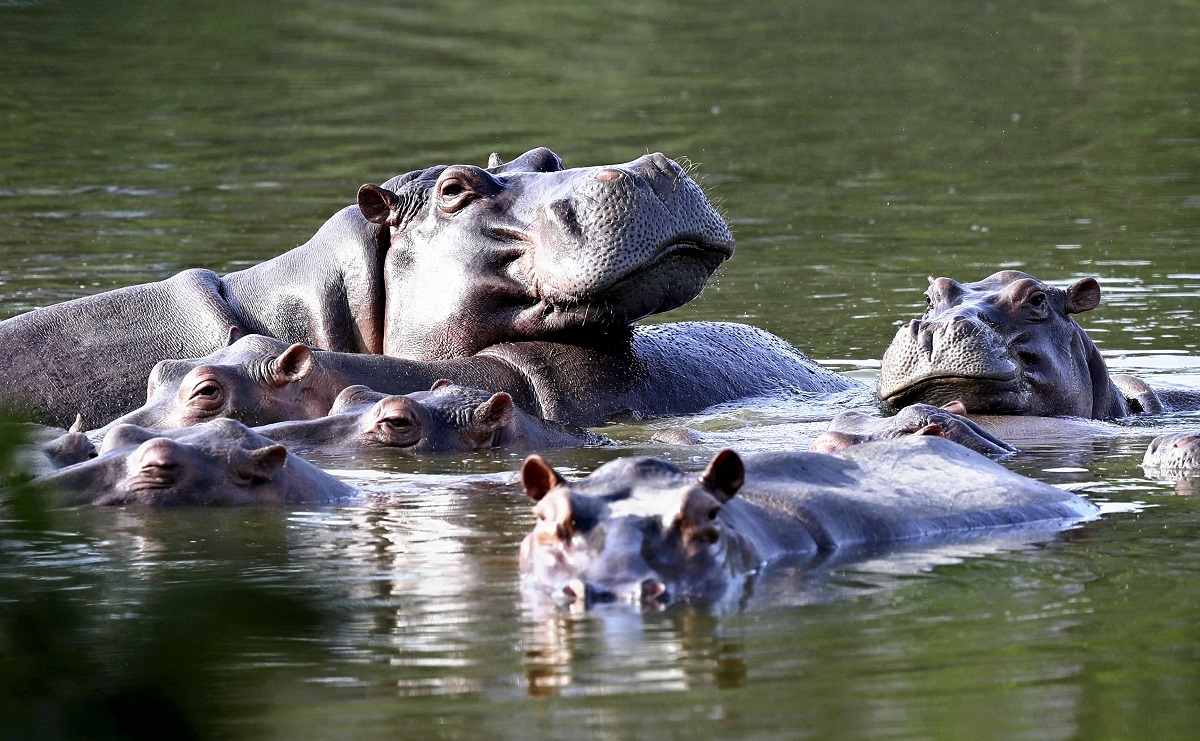
Hippopotamuses float in a lake in Puerto Triunfo, Colombia, on Feb. 4.
17:10 JST, February 25, 2021
RIO DE JANEIRO — Hippopotamuses are increasing in Colombia despite being an alien species in South America. Their existence in the country began with the import of four individuals by drug lord Pablo Escobar. The four hippopotamuses later escaped into the wild.
In January, biologists and other experts who fear the animals may adversely affect the ecosystem pointed out the need to cull the animals in an academic report, but there have been controversies around the issue.
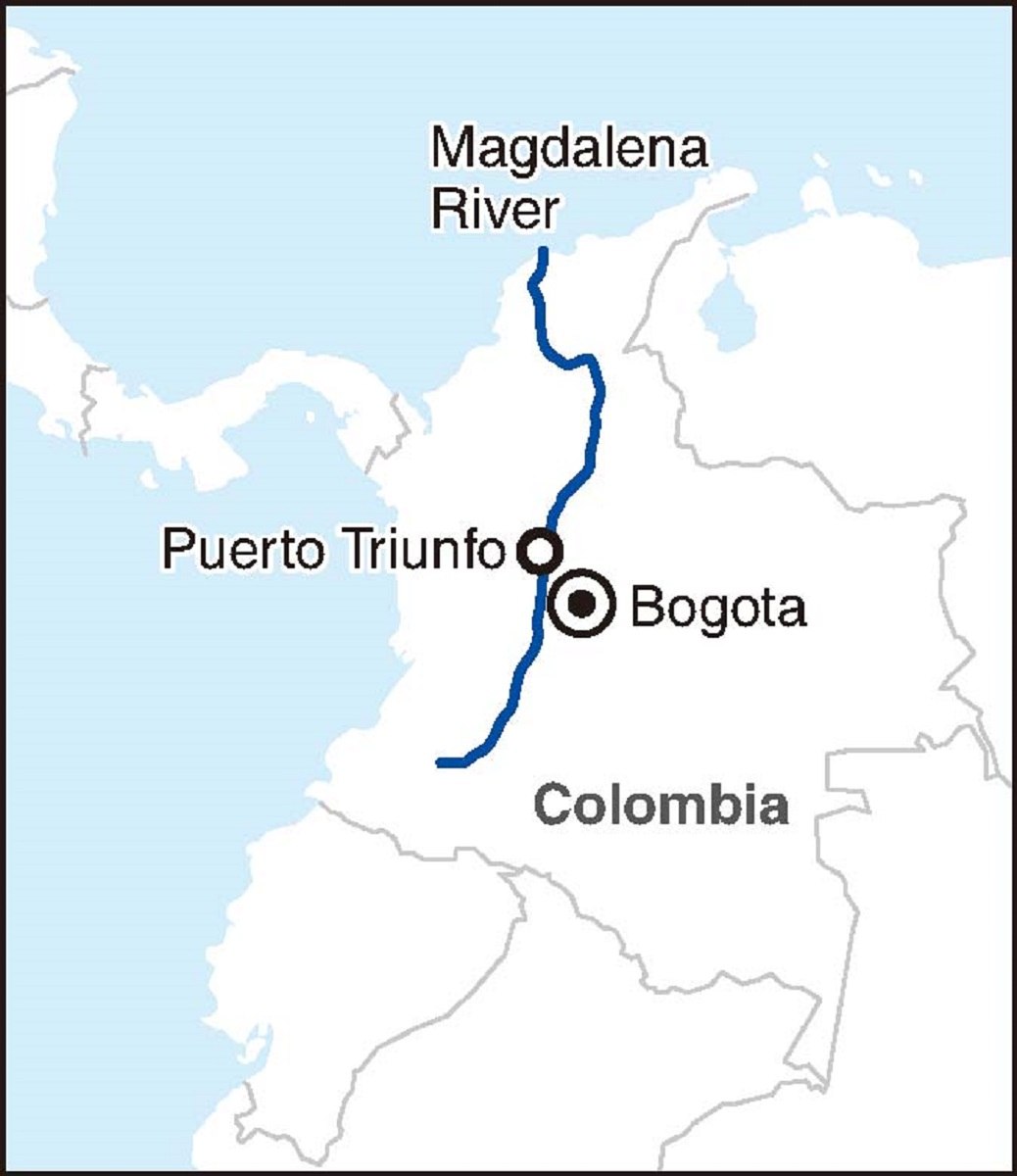
Hippopotamuses are native to Sub-Saharan Africa. But according to the report carried in academic journal Biological Conservation, which was written by biologists mainly based in Colombia, about 80 hippopotamuses currently reside in the Magdalena River, which flows through the northwest of the country.
The situation began in the 1980s when Pablo Escobar established a private zoo in Puerto Triunfo, a town along the river. Escobar was the leader of the Medellin Cartel, which was said to be the world’s largest narcotics syndicate.
In those days, Escobar had such enormous financial power that he appeared on a list of the world’s billionaires put out by U.S. economic magazine Forbes.
At the zoo, Escobar kept animals that had been illegally imported. Among the animals, there were four hippopotamuses – one male and three females – that had been brought over from U.S. zoos.
Escobar was shot to death in Colombia by security troops in December 1993. The Colombian authorities confiscated his weapons and assets, and transferred the animals to other zoos.
But the four hippopotamuses were left unattended partly because transportation costs were high. As they have no natural enemies among other animals in the area, the freed mammals increased in number.
According to the academic report, the hippopotamus population will increase to about 1,400 by around 2034.
The biologists warn that the animals will endanger native species, such as the manatee, and that a predicted change in water quality will affect local fisheries.
There are cases of people being attacked when they happen to encounter the hippopotamuses. In May last year, a 45-year-old man was seriously injured.
The report concluded, “The only course of action that will probably lead to the extirpation of this exotic species is to implement a high-level extraction by culling.”
On the other hand, there are objections to a cull. A woman living near the river said, “The hippopotamuses are part of our economy and our daily life.” She has called for coexistence with the animals on social media.
According to local media, there are souvenir shops in the area selling hippopotamus-themed goods, so it is true that the animals are an essential tourism resource.
When one of the hippopotamuses was shot to death in 2009, a protest took place.
An official of an international animal protection organization said, “There are other methods that are more humane,” insisting that the population can be controlled through birth control and other means.






Most Read
Popular articles in the past 24 hours
-

Japan's Budget on Track for Quick Passage, but Ruling Parties to ...
-

Ransomware Attacks Hitting Japan's Small, Midsize Firms
-

German Journalist Traces Footsteps of Great-Grandfather Who Was P...
-

10 Foreign Tourists Sustain Injuries After Fire at Capsule Hotel ...
-

World Baseball Classic: Venezuela Beats Japan in Nail-biting Back...
-

Rapid Services on JR Chuo Line Suspended; Accident at Kokubunji S...
-

World Baseball Classic: Red Sox’s Abreu Hits 3-run Homer, Giving ...
-

Rapid Services Resume on JR Chuo Line; Suspension Caused by Accid...
Popular articles in the past week
-

Japan Figure Skating Legend Yuzuru Hanyu Is Proud Disaster Surviv...
-

Govt to Utilize ODA for Ensuring Economic Security; Securing Ener...
-
15 Measles Patients Confirmed in Tokyo in Past 6 Days; 1 May Have...
-

Massive Sewer Pipe Found Jutting Out of Highway in Osaka
-

Japan Govt to Tighten Requirements to Receive Permanent Residency...
-

Power Outage Forces About 980 Passengers in Yokohama to Walk to T...
-

JR Tokai Breaks Ground on Yamanashi Maglev Station; Will Be Part ...
-

Parents in Japan to Get Instagram Notifications When Teens Repeat...
Popular articles in the past month
-

Producer Behind Pop Group XG Arrested for Cocaine Possession
-

Japan PM Takaichi’s Cabinet Resigns en Masse
-

Man Infected with Measles Reportedly Dined at Restaurant in Tokyo...
-
Japan Figure Skating Legend Yuzuru Hanyu Is Proud Disaster Surviv...
-

iPS Treatments Pass Key Milestone, but Broader Applications Far f...
-

Sanae Takaichi Elected Prime Minister of Japan; Keeps All Cabinet...
-

South Korea Tightens Rules on Foreigners Buying Homes in Seoul Me...
-

Nepal Bus Crash Kills 19 People, Injures 25 Including One Japanes...
Top Articles in World
-
South Korea Tightens Rules on Foreigners Buying Homes in Seoul Metro Area
-
Nepal Bus Crash Kills 19 People, Injures 25 Including One Japanese National
-
Govt to Utilize ODA for Ensuring Economic Security; Securing Energy, Critical Minerals Sought
-

Ukrainian Ambassador Closely Watching Japan’s Revision of Defense Export Rules, Hopes for Future Arms Support
-

China, India Tapping into Promising African Market; Beijing Announces Tariff Cuts, Both Countries Aim to Expand Exports
JN ACCESS RANKING
-
Producer Behind Pop Group XG Arrested for Cocaine Possession
-
Japan PM Takaichi’s Cabinet Resigns en Masse
-
Man Infected with Measles Reportedly Dined at Restaurant in Tokyo Station
-
Japan Figure Skating Legend Yuzuru Hanyu Is Proud Disaster Survivor and Gold Medalist, Vows to Continue Support Efforts
-
iPS Treatments Pass Key Milestone, but Broader Applications Far from Guaranteed