
U.S. Michelin-starred Restaurant Serves Up Foods from Areas Affected by Japan’s 2011 Earthquake

Ryan Ratino, left, owner-chef of Jont, serves customers a dish featuring ingredients from the Tohoku region on May 4.
6:00 JST, May 23, 2023
WASHINGTON — Earlier this month, a high-end Washington restaurant served guests a multicourse meal based around ingredients from the Tohoku region.
Behind the scenes, the Embassy of Japan in the United States has been matching elite U.S. chefs with agricultural producers from areas affected by the 2011 Great East Japan Earthquake, with the aim of developing sales channels for agricultural, forestry, and fishery products from the region. The embassy’s activities have also provided a fillip for producers in the disaster-stricken area.
On May 4, Ryan Ratino, the owner-chef of Jont — which has two Michelin stars — explained a dish to 16 evening guests. Ratino, 32, described the dish as featuring grilled striped jack topped with sea squirts from Ishinomaki, Miyagi Prefecture, which are known for their unique bittersweet taste. The gourmet guests each paid $425, or about ¥58,000, for the meal.
The course also included ocean perch from Iwate Prefecture and amazake sweet fermented rice drink and baby green peaches from Fukushima Prefecture, all foods that are relatively unfamiliar to American diners. After the meal, one guest said it had been a memorable dinner, and praised the chef for his creativity and the way he integrated the Tohoku ingredients.
Since 2021, the embassy has been helping Tohoko food producers meet with local U.S. chefs and retailers during visits to Washington. Additionally, the embassy has approached local government officials to organize tours to the affected areas for non-Japanese chefs, with an eye on communicating the producers’ passion and the background of the foods. The first such tour was held in August last year.
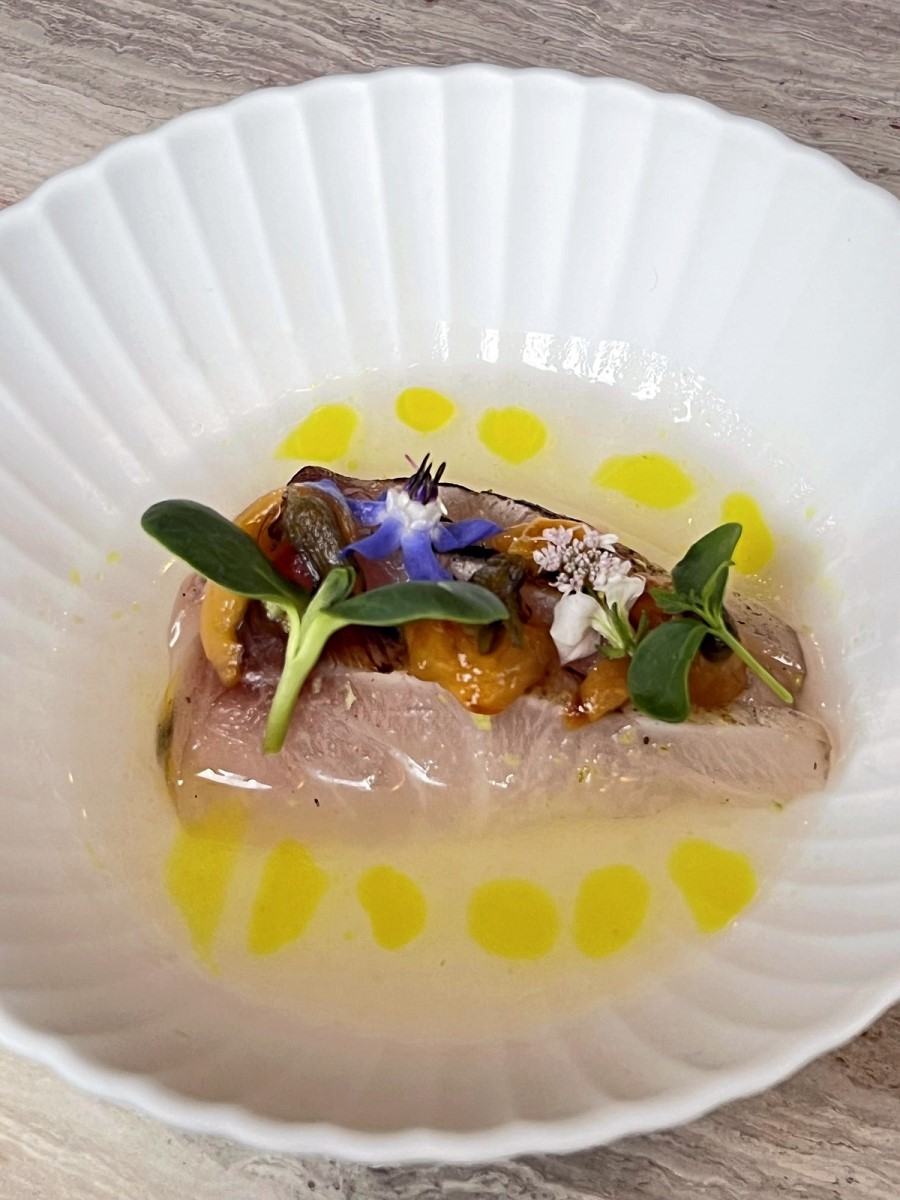
Sea squirts from Ishinomaki, Miyagi Prefecture, sit atop grilled striped jack.
During a visit to three affected prefectures — Iwate, Fukushima, and Miyagi — Ratino visited a sea squirt farm in Ishinomaki and a cattle farm in Morioka and talked with the farmers. The chef said he felt inspired after learning that the food producers share his passion for delivering the best products to customers.
“Our sales dropped due to reputational damage resulting from the quake, so we’d like to use this opportunity to help expand our business overseas,” said Misaki Tanida, 28, an employee at Horaiya Honten Co. in Koriyama, Fukushima Prefecture. Ratino used Horaiya’s amazake sweet fermented rice drink in the Washington diners’ desserts.
Prior to the 2011 accident at the Fukushima No. 1 nuclear plant in Fukushima Prefecture, almost 80% of Ishinomaki’s sea squirts were exported to South Korea. However, sales collapsed after the South Korean government banned seafood imports from Japan.
Takayuki Atsumi, 40, a sea squirt fisherman, said, “Expanding sales channels is a critical issue for us, so we’re very happy [about this new opportunity].
Ratino, who is already dreaming up new menus, said he plans to visit the Tohoku region again.






Most Read
Popular articles in the past 24 hours
-
Milano Cortina 2026: Kaori Sakamoto Wins Silver, Ami Nakai Takes ...
-
Approval of Takaichi Cabinet Stands at 73%; Yomiuri Survey Finds ...
-

New Japanese Animated Film ‘A New Dawn’ Applauded at Berlin Inter...
-

Baby Monkey Punch Captures Hearts at Chiba Pref. Zoo, on Social M...
-

Ex-ROK President Yoon Gets Life Sentence: Declaration of Martial ...
-
Early-Blooming Cherry Blossoms Adorn Former Samurai Residences in...
-

CARTOON OF THE DAY (February 20)
-

Milano Cortina 2026: Russian Skating Dynasty Leaves Milan with No...
Popular articles in the past week
-

Japan PM Takaichi’s Cabinet Resigns en Masse
-

Man Infected with Measles Reportedly Dined at Restaurant in Tokyo...
-

Videos Plagiarized, Reposted with False Subtitles Claiming ‘Ryuky...
-

Sanae Takaichi Elected 105th Prime Minister of Japan; Keeps All C...
-

Japan's Govt to Submit Road Map for Growth Strategy in March, PM ...
-

Milano Cortina 2026: Figure Skaters Riku Miura, Ryuichi Kihara Pa...
-

Bus Carrying 40 Passengers Catches Fire on Chuo Expressway; All E...
-

Tokyo’s New Record-Breaking Fountain Named ‘Tokyo Aqua Symphony’
Popular articles in the past month
-
Japan PM Takaichi’s Cabinet Resigns en Masse
-

Japan Institute to Use Domestic Commercial Optical Lattice Clock ...
-

Israeli Ambassador to Japan Speaks about Japan’s Role in the Reco...
-
Man Infected with Measles Reportedly Dined at Restaurant in Tokyo...
-

Man Infected with Measles May Have Come in Contact with Many Peop...
-
Videos Plagiarized, Reposted with False Subtitles Claiming ‘Ryuky...
-

Prudential Life Insurance Plans to Fully Compensate for Damages C...
-

Woman with Measles Visited Hospital in Tokyo Multiple Times Befor...
Top Articles in World
-
Israeli Ambassador to Japan Speaks about Japan’s Role in the Reconstruction of Gaza
-
Videos Plagiarized, Reposted with False Subtitles Claiming ‘Ryukyu Belongs to China’; Anti-China False Information Also Posted in Japan
-

North Korea Possibly Launches Ballistic Missile
-
Chinese Embassy in Japan Reiterates Call for Chinese People to Refrain from Traveling to Japan; Call Comes in Wake of ¥400 Mil. Robbery
-

Pentagon Foresees ‘More Limited’ Role in Deterring North Korea
JN ACCESS RANKING
-
Japan PM Takaichi’s Cabinet Resigns en Masse
-
Japan Institute to Use Domestic Commercial Optical Lattice Clock to Set Japan Standard Time
-
Israeli Ambassador to Japan Speaks about Japan’s Role in the Reconstruction of Gaza
-
Man Infected with Measles Reportedly Dined at Restaurant in Tokyo Station
-
Man Infected with Measles May Have Come in Contact with Many People in Tokyo, Went to Store, Restaurant Around When Symptoms Emerged