
Japanese NBA Dancer-Turned-DJ to Perform at All-Star, Hopes to Boost League’s Popularity in Japan
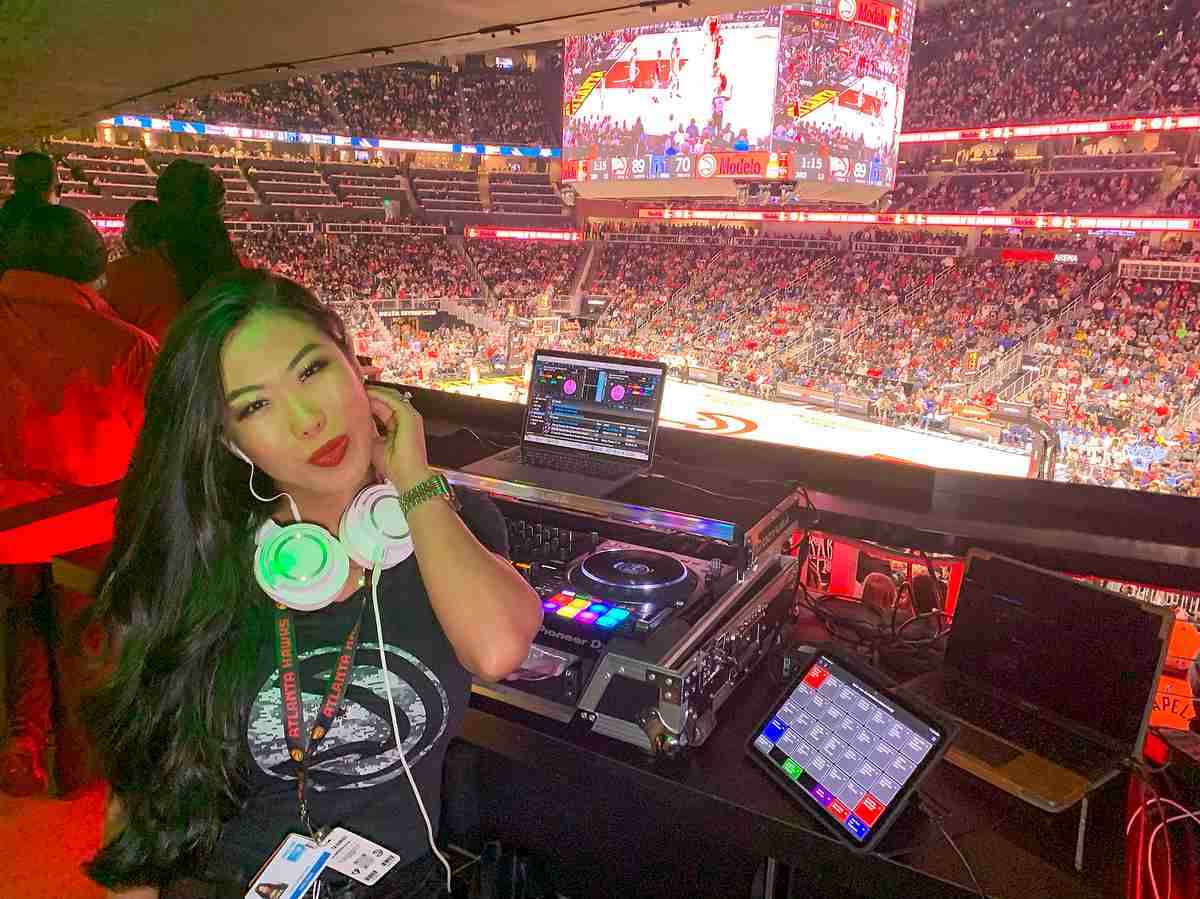
Chika Takai is seen at State Farm Arena in Atlanta in March 2022.
7:00 JST, February 13, 2026
When Chika Takai was lying on her sickbed and staring at the ceiling of her room in Saitama Prefecture over a decade ago, she never imagined what she’ll be experiencing this weekend — DJing at a packed stadium for the 2026 NBA All-Star.
An NBA Atlanta Hawks dancer-turned-DJ, Takai will be one of three DJs at the sporting extravaganza to be held on Feb. 13-15 in the Los Angeles area, where stars like Kevin Durant and Luka Doncic will appear.
The opportunity will make her the first Asian woman to be an official DJ at an NBA All-Star.
“Of course, I never imagined it,” Takai said in a recent interview with The Japan News, recalling the days when she struggled to forge a career path. “I just couldn’t picture what I’d be like in 10 or 15 years.”
Currently a Hawks resident DJ, Takai was selected from more than 100 peers to perform at the weekend event. At NBA games, music is so important that each team has several official resident DJs. Starting from the pre-game warm-up, they play music to help boost players’ motivation and improve the venue’s atmosphere.
“Music plays nonstop during games, except during the national anthem,” Takai said. “If the music stops, the game will stop.”
As an aspiring dancer, young Takai desired to hone her skills in the United States, but the plan was delayed due to an unexpected diagnosis of an intractable disease that caused internal bleeding and prevented her from dancing for almost a year.
After recuperation, she eventually moved to Atlanta in 2014 and landed a spot on the Hawks dance team through highly competitive tryouts the following year. In 2017, she became the squad’s captain, making her the first Japanese person to lead an NBA dance team. After performing as a dancer at the NBA All-Star in 2021, she moved on to her current position.
Her journey, however, wasn’t always smooth.
“Born and bred in Wako [in Saitama Prefecture], I barely left the city for 25 years. As a Japanese girl who landed in America with little English ability, I felt everything was impossible,” Takai said.
Being Asian, a woman and an immigrant, Takai felt she was often held to stereotypes, including after becoming a DJ.
“No matter how people see me and what they say about me, I remained truly patient,” Takai said. “That helped me make what once seemed impossible possible.”
In addition to her DJ gigs, Takai hopes to contribute to expanding the NBA’s appeal in Japan. With more international players in the league and games being available on different platforms outside the United States, the NBA’s fanbase is growing globally.
“The NBA is no longer only about basketball. With music, fashion and its brand, it has established its own culture,” Takai said.
America a place of dreams?
The recent immigrant crackdown in Minnesota has prompted several NBA players to speak out. As the ongoing situation may have made the United States a difficult place for many immigrants to live and work, what does the American Dream mean to her?
“In my case, the place of my dream just happened to be America. It could have been anywhere,” she said candidly, adding that the United States has the best environment for various industries, including for dancers. “So, people who have dreams should go to whatever country is best for the field in which they want to shine.”
Her skills alone didn’t bring her to where she is today; it’s also a combination of timing and support, she says. She never forgets that there were always people who believed in her at every milestone she has achieved.
Now that Takai has made the “big jump” from being one of the dancers to a more important role as a DJ, she’s more responsible and sure of herself.
“Now I feel I’m very much needed,” she says. “It’s a very precious feeling one can have living in the United States as a triple minority.”









Most Read
Popular articles in the past 24 hours
-
Seeking Nuclear Waste Site, Japan Eyes Remote Island of Minami-To...
-

Japan Ministry Asks to Conduct Nuclear Waste Disposal-related Sur...
-

Total Lunar Eclipse Visible for Some in Japan, While Clouds Block...
-

WBC to Begin: All the Pieces are in Place for Japan’s Second Stra...
-

Milano Cortina 2026: Ceremony for Winter Paralympic Torch Relay T...
-

Tokyo High Court Upholds Unification Church Dissolution Order; Li...
-

CARTOON OF THE DAY (March 4)
-

Japan to Set Up National Intelligence Bureau as Hub for Counterin...
Popular articles in the past week
-

Tokyo Spends Big on Children, Wins Over Parents
-

Japan’s Miura, Kihara Announce Withdrawal from Figure Skating Wor...
-

South Korea Tightens Rules on Foreigners Buying Homes in Seoul Me...
-
BOJ Keeping Eye on Economy and Takaichi's ‘Proactive Fiscal Polic...
-

Tokyo Measles Patient Traveled to Fukuoka Aboard JAL Planes; Susp...
-

Nidec Chairman Resigns Amid Accounting Scandal at Major Japanese ...
-

Strait of Hormuz Closure Shakes Markets; Prolonged Closure Could ...
-

Tourists Ignore Safety Barriers Near Famous Zao ‘Snow Monsters’ i...
Popular articles in the past month
-

Producer Behind Pop Group XG Arrested for Cocaine Possession
-

Japan PM Takaichi’s Cabinet Resigns en Masse
-

Man Infected with Measles Reportedly Dined at Restaurant in Tokyo...
-

Israeli Ambassador to Japan Speaks about Japan’s Role in the Reco...
-

Videos Plagiarized, Reposted with False Subtitles Claiming ‘Ryuky...
-

Prudential Life Insurance Plans to Fully Compensate for Damages C...
-

Woman with Measles Visited Hospital in Tokyo Multiple Times Befor...
-

iPS Treatments Pass Key Milestone, but Broader Applications Far f...
Top Articles in Sports
-

Milano Cortina 2026: Figure Skaters Riku Miura, Ryuichi Kihara Pair Win Gold; Dramatic Comeback from 5th Place in SP
-
Milano Cortina 2026: Japanese Gold Medalist Figure Skater Miura Says When Kihara Retires ‘I Retire Too’
-
Milano Cortina 2026: Riku Miura, Ryuichi Kihara Clinch Japan’s 1st Gold in Pairs Figure Skating, Rebounding from Disappointing Short Program
-

Milano Cortina 2026: Kokomo Murase Comes Out on Top After Overcoming Obstacles, Aiming for Greater Heights in Competition
-

Milano Cortina 2026: Japan’s Mari Fukada Wins Gold in Women’s Snowboard Slopestyle; Japan’s Kokomo Murase in Bronze
JN ACCESS RANKING
-
Producer Behind Pop Group XG Arrested for Cocaine Possession
-
Japan PM Takaichi’s Cabinet Resigns en Masse
-
Man Infected with Measles Reportedly Dined at Restaurant in Tokyo Station
-
Israeli Ambassador to Japan Speaks about Japan’s Role in the Reconstruction of Gaza
-
Videos Plagiarized, Reposted with False Subtitles Claiming ‘Ryukyu Belongs to China’; Anti-China False Information Also Posted in Japan