
Japanese-Style Bus Driver Training Underway in Indonesia; Language Skills, Road Rules Taught at Japanese Company in Java
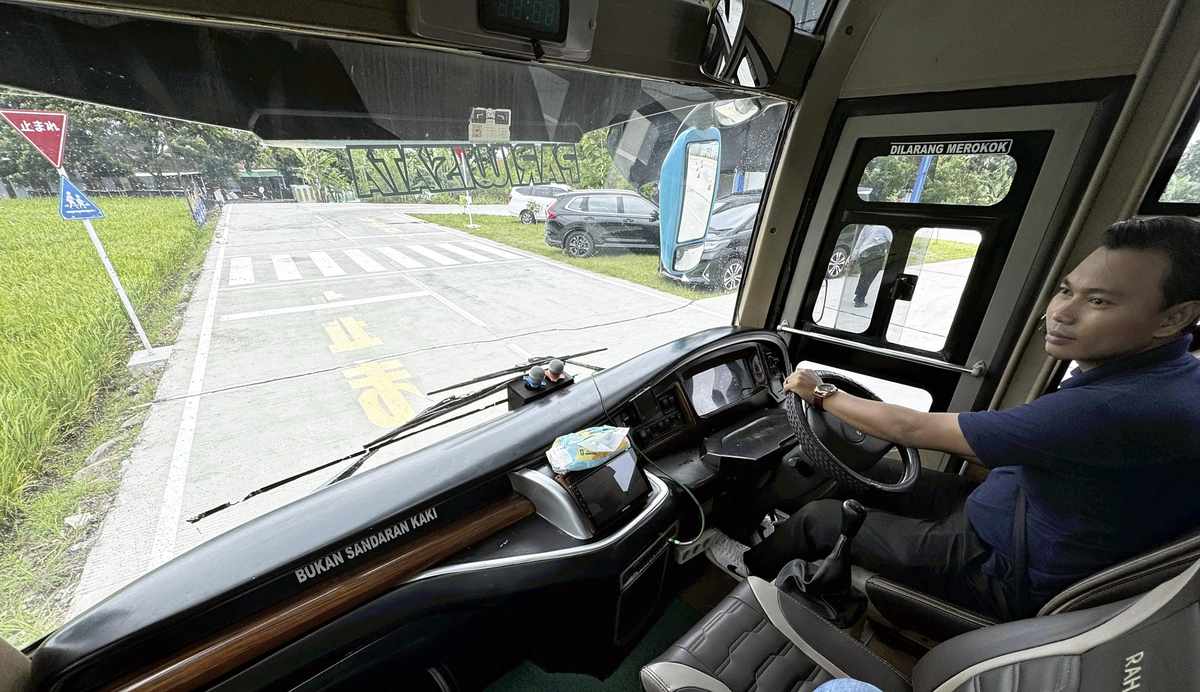
Jejen Kurniawan holds the steering wheel of a bus on a driving course with Japanese road signs at Japan Indonesia Driving School in Karanganyar, Inodnesia, on Jan. 23.
11:57 JST, February 13, 2026
KARANGANYAR, Indonesia — With Japan’s bus industry facing a serious shortage of workers, hopes are high for Indonesian bus drivers who have obtained a “specified skilled worker” visa.
At a Japanese-style driving school in Indonesia, students learn Japan’s traffic rules while studying the language, with about 50 drivers scheduled to head to Japan within a year.
Located in Karanganyar in Central Java Province, Indonesia, Japan Indonesia Driving School (JIDS) is surrounded by banana trees and rice fields. Its driving course features stop signs written in Japanese, Japanese-style railroad crossing signs, as well as practice slopes.
The school was established in August 2024 by KS Global Co. in collaboration with vocational training institution in Indonesia. The company, which is based in Shinjuku Ward, Tokyo, also runs a foreign talent recruitment business.
The Japanese education provided by the school ranges from a conversational level to the level required to pass the driver’s license examination in Japan.
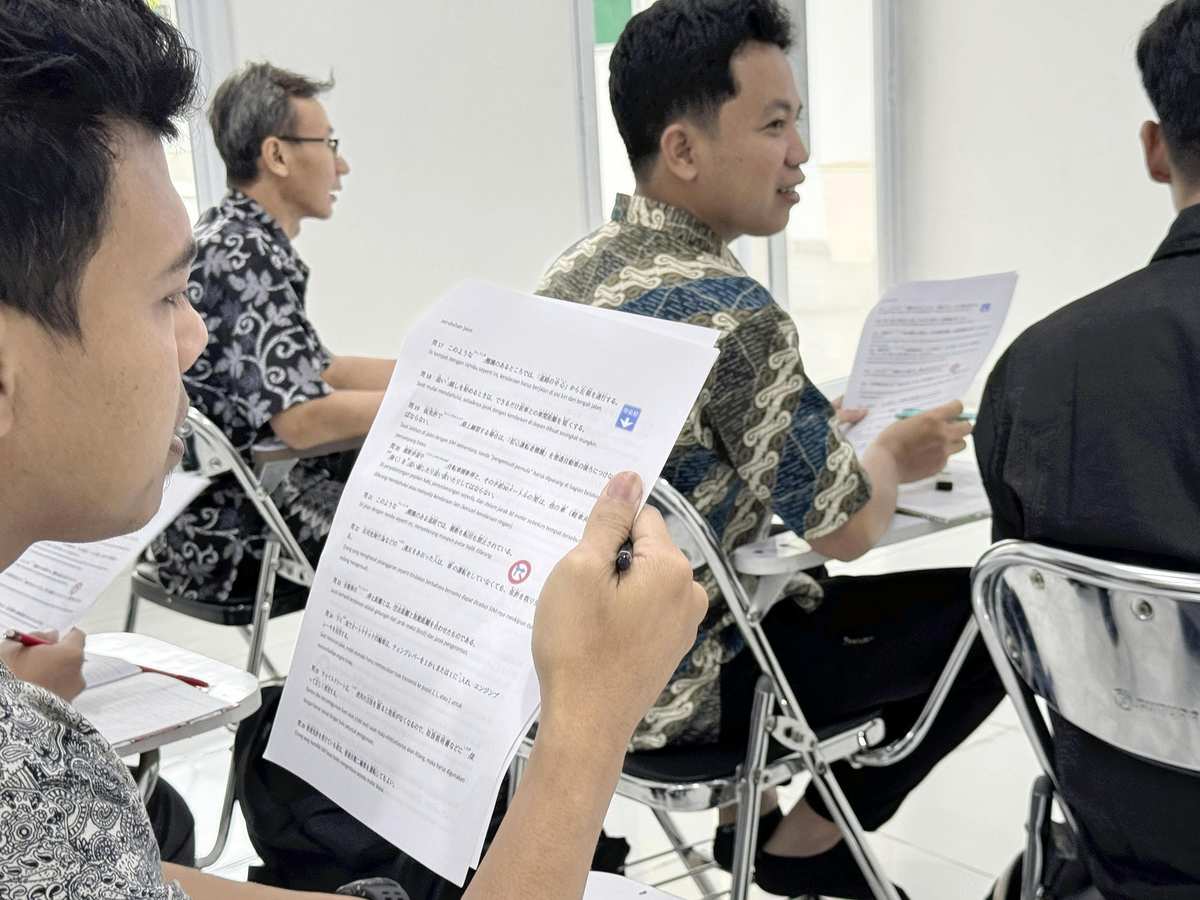
Indonesian trainees learn Japan’s traffic rules in Japanese in Karanganyar.
“The key is that Indonesia’s road rules are the same as Japan’s: traffic on the left side of the road, and drivers on the right side of the car,” said Kenichi Hikawa, managing director of KS Global. “There are other advantages, such as a high market share of Japanese cars in Indonesia, which makes Indonesians familiar with driving Japanese vehicles.”
Jejen Kurniawan, 32, who was practicing driving in an Isuzu large bus, said, “I can acquire the necessary knowledge and skills here while imagining Japanese roads.” With a family of four — his wife, 8-year-old son, 6-month-old daughter and himself — he dreams of “becoming a bus driver trusted in Japan so that I can send my children to university.”
In March 2024, just before JIDS opened, the Japanese government added foreign truck, bus and taxi drivers to the “specified skilled worker” residency category, thereby opening the automobile transport industry to foreign workers.
After arriving in Japan, the drivers must switch to a Japanese driver’s license. Then, to become bus or taxi drivers, they have to obtain a Class 2 license, a requirement for transporting passenger.
Nagoya-based Meitetsu Bus Co., which operates buses on regular routes mainly in Aichi Prefecture, hired three Indonesians trained at JIDS last August. The company conducted interviews and other tests in Indonesia in November 2024.
“Indonesians are mostly Muslims, which gives us peace of mind with regard to alcohol-related incidents occurring, and they’re friendly and serious,” said Naomi Irie, head of the company’s recruitment section. “Those were the main reasons behind our decision to hire them.”
The three recruits, who have already obtained their Class 2 licenses, are currently undergoing training on actual bus routes and are expected to start working as early as spring.
According to KS Global, JIDS trainees scheduled to arrive in Japan within the year have received preliminary job offers from bus companies nationwide, including in the Kanto, Kinki and Chugoku regions.
The company has been receiving increasingly more inquiries, not only from private bus companies but also local governments tasked with maintaining public transportation systems.


Related Tags

Most Read
Popular articles in the past 24 hours
-
Japan Tourist Spot's Capsule Toys Made from Recycled Materials Pr...
-

Space One's No. 3 Kairos Rocket Terminates Mid-Flight
-

Former Unification Church: Proceed Steadily with Liquidation to P...
-

Japan’s Space One Kairos 3rd Flight Rocket Launched, but Mission ...
-
NTT Docomo to Discontinue 3G Service in March
-

Person Apparently Caught in Avalanche on Mt. Kamifurano in Hokkai...
-
LCC Greater Bay Airlines to Launch Regular Service on Fukuoka-Hon...
-

Kihara Says Japanese National Detained in Iran Confirmed Safe; Pr...
Popular articles in the past week
-
Tokyo Spends Big on Children, Wins Over Parents
-

South Korea Tightens Rules on Foreigners Buying Homes in Seoul Me...
-

Japan’s Miura, Kihara Announce Withdrawal from Figure Skating Wor...
-
2 Unpublished Early Novellas by Japan's Kenzaburo Oe Discovered, ...
-

Strait of Hormuz Closure Shakes Markets; Prolonged Closure Could ...
-

Nidec Chairman Resigns Amid Accounting Scandal at Major Japanese ...
-
Tourists Ignore Safety Barriers Near Famous Zao ‘Snow Monsters’ i...
-

Iran Situation: Japan Must Exert Diplomatic Efforts without Merel...
Popular articles in the past month
-

Producer Behind Pop Group XG Arrested for Cocaine Possession
-

Japan PM Takaichi’s Cabinet Resigns en Masse
-

Man Infected with Measles Reportedly Dined at Restaurant in Tokyo...
-

Israeli Ambassador to Japan Speaks about Japan’s Role in the Reco...
-

Videos Plagiarized, Reposted with False Subtitles Claiming ‘Ryuky...
-

Prudential Life Insurance Plans to Fully Compensate for Damages C...
-

Woman with Measles Visited Hospital in Tokyo Multiple Times Befor...
-

iPS Treatments Pass Key Milestone, but Broader Applications Far f...
Top Articles in Society
-
Producer Behind Pop Group XG Arrested for Cocaine Possession
-
Man Infected with Measles Reportedly Dined at Restaurant in Tokyo Station
-
Woman with Measles Visited Hospital in Tokyo Multiple Times Before Being Diagnosed with Disease
-

Bus Carrying 40 Passengers Catches Fire on Chuo Expressway; All Evacuate Safely
-
Tokyo Skytree’s Elevator Stops, Trapping 20 People; All Rescued (Update 1)
JN ACCESS RANKING
-
Producer Behind Pop Group XG Arrested for Cocaine Possession
-
Japan PM Takaichi’s Cabinet Resigns en Masse
-
Man Infected with Measles Reportedly Dined at Restaurant in Tokyo Station
-
Israeli Ambassador to Japan Speaks about Japan’s Role in the Reconstruction of Gaza
-
Videos Plagiarized, Reposted with False Subtitles Claiming ‘Ryukyu Belongs to China’; Anti-China False Information Also Posted in Japan