
Over 20,000 Japanese Communities at Risk of Isolation in Major Disaster, According to Yomiuri Shimbun Tally
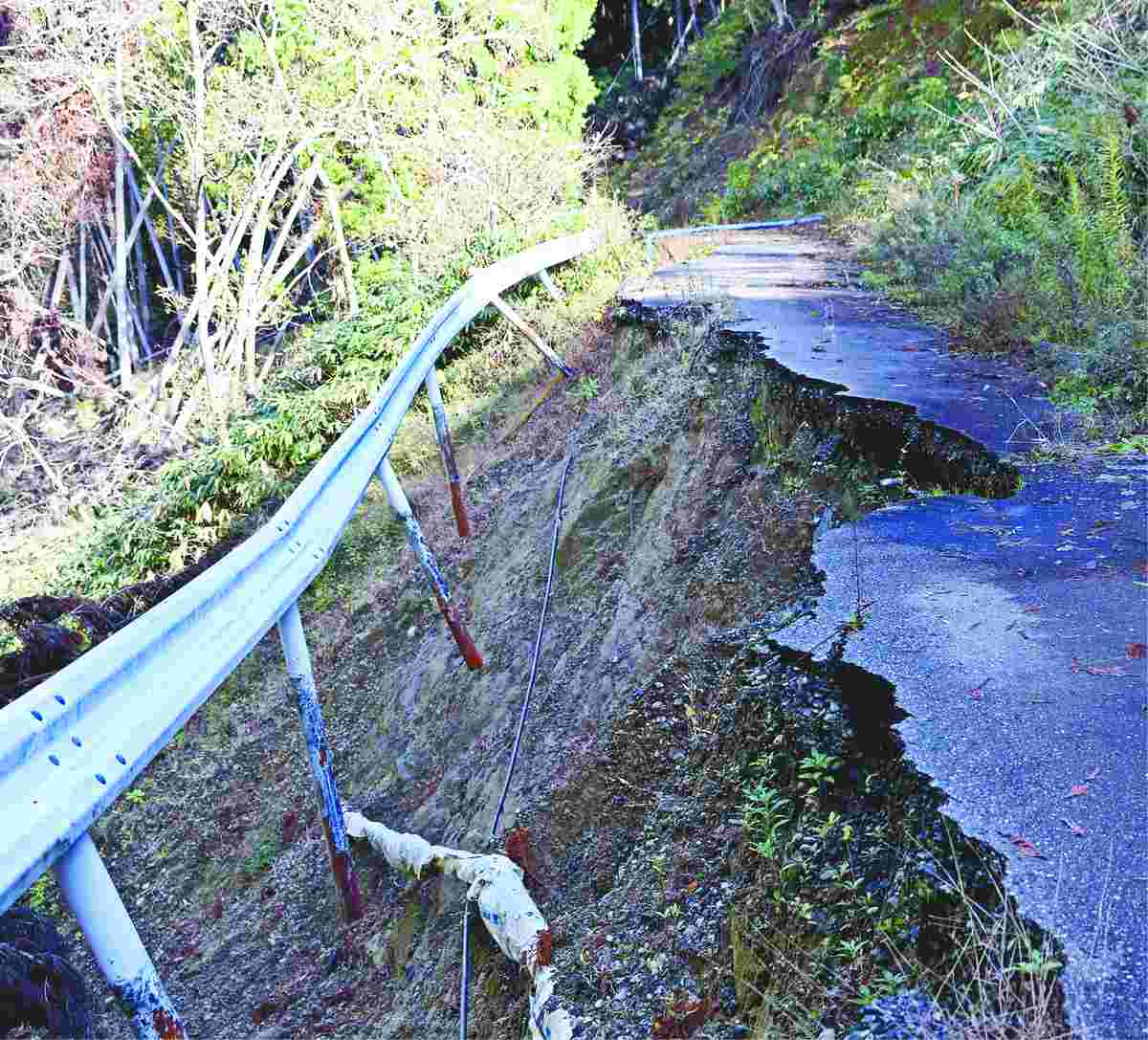
A road damaged in the Noto Peninsula Earthquake is seen unrepaired in Wajima, Ishikawa Prefecture, on Nov. 29.
14:48 JST, December 22, 2025
Japan has more than 20,000 communities that could be cut off from the rest of the country by a major disaster, according to research by The Yomiuri Shimbun.
After the Noto Peninsula Earthquake in January last year, 49 communities were isolated, but in about 60% of these cases, this was not predicted before the disaster.
Based on this lesson, local governments are working quickly to stockpile food and notify residents of the risk.
Isolated communities are those that cannot be reached by vehicles from the outside due to an earthquake; a landslide caused by torrential rain; land liquefaction; a tsunami; or another disaster, according to the Cabinet Office.
The last nationwide survey examining whether communities might be cut off was made by the central government in 2014.
In October and November, The Yomiuri Shimbun examined whether the number had risen or fallen since then. Thirty-five prefectural governments were found to have conducted their own surveys after the Noto earthquake and other disasters.
In at least 22 prefectures, the number rose, with 2,681 more communities found to be at risk. In eight prefectures, the number fell.
Across the country, at least 20,993 communities may be at risk of getting cut off in a major disaster, when one includes the five prefectures that have not disclosed their survey results or that are still tallying their figures, as well as the 12 prefectures, including Tokyo, that have not conducted new surveys since 2014.
In 2020, the Land, Infrastructure, Transport and Tourism Ministry issued guidelines calling for high-accuracy surveys using topographic maps made with aerial lasers. This has resulted in the number of landslide hazard zones across the nation doubling over 10 years, to 702,270 sites as of the end of fiscal 2024. This in turn led to an increase in the number of communities viewed as at risk of isolation.
In Oita Prefecture, the number of at-risk communities is remarkably high, at 1,202. “We are increasing stockpiles of food, water and other supplies,” said an official in the prefectural government.
In Hiroshima Prefecture, where the number is 1,114, a prefectural official said, “Though it’s hard to have so many [communities at risk], we will work in accordance with the situation in each of them.”
In the Noto Peninsula Earthquake, 49 communities in Ishikawa Prefecture were cut off from the rest of the country. But for 30 of these, including communities on flatlands, no such situation had been predicted.
The Cabinet Office will conduct another nationwide survey in 2026 that will expand the focus from mountainous regions to include flatlands.
Given that this will likely lead to an increase in the number of communities viewed as at risk, a Cabinet Office official said, “We hope local authorities will do more to stockpile supplies and ensure means of communication.”


Related Tags



Most Read
Popular articles in the past 24 hours
-

Artisans from Disaster-Hit Areas Work Together to Keep Memories o...
-

Japan Tourist Spot's Capsule Toys Made from Recycled Materials Pr...
-

Japan’s Space One Kairos 3rd Flight Rocket Launched, but Mission ...
-

Space One's No. 3 Kairos Rocket Terminates Mid-Flight
-

Person Apparently Caught in Avalanche on Mt. Kamifurano in Hokkai...
-

NTT Docomo to Discontinue 3G Service in March
-

Former Unification Church: Proceed Steadily with Liquidation to P...
-

LCC Greater Bay Airlines to Launch Regular Service on Fukuoka-Hon...
Popular articles in the past week
-
Tokyo Spends Big on Children, Wins Over Parents
-

South Korea Tightens Rules on Foreigners Buying Homes in Seoul Me...
-

Japan’s Miura, Kihara Announce Withdrawal from Figure Skating Wor...
-
2 Unpublished Early Novellas by Japan's Kenzaburo Oe Discovered, ...
-

Strait of Hormuz Closure Shakes Markets; Prolonged Closure Could ...
-

Nidec Chairman Resigns Amid Accounting Scandal at Major Japanese ...
-
Tourists Ignore Safety Barriers Near Famous Zao ‘Snow Monsters’ i...
-

Iran Situation: Japan Must Exert Diplomatic Efforts without Merel...
Popular articles in the past month
-

Producer Behind Pop Group XG Arrested for Cocaine Possession
-

Japan PM Takaichi’s Cabinet Resigns en Masse
-

Man Infected with Measles Reportedly Dined at Restaurant in Tokyo...
-

Israeli Ambassador to Japan Speaks about Japan’s Role in the Reco...
-

Videos Plagiarized, Reposted with False Subtitles Claiming ‘Ryuky...
-

Prudential Life Insurance Plans to Fully Compensate for Damages C...
-

Woman with Measles Visited Hospital in Tokyo Multiple Times Befor...
-

iPS Treatments Pass Key Milestone, but Broader Applications Far f...
Top Articles in Society
-
Producer Behind Pop Group XG Arrested for Cocaine Possession
-
Man Infected with Measles Reportedly Dined at Restaurant in Tokyo Station
-
Woman with Measles Visited Hospital in Tokyo Multiple Times Before Being Diagnosed with Disease
-

Bus Carrying 40 Passengers Catches Fire on Chuo Expressway; All Evacuate Safely
-

Tokyo Skytree’s Elevator Stops, Trapping 20 People; All Rescued (Update 1)
JN ACCESS RANKING
-
Producer Behind Pop Group XG Arrested for Cocaine Possession
-
Japan PM Takaichi’s Cabinet Resigns en Masse
-
Man Infected with Measles Reportedly Dined at Restaurant in Tokyo Station
-
Israeli Ambassador to Japan Speaks about Japan’s Role in the Reconstruction of Gaza
-
Videos Plagiarized, Reposted with False Subtitles Claiming ‘Ryukyu Belongs to China’; Anti-China False Information Also Posted in Japan