
No Liver Transplants Performed at 3 Designated Facilities; Ministry Considering Review of Standards for Certification
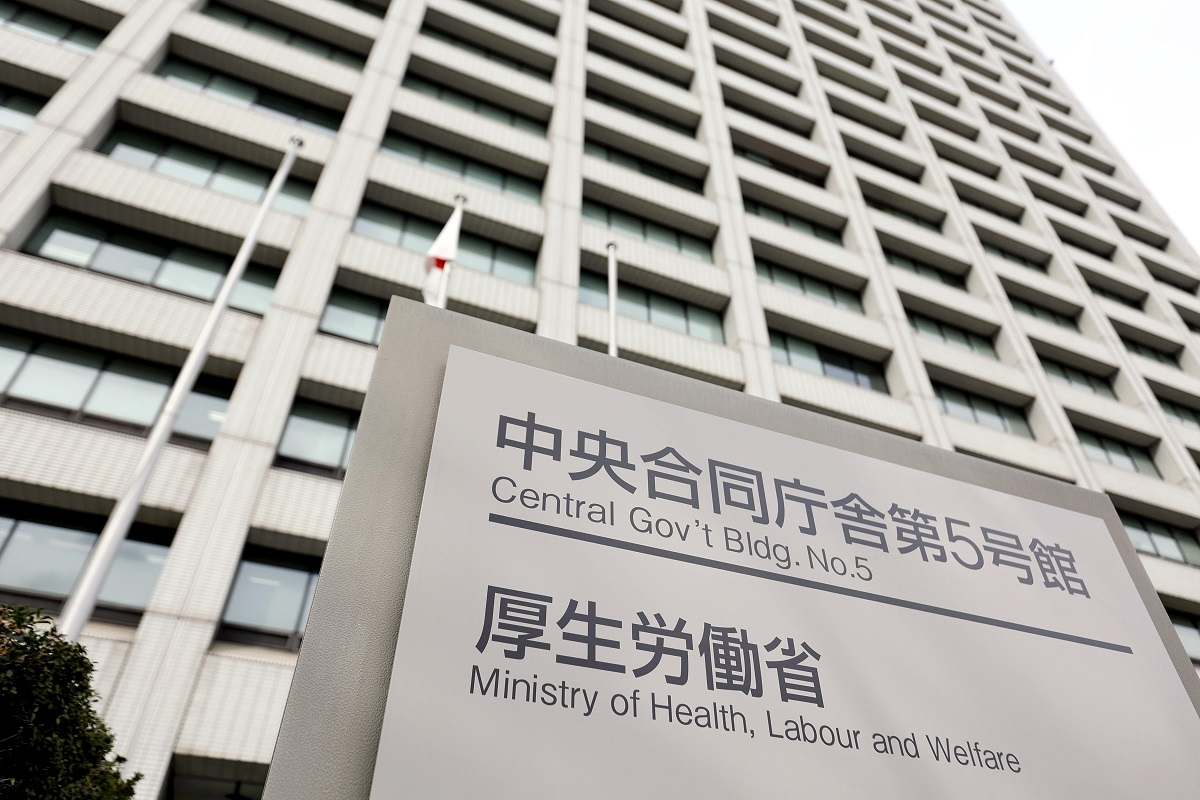
The Health, Labor and Welfare Ministry in Tokyo
15:37 JST, September 30, 2025
Three of the 23 facilities designated nationwide to transplant livers donated by brain-dead individuals have not performed a single transplant in over 2½ years, a Yomiuri Shimbun investigation has revealed.
Organ donations are increasing, but the Yomiuri’s inquiries found that transplants are concentrated at certain facilities while some others do not perform any for long periods of time. Concerned that such facilities may not be able to guarantee the quality of their surgeries, the Health, Labor and Welfare Ministry is considering revising the standards for certifying transplant facilities.
Transplant facilities are certified by a committee of the Japanese Association of Medical Sciences after being reviewed by relevant academic societies for each organ type, based on such criteria as the required number of physicians and experience with highly difficult surgeries.
According to the Japan Organ Transplant Network, an organ allocation agency, 315 liver transplants were performed between January 2023 and August 2025.
An analysis by The Yomiuri Shimbun revealed that three university hospitals — Tokyo Women’s Medical University, Mie University and Kumamoto University — did not perform any transplants during that time.
Mie University said there were no cases eligible for transplantation, while Tokyo Women’s Medical University said it had suspended liver transplants several years ago. Kumamoto University declined to comment.
All three institutions stated that patients awaiting transplants were transferred to other university hospitals and no patients was negatively affected.
The University of Tokyo performed the most liver transplants during the same period with 70 cases, followed by Kyoto University with 38 and Kyushu University with 36. The top five facilities accounted for 196 cases, or 60% of the total.
Requests for organ donations have become concentrated at some facilities, overwhelming their capacity and leading to situations where they had to decline to perform transplants.
“If a patient at a facility where transplants are difficult to perform wishes to undergo a transplant, they may need to seek another facility, risking the loss of their transplant opportunity,” said Keio University Prof. Yukiko Ito, an expert in transplant medicine.
“The government should not leave facility accreditation solely to academic societies but should proactively participate to ensure it can be reviewed based on performance,” Ito said.






Most Read
Popular articles in the past 24 hours
-

Japan’s Major Real Estate Firms Expanding Overseas Businesses to ...
-

Ukrainian Ambassador Closely Watching Japan’s Revision of Defense...
-

Milano Cortina 2026: Sakamoto Serves as Flag Bearer; Japan Earns ...
-

Emperor Turns 66 Ahead of Disaster Milestones
-

Milano Cortina 2026: There Were Cheers across the Country, after ...
-

Luna Sea Drummer Shinya Dies at 56; Powerful Drummer Behind ‘Desi...
-

Milano Cortina 2026: Riku-Ryu Duo Stick Together During Closing C...
-

Milano Cortina 2026: ‘Magical’ Italian Games Close wi...
Popular articles in the past week
-

Japan PM Takaichi’s Cabinet Resigns en Masse
-

Man Infected with Measles Reportedly Dined at Restaurant in Tokyo...
-

Sanae Takaichi Elected Prime Minister of Japan; Keeps All Cabinet...
-

Japan's Govt to Submit Road Map for Growth Strategy in March, PM ...
-

Bus Carrying 40 Passengers Catches Fire on Chuo Expressway; All E...
-

Milano Cortina 2026: Figure Skaters Riku Miura, Ryuichi Kihara Pa...
-

Japan, U.S. Name 3 Inaugural Investment Projects; Reached Agreeme...
-

U.S. Firm to Build Training Hub in Fukushima N-plant for Debris R...
Popular articles in the past month
-
Japan PM Takaichi’s Cabinet Resigns en Masse
-

Japan Institute to Use Domestic Commercial Optical Lattice Clock ...
-

Israeli Ambassador to Japan Speaks about Japan’s Role in the Reco...
-
Man Infected with Measles Reportedly Dined at Restaurant in Tokyo...
-

Videos Plagiarized, Reposted with False Subtitles Claiming ‘Ryuky...
-

Man Infected with Measles May Have Come in Contact with Many Peop...
-

Prudential Life Insurance Plans to Fully Compensate for Damages C...
-

Woman with Measles Visited Hospital in Tokyo Multiple Times Befor...
Top Articles in Society
-

Producer Behind Girls Group XG Arrested for Cocaine Possession
-
Man Infected with Measles Reportedly Dined at Restaurant in Tokyo Station
-
Man Infected with Measles May Have Come in Contact with Many People in Tokyo, Went to Store, Restaurant Around When Symptoms Emerged
-
Woman with Measles Visited Hospital in Tokyo Multiple Times Before Being Diagnosed with Disease
-
Australian Woman Dies After Mishap on Ski Lift in Nagano Prefecture
JN ACCESS RANKING
-
Japan PM Takaichi’s Cabinet Resigns en Masse
-
Japan Institute to Use Domestic Commercial Optical Lattice Clock to Set Japan Standard Time
-
Israeli Ambassador to Japan Speaks about Japan’s Role in the Reconstruction of Gaza
-
Man Infected with Measles Reportedly Dined at Restaurant in Tokyo Station
-
Videos Plagiarized, Reposted with False Subtitles Claiming ‘Ryukyu Belongs to China’; Anti-China False Information Also Posted in Japan