
American Blue-Eyed Friendship Doll Survived World War II in Japan as Wish for Protecting Lives of Young People
16:46 JST, September 23, 2025
MAEBASHI — A blue-eyed doll on display at the main entrance of Tone Elementary School in Numata, Gunma Prefecture, is one of 12,739 dolls gifted as a token of friendship by the United States before World War II.
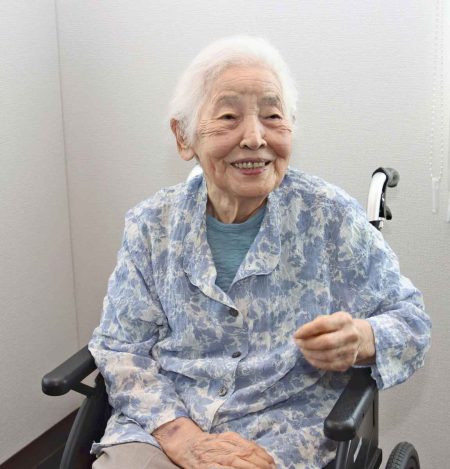
Mitsu Araki speaks at a nursing home in Maebashi in August.
While many of them were targets of hatred as dolls of the enemy and destroyed, this school’s doll, named Mary-chan, was hidden away in a cupboard and survived unscathed. The doll is now preserved as a reminder of the importance of peace for children.
Mitsu Araki, 97, from Maebashi, first saw Mary-chan in 1934 when she entered the then Azumamura elementary and junior high school in Numata, where her father, Takeo Kaneko, served as vice principal. Araki said she still remembered when she first encountered the 40-centimeter-tall doll sitting on a cabinet in the school staff room and thought Mary-chan was “cute, with strong features different from Japanese dolls, and wearing a pretty cape.”
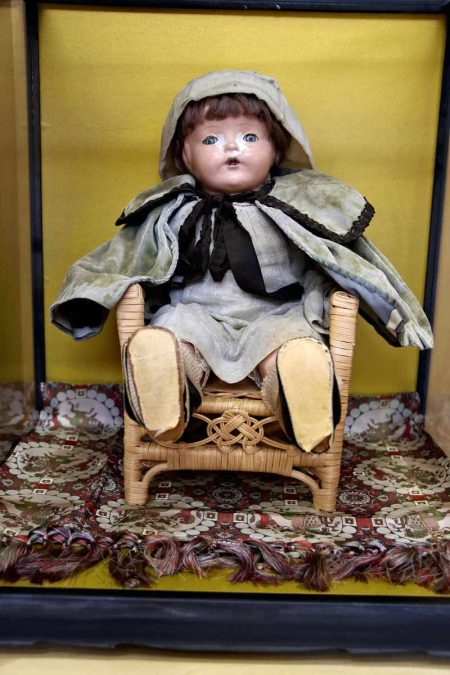
Mary-chan at Tone Elementary school in Numata, Gunma Prefecture
The blue-eyed dolls were gifted to Japanese kindergartens and elementary schools by a private group in the United States in 1927. Following the enforcement of the Immigration Act of 1924, which banned immigration from Japan to the United States, a missionary with a positive view on Japan was concerned about bilateral relations souring and called upon Americans to send friendship dolls to Japanese children. Of the 12,739 dolls collected, about 140 arrived in Gunma Prefecture. Mary-chan was one of those dolls.
Welcoming ceremonies were held across the prefecture, and the dolls “met” Japanese dolls brought by children at the Hina Matsuri Doll Festival in March. The situation changed dramatically when the war between Japan and the United States began in 1941. They were seen as dolls from an enemy country, and many were stabbed with bamboo spears or burned.
At the Azumamura school, teachers had many meetings to discuss what to do with Mary-chan, but no conclusion was reached. Kaneko, who was entrusted with the decision, thought he could not destroy the doll because it came as a messenger of peace. He hid it in a sewing room cabinet while on night duty.
Back then, his students were being drafted one after another, and Araki said, “My father may have been making a plea, saying ‘I am protecting you, so please don’t take the lives of Japan’s young people.’”
Mary-chan saw the light of day again in 1966. It was found when the school building was being demolished to build a new one. After its story was featured on a television program in 1973, other friendship dolls were discovered nationwide, with over 300 confirmed to date.
During the war, Araki studied at the prefectural teacher’s school in Maebashi while living in the dormitory. She did not know that her father was agonizing over the doll. Even after the war ended, he had never spoke of the hidden doll to others. However, after the TV program, he started talking about the doll with his family.
“I want to honor him for his courage to hide the doll and wish for peace,” Araki said as she reminisced about her deeply sincere father.
Araki visited her alma mater for the first time in 13 years last spring to meet Mary-chan at the entrance. It will soon be 100 years since the doll’s arrival in Japan.
“Thank you for your long service,” she said.
‘The doll did nothing wrong’
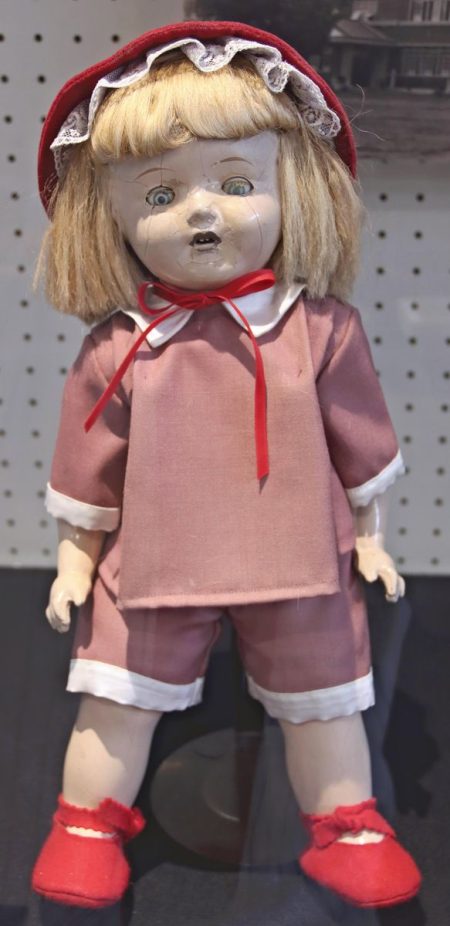
Mary-chan is seen at Niragawa Elementary School in Ota, Gunma Prefecture. The outfit was made after World War II.
Another doll also called Mary-chan is at Niragawa Elementary School in Ota, the same prefecture. The then principal hid it away in a cupboard as “the doll did nothing wrong.”
This Mary-chan is displayed in the principal’s office but had been exhibited at the city’s Nittanosho History Museum until the end of August.
The exhibition was organized by Tetsuya Maezawa, 65, a modern military history researcher and historical writer. His uncle, who graduated from Niragawa, died in battle in the Philippines in 1945 at the age of 25. Maezawa displayed a panel photo of his uncle in the exhibition.
“I was finally able to reunite my uncle with Mary-chan. I hope children will feel how precious peace is,” Maezawa said.






Most Read
Popular articles in the past 24 hours
-

Japan’s Major Real Estate Firms Expanding Overseas Businesses to ...
-

Ukrainian Ambassador Closely Watching Japan’s Revision of Defense...
-

Milano Cortina 2026: Sakamoto Serves as Flag Bearer; Japan Earns ...
-

Emperor Turns 66 Ahead of Disaster Milestones
-

Milano Cortina 2026: There Were Cheers across the Country, after ...
-
Luna Sea Drummer Shinya Dies at 56; Powerful Drummer Behind ‘Desi...
-

Milano Cortina 2026: ‘Magical’ Italian Games Close wi...
-

Milano Cortina 2026: Riku-Ryu Duo Stick Together During Closing C...
Popular articles in the past week
-

Japan PM Takaichi’s Cabinet Resigns en Masse
-

Man Infected with Measles Reportedly Dined at Restaurant in Tokyo...
-

Sanae Takaichi Elected Prime Minister of Japan; Keeps All Cabinet...
-

Japan's Govt to Submit Road Map for Growth Strategy in March, PM ...
-

Bus Carrying 40 Passengers Catches Fire on Chuo Expressway; All E...
-

Milano Cortina 2026: Figure Skaters Riku Miura, Ryuichi Kihara Pa...
-

Japan, U.S. Name 3 Inaugural Investment Projects; Reached Agreeme...
-

U.S. Firm to Build Training Hub in Fukushima N-plant for Debris R...
Popular articles in the past month
-
Japan PM Takaichi’s Cabinet Resigns en Masse
-

Japan Institute to Use Domestic Commercial Optical Lattice Clock ...
-

Israeli Ambassador to Japan Speaks about Japan’s Role in the Reco...
-
Man Infected with Measles Reportedly Dined at Restaurant in Tokyo...
-

Videos Plagiarized, Reposted with False Subtitles Claiming ‘Ryuky...
-

Man Infected with Measles May Have Come in Contact with Many Peop...
-

Prudential Life Insurance Plans to Fully Compensate for Damages C...
-

Woman with Measles Visited Hospital in Tokyo Multiple Times Befor...
Top Articles in Society
-

Producer Behind Girls Group XG Arrested for Cocaine Possession
-
Man Infected with Measles Reportedly Dined at Restaurant in Tokyo Station
-
Man Infected with Measles May Have Come in Contact with Many People in Tokyo, Went to Store, Restaurant Around When Symptoms Emerged
-
Woman with Measles Visited Hospital in Tokyo Multiple Times Before Being Diagnosed with Disease
-

Australian Woman Dies After Mishap on Ski Lift in Nagano Prefecture
JN ACCESS RANKING
-
Japan PM Takaichi’s Cabinet Resigns en Masse
-
Japan Institute to Use Domestic Commercial Optical Lattice Clock to Set Japan Standard Time
-
Israeli Ambassador to Japan Speaks about Japan’s Role in the Reconstruction of Gaza
-
Man Infected with Measles Reportedly Dined at Restaurant in Tokyo Station
-
Videos Plagiarized, Reposted with False Subtitles Claiming ‘Ryukyu Belongs to China’; Anti-China False Information Also Posted in Japan