
City Brands Self As Birthplace of Suzuki Surname; It May Have Begun with a Priest in the Heian Period
16:00 JST, September 21, 2025
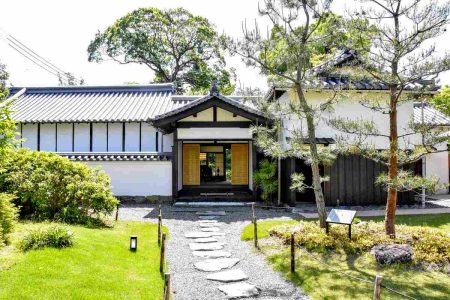
The restored Suzuki Yashiki mansion is seen in Kainan, Wakayama Prefecture.
WAKAYAMA — Since ancient times, pilgrims have passed through the city of Kainan, Wakayama Prefecture, on their way to the three Kumano Sanzan grand shrines — Hongu Taisha, Hayatama Taisha and Nachi Taisha. Kainan is believed to be the birthplace of the Suzuki surname, now borne by an estimated 1.76 million people in Japan.
Focusing on the surname, the nation’s second most common after Sato, local residents and others are working to revitalize Kainan by various means, including the restoration of a mansion associated with the Suzuki surname.
Fujishiro Jinja shrine is located on a hill in Kainan that was once an important site for pilgrims, who are believed to have prayed there for safe travels.
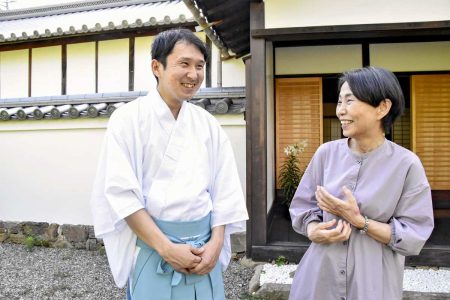
Yoshinori Nishioka, left, the chief priest of Fujishiro Jinja shrine
Two years ago, the Suzuki Yashiki mansion was restored on the grounds of the shrine, surrounded by deep greenery. “We want this house to serve as the home of people with the Suzuki name,” said Yoshinori Nishioka, 35, the chief priest of the shrine.
The Suzuki name is said to have originated when the family of a priest from the Kumano region settled near the shrine and called themselves Suzuki during the Heian period (from 794 to the late 12th century). Later Suzukis spread Kumano worship around the country, and their surname spread along with it.
The mansion where successive heads of the Suzuki family lived fell into ruin after it was abandoned in 1942 when the family came to have no successor.
In 2013, some participants in the seventh “Suzuki summit,” a gathering of Suzukis from across the country that was held in Kainan that year, called for the restoration of the dilapidated mansion.
It was agreed at the summit to restore the house and create a place to welcome Suzukis from all over the country. In 2015, local volunteers including people from the chamber of commerce and industry set up an association for the restoration efforts and launched the project, guided in part by a picture map from the Edo period (1603-1867).
There are many places associated with the Suzuki surname around the nation, and the Suzuki summit meeting has been held since 1998 in various locations such as Akita, Ishikawa and Kumamoto prefectures.
Donations were solicited mainly from Suzukis nationwide, and about ¥87 million was raised. Major automaker Suzuki Motor Corp. also made contributions. With a total of about ¥200 million in funds, including public subsidies, the mansion’s tatami-mat hall, entrance building and a pond-and-garden landscape from the late Muromachi period (1336-1573) were restored.
Katsuji Jinde, 77, a company executive and former chair of the association, said that although he was relieved by the completion of the restoration, he thought it was important to take further steps. “We should not allow the city to further depopulate and become deserted,” Jinde said.
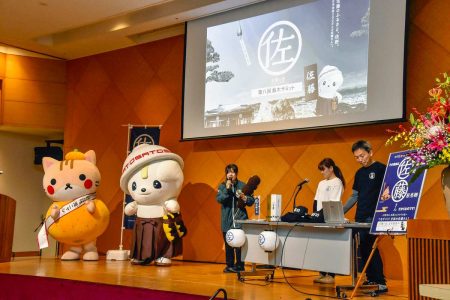
Mascot characters appear at the “Suzuki summit,” a gathering of people with the Suzuki surname, in Kainan last year.
In November 2024, a Suzuki summit was held in Kainan for the first time in 11 years. The restored mansion was unveiled to the public at the same time.
Local volunteers organized various events and promoted the summit by, for instance, distributing stickers bearing the slogan “Suzuki Daiyakushin” (Suzukis make a great leap) to people who visited a michi-no-eki roadside rest area in the city in Suzuki vehicles.
They also invited Sato no Kai, an association of people with the Sato surname based in Sano, Tochigi Prefecture, to the meeting and exchanged opinions on the potential for regional revitalization through surname-themed goods. Sano is said to be the birthplace of the most common surname in the nation.
“It was good that the mansion was restored to highlight our roots. I want to continue promoting it,” said a 55-year-old summit participant from Akita Prefecture.
In fiscal 2021, the Kainan municipal government established a subsidy program for Suzukis wishing to move to the city from the Tokyo metropolitan area. The city aims to improve the name recognition of Kainan by continuously leveraging the Suzuki surname. It also is set to further promote immigration to the city and expand the number of visitors it receives.
Preparations are underway at Fujishiro Jinja to register the mansion and the shrine’s precincts as a museum. It plans to create items related to the Suzuki name, open a museum shop and establish a cafe, too.
“We want to reach not only those with the surname but also other people nationwide. We want to create activities that involve many people, just like people working for the Sato surname do,” Nishioka said.
Sato, Tanaka summit meetings
There are said to be about 300,000 surnames in Japan.
The city of Sano in Tochigi Prefecture is known for utilizing the surname Sato, the nation’s most common one, for regional revitalization.
Sato no Kai was established in 2020. It punningly designated March 10 as “Sato-no Hi” (Sato day) because “sa” sounds like “three” and “to” sounds like “ten.” The group has developed goods such as caps featuring the surname, and sells them at some stores in the city, with discounts for members. The association interacts with people of the second most common surname, Suzuki, through baseball tournaments, too.
Takahashi is the nation’s third most common surname, followed by Tanaka in fourth. In 2024, a gathering of people with the Tanaka surname was also held.
In the village of Ubuyama, Kumamoto Prefecture, 20% of the population have the family name “I,” which is pronounced “e” as in “eat.” In another pun, the municipality designated Nov. 3 as “I-san’s day” (Day for those named I), because the two 1s in 11 could be pronounced together with a long “e” and “san” sounds like “three.” Ubuyama has also held the “Zenkoku I-san Matsuri” (National festival for people named I) event that day since 2023.


Related Tags



Most Read
Popular articles in the past 24 hours
-

Japan’s Major Real Estate Firms Expanding Overseas Businesses to ...
-

Ukrainian Ambassador Closely Watching Japan’s Revision of Defense...
-

Milano Cortina 2026: Sakamoto Serves as Flag Bearer; Japan Earns ...
-
Emperor Turns 66 Ahead of Disaster Milestones
-

Milano Cortina 2026: There Were Cheers across the Country, after ...
-
Luna Sea Drummer Shinya Dies at 56; Powerful Drummer Behind ‘Desi...
-

Milano Cortina 2026: ‘Magical’ Italian Games Close wi...
-

Milano Cortina 2026: Riku-Ryu Duo Stick Together During Closing C...
Popular articles in the past week
-

Japan PM Takaichi’s Cabinet Resigns en Masse
-

Man Infected with Measles Reportedly Dined at Restaurant in Tokyo...
-

Sanae Takaichi Elected Prime Minister of Japan; Keeps All Cabinet...
-

Japan's Govt to Submit Road Map for Growth Strategy in March, PM ...
-

Bus Carrying 40 Passengers Catches Fire on Chuo Expressway; All E...
-

Milano Cortina 2026: Figure Skaters Riku Miura, Ryuichi Kihara Pa...
-

Japan, U.S. Name 3 Inaugural Investment Projects; Reached Agreeme...
-

U.S. Firm to Build Training Hub in Fukushima N-plant for Debris R...
Popular articles in the past month
-
Japan PM Takaichi’s Cabinet Resigns en Masse
-

Japan Institute to Use Domestic Commercial Optical Lattice Clock ...
-

Israeli Ambassador to Japan Speaks about Japan’s Role in the Reco...
-
Man Infected with Measles Reportedly Dined at Restaurant in Tokyo...
-

Videos Plagiarized, Reposted with False Subtitles Claiming ‘Ryuky...
-

Man Infected with Measles May Have Come in Contact with Many Peop...
-

Prudential Life Insurance Plans to Fully Compensate for Damages C...
-

Woman with Measles Visited Hospital in Tokyo Multiple Times Befor...
Top Articles in Society
-

Producer Behind Girls Group XG Arrested for Cocaine Possession
-
Man Infected with Measles Reportedly Dined at Restaurant in Tokyo Station
-
Man Infected with Measles May Have Come in Contact with Many People in Tokyo, Went to Store, Restaurant Around When Symptoms Emerged
-
Woman with Measles Visited Hospital in Tokyo Multiple Times Before Being Diagnosed with Disease
-
Australian Woman Dies After Mishap on Ski Lift in Nagano Prefecture
JN ACCESS RANKING
-
Japan PM Takaichi’s Cabinet Resigns en Masse
-
Japan Institute to Use Domestic Commercial Optical Lattice Clock to Set Japan Standard Time
-
Israeli Ambassador to Japan Speaks about Japan’s Role in the Reconstruction of Gaza
-
Man Infected with Measles Reportedly Dined at Restaurant in Tokyo Station
-
Videos Plagiarized, Reposted with False Subtitles Claiming ‘Ryukyu Belongs to China’; Anti-China False Information Also Posted in Japan