
20% of Japanese Students Don’t Read Books, Harming Their Comprehension Skills, Study Finds
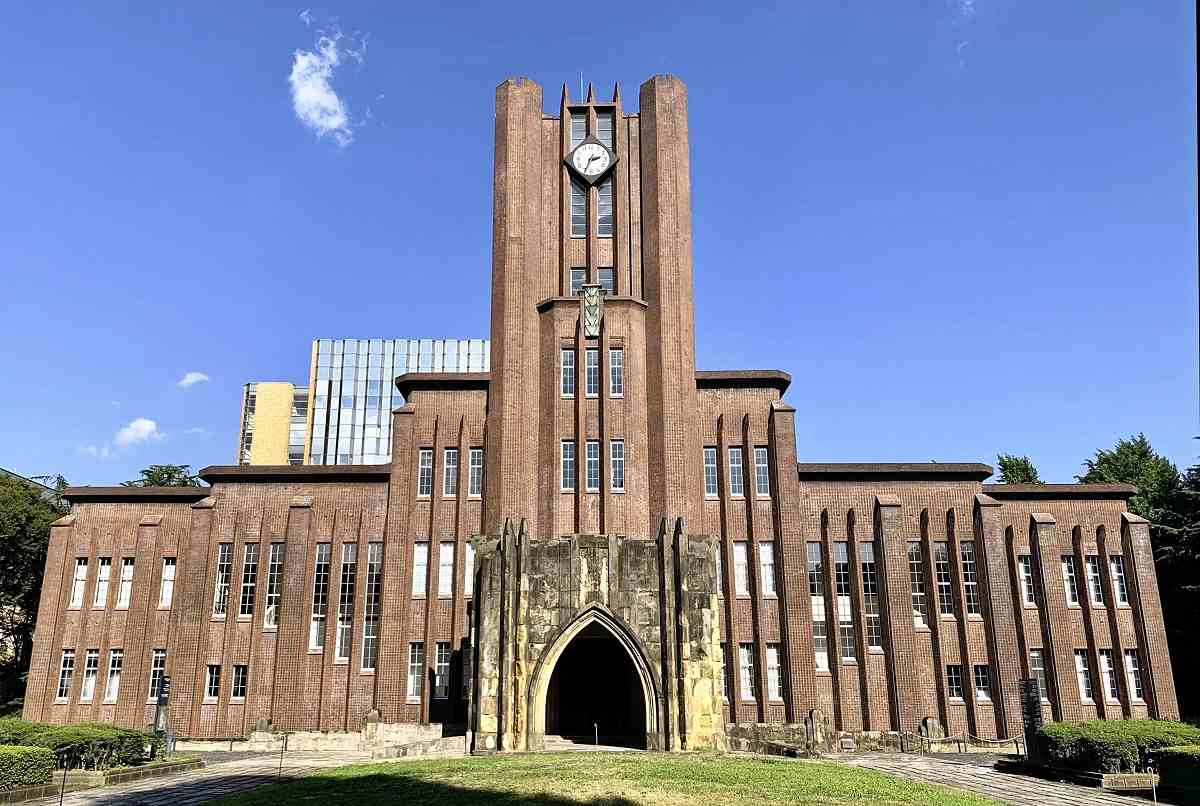
University of Tokyo
15:02 JST, September 2, 2025
One in ten university students do not take notes during lectures, while two in ten do not regularly read books, newspapers or magazines, according to a survey of university students’ reading and writing habits.
A research team led by University of Tokyo Prof. Kuniyoshi Sakai, who specializes in the neuroscience of language, released the survey’s results on Monday.
Those who do not take notes or who read infrequently tended to score low on reading comprehension tests. The research team described this as a serious situation rooted in the daily lives of university students.
The research team conducted its survey from March to August, posing questions to undergraduate and graduate students as well as junior college students ages 18 to 29. A total of 1,062 people responded.
According to the survey, 107 respondents do not take notes on lectures, neither writing in a notebook nor making a record on a digital device using a stylus or keyboard. One hundred eighty-five students recorded everything they could, while the remaining 770 students take some notes, such as when something particularly stands out.
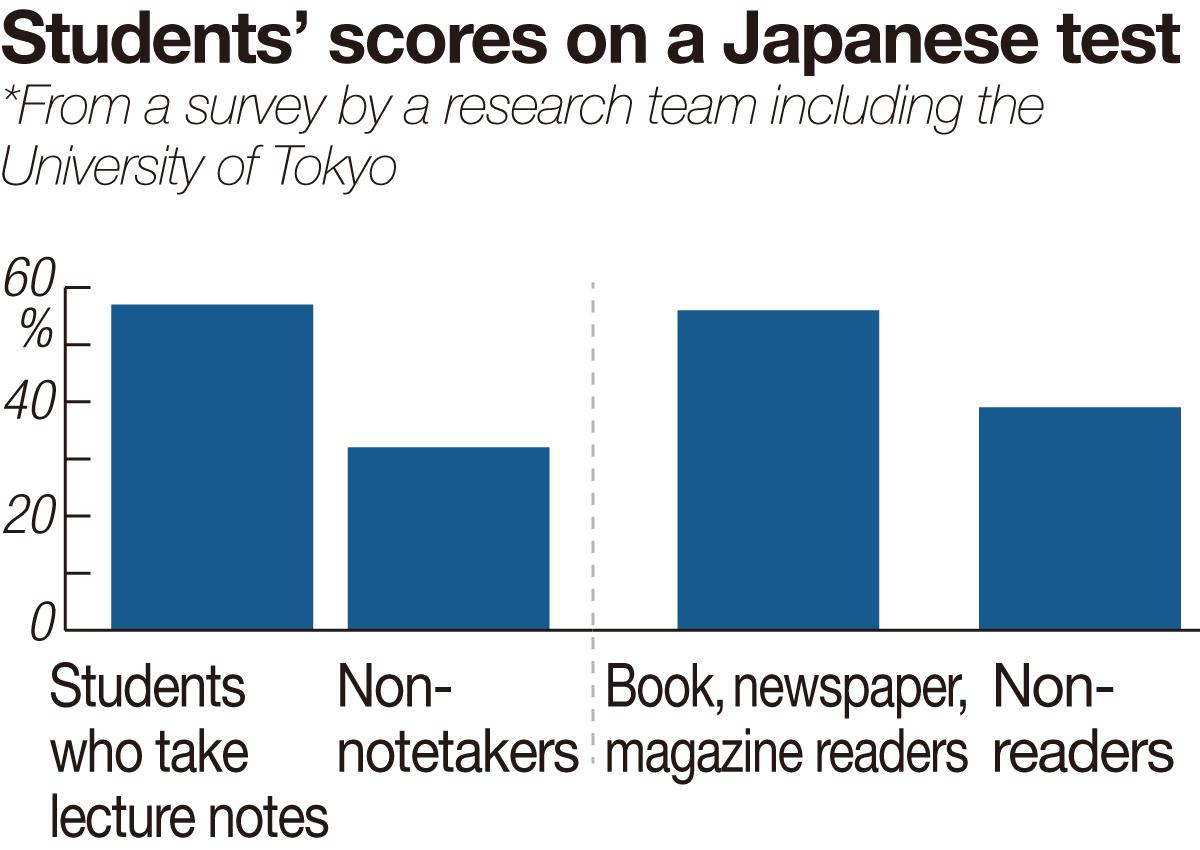
Some of the respondents were given the “Japanese proficiency test in reading and writing Grade Pre-2,” from the Japan Kanji Aptitude Testing Foundation. Students who take notes answered correctly 57% of the time, while those who do not scored significantly lower, at 32%. The percentage of those who do not take notes was at a level indicating they can “barely understand the content of diagrams and texts.”
The team also compared the answers of students who regularly read books, newspapers or magazines and those who do not. Readers scored 56%, while non-readers only answered 39% of questions correctly.
The team also asked how much time respondents spend reading. Those reading physical books spend about 40 minutes per day reading, and those who said they read social media or blogs spend about 60 minutes.
“The survey clearly shows that daily note-taking habits and reading habits are related to reading comprehension and logical thinking skills,” said Sakai. “The rapid spread of digital devices in recent years may be causing a significant problem by eroding the habits of handwriting and reading.”





Most Read
Popular articles in the past 24 hours
-

Ukrainian Ambassador Closely Watching Japan’s Revision of Defense...
-

Milano Cortina 2026: Sakamoto Serves as Flag Bearer; Japan Earns ...
-

Milano Cortina 2026: There Were Cheers across the Country, after ...
-

Emperor Turns 66 Ahead of Disaster Milestones
-

Luna Sea Drummer Shinya Dies at 56; Powerful Drummer Behind ‘Desi...
-

Milano Cortina 2026: ‘Magical’ Italian Games Close wi...
-

Milano Cortina 2026: Riku-Ryu Duo Stick Together During Closing C...
-

1.2 Mil. Rapeseed Flowers Attract Cute Birds, People in Aichi Pre...
Popular articles in the past week
-

Japan PM Takaichi’s Cabinet Resigns en Masse
-

Man Infected with Measles Reportedly Dined at Restaurant in Tokyo...
-

Sanae Takaichi Elected Prime Minister of Japan; Keeps All Cabinet...
-

Japan's Govt to Submit Road Map for Growth Strategy in March, PM ...
-

Bus Carrying 40 Passengers Catches Fire on Chuo Expressway; All E...
-

Milano Cortina 2026: Figure Skaters Riku Miura, Ryuichi Kihara Pa...
-

U.S. Firm to Build Training Hub in Fukushima N-plant for Debris R...
-

Japan, U.S. Name 3 Inaugural Investment Projects; Reached Agreeme...
Popular articles in the past month
-
Japan PM Takaichi’s Cabinet Resigns en Masse
-

Japan Institute to Use Domestic Commercial Optical Lattice Clock ...
-

Israeli Ambassador to Japan Speaks about Japan’s Role in the Reco...
-
Man Infected with Measles Reportedly Dined at Restaurant in Tokyo...
-

Videos Plagiarized, Reposted with False Subtitles Claiming ‘Ryuky...
-

Man Infected with Measles May Have Come in Contact with Many Peop...
-

Prudential Life Insurance Plans to Fully Compensate for Damages C...
-

Woman with Measles Visited Hospital in Tokyo Multiple Times Befor...
Top Articles in Society
-

Producer Behind Girls Group XG Arrested for Cocaine Possession
-
Man Infected with Measles Reportedly Dined at Restaurant in Tokyo Station
-
Man Infected with Measles May Have Come in Contact with Many People in Tokyo, Went to Store, Restaurant Around When Symptoms Emerged
-
Woman with Measles Visited Hospital in Tokyo Multiple Times Before Being Diagnosed with Disease
-

Australian Woman Dies After Mishap on Ski Lift in Nagano Prefecture
JN ACCESS RANKING
-
Japan PM Takaichi’s Cabinet Resigns en Masse
-
Japan Institute to Use Domestic Commercial Optical Lattice Clock to Set Japan Standard Time
-
Israeli Ambassador to Japan Speaks about Japan’s Role in the Reconstruction of Gaza
-
Man Infected with Measles Reportedly Dined at Restaurant in Tokyo Station
-
Videos Plagiarized, Reposted with False Subtitles Claiming ‘Ryukyu Belongs to China’; Anti-China False Information Also Posted in Japan