
Treated Water Release at Fukushima Nuclear Plant Passes 2-Year Mark; 11 of 1,046 Water Tanks Dismantled to Date
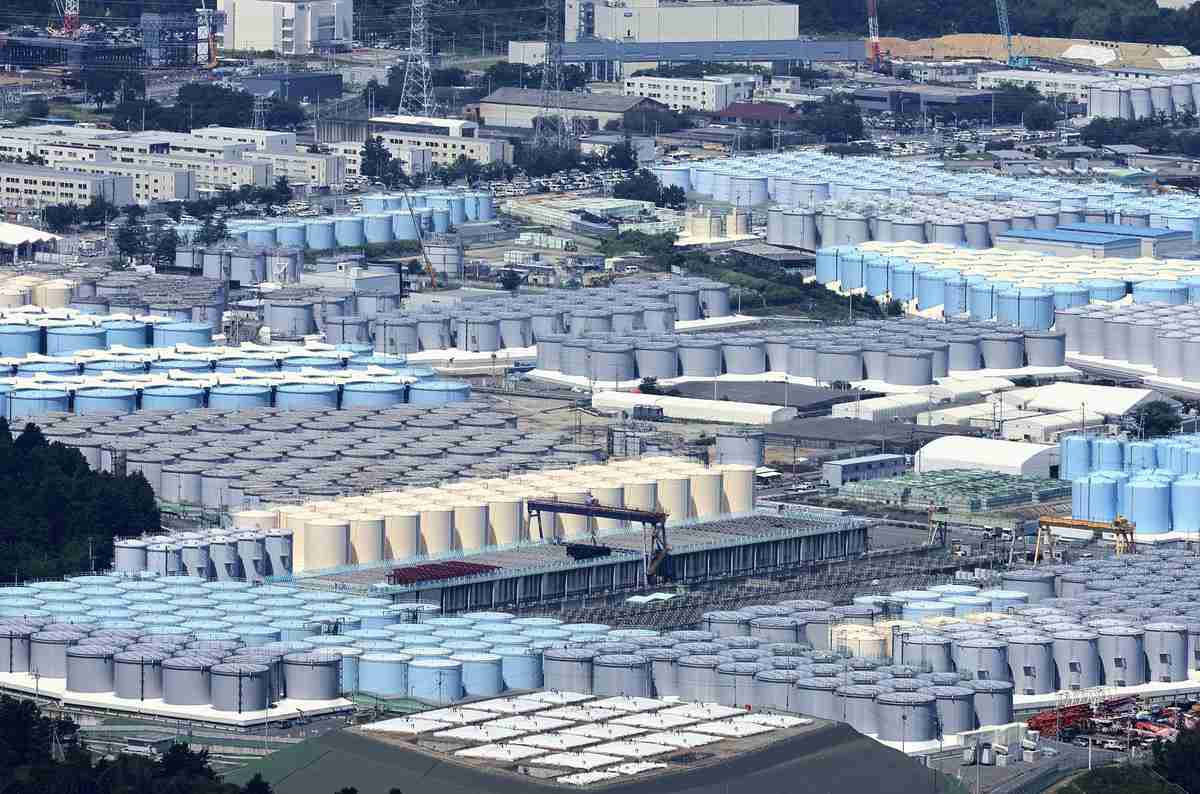
Tanks storing treated water are seen on the grounds of Tokyo Electric Power Company Holdings Inc.’s Fukushima No. 1 nuclear power plant in Fukushima Prefecture on Aug. 19.
6:00 JST, September 2, 2025
Treated water started to be released into the ocean from Tokyo Electric Power Company Holdings Inc.’s Fukushima No. 1 nuclear power plant on Aug. 24, 2023. Ongoing monitoring of the surrounding waters in the two years since has uncovered no abnormalities in the concentration of radioactive materials.
The government and TEPCO must keep seeking broad understanding from the international community that the ocean discharge is an essential part of the decommissioning work, which they aim to complete by 2051.
Water tank demolition begins
The massive water tanks clustered on an elevated area on the plant’s grounds were a striking sight when viewed from an airplane in mid-August.
The demolition of empty tanks began in February, with 11 fully dismantled. Yet, this represents just 1% of the 1,046 total at its peak. The space opened by the demolition was barely noticeable from above.
TEPCO plans to build facilities on the cleared site to temporarily store melted nuclear fuel and to prepare equipment for extracting it.
After the 2011 nuclear accident, TEPCO constructed the 1,000 ton-capacity tanks to store both treated water and water undergoing treatment. A cumulative total of about 1.35 million tons of water has been stored since. The government decided in 2021 to release the treated water into the ocean out of concern that land available for the tanks would run out.
An ongoing process
In order to keep stable the estimated 880 tons of radioactive debris at the plant, water must be continuously poured over it. However, the water becomes contaminated as a result.
About 110,000 tons of treated water has been released over the past two years, but the amount of water stored in the tanks has only been reduced by 58,000 tons as of Aug. 14.
Rainwater and groundwater seeping into cracks of the reactor buildings — which were primarily damaged by hydrogen explosions — mixes with the contaminated water, increasing the overall volume of water that needs to be treated.
TEPCO has taken countermeasures such as installing a barrier of frozen soil underneath the site and pumping groundwater from wells. It also paved the area to prevent rainwater from seeping into the ground.
These measures have decreased the amount of newly generated contaminated water from 490 tons a day a decade ago to 70 tons a day last year, with low rainfall also contributing to this drop. However, there are limits to such efforts, and whether the rate can be reduced further is unclear.
Science backs safety claims
The scientific basis for the safety of the ocean discharge has been received understanding overseas.
Former Nauruan President Baron Waqa, who is currently secretary general of the Pacific Islands Forum, a group mainly comprised of Pacific Island nations, told The Yomiuri Shimbun that the forum has received thorough explanations from the Japanese government about the safety of the treated water.
A research group including members from Fukushima University announced in August that no accumulation of tritium had been found in fish caught about 7 kilometers off Fukushima Prefecture.
Tritium naturally exists in the ocean and is routinely discharged from nuclear power plants both domestically and internationally. In fact, the tritium concentration is less than 0.002% the World Health Organization’s maximum level for drinking water of 10,000 becquerels per liter.
An estimate by the University of Tokyo and others, which have studied how the discharge would change ocean tritium concentrations, suggests a maximum increase of 0.1% by 2099. Alexandre Cauquoin, a project associate professor at the University of Tokyo, said the impact on human health and the environment is negligible.
In regard to TEPCO’s future approach to treated water, Hiroshi Miyano, a former visiting professor at Hosei University said, “It is crucial to continue responsibly disclosing data, such as the discharge volume, to ensure no doubts arise about the reliability of the decommissioning work.”


Related Tags


Most Read
Popular articles in the past 24 hours
-

Ukrainian Ambassador Closely Watching Japan’s Revision of Defense...
-

Milano Cortina 2026: Sakamoto Serves as Flag Bearer; Japan Earns ...
-

Milano Cortina 2026: There Were Cheers across the Country, after ...
-

Emperor Turns 66 Ahead of Disaster Milestones
-
Luna Sea Drummer Shinya Dies at 56; Powerful Drummer Behind ‘Desi...
-

Milano Cortina 2026: ‘Magical’ Italian Games Close wi...
-

Milano Cortina 2026: Riku-Ryu Duo Stick Together During Closing C...
-

1.2 Mil. Rapeseed Flowers Attract Cute Birds, People in Aichi Pre...
Popular articles in the past week
-

Japan PM Takaichi’s Cabinet Resigns en Masse
-

Man Infected with Measles Reportedly Dined at Restaurant in Tokyo...
-

Sanae Takaichi Elected Prime Minister of Japan; Keeps All Cabinet...
-

Japan's Govt to Submit Road Map for Growth Strategy in March, PM ...
-

Bus Carrying 40 Passengers Catches Fire on Chuo Expressway; All E...
-

Milano Cortina 2026: Figure Skaters Riku Miura, Ryuichi Kihara Pa...
-

U.S. Firm to Build Training Hub in Fukushima N-plant for Debris R...
-

Japan, U.S. Name 3 Inaugural Investment Projects; Reached Agreeme...
Popular articles in the past month
-
Japan PM Takaichi’s Cabinet Resigns en Masse
-

Japan Institute to Use Domestic Commercial Optical Lattice Clock ...
-

Israeli Ambassador to Japan Speaks about Japan’s Role in the Reco...
-
Man Infected with Measles Reportedly Dined at Restaurant in Tokyo...
-

Videos Plagiarized, Reposted with False Subtitles Claiming ‘Ryuky...
-

Man Infected with Measles May Have Come in Contact with Many Peop...
-

Prudential Life Insurance Plans to Fully Compensate for Damages C...
-

Woman with Measles Visited Hospital in Tokyo Multiple Times Befor...
Top Articles in Society
-

Producer Behind Girls Group XG Arrested for Cocaine Possession
-
Man Infected with Measles Reportedly Dined at Restaurant in Tokyo Station
-
Man Infected with Measles May Have Come in Contact with Many People in Tokyo, Went to Store, Restaurant Around When Symptoms Emerged
-
Woman with Measles Visited Hospital in Tokyo Multiple Times Before Being Diagnosed with Disease
-
Australian Woman Dies After Mishap on Ski Lift in Nagano Prefecture
JN ACCESS RANKING
-
Japan PM Takaichi’s Cabinet Resigns en Masse
-
Japan Institute to Use Domestic Commercial Optical Lattice Clock to Set Japan Standard Time
-
Israeli Ambassador to Japan Speaks about Japan’s Role in the Reconstruction of Gaza
-
Man Infected with Measles Reportedly Dined at Restaurant in Tokyo Station
-
Videos Plagiarized, Reposted with False Subtitles Claiming ‘Ryukyu Belongs to China’; Anti-China False Information Also Posted in Japan