
Govt. Premises in Tokyo’s Kasumigaseki to Receive Soil from Fukushima, New 5-Year Roadmap Reveals
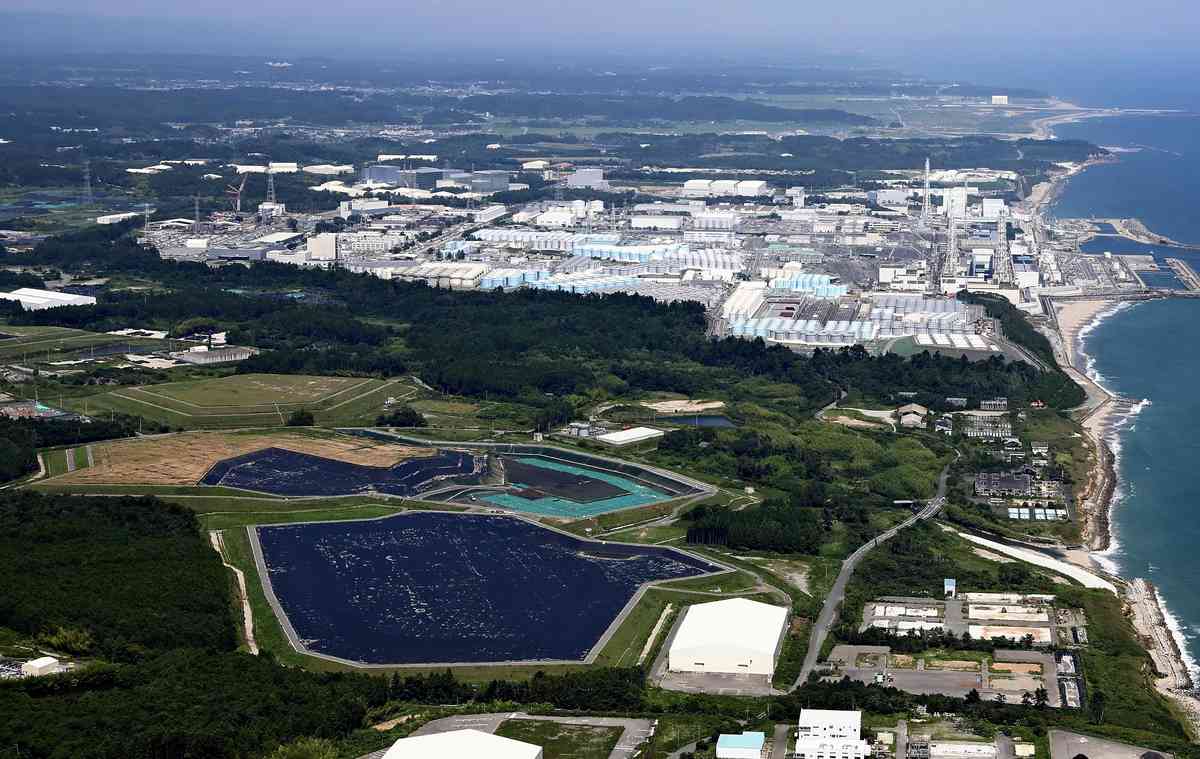
Part of the area surrounding Tokyo Electric Power Company’s Fukushima No. 1 nuclear power plant where removed soil is being stored is seen in Fukushima Prefecture on Aug. 19.
20:00 JST, August 26, 2025
Nine locations on the grounds of central government offices in the Kasumigaseki area of Tokyo have been selected to receive soil with low levels of radiation removed during decontamination work following the 2011 accident at the Fukushima No. 1 nuclear power plant as early as next month, according to a government roadmap approved Tuesday.
The five-year roadmap, officially approved at a meeting of relevant ministers, is a collection of measures to be taken for the disposal of all the removed soil outside Fukushima Prefecture to go ahead.
At the ministers’ meeting held on Tuesday, Chief Cabinet Secretary Yoshimasa Hayashi said, “The government will make every effort to realize the final disposal of the soil outside the prefecture.”
Currently, about 14 million cubic meters of removed soil is being temporarily stored in an area spanning the two prefectural towns of Okuma and Futaba near the nuclear power plant. All of the soil is legally required to be disposed of outside the prefecture by March 2045.
In order to reduce the amount of soil to be disposed of, the government plans to reuse the 75% of the soil with radioactivity of 8,000 becquerels or less per kilogram in road embankments and land development projects. The radiation dose a person would receive from this portion of soil would not exceed 1 millisievert per year, the maximum public exposure allowable under international safety standards.
According to the roadmap, about 80 cubic meters of the soil with low radioactivity will be transported to nine locations in the Kasumigaseki district, including the grounds of the Central Common Government Offices, which house government ministries and agencies such as the Economy, Trade and Industry Ministry and the Foreign Ministry, in or after September. The soil will be added to flower beds and embankments within the premises.
A project planned by the Environment Ministry to reuse the soil on government-owned land outside the prefecture has fallen through due to opposition from local residents.
In July, the government transported about 2 cubic meters of the soil to the Prime Minister’s Office to reuse it in the front garden.
In the roadmap, the government set out its stance of proactively accepting the soil and plans to expand reuse not only in the Kasumigaseki district but also in other regions where local offices of the central government are located.
Meanwhile, no prospective sites have emerged for the disposal of the remaining 25% of the soil, which has a radioactivity of more than 8,000 becquerels per kilogram.
The roadmap states that the government will begin selecting and investigating candidate sites for final disposal of the soil around 2030. It says the Environment Ministry will discuss such matters as the conditions for candidate locations at an expert panel to be established in autumn.
The government is believed to be aiming at promoting public understanding regarding the safety of the soil, among other issues, and realize its final disposal.








Most Read
Popular articles in the past 24 hours
-
Milano Cortina 2026: Japanese Gold Medalist Figure Skater Miura S...
-

Yokohama to Test Out Renewable-Powered Offshore Floating Data Cen...
-
Japan’s Takaichi Speaks on New U.S. Tariff in Upper House, Says P...
-

Ishinomaki Man Plush Toy Offers Hope to Children in Times of Disa...
-
Japan Authorities Begin On-site Inspection of Japanese Microsoft ...
-

Nikkei Tops 59,000 for First Time
-
Japan Eyes Introducing Prescreening System for Foreign Travelers,...
-

Dodgers' Roki Sasaki Erratic in First Spring Training Outing, Giv...
Popular articles in the past week
-

Producer Behind Pop Group XG Arrested for Cocaine Possession
-

iPS Treatments Pass Key Milestone, but Broader Applications Far f...
-
Japan, U.S. Name 3 Inaugural Investment Projects; Reached Agreeme...
-

Tokyo Skytree's Elevator Stops, Trapping 20 People; All Rescued (...
-

Japan’s Major Real Estate Firms Expanding Overseas Businesses to ...
-
Milano Cortina 2026: Japanese Gold Medalist Figure Skater Miura S...
-

Baby Monkey Punch Captures Hearts at Chiba Pref. Zoo, on Social M...
-

Nepal Bus Crash Kills 19 People, Injures 25 Including One Japanes...
Popular articles in the past month
-
Producer Behind Pop Group XG Arrested for Cocaine Possession
-

Japan PM Takaichi’s Cabinet Resigns en Masse
-

Japan Institute to Use Domestic Commercial Optical Lattice Clock ...
-

Man Infected with Measles Reportedly Dined at Restaurant in Tokyo...
-

Israeli Ambassador to Japan Speaks about Japan’s Role in the Reco...
-

Videos Plagiarized, Reposted with False Subtitles Claiming ‘Ryuky...
-

Man Infected with Measles May Have Come in Contact with Many Peop...
-

Prudential Life Insurance Plans to Fully Compensate for Damages C...
Top Articles in Society
-
Producer Behind Pop Group XG Arrested for Cocaine Possession
-
Man Infected with Measles Reportedly Dined at Restaurant in Tokyo Station
-
Man Infected with Measles May Have Come in Contact with Many People in Tokyo, Went to Store, Restaurant Around When Symptoms Emerged
-
Woman with Measles Visited Hospital in Tokyo Multiple Times Before Being Diagnosed with Disease
-
Australian Woman Dies After Mishap on Ski Lift in Nagano Prefecture
JN ACCESS RANKING
-
Producer Behind Pop Group XG Arrested for Cocaine Possession
-
Japan PM Takaichi’s Cabinet Resigns en Masse
-
Man Infected with Measles Reportedly Dined at Restaurant in Tokyo Station
-
Israeli Ambassador to Japan Speaks about Japan’s Role in the Reconstruction of Gaza
-
Videos Plagiarized, Reposted with False Subtitles Claiming ‘Ryukyu Belongs to China’; Anti-China False Information Also Posted in Japan