
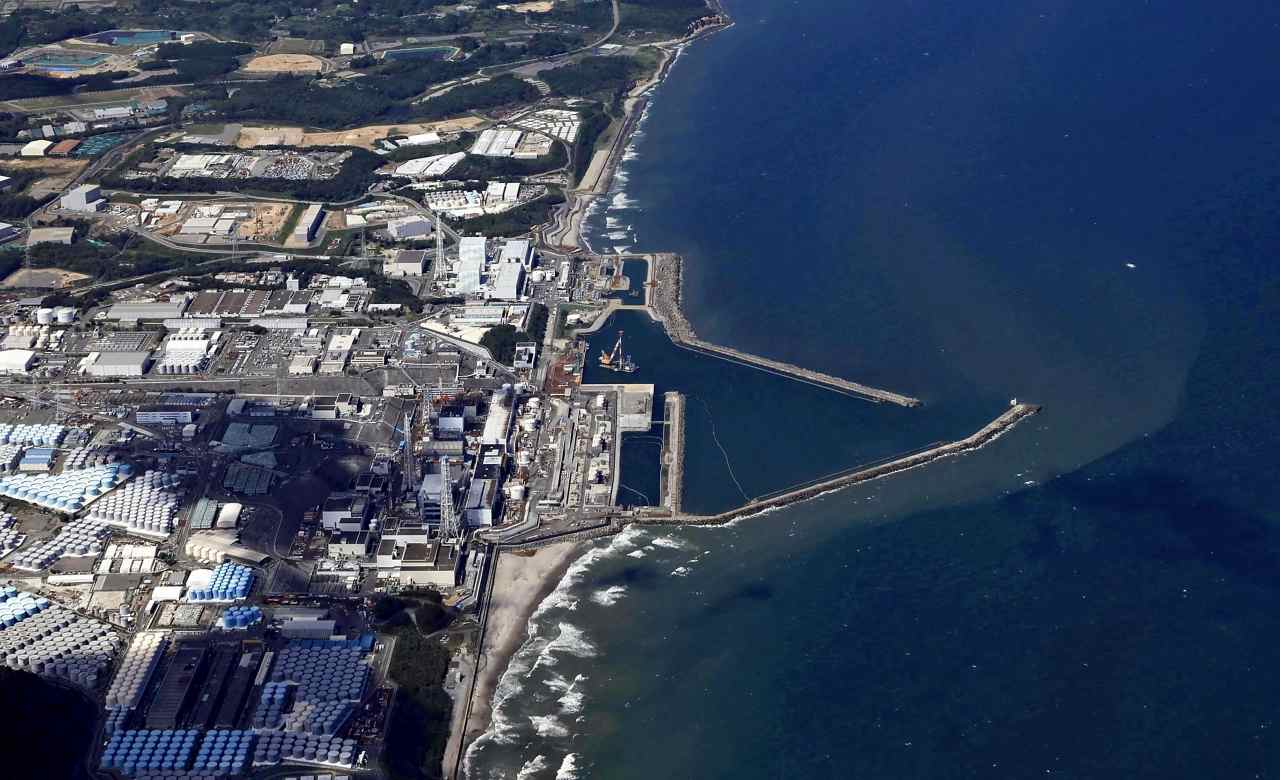
The Fukushima No. 1 nuclear power plant
14:56 JST, September 2, 2023
Ten becquerels per liter of tritium was detected in a seawater sample taken Thursday about 200 meters north of the Fukushima No. 1 nuclear power plant’s underwater discharge tunnel, Tokyo Electric Power Company Holdings, Inc. said Friday.
The World Health Organization’s drinking water standard guideline is set at 10,000 becquerels per liter.
This is the first time the radioactive material, which is believed to be from the treated water, was detected in a seawater sample since it started being released on Aug. 24.
Of the 10 sites that TEPCO is monitoring, the sample was taken at a location nearest to the discharge tunnel’s opening, which is located 1 kilometer from the plant.
The level detected in Thursday’s sample is said to not have an impact on the environment or health. Levels of tritium were below the detectable limit, which is about eight becquerels per liter, at the other nine sites.
Meanwhile, tritium levels in flounders and seawater sampled at sites near the plant were below the detectable limit, the Fisheries Agency, the Environment Ministry and the Fukushima prefectural government said Friday.







Most Read
Popular articles in the past 24 hours
-

Inspection via Micro-Drones Begins at Fukushima No. 1 Nuclear Pla...
-

Samurai Japan Beats Taiwan in its First World Baseball Classic Ga...
-
Japan Govt Survey Finds Just 10% of Workers Want Working Hours to...
-

Heckling, Once a Fixture of Diet Debate in Japan, Abates in the F...
-

Nippon Life Insurance's U.S. Arm Sues OpenAI Over Legal Assistanc...
-

Japan Asked U.S. Not to Disadvantage Tokyo under New Tariff Rules
-

Sake Mash Brewed Aboard ISS Returns to Japan; Final Product Alrea...
-

Japan to Send SDF Jet to Maldives for Iran Evacuations; Planes to...
Popular articles in the past week
-

South Korea Tightens Rules on Foreigners Buying Homes in Seoul Me...
-

Ibaraki Pref.'s 1st Foreign Bus Driver Hired in Tsukuba
-

2 Unpublished Early Novellas by Japan's Kenzaburo Oe Discovered, ...
-

Amid Strait of Hormuz Blockade, Shipping Companies Scramble to Ge...
-

Strait of Hormuz Closure Shakes Markets; Prolonged Closure Could ...
-

Iran Situation: Japan Must Exert Diplomatic Efforts without Merel...
-
Measles Patient Visited Hospital in Bunkyo Ward, Tokyo, Metropoli...
-

Japanese Shipping Giants Halt Strait of Hormuz Transit as Iran Co...
Popular articles in the past month
-

Producer Behind Pop Group XG Arrested for Cocaine Possession
-

Japan PM Takaichi’s Cabinet Resigns en Masse
-

Man Infected with Measles Reportedly Dined at Restaurant in Tokyo...
-

Videos Plagiarized, Reposted with False Subtitles Claiming ‘Ryuky...
-

Prudential Life Insurance Plans to Fully Compensate for Damages C...
-

Woman with Measles Visited Hospital in Tokyo Multiple Times Befor...
-

iPS Treatments Pass Key Milestone, but Broader Applications Far f...
-

Sanae Takaichi Elected Prime Minister of Japan; Keeps All Cabinet...
Top Articles in Society
-
Producer Behind Pop Group XG Arrested for Cocaine Possession
-
Man Infected with Measles Reportedly Dined at Restaurant in Tokyo Station
-
Woman with Measles Visited Hospital in Tokyo Multiple Times Before Being Diagnosed with Disease
-

Bus Carrying 40 Passengers Catches Fire on Chuo Expressway; All Evacuate Safely
-

Tokyo Skytree’s Elevator Stops, Trapping 20 People; All Rescued (Update 1)
JN ACCESS RANKING
-
Producer Behind Pop Group XG Arrested for Cocaine Possession
-
Japan PM Takaichi’s Cabinet Resigns en Masse
-
Man Infected with Measles Reportedly Dined at Restaurant in Tokyo Station
-
Videos Plagiarized, Reposted with False Subtitles Claiming ‘Ryukyu Belongs to China’; Anti-China False Information Also Posted in Japan
-
Prudential Life Insurance Plans to Fully Compensate for Damages Caused by Fraudulent Actions Without Waiting for Third-Party Committee Review