

A surrogate mother with her cloned baby camel is seen at the farm of the Reproductive Biotechnology Centre in Dubai on May 18.
12:41 JST, June 16, 2023
DUBAI (Reuters) — Having led the world’s first cloning of camels in 2009, Nisar Wani is now replicating a few dozen a year at a Dubai lab — a big business in the Gulf region where camels are cherished and can earn huge sums in beauty and racing contests.
“We collect these eggs from the ovaries of slaughtered animals. We have to mature them in the lab for 24 hours before they reach the stage where we can use them for the cloning process,” Wani said.
Reproductive cloning of animals uses a process called somatic cell nuclear transfer.
DNA is removed from a camel egg cell and replaced with DNA from a frozen body cell of a camel prized for some quality such as speed or beauty. The egg then develops into an embryo with no sperm needed.
Animal cloning is, however, time-consuming, with low success rates.
“From a hundred embryos that we transfer, we can have five to ten pregnancies, and sometimes maybe three to six babies born,” said Wani, originally a veterinarian who has a PhD in animal reproduction.
The Reproductive Biotechnology Centre in Dubai works to preserve the cells of and reproduce elite racing camels, beauty contest winners, milking camels and prized males, Wani said.
It also uses interspecies cloning technology to preserve threatened species.
It has cloned critically endangered, double-humped wild Bactrian camels using the eggs and surrogate mothers of single humped camels, Wani said.
“In cloning we are not doing anything new. God has created all the material. God has created the cells, we are only helping the process,” Wani said, adding it was one of a number of assisted reproductive technology techniques.
Most of the center’s work preserving elite traits is done through the more conventional multiple embryo transfer method.
A valued camel’s ovary is stimulated to produce multiple eggs. After fertilizations with prized sperm, multiple embryos can be transferred to surrogate camels.
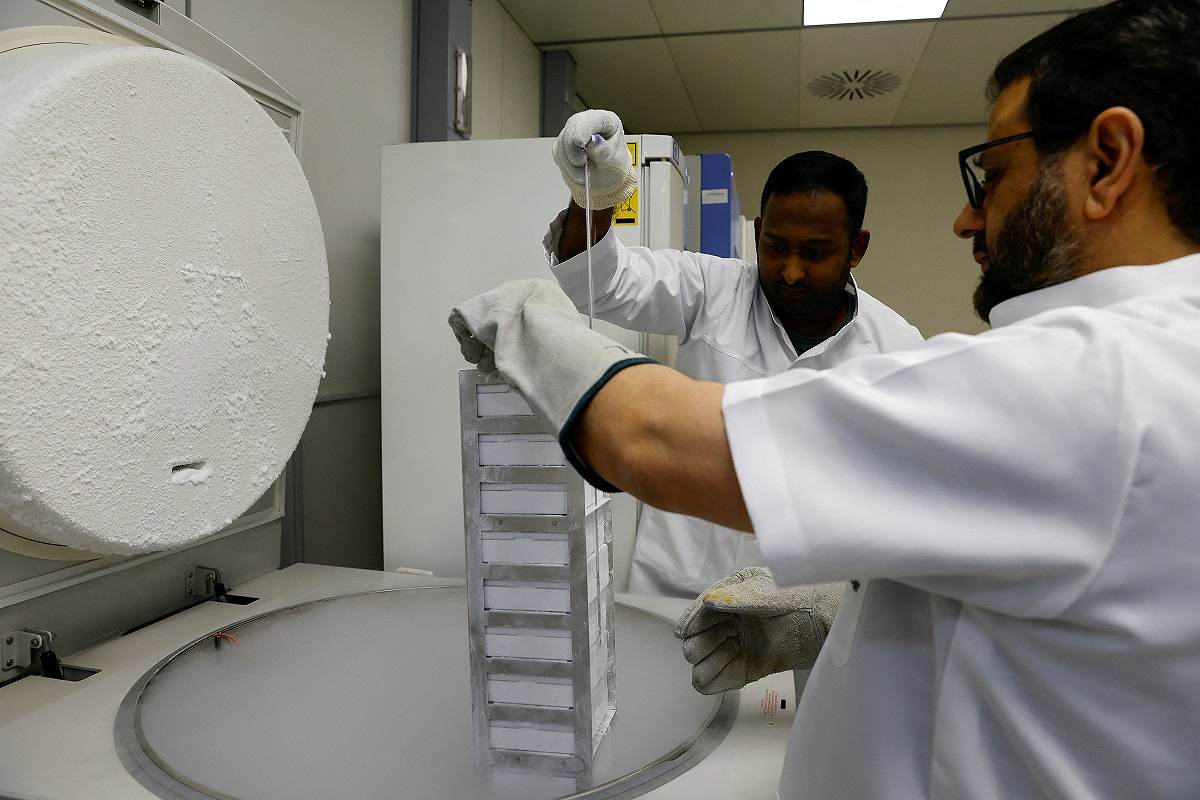
Dr. Nisar Wani shows a box of cells of a cultured animal cell line stored in liquid nitrogen storage at minus 145 C at the lab.





Most Read
Popular articles in the past 24 hours
-

Business Hotels Expanding into Regional Areas in Japan, Aiming to...
-

Milano Cortina 2026: Japan Sees Leap in Olympic Performance Throu...
-

6 Injured at Naked Festival in Japan’s Okayama Prefecture; Police...
-

Fiji Defense Minister Hopes Japan Will Support Stabilization of P...
-

Milano Cortina 2026: Malinin Highlights Dangers of Social Media i...
-

Space One Delays Launch of No. 3 Kairos Rocket; Company to Announ...
-

3rd Japan Pacific Islands Defense Dialogue to Begin in Tokyo on S...
-

Reciprocal Tariffs Ruled Illegal: Judiciary Would Not Tolerate Pr...
Popular articles in the past week
-

Japan PM Takaichi’s Cabinet Resigns en Masse
-

Man Infected with Measles Reportedly Dined at Restaurant in Tokyo...
-

Sanae Takaichi Elected Prime Minister of Japan; Keeps All Cabinet...
-

Japan's Govt to Submit Road Map for Growth Strategy in March, PM ...
-

Bus Carrying 40 Passengers Catches Fire on Chuo Expressway; All E...
-

Milano Cortina 2026: Figure Skaters Riku Miura, Ryuichi Kihara Pa...
-

Japan, U.S. Name 3 Inaugural Investment Projects; Reached Agreeme...
-

U.S. Firm to Build Training Hub in Fukushima N-plant for Debris R...
Popular articles in the past month
-
Japan PM Takaichi’s Cabinet Resigns en Masse
-

Japan Institute to Use Domestic Commercial Optical Lattice Clock ...
-

Israeli Ambassador to Japan Speaks about Japan’s Role in the Reco...
-
Man Infected with Measles Reportedly Dined at Restaurant in Tokyo...
-

Videos Plagiarized, Reposted with False Subtitles Claiming ‘Ryuky...
-

Man Infected with Measles May Have Come in Contact with Many Peop...
-

Prudential Life Insurance Plans to Fully Compensate for Damages C...
-

Woman with Measles Visited Hospital in Tokyo Multiple Times Befor...
Top Articles in Science & Nature
-
Japan Institute to Use Domestic Commercial Optical Lattice Clock to Set Japan Standard Time
-

Japan to Face Shortfall of 3.39 Million Workers in AI, Robotics in 2040; Clerical Workers Seen to Be in Surplus
-

Record 700 Startups to Gather at SusHi Tech Tokyo in April; Event Will Center on Themes Like Artificial Intelligence and Robotics
-

iPS Treatments Pass Key Milestone, but Broader Applications Far from Guaranteed
-
iPS Cell Products for Parkinson’s, Heart Disease OK’d for Commercialization by Japan Health Ministry Panel
JN ACCESS RANKING
-
Japan PM Takaichi’s Cabinet Resigns en Masse
-
Japan Institute to Use Domestic Commercial Optical Lattice Clock to Set Japan Standard Time
-
Israeli Ambassador to Japan Speaks about Japan’s Role in the Reconstruction of Gaza
-
Man Infected with Measles Reportedly Dined at Restaurant in Tokyo Station
-
Videos Plagiarized, Reposted with False Subtitles Claiming ‘Ryukyu Belongs to China’; Anti-China False Information Also Posted in Japan