
Fires in Brazilian Amazon Peak in September, Yomiuri Shimbun Analysis Shows, Due to Suspected Pre-Rainy Season Logging
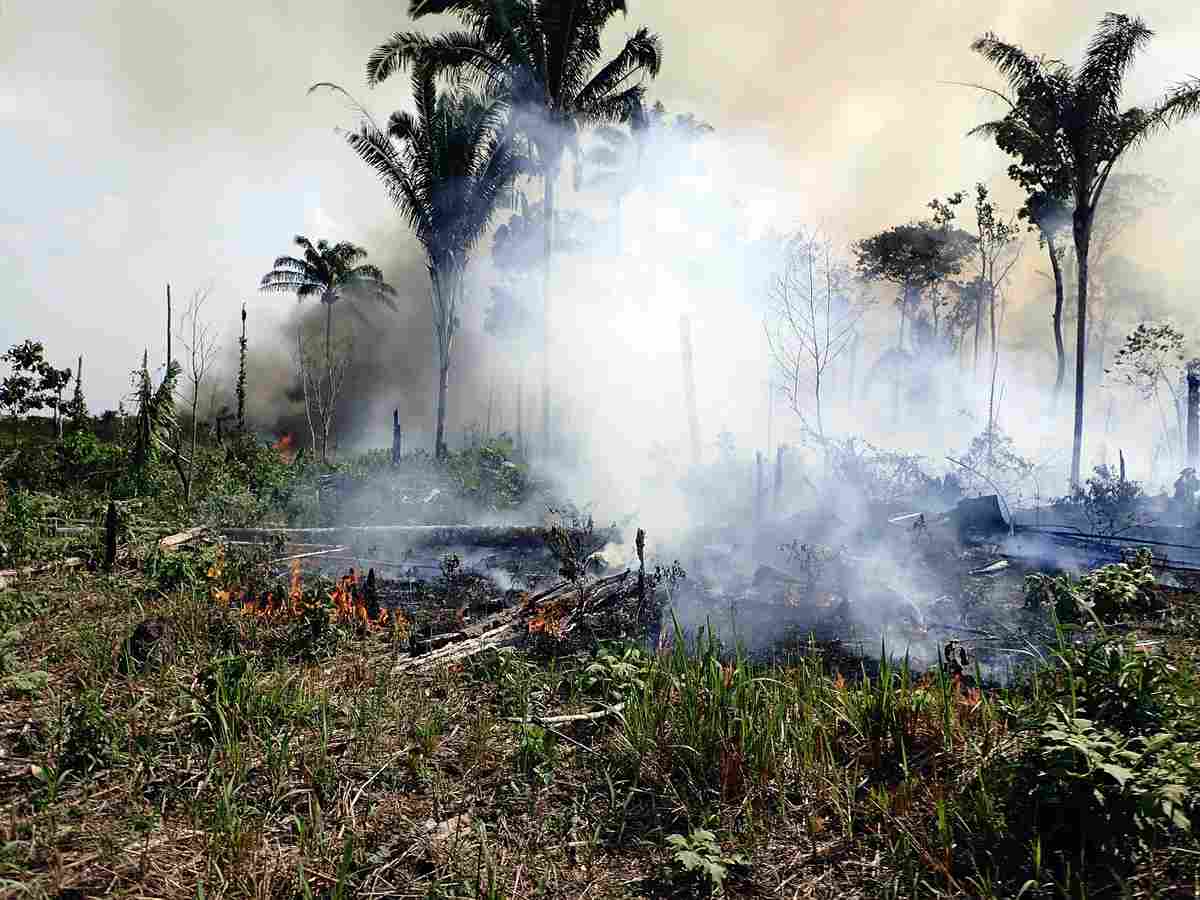
Felled trees burn in the Amazon
6:00 JST, November 4, 2025
Fires in the Brazilian portion of the Amazon rainforest surge each year in September, the tail end of the dry season, a Yomiuri Shimbun analysis of satellite data has found. On the ground, illegal logging to open up more land for agricultural use is rampant, and there are indications that felled trees are being burned at the most combustible time of year.
The Amazon, often called “the planet’s lungs,” absorbs vast amounts of the greenhouse gas carbon dioxide, and is expected to be a key focus of conservation discussions at the 30th Conference of the Parties to the U.N. Framework Convention on Climate Change (COP30), which will begin Monday in Brazil.
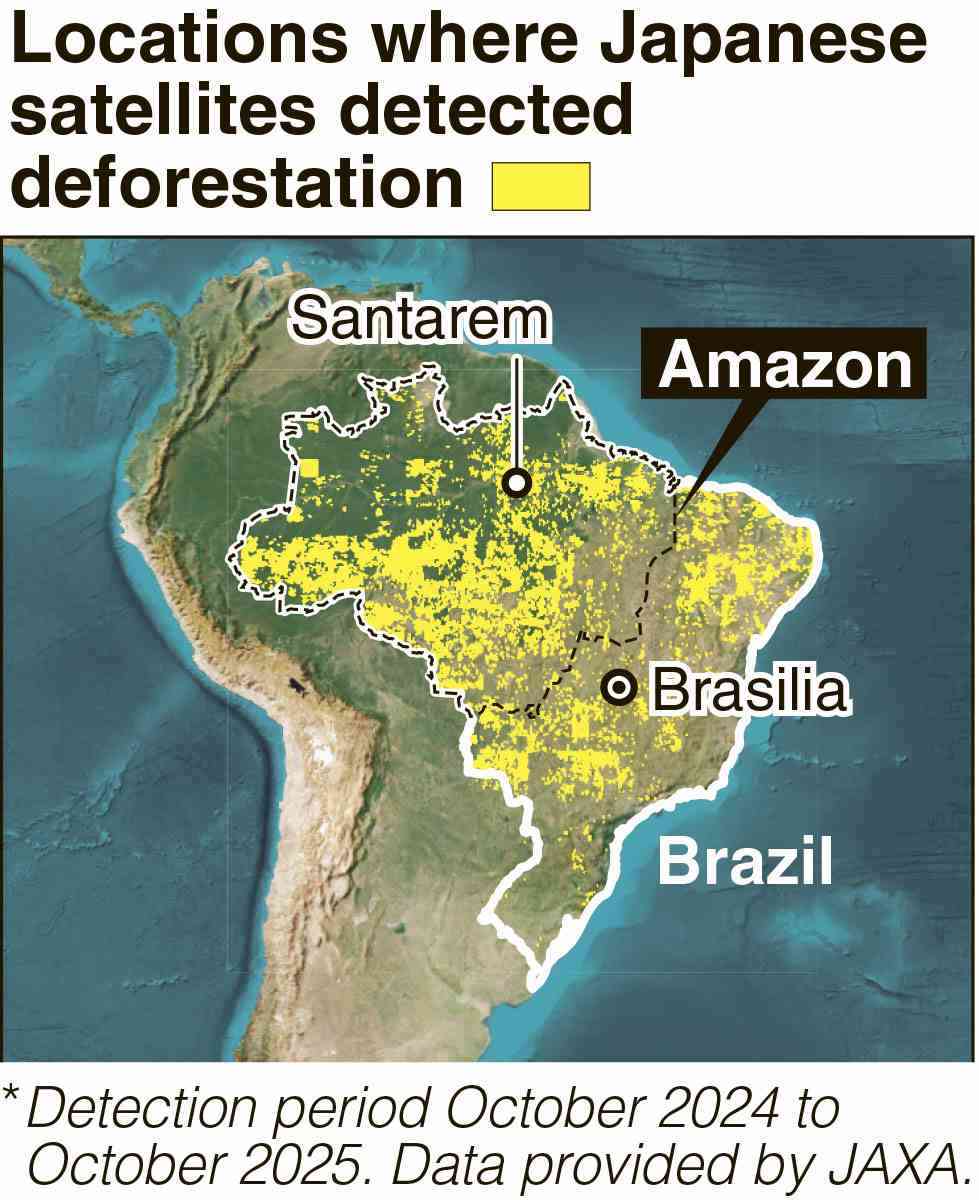
Stretching across nine South American countries and territories, the Amazon covers more than 6 million square kilometers — about 15 times the land area of Japan — with roughly 60% in northern Brazil. Illegal practices are widespread, including the clearing of land without permits to create more cropland and pasture. According to Brazil’s National Institute for Space Research, about 400,000 square kilometers of forest have been lost in Brazil alone over 30 years from 1990.
The Yomiuri Shimbun analyzed publicly available data from NASA satellites that detect heat sources. Excluding volcanoes and industrial zones, the paper tallied the number of likely wildfire detections (each representing 1 square kilometer) recorded in the Brazilian Amazon since 2000.
The month with the highest average number of daily wildfire detections was September, at 1,048, nearly 100 times the April low of 11. Daily detections peaked at 2,396 in September 2007 and have trended downward since 2008. However, roughly 1,000 heat sources per day are still detected.
In the Amazon, the dry season lasts through around September, and rainfall increases from about October as the rainy season begins.
Brazil’s government primarily relies on imagery from its own satellites to monitor illegal logging. However, cameras on optical satellites cannot capture images when the sky is not clear. During the rainy season — when cloud cover is heavy — monitoring becomes less effective, and logging may proliferate. To strengthen oversight, Brazilian authorities are also using data from Japanese satellites that use other imaging techniques to observe the ground regardless of weather conditions.
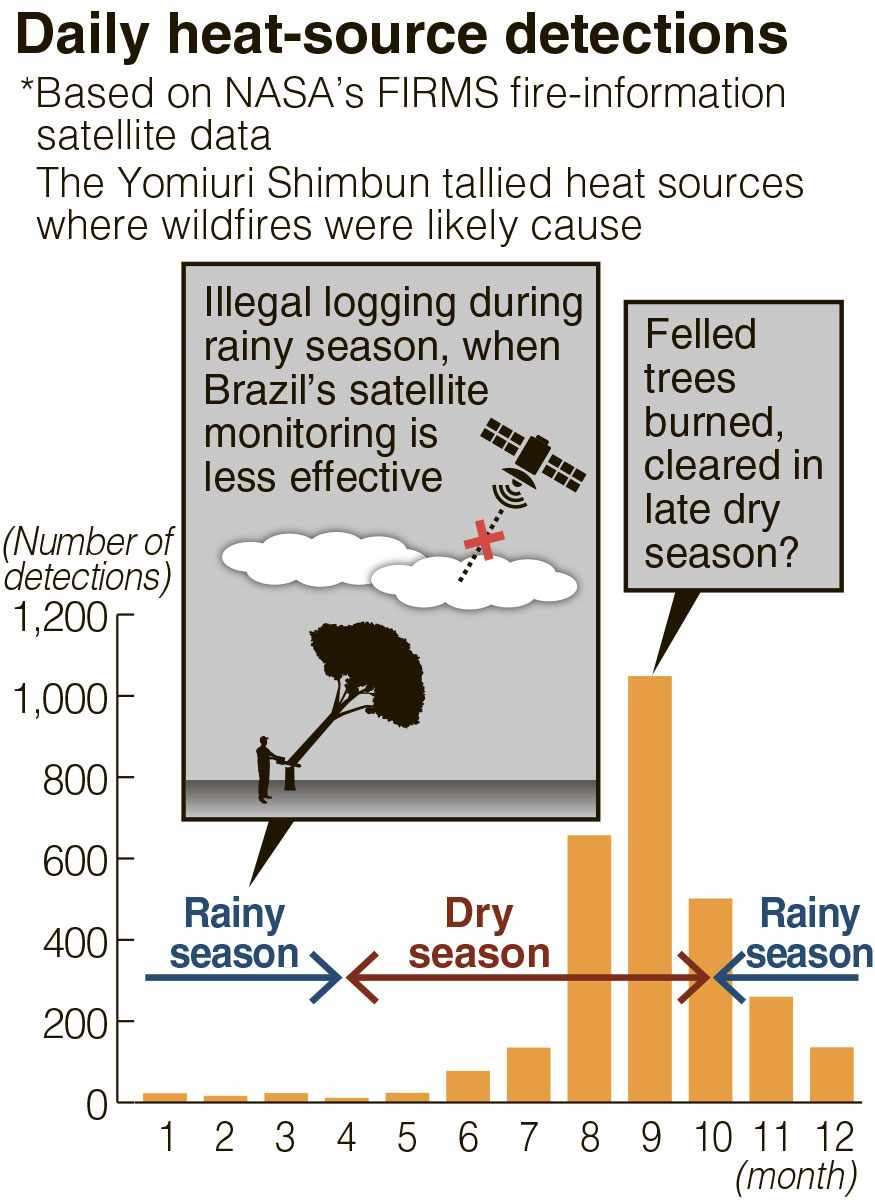
Yasumasa Hirata, a senior researcher at Japan’s Forest Research and Management Organization and expert on the Amazon, notes, “After logging, timber that cannot be sold is left to dry sufficiently until September and then burned.” He attributes the decline in deforestation partly to voluntary measures by companies, such as bans on purchases of soy grown on illegally cleared land, which have “slowed [the practice] to a certain extent.”
At the current pace of deforestation, however, some projections indicate that, combined with damage from global warming, the rainforest could become irrecoverable within this century. Deforestation also harms ecosystems.
The World Meteorological Organization reported that concentrations of atmospheric carbon dioxide hit a fresh record last year, with Amazon fires cited as one contributing factor. Tokuta Yokohata, principal researcher at Japan’s National Institute for Environmental Studies, warns: “Conditions in the Amazon affect the climate even in far-off Japan. The world should act together to implement countermeasures.”






Most Read
Popular articles in the past 24 hours
-

Ransomware Attacks Hitting Japan's Small, Midsize Firms
-

German Journalist Traces Footsteps of Great-Grandfather Who Was P...
-

10 Foreign Tourists Sustain Injuries After Fire at Capsule Hotel ...
-

World Baseball Classic: Venezuela Beats Japan in Nail-biting Back...
-

Rapid Services on JR Chuo Line Suspended; Accident at Kokubunji S...
-

Rapid Services Resume on JR Chuo Line; Suspension Caused by Accid...
-

World Baseball Classic: Red Sox’s Abreu Hits 3-run Homer, Giving ...
-

World Baseball Classic: Venezuela Beats Japan in Back-and-Forth Q...
Popular articles in the past week
-

Japan Figure Skating Legend Yuzuru Hanyu Is Proud Disaster Surviv...
-
15 Measles Patients Confirmed in Tokyo in Past 6 Days; 1 May Have...
-
Massive Sewer Pipe Found Jutting Out of Highway in Osaka
-

Japan Govt to Tighten Requirements to Receive Permanent Residency...
-

Power Outage Forces About 980 Passengers in Yokohama to Walk to T...
-

JR Tokai Breaks Ground on Yamanashi Maglev Station; Will Be Part ...
-

Parents in Japan to Get Instagram Notifications When Teens Repeat...
-

'World's Oldest Bio-Business' Is Japan's Seed Koji Retailing, Mol...
Popular articles in the past month
-

Producer Behind Pop Group XG Arrested for Cocaine Possession
-

Japan PM Takaichi’s Cabinet Resigns en Masse
-

Man Infected with Measles Reportedly Dined at Restaurant in Tokyo...
-
Japan Figure Skating Legend Yuzuru Hanyu Is Proud Disaster Surviv...
-

iPS Treatments Pass Key Milestone, but Broader Applications Far f...
-

Sanae Takaichi Elected Prime Minister of Japan; Keeps All Cabinet...
-

South Korea Tightens Rules on Foreigners Buying Homes in Seoul Me...
-
Nepal Bus Crash Kills 19 People, Injures 25 Including One Japanes...
Top Articles in Science & Nature
-
iPS Treatments Pass Key Milestone, but Broader Applications Far from Guaranteed
-

Record 700 Startups to Gather at SusHi Tech Tokyo in April; Event Will Center on Themes Like Artificial Intelligence and Robotics
-
Parents in Japan to Get Instagram Notifications When Teens Repeatedly Search for Suicide Content
-

iPS Cell Products for Parkinson’s, Heart Disease OK’d for Commercialization by Japan Health Ministry Panel
-

Japan to Ban Use of Power Banks on Airplanes
JN ACCESS RANKING
-
Producer Behind Pop Group XG Arrested for Cocaine Possession
-
Japan PM Takaichi’s Cabinet Resigns en Masse
-
Man Infected with Measles Reportedly Dined at Restaurant in Tokyo Station
-
Japan Figure Skating Legend Yuzuru Hanyu Is Proud Disaster Survivor and Gold Medalist, Vows to Continue Support Efforts
-
iPS Treatments Pass Key Milestone, but Broader Applications Far from Guaranteed