
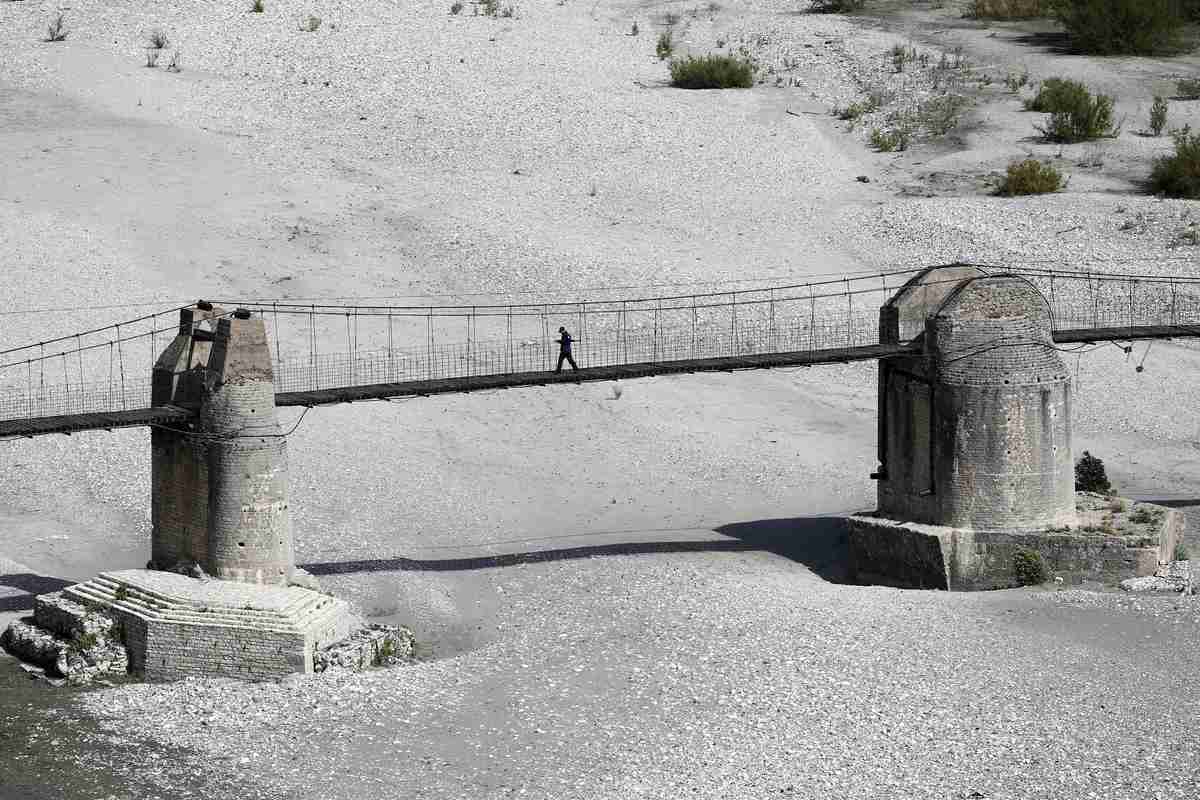
A man walks on a bridge by the Vjosa valley in Tepelene. Photos were taken in Albania on Oct. 4 and 5.
11:06 JST, October 22, 2025
TEPELENE, Albania (Reuters) — A strong wind blows scraps of plastic from an open landfill into the Vjosa River in Albania. A few hundred meters upstream, a large pipe discharges sewage into the fast-flowing water. Elsewhere, diggers scrape gravel from the riverbed to make concrete, which experts say alters the river’s path and destabilizes its banks.
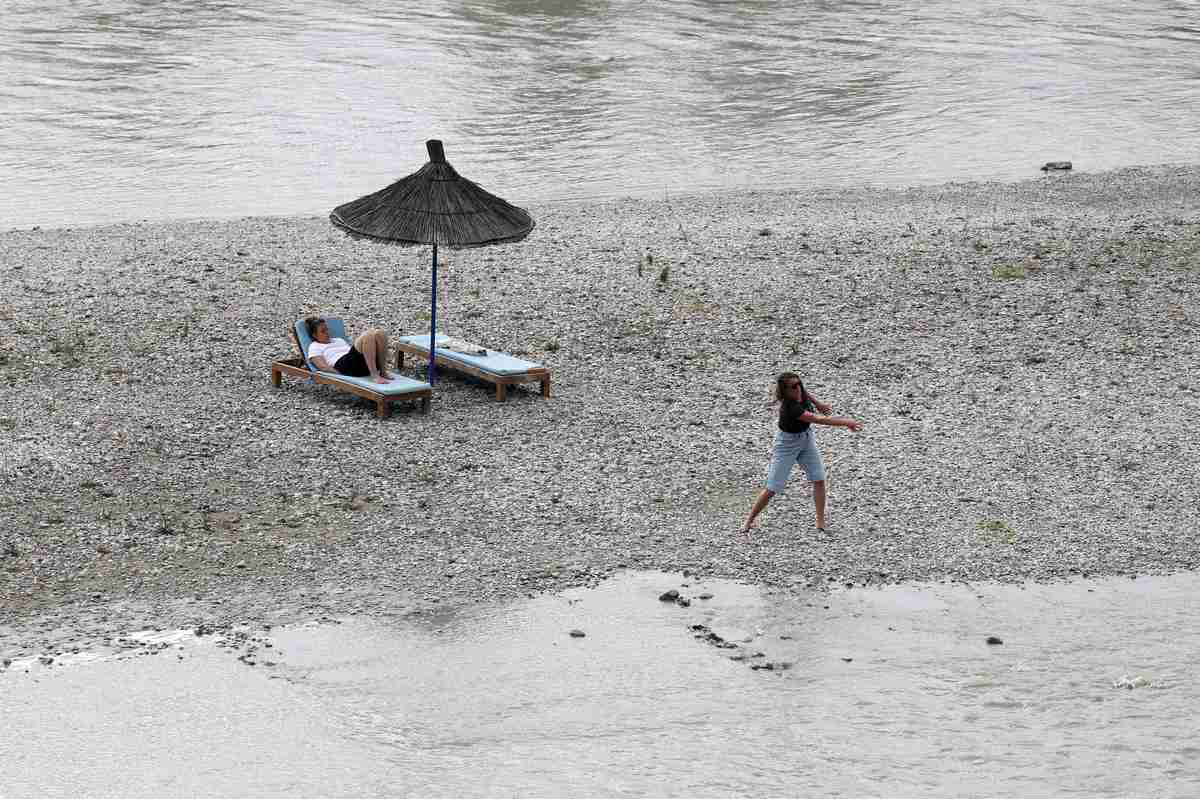
Tourists relax by the bay of the Vjosa River, near Mallakaster.
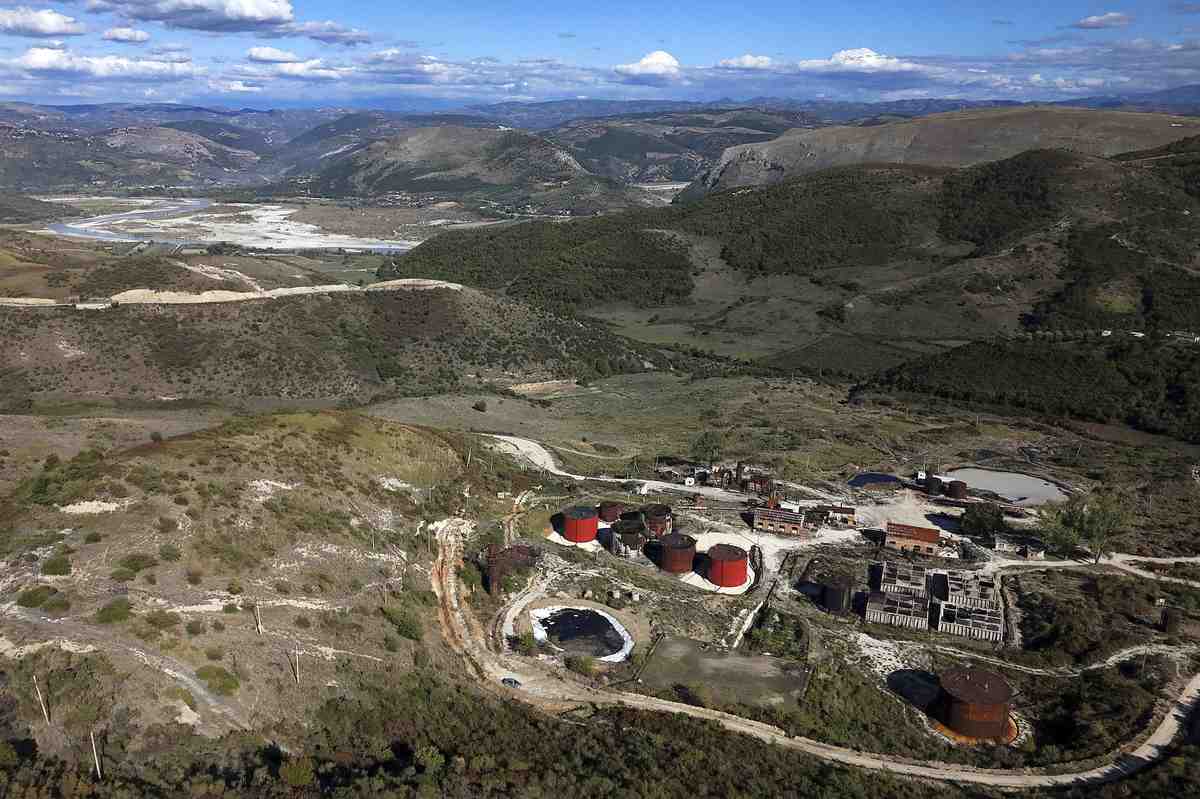
A bitumen processing site next to Vjosa River is seen near Fier.
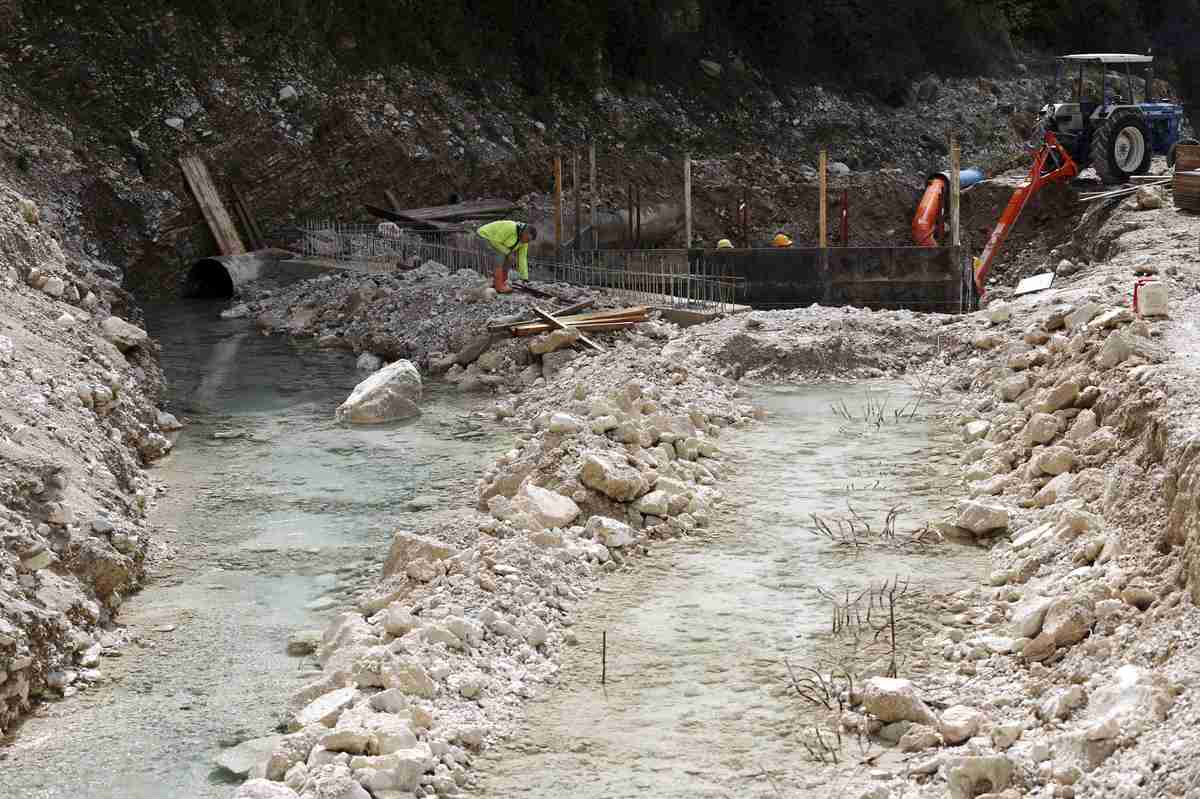
A worker operates at the water extraction site near the source of Shushica, a tributary of the Vjosa River near Kuc.
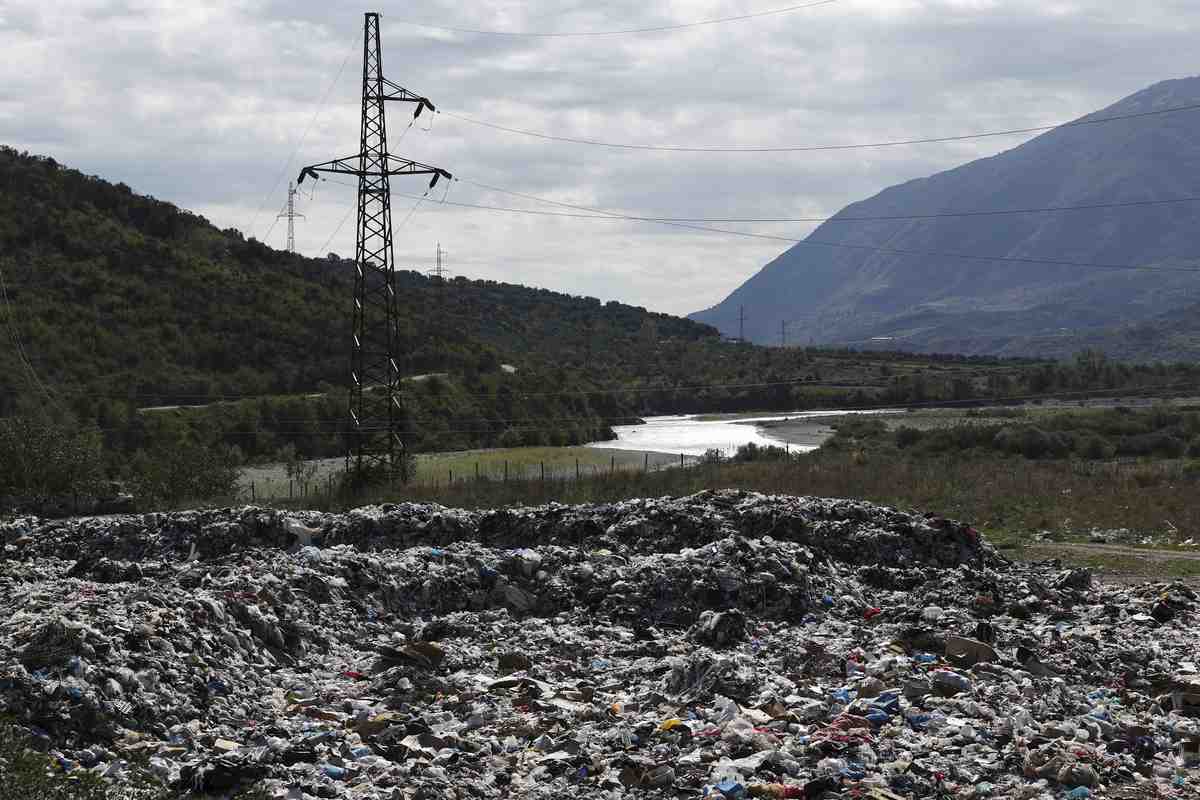
A landfill is seen in the Vjosa valley.
Last month, UNESCO labeled the Vjosa valley in Albania as one of 26 newly-designated Biosphere Reserves, part of an initiative to “safeguard some of the planet’s richest and most fragile ecosystems,” it said in a statement.
In many places the valley, which follows the river’s course from northern Greece to Albania’s Adriatic coast, appears to meet the criteria of an environmentally rich area. It is home to otters, threatened Egyptian vultures and rare plant species.
The river, one of the last uninterrupted waterways in Europe, meanders through tree-lined gorges and lush empty valleys. In 2023, the government declared it a national park.
The designation is a boon for Albania, a Balkan country of 2.4 million people that has seen tourism to its coastline and mountains skyrocket in recent years and is seeking to join the European Union by the end of the decade.
But beneath the sweeping scenery, environmentalists are worried for the future.
“International recognition papers like UNESCO do not solve problems,” said Besjana Guri from the non-governmental environmental organization Lumi (River) during one of her recent visits to the valley.
UNESCO said when issues arise, its experts will initiate consultations with the country’s government to verify them.
“The inclusion of a site in the World Network of Biosphere Reserves does not signify that all challenges have been resolved, but rather that the concerned country has committed to addressing them,” UNESCO said in a statement sent to Reuters.
In previous reports, UNESCO said it would follow rigorous criteria before granting Vjosa biosphere reserve status.
Albania’s Environment Minister Sofjan Jaupaj, who keeps a framed copy of the UNESCO designation in his office, acknowledged the problems during an interview with Reuters. He said his ministry plans to spend more than €150 million to treat sewage water and close all landfills.
For many, the damage is already done. Oil wells and bitumen pits line the river, further risking pollution, they say.
Agron Zia, 55, took sheep and goats out to graze on the river bank. He motioned toward the landfill where plastic is kicked up by the wind and caught by the branches of nearby trees.
“When I was young, we used to swim here all summer. It hurts when your children cannot go because of sewage and rubbish,” he said.






Most Read
Popular articles in the past 24 hours
-

Ransomware Attacks Hitting Japan's Small, Midsize Firms
-

German Journalist Traces Footsteps of Great-Grandfather Who Was P...
-

10 Foreign Tourists Sustain Injuries After Fire at Capsule Hotel ...
-

World Baseball Classic: Venezuela Beats Japan in Nail-biting Back...
-
Rapid Services on JR Chuo Line Suspended; Accident at Kokubunji S...
-
Rapid Services Resume on JR Chuo Line; Suspension Caused by Accid...
-

World Baseball Classic: Red Sox’s Abreu Hits 3-run Homer, Giving ...
-

World Baseball Classic: Venezuela Beats Japan in Back-and-Forth Q...
Popular articles in the past week
-

Japan Figure Skating Legend Yuzuru Hanyu Is Proud Disaster Surviv...
-
15 Measles Patients Confirmed in Tokyo in Past 6 Days; 1 May Have...
-

Massive Sewer Pipe Found Jutting Out of Highway in Osaka
-

Japan Govt to Tighten Requirements to Receive Permanent Residency...
-
Power Outage Forces About 980 Passengers in Yokohama to Walk to T...
-
JR Tokai Breaks Ground on Yamanashi Maglev Station; Will Be Part ...
-

Parents in Japan to Get Instagram Notifications When Teens Repeat...
-
'World's Oldest Bio-Business' Is Japan's Seed Koji Retailing, Mol...
Popular articles in the past month
-

Producer Behind Pop Group XG Arrested for Cocaine Possession
-

Japan PM Takaichi’s Cabinet Resigns en Masse
-

Man Infected with Measles Reportedly Dined at Restaurant in Tokyo...
-
Japan Figure Skating Legend Yuzuru Hanyu Is Proud Disaster Surviv...
-

iPS Treatments Pass Key Milestone, but Broader Applications Far f...
-

Sanae Takaichi Elected Prime Minister of Japan; Keeps All Cabinet...
-

South Korea Tightens Rules on Foreigners Buying Homes in Seoul Me...
-

Nepal Bus Crash Kills 19 People, Injures 25 Including One Japanes...
Top Articles in Science & Nature
-
iPS Treatments Pass Key Milestone, but Broader Applications Far from Guaranteed
-

Record 700 Startups to Gather at SusHi Tech Tokyo in April; Event Will Center on Themes Like Artificial Intelligence and Robotics
-
Parents in Japan to Get Instagram Notifications When Teens Repeatedly Search for Suicide Content
-
iPS Cell Products for Parkinson’s, Heart Disease OK’d for Commercialization by Japan Health Ministry Panel
-

Japan to Ban Use of Power Banks on Airplanes
JN ACCESS RANKING
-
Producer Behind Pop Group XG Arrested for Cocaine Possession
-
Japan PM Takaichi’s Cabinet Resigns en Masse
-
Man Infected with Measles Reportedly Dined at Restaurant in Tokyo Station
-
Japan Figure Skating Legend Yuzuru Hanyu Is Proud Disaster Survivor and Gold Medalist, Vows to Continue Support Efforts
-
iPS Treatments Pass Key Milestone, but Broader Applications Far from Guaranteed