
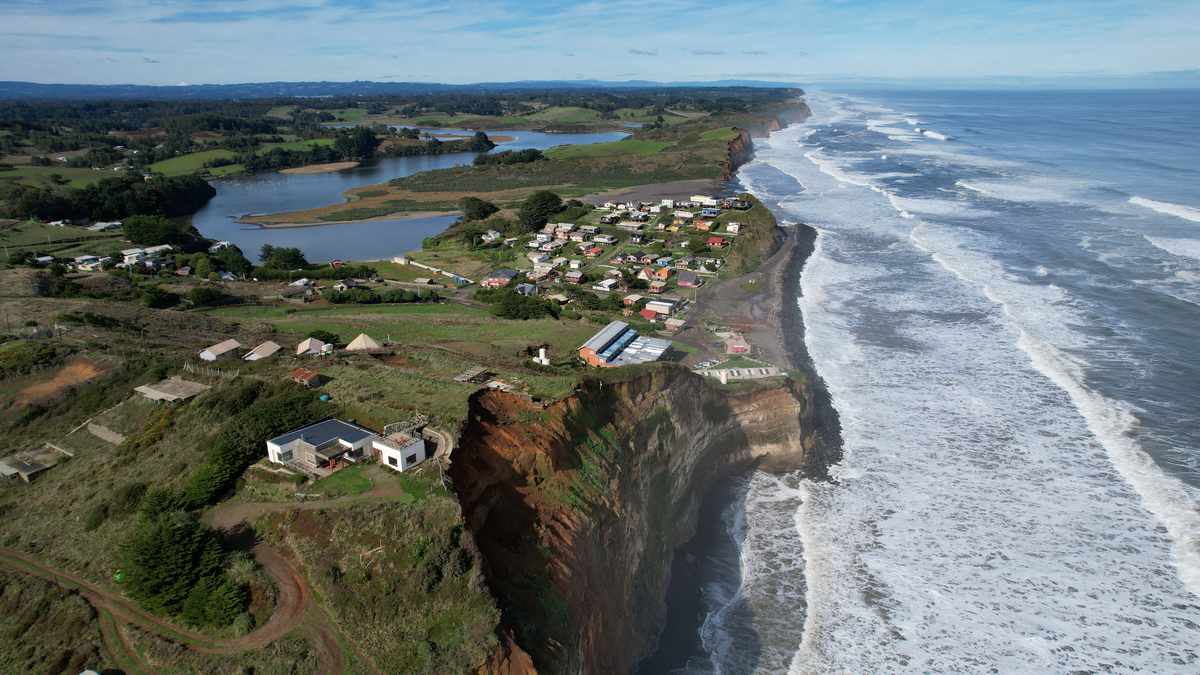
Houses are seen on the edge of a hill cliff with parts missing due to erosion in Puerto Saavedra, Chile, on May 12.
10:56 JST, August 14, 2025
RENACA, Chile (Reuters) — Chile’s central and southern coastlines are facing erosion that could cause at least 10 beaches to disappear within a decade, according to a team of scientists in the South American country, which stretches for several thousand kilometers along the Pacific Ocean.
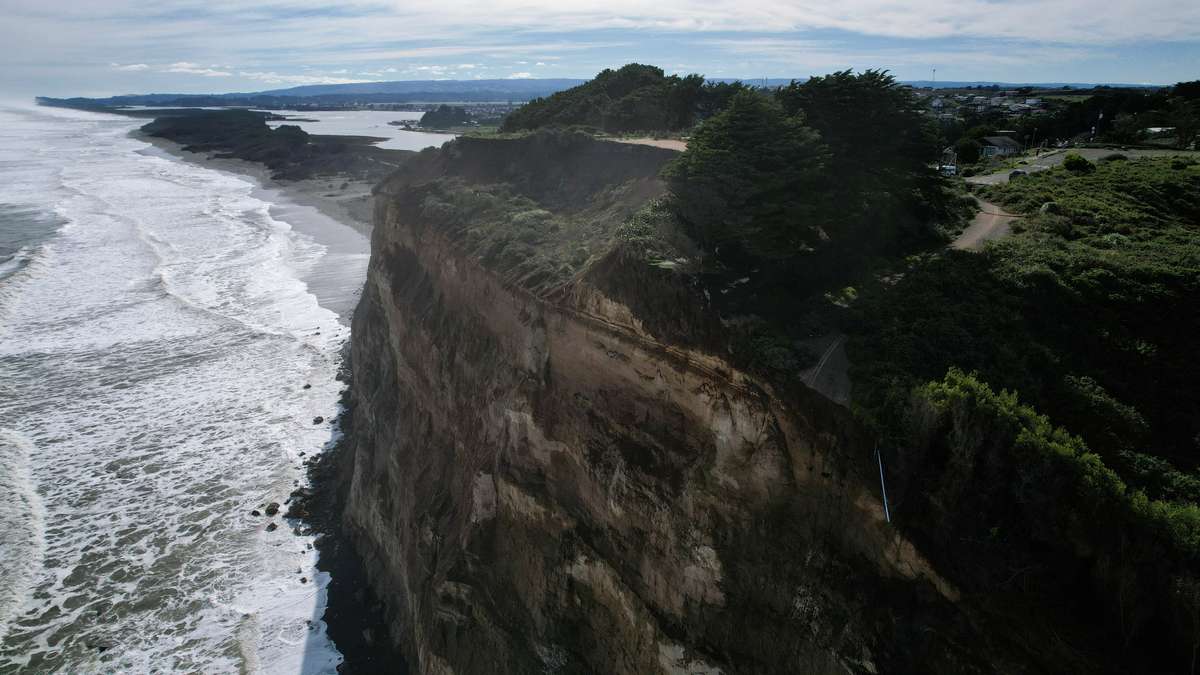
A road cut off by a landslide on a hill near the ocean’s shore. Photos were taken in Puerto Saavedra, Chile, on May 12.
“It will be very difficult for these beaches to survive the next 10 years,” said Carolina Martinez, director of the Coastal Observatory at Universidad Catolica, in an interview last month on the Renaca beach near the popular coastal city of Vina del Mar.
Her team has tracked erosion on 67 beaches, finding that 86% are steadily shrinking — even during spring and summer, when they typically recover.
Ten in particular, which already had high erosion in 2023, have continued to rapidly lose ground, with rates now about twice as high.
The causes are both natural and human-made, Martinez said.
She pointed to intense and increasingly frequent swells driven by climate change, along with rising sea levels, sudden downpours and heat waves, as key factors. Unchecked urbanization and the degradation of river basins that supply sand to the coast have also contributed.
In Puerto Saavedra, in the southern region of Araucania, storm surges have carved sinkholes into roads and cliffs, cutting off access to some communities. The saltwater is damaging forests, too.
“We’re seeing cliffs and sandy shores retreating rapidly,” Martinez said.
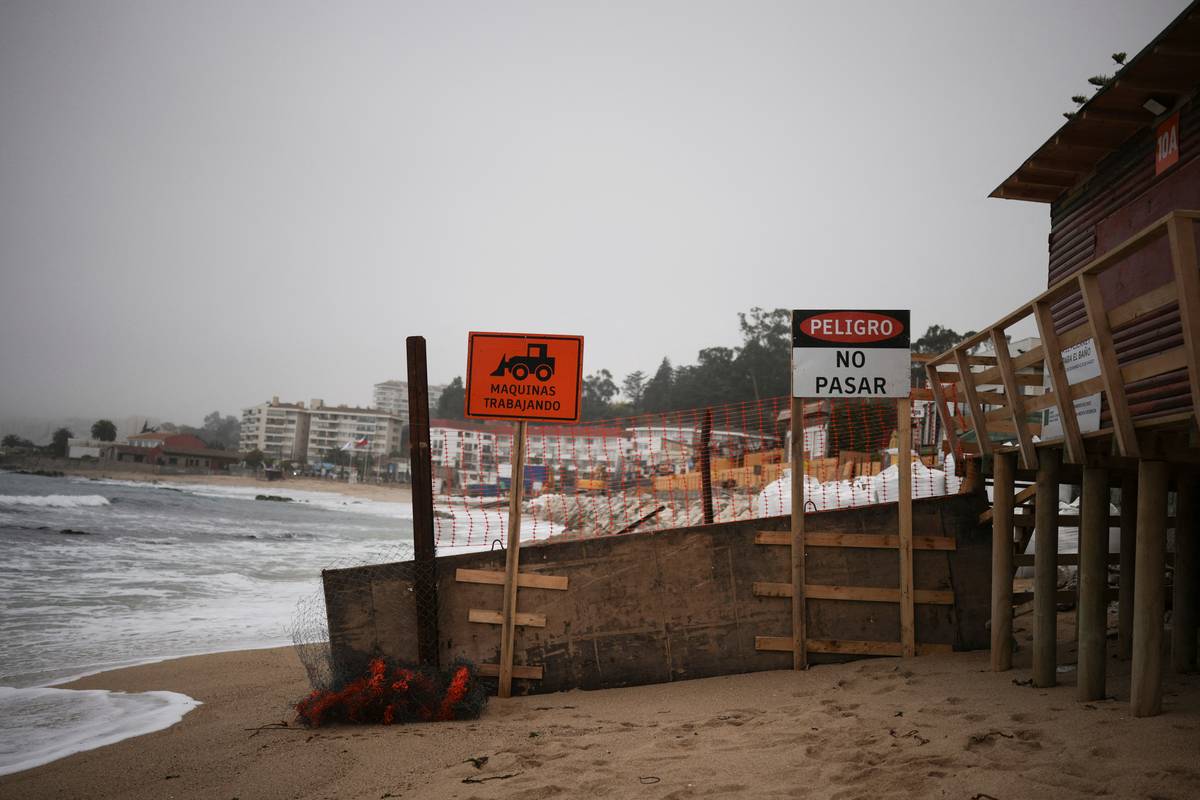
Signs reading ‘Machines Working’ and ‘Danger, Do Not Enter’ are seen near a part of the beach where wave seawall is being built, in Chile, on July 7.
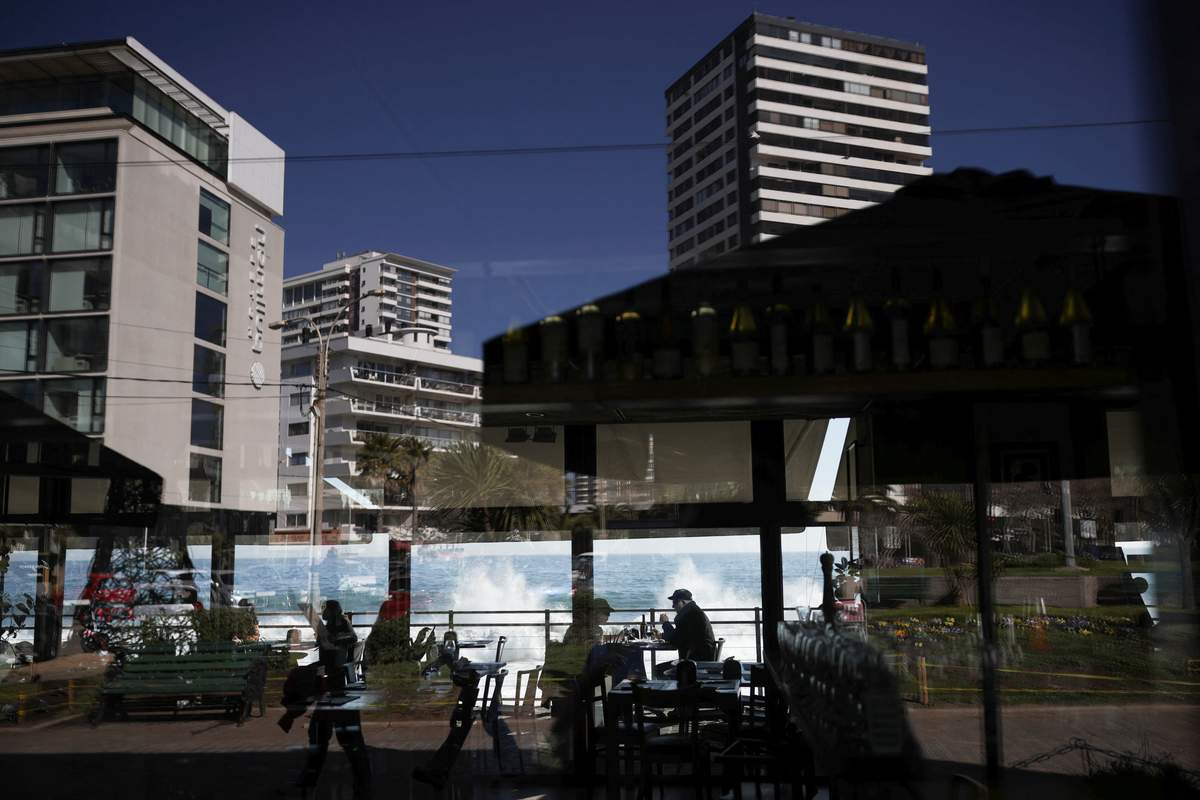
A reflection shows people eating at a restaurant near the ocean’s shore, in Chile, on July 7.
Some local businesses in popular tourist towns are already feeling the impact. “Last year was brutal … the beach disappeared,” said Maria Harris, who owns a beachfront restaurant in Valparaiso. “There was no space between us and the sea.”
Despite the risks, construction continues along the coastline, often near wetlands and dunes. Martinez warned that the impacts go beyond the environment.
“We’re transferring the cost of these disasters to people — fishermen, coastal communities and the tourism sector,” she said.







Most Read
Popular articles in the past 24 hours
-

Ransomware Attacks Hitting Japan's Small, Midsize Firms
-

German Journalist Traces Footsteps of Great-Grandfather Who Was P...
-

10 Foreign Tourists Sustain Injuries After Fire at Capsule Hotel ...
-

World Baseball Classic: Venezuela Beats Japan in Nail-biting Back...
-

Rapid Services on JR Chuo Line Suspended; Accident at Kokubunji S...
-

Rapid Services Resume on JR Chuo Line; Suspension Caused by Accid...
-

World Baseball Classic: Venezuela Beats Japan in Back-and-Forth Q...
-

World Baseball Classic: Red Sox’s Abreu Hits 3-run Homer, Giving ...
Popular articles in the past week
-

Japan Figure Skating Legend Yuzuru Hanyu Is Proud Disaster Surviv...
-
15 Measles Patients Confirmed in Tokyo in Past 6 Days; 1 May Have...
-

Massive Sewer Pipe Found Jutting Out of Highway in Osaka
-

Japan Govt to Tighten Requirements to Receive Permanent Residency...
-

Power Outage Forces About 980 Passengers in Yokohama to Walk to T...
-

JR Tokai Breaks Ground on Yamanashi Maglev Station; Will Be Part ...
-

Parents in Japan to Get Instagram Notifications When Teens Repeat...
-

'World's Oldest Bio-Business' Is Japan's Seed Koji Retailing, Mol...
Popular articles in the past month
-

Producer Behind Pop Group XG Arrested for Cocaine Possession
-

Japan PM Takaichi’s Cabinet Resigns en Masse
-

Man Infected with Measles Reportedly Dined at Restaurant in Tokyo...
-
Japan Figure Skating Legend Yuzuru Hanyu Is Proud Disaster Surviv...
-

iPS Treatments Pass Key Milestone, but Broader Applications Far f...
-

Sanae Takaichi Elected Prime Minister of Japan; Keeps All Cabinet...
-

South Korea Tightens Rules on Foreigners Buying Homes in Seoul Me...
-

Nepal Bus Crash Kills 19 People, Injures 25 Including One Japanes...
Top Articles in Science & Nature
-
iPS Treatments Pass Key Milestone, but Broader Applications Far from Guaranteed
-

Record 700 Startups to Gather at SusHi Tech Tokyo in April; Event Will Center on Themes Like Artificial Intelligence and Robotics
-
Parents in Japan to Get Instagram Notifications When Teens Repeatedly Search for Suicide Content
-

iPS Cell Products for Parkinson’s, Heart Disease OK’d for Commercialization by Japan Health Ministry Panel
-

Japan to Ban Use of Power Banks on Airplanes
JN ACCESS RANKING
-
Producer Behind Pop Group XG Arrested for Cocaine Possession
-
Japan PM Takaichi’s Cabinet Resigns en Masse
-
Man Infected with Measles Reportedly Dined at Restaurant in Tokyo Station
-
Japan Figure Skating Legend Yuzuru Hanyu Is Proud Disaster Survivor and Gold Medalist, Vows to Continue Support Efforts
-
iPS Treatments Pass Key Milestone, but Broader Applications Far from Guaranteed