

A woman waits for a haircut in a hairdresser’s shop in Santiago, where the Matter of Trust Chile foundation collects hair which will be transformed into compostable mulch sheets and discs through mechanical weaving as part of Agropelo, a sustainable agriculture initiative. Photos were taken in Chile, between June 12 and July 1.
12:11 JST, July 17, 2025
SANTIAGO (Reuters) — Small mats of human hair line the base of plants, helping lock in moisture for crops in orchards around Chile that have been struggling with drought for years.
The hair, which is turned into sheets and discs of compostable mulch through mechanical weaving, reduces direct evaporation by 71% and saves up to 48% of irrigation water, according to the Matter of Trust Chile foundation, which makes the hair mats.
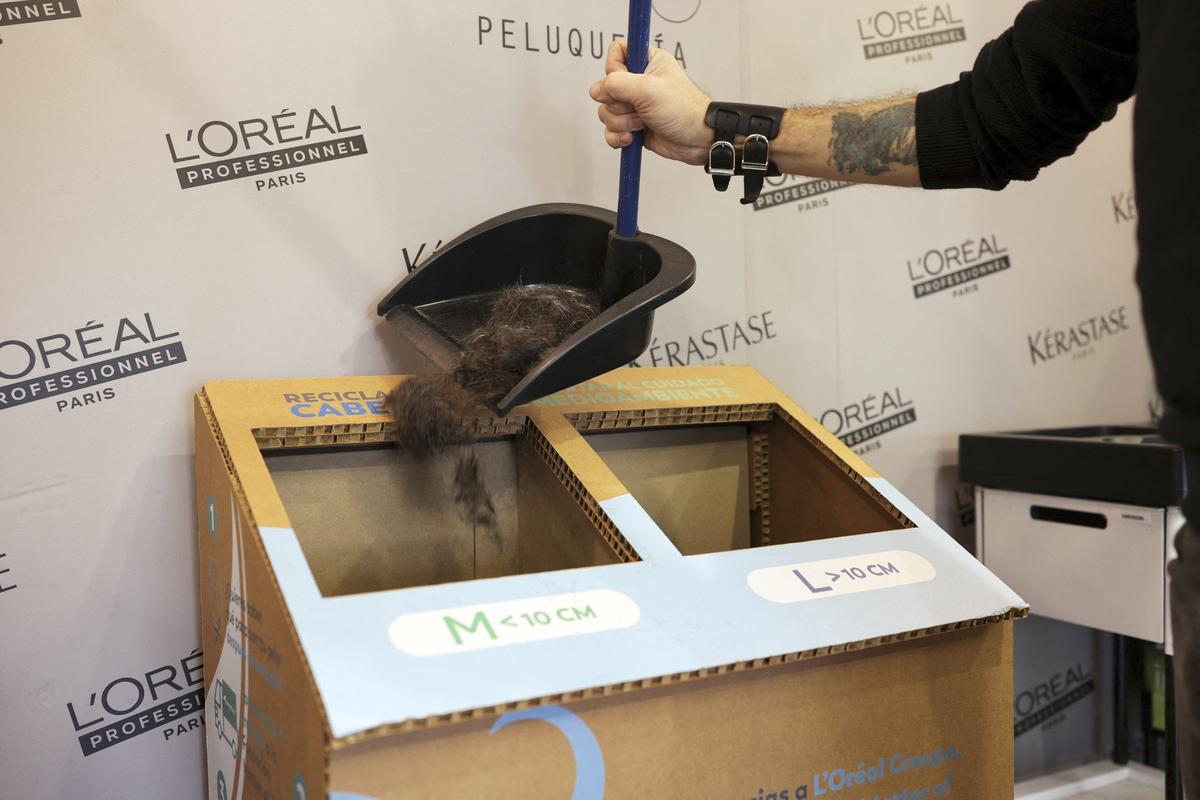
A hairdresser deposits hair in recycling bins at a salon.
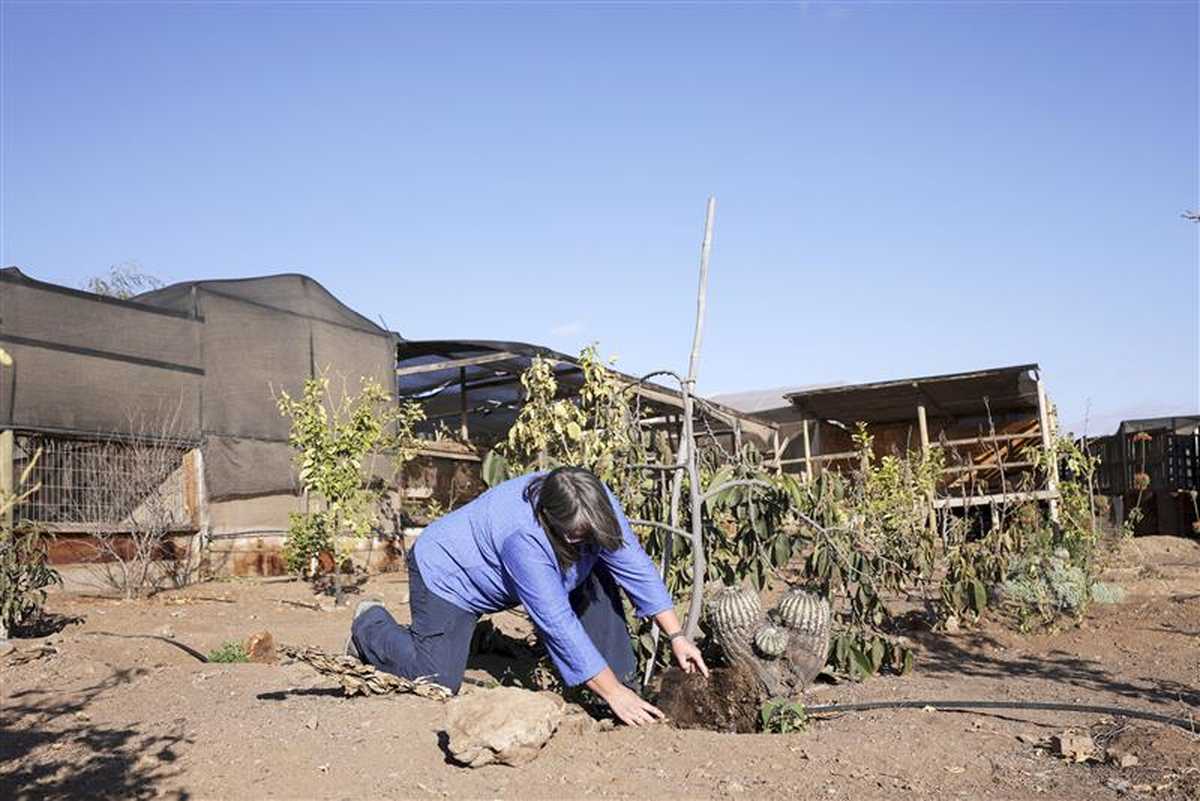
Farmer Maria Salazar works at her orchard in Taltal, where she uses mats from Agropelo.
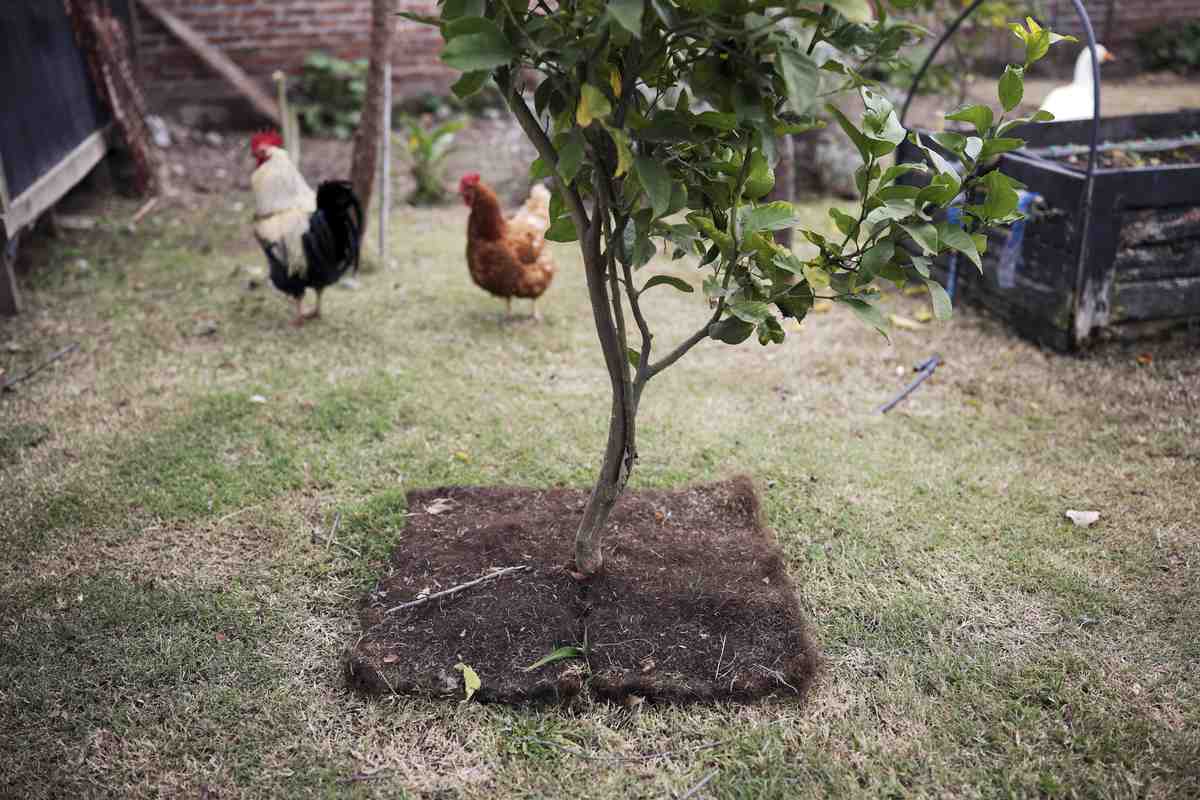
A small mat covers the base of a tree to help retain soil moisture and reduce water evaporation.
“Hair is very interesting. It contains nutrients, nitrogen, calcium, sulfur and organic matter that is added to the soil, improving it and enhancing plant growth and agricultural production by at least 30%,” said Mattia Carenini, CEO of the foundation.
Farmer Maria Salazar said the hair has helped get excellent crop yield from lemon trees in Taltal, about 900 kilometers north of the Chilean capital in the arid Antofagasta region.
“The hair mats are a benefit to the system and water stress we’re facing,” Salazar said. “By providing shade, they maintain a lot of humidity and prevent the sun’s rays from evaporating the little water we have.”
The foundation was created in 2020 to promote conservation and regeneration through the creative use of waste. The hair is sourced from deals with 350 salons and 10 pet groomers around Chile, with about 2% of the hair used in the mats coming from pets.
Other products from the foundation include a liquid fertilizer made from recycled hair and a hair-based absorbent for recovering oils, metals and other contaminants from water.






Most Read
Popular articles in the past 24 hours
-

Ransomware Attacks Hitting Japan's Small, Midsize Firms
-

German Journalist Traces Footsteps of Great-Grandfather Who Was P...
-

10 Foreign Tourists Sustain Injuries After Fire at Capsule Hotel ...
-

World Baseball Classic: Venezuela Beats Japan in Nail-biting Back...
-

Rapid Services on JR Chuo Line Suspended; Accident at Kokubunji S...
-

Rapid Services Resume on JR Chuo Line; Suspension Caused by Accid...
-

World Baseball Classic: Venezuela Beats Japan in Back-and-Forth Q...
-

World Baseball Classic: Red Sox’s Abreu Hits 3-run Homer, Giving ...
Popular articles in the past week
-

Japan Figure Skating Legend Yuzuru Hanyu Is Proud Disaster Surviv...
-
15 Measles Patients Confirmed in Tokyo in Past 6 Days; 1 May Have...
-

Massive Sewer Pipe Found Jutting Out of Highway in Osaka
-

Japan Govt to Tighten Requirements to Receive Permanent Residency...
-

Power Outage Forces About 980 Passengers in Yokohama to Walk to T...
-
JR Tokai Breaks Ground on Yamanashi Maglev Station; Will Be Part ...
-

Parents in Japan to Get Instagram Notifications When Teens Repeat...
-
'World's Oldest Bio-Business' Is Japan's Seed Koji Retailing, Mol...
Popular articles in the past month
-

Producer Behind Pop Group XG Arrested for Cocaine Possession
-

Japan PM Takaichi’s Cabinet Resigns en Masse
-

Man Infected with Measles Reportedly Dined at Restaurant in Tokyo...
-
Japan Figure Skating Legend Yuzuru Hanyu Is Proud Disaster Surviv...
-

iPS Treatments Pass Key Milestone, but Broader Applications Far f...
-

Sanae Takaichi Elected Prime Minister of Japan; Keeps All Cabinet...
-

South Korea Tightens Rules on Foreigners Buying Homes in Seoul Me...
-

Nepal Bus Crash Kills 19 People, Injures 25 Including One Japanes...
Top Articles in Science & Nature
-
iPS Treatments Pass Key Milestone, but Broader Applications Far from Guaranteed
-
Record 700 Startups to Gather at SusHi Tech Tokyo in April; Event Will Center on Themes Like Artificial Intelligence and Robotics
-
Parents in Japan to Get Instagram Notifications When Teens Repeatedly Search for Suicide Content
-
iPS Cell Products for Parkinson’s, Heart Disease OK’d for Commercialization by Japan Health Ministry Panel
-

Japan to Ban Use of Power Banks on Airplanes
JN ACCESS RANKING
-
Producer Behind Pop Group XG Arrested for Cocaine Possession
-
Japan PM Takaichi’s Cabinet Resigns en Masse
-
Man Infected with Measles Reportedly Dined at Restaurant in Tokyo Station
-
Japan Figure Skating Legend Yuzuru Hanyu Is Proud Disaster Survivor and Gold Medalist, Vows to Continue Support Efforts
-
iPS Treatments Pass Key Milestone, but Broader Applications Far from Guaranteed