
Japan’s Ruling LDP Expresses Reservations about 2nd-Vote Passage of Bills; Hopes to Avoid Possible Antipathy from Overriding Will of Upper House
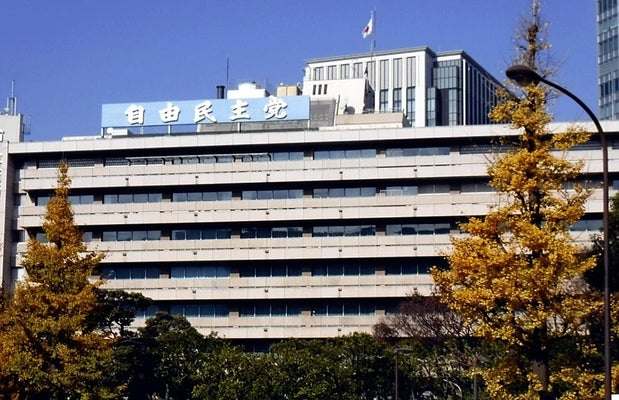
The Liberal Democratic Party headquarters in Chiyoda Ward, Tokyo
7:00 JST, February 11, 2026
The Liberal Democratic Party has expressed reservations about using its newly gained ability to pass bills rejected in the House of Councillors by a second vote in the House of Representatives.
The LDP obtained this “trump card” power by taking more than two-thirds of the seats in the lower house in Sunday’s election, but it is cautious that using it could draw the ire of opposition parties.
Thus, the LDP will prioritize seeking opposition party cooperation for the time being and will not rely on second votes to pass bills.
LDP Secretary General Shunichi Suzuki told reporters at the party headquarters before dawn on Monday, “We have to refrain from adopting the attitude that we will force things through just by dint of numbers.”
Prime Minister Sanae Takaichi, also president of the LDP, said at a press conference Monday, “If the Democratic Party for the People is considering [joining a coalition with the LDP], that is something we would certainly like to pursue.”
She indicated that the LDP’s immediate priority is to resolve the disadvantages it faces from still having a minority government in the upper house by expanding the framework of its coalition.
In Sunday’s election, the LDP alone won 316 lower house seats; 310 would be a two-thirds majority.
Article 59 of the Constitution stipulates that, after the lower house passes a bill, if the upper house votes it down outright or does not hold a vote on it within 60 days — in which case it is considered to have been rejected — the lower house can vote on the bill a second time and secure final passage for it if two-thirds or more of the representatives vote in favor of it.
Previously, second-vote passage has been used on a number of occasions when the ruling bloc has held a majority in the lower house but not in the upper house.
In 2008, during the administration of then Prime Minister Yasuo Fukuda, the upper house voted down a bill to enable the Maritime Self-Defense Force to resume refueling services for other countries’ warships in the Indian Ocean as a special measure to combat terrorism, so the lower house passed it on a second vote.
Including that bill, there were 18 occasions on which bills were passed by second votes under the administrations of Fukuda, Taro Aso and the second Shinzo Abe administration.
However, because second-vote passage has stoked antipathy from opposition parties, past LDP-led administrations have been hesitant to use it.
In 2015, when upper-house debate on some national security-related bills became prolonged due to objections from opposition parties, then Prime Minister Abe’s administration considered a second-vote passage but ultimately decided against it.
A veteran LDP lawmaker said, “If we try to pass everything by a second vote, it will invite public criticism.”
There are also limits to the power of second-vote passage — for example, it cannot be used to appoint Bank of Japan governors.
Many opposition party members are concerned about the possibility that Prime Minister Takaichi, having achieved a historic election victory, may use second-vote passage to push through the bills that she most wants to see enacted.
Takaichi has emphasized her desire to see certain bills passed, some of which are built into the coalition agreement with the JIP, including one to prevent espionage by foreign agents; one to toughen restrictions on land purchases by foreign nationals; and one to outlaw damaging national flags.
Takaichi has said that such laws represent “what I wanted to do but could not do.”
Because the Centrist Reform Alliance and some other opposition parties have indicated that they will oppose these planned laws, these issues may become points of contention between the ruling and opposition blocs in Diet debates going forward.





Most Read
Popular articles in the past 24 hours
-
Seeking Nuclear Waste Site, Japan Eyes Remote Island of Minami-To...
-

Total Lunar Eclipse Visible for Some in Japan, While Clouds Block...
-
Japan Ministry Asks to Conduct Nuclear Waste Disposal-related Sur...
-

WBC to Begin: All the Pieces are in Place for Japan’s Second Stra...
-

Milano Cortina 2026: Ceremony for Winter Paralympic Torch Relay T...
-

Tokyo High Court Upholds Unification Church Dissolution Order; Li...
-

CARTOON OF THE DAY (March 4)
-

Japan to Set Up National Intelligence Bureau as Hub for Counterin...
Popular articles in the past week
-
Tokyo Spends Big on Children, Wins Over Parents
-

Japan’s Miura, Kihara Announce Withdrawal from Figure Skating Wor...
-

South Korea Tightens Rules on Foreigners Buying Homes in Seoul Me...
-

BOJ Keeping Eye on Economy and Takaichi's ‘Proactive Fiscal Polic...
-
Tokyo Measles Patient Traveled to Fukuoka Aboard JAL Planes; Susp...
-
Nidec Chairman Resigns Amid Accounting Scandal at Major Japanese ...
-

Strait of Hormuz Closure Shakes Markets; Prolonged Closure Could ...
-

Tourists Ignore Safety Barriers Near Famous Zao ‘Snow Monsters’ i...
Popular articles in the past month
-

Producer Behind Pop Group XG Arrested for Cocaine Possession
-

Japan PM Takaichi’s Cabinet Resigns en Masse
-

Man Infected with Measles Reportedly Dined at Restaurant in Tokyo...
-

Israeli Ambassador to Japan Speaks about Japan’s Role in the Reco...
-

Videos Plagiarized, Reposted with False Subtitles Claiming ‘Ryuky...
-

Prudential Life Insurance Plans to Fully Compensate for Damages C...
-

Woman with Measles Visited Hospital in Tokyo Multiple Times Befor...
-

iPS Treatments Pass Key Milestone, but Broader Applications Far f...
Top Articles in Politics
-
Japan PM Takaichi’s Cabinet Resigns en Masse
-

Sanae Takaichi Elected Prime Minister of Japan; Keeps All Cabinet Appointees from Previous Term
-

Japan’s Govt to Submit Road Map for Growth Strategy in March, PM Takaichi to Announce in Upcoming Policy Speech
-

LDP Wins Landslide Victory, Secures Single-party Majority; Ruling Coalition with JIP Poised to Secure Over 300 seats (UPDATE 1)
-

LDP Wins Historic Landslide Victory
JN ACCESS RANKING
-
Producer Behind Pop Group XG Arrested for Cocaine Possession
-
Japan PM Takaichi’s Cabinet Resigns en Masse
-
Man Infected with Measles Reportedly Dined at Restaurant in Tokyo Station
-
Israeli Ambassador to Japan Speaks about Japan’s Role in the Reconstruction of Gaza
-
Videos Plagiarized, Reposted with False Subtitles Claiming ‘Ryukyu Belongs to China’; Anti-China False Information Also Posted in Japan