
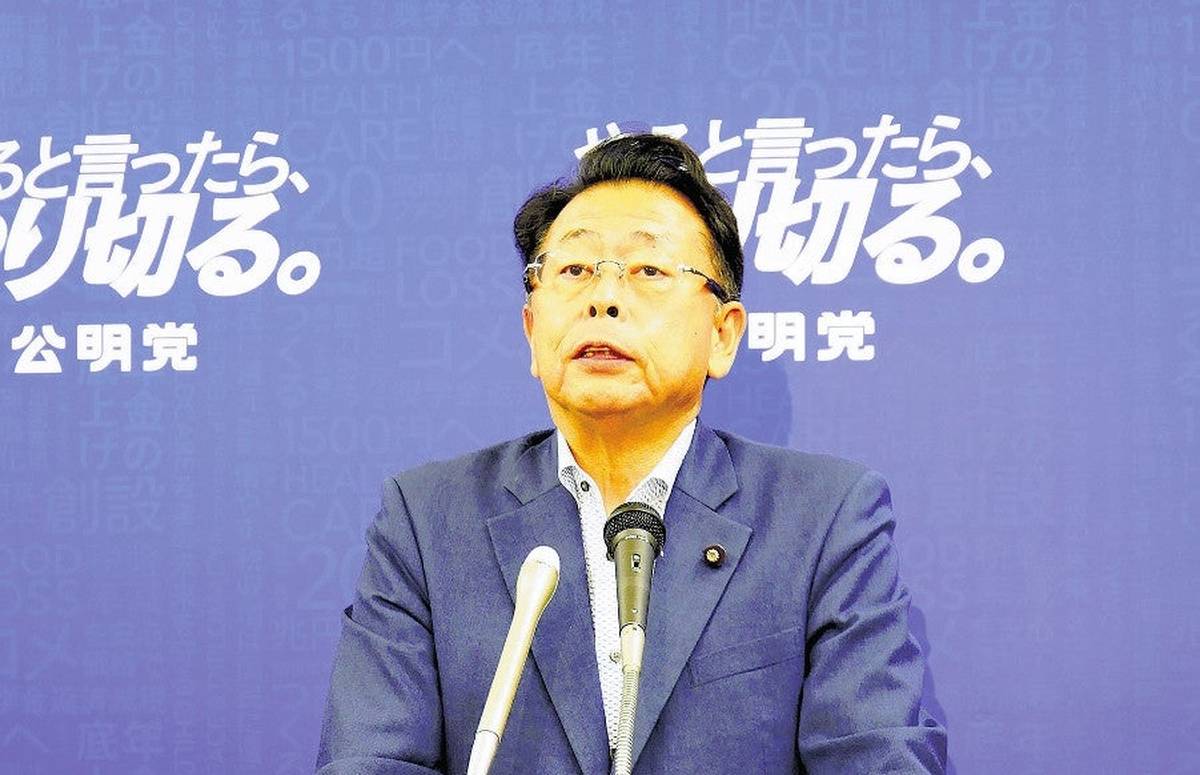
Komeito Secretary-General Makoto Nishida announces an election review document on Thursday.
11:34 JST, September 12, 2025
TOKYO (Jiji Press) — Komeito, the junior member of Japan’s ruling coalition, on Thursday adopted an election review document recognizing its existential crisis.
Following the adoption, Komeito Secretary-General Makoto Nishida informed party leader Tetsuo Saito of his resignation, informed sources said.
Nishida, a four-term House of Councillors member, assumed the key party post in September last year and has remained in the post even after the party lost seats in the House of Representatives election last October.
In the July Upper House election, Komeito won only eight seats, the lowest figure since its founding. The document states that the party was unable to expand its support among the working generation, young people and independent voters.
Admitting a sense of rejection among voters toward establishment parties, the document notes, “The global trend toward multiparty politics has begun in earnest in Japan as well.”
As a factor behind the poor election result, it cites the party’s endorsement of candidates from its coalition partner, the Liberal Democratic Party, who were involved in a political funds scandal at the LDP.
In the document, Komeito vows to “fulfill our role as a responsible centrist reform force,” saying that reforms that merely extend conventional policy are insufficient.
The party plans to focus on efforts to appeal to young people, in light of the aging membership of its main supporter, the lay Buddhist group Soka Gakkai. Specifically, it will create a student division and consider establishing an organization to foster female and young candidates ahead of the next House of Representatives election.
“Our dialogue [with young people] on the internet has been quite insufficient,” Nishida told a press conference.
Companies investing in the United States get concerned if they encounter disadvantages and difficulties in building factories there, Lee said, warning that the incident may heavily affect future direct investments in the United States.








Most Read
Popular articles in the past 24 hours
-
Japan's Budget on Track for Quick Passage, but Ruling Parties to ...
-

Japan-Based USS Tripoli, Marine Unit to Be Sent to Middle East, U...
-

Ransomware Attacks Hitting Japan's Small, Midsize Firms
-

7 Men Arrested Over Robbery of ¥423 Mil. on Tokyo Street; Members...
-

North Korea Fires about 10 Missiles toward Sea in Show of Force, ...
-

German Journalist Traces Footsteps of Great-Grandfather Who Was P...
-

Hiroshima: Yamato Museum to Reopen on April 23 after Major Renova...
-

CARTOON OF THE DAY (March 14)
Popular articles in the past week
-

Japan Figure Skating Legend Yuzuru Hanyu Is Proud Disaster Surviv...
-

Govt to Utilize ODA for Ensuring Economic Security; Securing Ener...
-
15 Measles Patients Confirmed in Tokyo in Past 6 Days; 1 May Have...
-

Massive Sewer Pipe Found Jutting Out of Highway in Osaka
-

Japan Govt to Tighten Requirements to Receive Permanent Residency...
-

Power Outage Forces About 980 Passengers in Yokohama to Walk to T...
-
JR Tokai Breaks Ground on Yamanashi Maglev Station; Will Be Part ...
-

Beckoning Cats Get Makeover to Fit Modern Lifestyles with Sleek D...
Popular articles in the past month
-

Producer Behind Pop Group XG Arrested for Cocaine Possession
-

Japan PM Takaichi’s Cabinet Resigns en Masse
-

Man Infected with Measles Reportedly Dined at Restaurant in Tokyo...
-
Japan Figure Skating Legend Yuzuru Hanyu Is Proud Disaster Surviv...
-

iPS Treatments Pass Key Milestone, but Broader Applications Far f...
-

Sanae Takaichi Elected Prime Minister of Japan; Keeps All Cabinet...
-

South Korea Tightens Rules on Foreigners Buying Homes in Seoul Me...
-

Nepal Bus Crash Kills 19 People, Injures 25 Including One Japanes...
Top Articles in Politics
-
Japan PM Takaichi’s Cabinet Resigns en Masse
-
Sanae Takaichi Elected Prime Minister of Japan; Keeps All Cabinet Appointees from Previous Term
-

Japan’s Govt to Submit Road Map for Growth Strategy in March, PM Takaichi to Announce in Upcoming Policy Speech
-
LDP Begins Training New Lawmakers to Avoid Scandal, Gaffes; Historic Victory in Latest Election Heightens Focus on Party
-

Japan PM Sanae Takaichi Welcomes Peach Ambassadors Koga Momo Musume to Official Residence
JN ACCESS RANKING
-
Producer Behind Pop Group XG Arrested for Cocaine Possession
-
Japan PM Takaichi’s Cabinet Resigns en Masse
-
Man Infected with Measles Reportedly Dined at Restaurant in Tokyo Station
-
Japan Figure Skating Legend Yuzuru Hanyu Is Proud Disaster Survivor and Gold Medalist, Vows to Continue Support Efforts
-
iPS Treatments Pass Key Milestone, but Broader Applications Far from Guaranteed