
Sanseito Requires Advance Registration for Press Conferences Required; Experts Warn over Public’s Right to Know
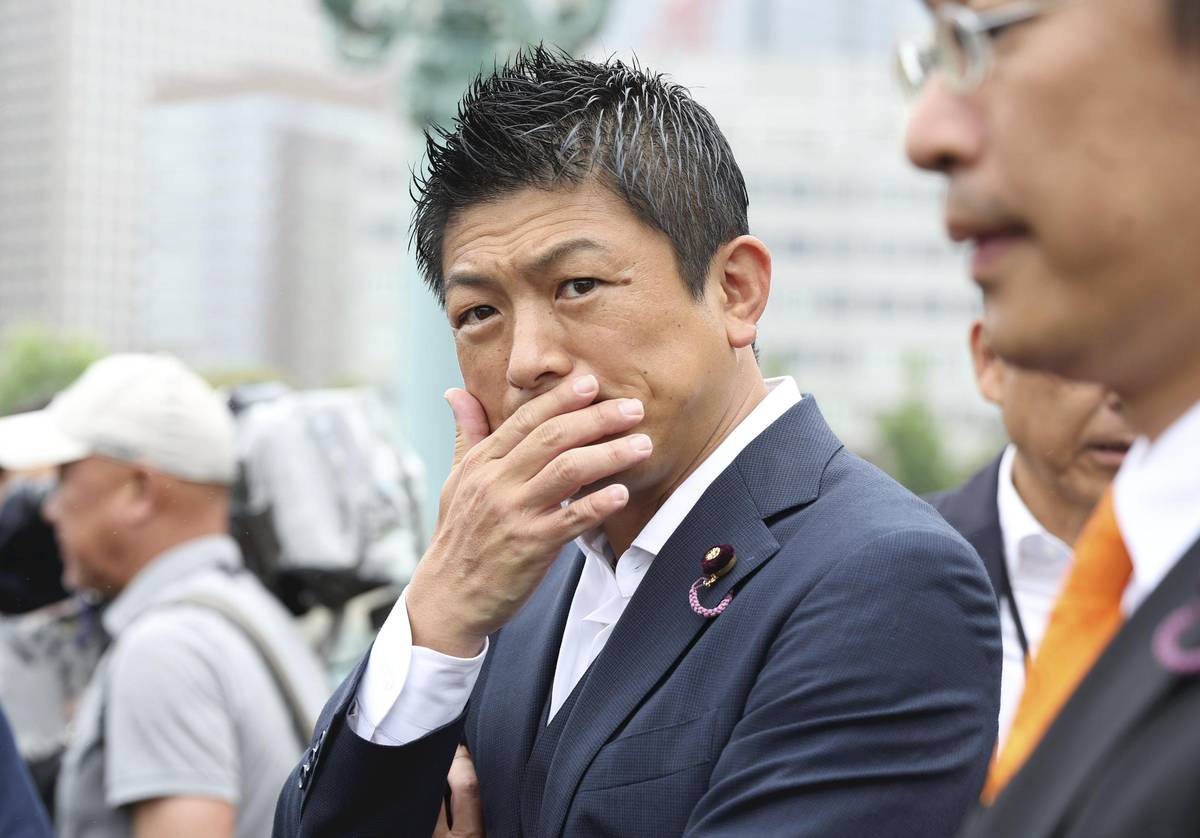
Sanseito leader Sohei Kamiya
17:37 JST, August 8, 2025
Opposition party Sanseito has notified media outlets and other organizations that advance registration will be required to attend regular press conferences with the party’s leader Sohei Kamiya.
Experts have warned that the requirement could allow the party to arbitrarily select media outlets that are allowed to attend, potentially infringing on the public’s right to know.
Registration will require applicants to agree to a written disclaimer stating that anyone who has engaged in “disruption or nuisance behavior” may be denied access.
On July 22, Sanseito refused to allow a reporter from the Kanagawa Shimbun to attend a regular press conference held at the Diet. The party claimed that the reporter had “been involved in disruptive acts during street speeches” in the Upper House election period and stated that “there was also a risk of disorder at the press conference.” The newspaper issued a statement rebutting this, saying the claim was “based on an obvious factual error.”
The party began asking for registrations on Wednesday. However, it has not specified what circumstances would constitute disruption or nuisance.
Kamiya has previously explained that the registration system is “not about pre-screening to reject certain people … If we say one question per person and someone refuses to cooperate, we may deny them entry, but it’s not about excluding people just because their views differ.”
Other political parties also sometimes impose conditions on reporters attending press conferences, such as requiring attendance solely for reporting purposes, or asking for the presentation of a business card or to wear an armband. These policies are implemented to avoid disorder. However, no other party refuses attendance to those who do not accept conditions set out in advance.
Hiroshi Shiratori, a Hosei University professor specializing in contemporary political analysis, said, “Parties that receive taxpayer-funded political subsidies from the government have a responsibility to explain themselves to the public, including on matters unfavorable to them.” He added, “If vague terms like ‘disruption’ or ‘nuisance’ are interpreted broadly, this could lead to the exclusion of media outlets critical of the party, ultimately threatening the public’s right to know.”
Shiratori also warned that “reporters may feel pressured and shrink from asking anything but questions favorable to the party.”
Sanseito has stressed that press conferences are streamed in full online without being edited, which they say creates an environment where anyone can watch, whether or not they are part of the media. However, Kenta Yamada, a Senshu University professor specializing in media law, said: “A press conference is not just a publicity platform for a party to say whatever it wants. Even if it can be viewed online, if reporters on site cannot freely ask questions, the party’s claims will simply be broadcast unilaterally, which is problematic.”






Most Read
Popular articles in the past 24 hours
-
Tokyo Skytree's Elevator Stops, Trapping 20 People; All Rescued (...
-

China, India Tapping into Promising African Market; Beijing Annou...
-

Milano Cortina 2026: Miura-Kihara Duo, Other Japanese Figure Skat...
-

Japan’s Major Real Estate Firms Expanding Overseas Businesses to ...
-
‘Storytellers’ Being Dispatched Overseas to Promote Japan; Events...
-
Japan, Pacific Island Nations to Work on Deepening Cooperation
-

Ukrainian Ambassador Closely Watching Japan’s Revision of Defense...
-
Japanese Film, Anymart, Wins Critics’ Award at International Film...
Popular articles in the past week
-

Japan PM Takaichi’s Cabinet Resigns en Masse
-

Man Infected with Measles Reportedly Dined at Restaurant in Tokyo...
-

Sanae Takaichi Elected Prime Minister of Japan; Keeps All Cabinet...
-

Japan's Govt to Submit Road Map for Growth Strategy in March, PM ...
-

Bus Carrying 40 Passengers Catches Fire on Chuo Expressway; All E...
-

Milano Cortina 2026: Figure Skaters Riku Miura, Ryuichi Kihara Pa...
-

Japan, U.S. Name 3 Inaugural Investment Projects; Reached Agreeme...
-
U.S. Firm to Build Training Hub in Fukushima N-plant for Debris R...
Popular articles in the past month
-
Japan PM Takaichi’s Cabinet Resigns en Masse
-

Japan Institute to Use Domestic Commercial Optical Lattice Clock ...
-

Israeli Ambassador to Japan Speaks about Japan’s Role in the Reco...
-
Man Infected with Measles Reportedly Dined at Restaurant in Tokyo...
-

Videos Plagiarized, Reposted with False Subtitles Claiming ‘Ryuky...
-

Man Infected with Measles May Have Come in Contact with Many Peop...
-

Prudential Life Insurance Plans to Fully Compensate for Damages C...
-

Woman with Measles Visited Hospital in Tokyo Multiple Times Befor...
Top Articles in Politics
-
Japan PM Takaichi’s Cabinet Resigns en Masse
-
Sanae Takaichi Elected Prime Minister of Japan; Keeps All Cabinet Appointees from Previous Term
-
Japan’s Govt to Submit Road Map for Growth Strategy in March, PM Takaichi to Announce in Upcoming Policy Speech
-

LDP Wins Historic Landslide Victory
-

LDP Wins Landslide Victory, Secures Single-party Majority; Ruling Coalition with JIP Poised to Secure Over 300 seats (UPDATE 1)
JN ACCESS RANKING
-
Japan PM Takaichi’s Cabinet Resigns en Masse
-
Japan Institute to Use Domestic Commercial Optical Lattice Clock to Set Japan Standard Time
-
Israeli Ambassador to Japan Speaks about Japan’s Role in the Reconstruction of Gaza
-
Man Infected with Measles Reportedly Dined at Restaurant in Tokyo Station
-
Videos Plagiarized, Reposted with False Subtitles Claiming ‘Ryukyu Belongs to China’; Anti-China False Information Also Posted in Japan