
Koizumi, Japan’s New Agriculture Minister, Faces Soaring Rice Prices and Possible Surge in Imports from U.S.
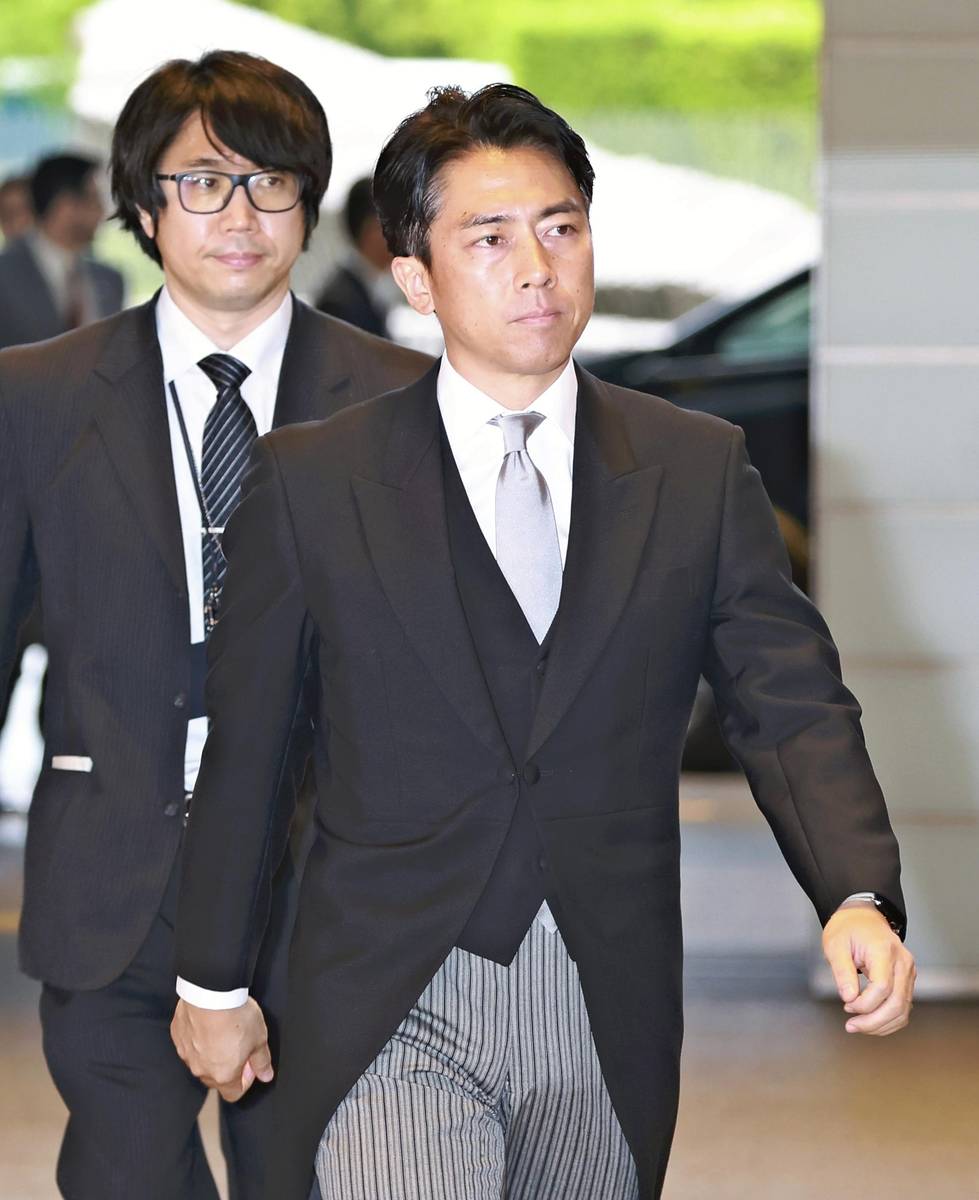
Agriculture minister Shinjiro Koizumi arrives at the Prime Minister’s Office in Tokyo on Wednesday.
13:32 JST, May 22, 2025
Newly appointed agriculture minister Shinjiro Koizumi faces critical challenges, including addressing the rising price of rice and a possible increase in agricultural imports from the United States.
How he manages these issues could ultimately determine the fate of Prime Minister Shigeru Ishiba’s administration.
During his inaugural press conference at the Agriculture, Forestry and Fisheries Ministry on Wednesday, Koizumi said: “What we need to focus on right now, above all, is rice. It’s all about tice. I want to take the first step toward lowering rice prices.”
Ishiba said Wednesday he had instructed Koizumi to change how the government sells stockpiled rice reserved for emergency use, shifting from competitive bidding to discretionary contracts in order to reduce prices.
Although currently only rice distributors can bid on contracts, Koizumi stressed that he was committed to moving quickly to flesh out plans such as for expanding discretionary contracts to include retailers and restaurant operators.
The National Federation of Agricultural Cooperative Associations (JA Zen-Noh) placed successful bids on more than 90% of the 210,000 tons of stockpiled rice released by the ministry in March. Yet, as of April 27, only about 10% of that rice had reached retailers and the food service sector.
The average price of a five-kilogram bag of rice sold at supermarkets nationwide has increased for 17 weeks running, and now exceeds ¥4,000 — double last year’s price. Koizumi will have to act swiftly to ensure that reserve rice reaches consumers and retail prices come down.
He will also be tested during the Japan-U.S. negotiations over President Donald Trump’s tariff measures.
Proposals for increased imports of corn and soybeans, both of which Japan relies on imports for, are being considered as bargaining chips with the United States. Plans to boost rice imports are also being floated, though they are certain to face fierce resistance from Japan’s farmers.
“Based on a policy of not sacrificing agriculture, I want to cooperate with relevant ministries and agencies to secure national interests,” Koizumi said.
One senior official inside the ministry expressed optimism, saying, “We expect he will make reforms.” However, another senior official raised concerns, arguing that “if policies are decided top-down, it will cause confusion on the ground.”
A Diet member with close ties to the agricultural lobby said that Koizumi “knows how to grab attention, but his leadership abilities are still untested.”


Related Tags

Most Read
Popular articles in the past 24 hours
-

Director Naomi Kawase's New Film Explores Heart Transplants in Ja...
-

Japan’s Nikkei Stock Average Rises on Tech Rally and Takaichi's S...
-

Takaichi Expected to Express Desire for Constitutional Revision P...
-

Security Services Law Unconstitutional: Do Not Restrict Career Ch...
-
Japanese Man Living in Iraq Suspected of Illegally Entering U.S. ...
-
New Leader of Japan's CRA Opposition Party Faces Challenge of For...
-

Milano Cortina 2026: Snowboarding Star Fukada Wins Gold in Hard-F...
-

Tokyo Exhibition Featuring VR Walk Through 2025 Osaka-Kansai Expo...
Popular articles in the past week
-

Japan PM Takaichi’s Cabinet Resigns en Masse
-

Man Infected with Measles Reportedly Dined at Restaurant in Tokyo...
-

Videos Plagiarized, Reposted with False Subtitles Claiming ‘Ryuky...
-

Sanae Takaichi Elected 105th Prime Minister of Japan; Keeps All C...
-

Japan's Govt to Submit Road Map for Growth Strategy in March, PM ...
-

Milano Cortina 2026: Figure Skaters Riku Miura, Ryuichi Kihara Pa...
-

Tokyo’s New Record-Breaking Fountain Named ‘Tokyo Aqua Symphony’
-

Bus Carrying 40 Passengers Catches Fire on Chuo Expressway; All E...
Popular articles in the past month
-
Japan PM Takaichi’s Cabinet Resigns en Masse
-

Japan Institute to Use Domestic Commercial Optical Lattice Clock ...
-

Israeli Ambassador to Japan Speaks about Japan’s Role in the Reco...
-
Man Infected with Measles Reportedly Dined at Restaurant in Tokyo...
-

Man Infected with Measles May Have Come in Contact with Many Peop...
-

Prudential Life Insurance Plans to Fully Compensate for Damages C...
-
Videos Plagiarized, Reposted with False Subtitles Claiming ‘Ryuky...
-

Woman with Measles Visited Hospital in Tokyo Multiple Times Befor...
Top Articles in Politics
-
Japan PM Takaichi’s Cabinet Resigns en Masse
-
Sanae Takaichi Elected 105th Prime Minister of Japan; Keeps All Cabinet Appointees from Previous Term
-
Japan’s Govt to Submit Road Map for Growth Strategy in March, PM Takaichi to Announce in Upcoming Policy Speech
-

LDP Wins Historic Landslide Victory
-

LDP Wins Landslide Victory, Secures Single-party Majority; Ruling Coalition with JIP Poised to Secure Over 300 seats (UPDATE 1)
JN ACCESS RANKING
-
Japan PM Takaichi’s Cabinet Resigns en Masse
-
Japan Institute to Use Domestic Commercial Optical Lattice Clock to Set Japan Standard Time
-
Israeli Ambassador to Japan Speaks about Japan’s Role in the Reconstruction of Gaza
-
Man Infected with Measles Reportedly Dined at Restaurant in Tokyo Station
-
Man Infected with Measles May Have Come in Contact with Many People in Tokyo, Went to Store, Restaurant Around When Symptoms Emerged