
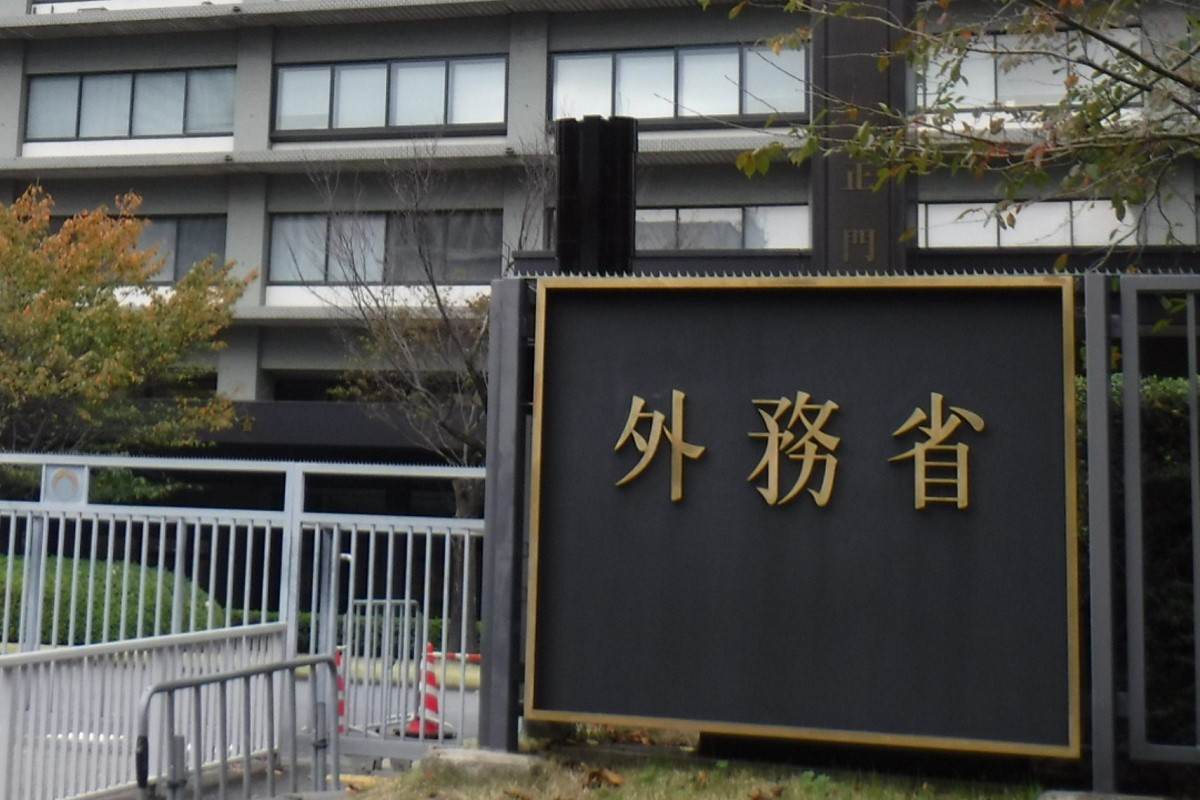
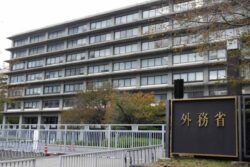
The Foreign Ministry head office is seen in Chiyoda Ward, Tokyo, on Nov. 1, 2020.
20:00 JST, April 11, 2023
The Foreign Ministry on Tuesday released its annual foreign policy report, in which it describes the international community as “at a turning point” in history in light of the Russian invasion of Ukraine and other developments. Foreign Minister Yoshimasa Hayashi presented the report, also called a diplomatic bluebook, at a Cabinet meeting on Tuesday morning.
While the describing the U.N. as dysfunctional, the report stresses the role of the Group of 7, saying, “The importance of the G7, whose influence had been rumored to be in decline, has been acknowledged once more.”
The report also explains that the G7 has “worked closely together and responded most effectively to Russian aggression in Ukraine.” Regarding the G7 summit that Japan is scheduled to preside over in May in Hiroshima, it says “the G7 leaders will demonstrate their determination to uphold the international order based on the rule of law.”
As for the recent international situation, the report argues that the post-Cold War era is over and the world is now “entering an era in which it will be difficult for the international community to converge under a single set of values and principles.”
The bluebook this year includes, for the first time, a description of the Global South, which refers to emerging and developing countries located primarily in the southern hemisphere, such as in Asia and Africa. It also urges more involvement with these countries, as their importance in the international community is growing.
Concerning China, the report argues that Beijing is “intensifying its attempts to unilaterally change the status quo by force or coercion” in the maritime regions and airspace of the East and South China Seas. It also calls China’s approach to international relations and military trends “the greatest strategic challenge ever” to the international order.
In Japan-South Korea relations, the report praises Seoul for its plan to resolve the issue of former requisitioned workers from the Korean Peninsula and “restoring Japan-South Korea relations, which had been under extreme strain, back to a healthy relationship.”
It also stresses the importance of cooperation among Japan, South Korea and the U.S. as well as bilateral cooperation between Japan and South Korea.



Most Read
Popular articles in the past 24 hours
-

McDonald's Japan Raises Prices; Big Mac to Cost ¥500, Double Chee...
-

Nepal Bus Crash Kills 19 People, Injures 25 Including One Japanes...
-

Japan’s Nikkei Stock Average Rises as AI-Related Stocks Shine; Co...
-

Aggression against Ukraine: Malignant Precedent Must Not Be Set t...
-

Joruri Bunraku Narrative Performed in Honor of Donald Keene by La...
-
Kanto's 1st Spring Wind Blows as Tokyo Sees Unseasonably High Tem...
-

Early-Blooming Kawazu Cherry Blossoms Create Sea of Pink at Park ...
-

Astellas Collaborates with Vir to Develop Its Experimental Prosta...
Popular articles in the past week
-

Producer Behind Pop Group XG Arrested for Cocaine Possession
-

Japan PM Takaichi’s Cabinet Resigns en Masse
-

Sanae Takaichi Elected Prime Minister of Japan; Keeps All Cabinet...
-

Japan's Govt to Submit Road Map for Growth Strategy in March, PM ...
-

Bus Carrying 40 Passengers Catches Fire on Chuo Expressway; All E...
-

Japan, U.S. Name 3 Inaugural Investment Projects; Reached Agreeme...
-

Riku-Ryu Pair Wins Gold Medal: Their Strong Bond Leads to Major C...
-

iPS Treatments Pass Key Milestone, but Broader Applications Far f...
Popular articles in the past month
-
Producer Behind Pop Group XG Arrested for Cocaine Possession
-
Japan PM Takaichi’s Cabinet Resigns en Masse
-

Japan Institute to Use Domestic Commercial Optical Lattice Clock ...
-

Man Infected with Measles Reportedly Dined at Restaurant in Tokyo...
-

Israeli Ambassador to Japan Speaks about Japan’s Role in the Reco...
-

Videos Plagiarized, Reposted with False Subtitles Claiming ‘Ryuky...
-

Man Infected with Measles May Have Come in Contact with Many Peop...
-

Prudential Life Insurance Plans to Fully Compensate for Damages C...
Top Articles in Politics
-
Japan PM Takaichi’s Cabinet Resigns en Masse
-
Sanae Takaichi Elected Prime Minister of Japan; Keeps All Cabinet Appointees from Previous Term
-
Japan’s Govt to Submit Road Map for Growth Strategy in March, PM Takaichi to Announce in Upcoming Policy Speech
-

LDP Wins Historic Landslide Victory
-

LDP Wins Landslide Victory, Secures Single-party Majority; Ruling Coalition with JIP Poised to Secure Over 300 seats (UPDATE 1)
JN ACCESS RANKING
-
Producer Behind Pop Group XG Arrested for Cocaine Possession
-
Japan PM Takaichi’s Cabinet Resigns en Masse
-
Man Infected with Measles Reportedly Dined at Restaurant in Tokyo Station
-
Israeli Ambassador to Japan Speaks about Japan’s Role in the Reconstruction of Gaza
-
Videos Plagiarized, Reposted with False Subtitles Claiming ‘Ryukyu Belongs to China’; Anti-China False Information Also Posted in Japan