
Consumption Tax Cut Could Cause Headaches for Retailers; Updates to Point-of-Sale Systems Expected to Take Time
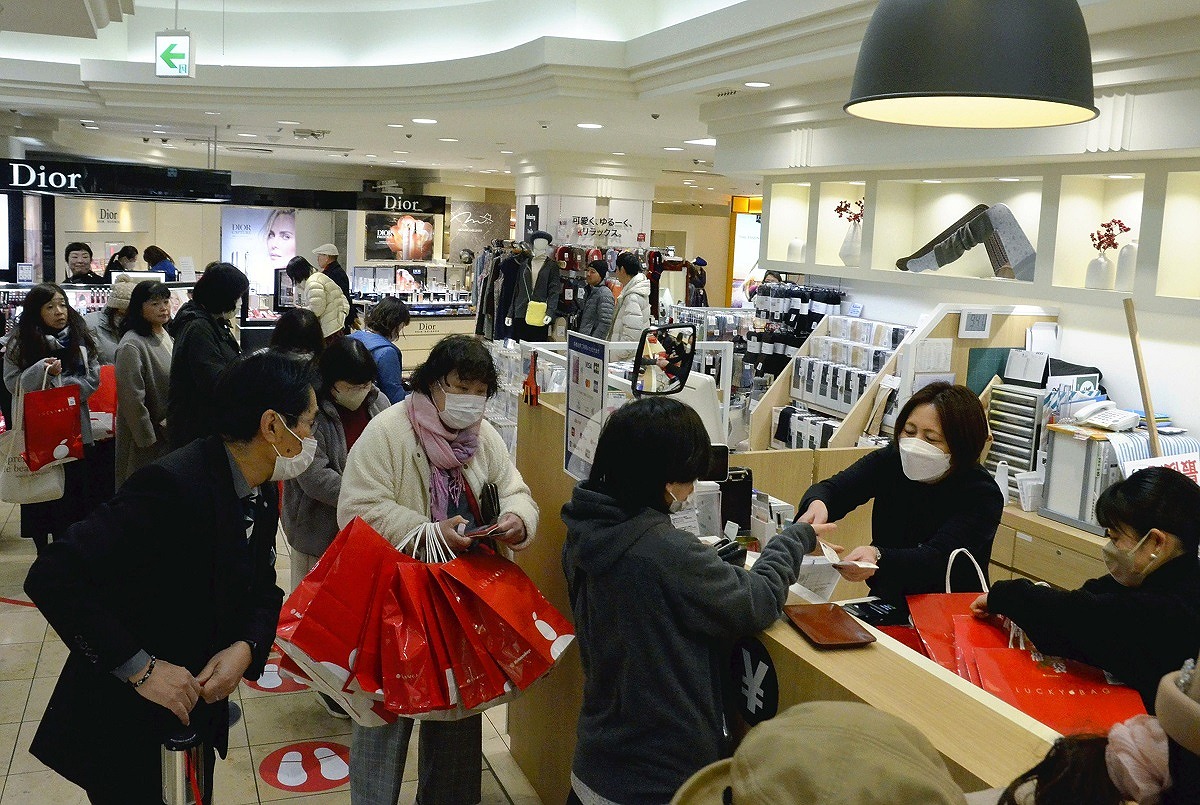
A sales floor is crowded with shoppers in Kochi City.
15:10 JST, February 5, 2026
Japan’s major political parties have made cutting the consumption tax rate part of their campaign pledges ahead of Sunday’s House of Representatives election, but these promises could lead to practical difficulties at the checkout counters of stores across the country.
Implementing a reduced consumption tax rate will require updating the systems that manage product sales records, and both the retailers that use these systems and the manufacturers that provide them are likely to find themselves scrambling to carry out this overhaul as quickly as possible.
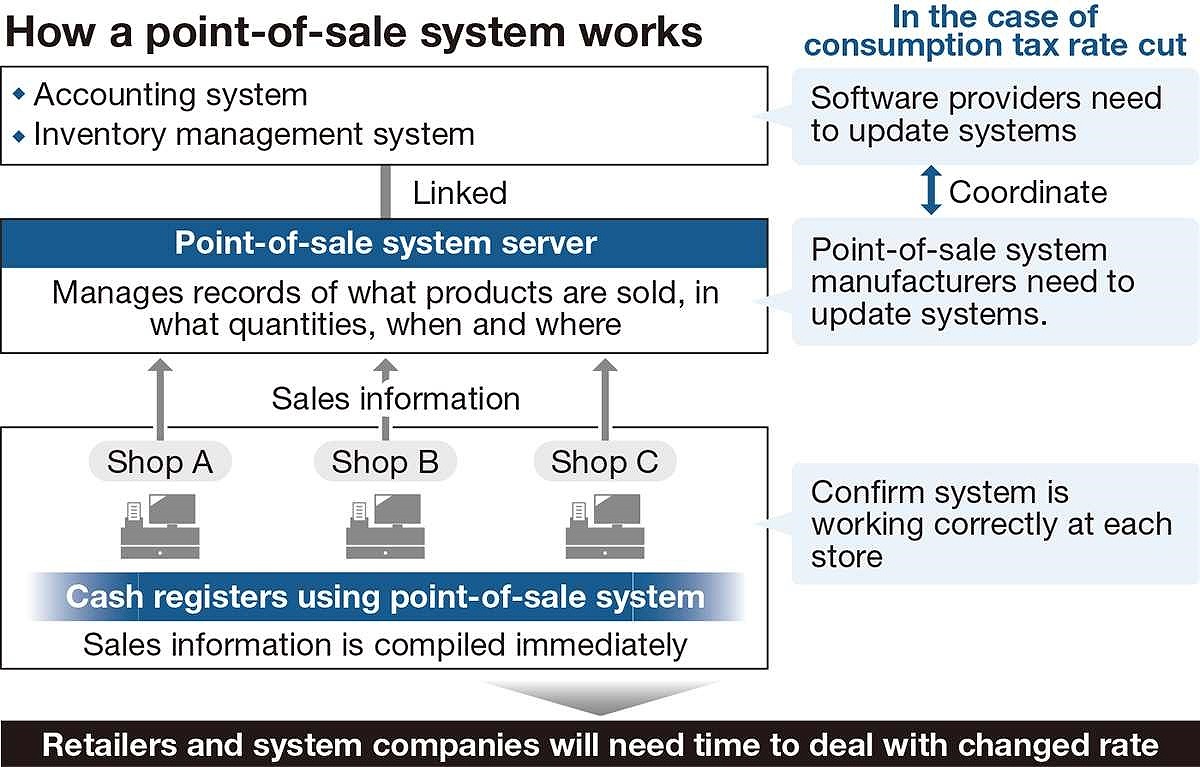
Supermarkets, convenience stores and many other retailers use “point-of-sale” systems that manage sales records, including what items are sold, and when and where transactions take place.
When a sale is made at one of these stores, a cash register reads a barcode containing product information such as the price. These details are checked against the system’s product data, and data on the sale is recorded. The point-of-sale system compiles this information, which the retailer then uses for purchase planning and sales management.
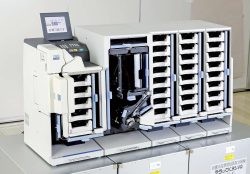
Electronic cash registers used at individually owned stores and small businesses are not connected to such networks, so many of them will be able to adjust their systems in accordance with a consumption tax cut within the space of a few hours.
By contrast, businesses that employ point-of-sale systems will require significantly more time to prepare for such a change. According to one major manufacturer of these technologies, not only retailers’ management systems but also their point-of-sale systems will have to be updated, because these are connected to their accounting and inventory management systems.
Recruit Co., which supplies point-of-sale services mainly to small and midsize businesses, predicts that implementing such changes could take “from six months to one year.” Large system manufacturers that have many clients across a broad range of industries will likely require even longer to complete this work.
“System-related business operators with a large market share will take at least one year to make these upgrades,” Prime Minister Sanae Takaichi told the lower house’s Budget Committee in November.
“The modifications to be made will differ depending on factors such as what items receive a tax cut and what the new rate is,” said an official at a major system maker. “It’s hard to say exactly how we’ll deal with this issue.”
Should the consumption tax rate be trimmed only temporarily, point-of-sale systems will need to be updated again when the cut expires. “We’ll need to simulate various scenarios,” an official at another system manufacturer said.


Related Tags




Most Read
Popular articles in the past 24 hours
-

Japan Govt to Tighten Requirements to Receive Permanent Residency...
-

‘King Kazu’ Discusses His Connection to Fukushima
-
JR Tokai Breaks Ground on Yamanashi Maglev Station; Will Be Part ...
-

Medical Care at Home and Disasters: Ensure Systems to Provide Con...
-

Metal Pipe That Protruded 13 Meters Above Ground in Osaka Sinks B...
-

White House Takes First Step toward Permanent Fix for Illegal Tar...
-
Japan to Extend Drone No-fly Zones Near Key Facilities to 1 km
-

The Japan News / Weekly Edition (3/13-3/19)
Popular articles in the past week
-

Japan Figure Skating Legend Yuzuru Hanyu Is Proud Disaster Surviv...
-

Nippon Life Insurance's U.S. Arm Sues OpenAI Over Legal Assistanc...
-

Govt to Utilize ODA for Ensuring Economic Security; Securing Ener...
-

Massive Sewer Pipe Found Jutting Out of Highway in Osaka
-

Beckoning Cats Get Makeover to Fit Modern Lifestyles with Sleek D...
-
Japan Govt Survey Finds Just 10% of Workers Want Working Hours to...
-

Japan's 2nd Round of U.S. Investments May Be Worth Over $100 Bill...
-

Imperial Family Watches World Baseball Classic Game Against Austr...
Popular articles in the past month
-

Producer Behind Pop Group XG Arrested for Cocaine Possession
-

Japan PM Takaichi’s Cabinet Resigns en Masse
-

Man Infected with Measles Reportedly Dined at Restaurant in Tokyo...
-

Videos Plagiarized, Reposted with False Subtitles Claiming ‘Ryuky...
-
Japan Figure Skating Legend Yuzuru Hanyu Is Proud Disaster Surviv...
-

iPS Treatments Pass Key Milestone, but Broader Applications Far f...
-

Sanae Takaichi Elected Prime Minister of Japan; Keeps All Cabinet...
-

Nepal Bus Crash Kills 19 People, Injures 25 Including One Japanes...
Top Articles in Politics
-
Japan PM Takaichi’s Cabinet Resigns en Masse
-
Sanae Takaichi Elected Prime Minister of Japan; Keeps All Cabinet Appointees from Previous Term
-

Japan’s Govt to Submit Road Map for Growth Strategy in March, PM Takaichi to Announce in Upcoming Policy Speech
-
LDP Begins Training New Lawmakers to Avoid Scandal, Gaffes; Historic Victory in Latest Election Heightens Focus on Party
-

Japan PM Sanae Takaichi Welcomes Peach Ambassadors Koga Momo Musume to Official Residence
JN ACCESS RANKING
-
Producer Behind Pop Group XG Arrested for Cocaine Possession
-
Japan PM Takaichi’s Cabinet Resigns en Masse
-
Man Infected with Measles Reportedly Dined at Restaurant in Tokyo Station
-
Videos Plagiarized, Reposted with False Subtitles Claiming ‘Ryukyu Belongs to China’; Anti-China False Information Also Posted in Japan
-
Japan Figure Skating Legend Yuzuru Hanyu Is Proud Disaster Survivor and Gold Medalist, Vows to Continue Support Efforts