
Japan Seeks to Counter China’s Expanding Influence in Pacific by Strengthening Ties with Island Nations
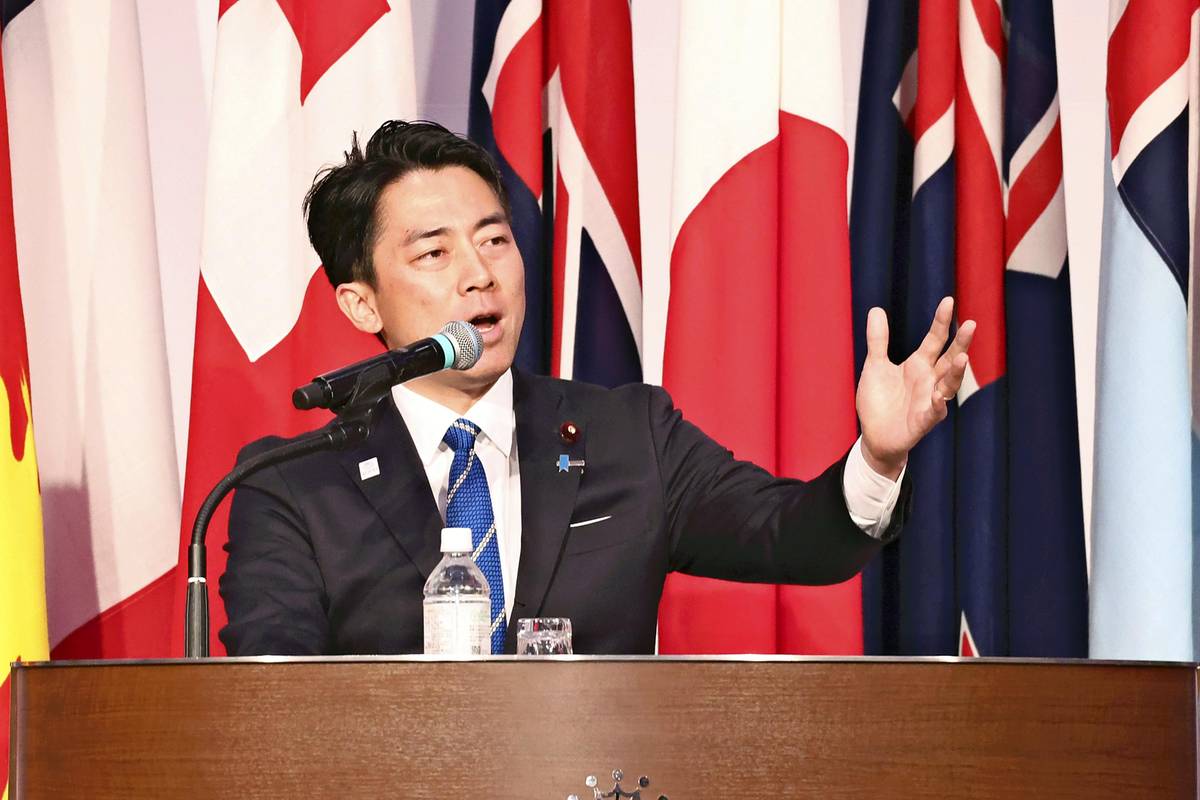
Defense Minister Shinjiro Koizumi delivers a keynote address during the third Japan Pacific Islands Defense Dialogue meeting in Tokyo on Monday.
2:00 JST, February 25, 2026
Defense Minister Shinjiro Koizumi expressed Japan’s intention to strengthen ties with 14 Pacific Island nations through such means as personnel exchanges and building a relationship based on multilayered cooperation, at the third Japan Pacific Islands Defense Dialogue which concluded on Tuesday.
China seeks to expand its influence over the island nations by providing vast sums in so-called aid. With this in mind, the Japanese government aims to expand the network of cooperation to include the United States, Australia, the Association of Southeast Asian Nations and others.
Koizumi emphasized the importance of partnering with the Pacific Island nations, saying, “In response to crises in the [Pacific] region, countries that share the same spirit connect their respective efforts, generate synergy and transform those efforts into strength for the region as a whole,” during his keynote address on Monday. “This is the power of interconnectivity.”
China is investing heavily in airports and other infrastructure in Pacific Island nations, seeking to gain influence. However, these investments carry the risk of becoming a “debt trap,” in which infrastructure and other assets are seized from countries that default on repayments.
The Japanese government aims to differentiate itself from China by promoting “projects that consider the partner country’s perspective,” to help to achieve sound economic development in the island nations.
Japan’s sense of urgency regarding strengthening personnel exchanges with the Pacific Island nations also stems from China’s presence in the region. In April 2022, the Solomon Islands and China signed a security agreement, which enables China to dispatch military forces and police to the nation.
Of the 14 Pacific Island nations, only three have a military, namely Tonga, Fiji and Papua New Guinea. Thus, many of them must rely on other nations for military and policing functions. Japan, the United States, Australia and others therefore have strong concerns over China expanding its influence over the South Pacific region economically and in terms of security.
This year’s meeting was attended by seven ASEAN members, including the Philippines and Indonesia, as observers. Many of these countries face the South China Sea.
ASEAN members are located near the same maritime transport route that connects Japan and the Pacific Island nations. With China constructing military outposts in the South China Sea, they face similar problems concerning maritime security.
The Japanese government invited ASEAN members to the meeting, as it considered it necessary to build a bridge between them and the Pacific Island nations in order to maintain maritime order under the rule of law.
After the three-day meeting concluded, Koizumi said, “By sharing knowledge and insights, Japan, Pacific Island nations and ASEAN are able to respond [to issues] more effectively.”


Related Tags


Most Read
Popular articles in the past 24 hours
-

‘Dry Bonsai’ Gives New Life to Withered Trees, Allows Free Artist...
-

McDonald's Japan Raises Prices; Big Mac to Cost ¥500, Double Chee...
-

Nepal Bus Crash Kills 19 People, Injures 25 Including One Japanes...
-

Japan’s Nikkei Stock Average Rises as AI-Related Stocks Shine; Co...
-

Aggression against Ukraine: Malignant Precedent Must Not Be Set t...
-

Joruri Bunraku Narrative Performed in Honor of Donald Keene by La...
-

Astellas Collaborates with Vir to Develop Its Experimental Prosta...
-

Early-Blooming Kawazu Cherry Blossoms Create Sea of Pink at Park ...
Popular articles in the past week
-

Producer Behind Pop Group XG Arrested for Cocaine Possession
-

Japan PM Takaichi’s Cabinet Resigns en Masse
-

Sanae Takaichi Elected Prime Minister of Japan; Keeps All Cabinet...
-

Japan's Govt to Submit Road Map for Growth Strategy in March, PM ...
-

Bus Carrying 40 Passengers Catches Fire on Chuo Expressway; All E...
-

Japan, U.S. Name 3 Inaugural Investment Projects; Reached Agreeme...
-

Riku-Ryu Pair Wins Gold Medal: Their Strong Bond Leads to Major C...
-

Tokyo Skytree's Elevator Stops, Trapping 20 People; All Rescued (...
Popular articles in the past month
-
Producer Behind Pop Group XG Arrested for Cocaine Possession
-
Japan PM Takaichi’s Cabinet Resigns en Masse
-

Japan Institute to Use Domestic Commercial Optical Lattice Clock ...
-

Man Infected with Measles Reportedly Dined at Restaurant in Tokyo...
-

Israeli Ambassador to Japan Speaks about Japan’s Role in the Reco...
-

Videos Plagiarized, Reposted with False Subtitles Claiming ‘Ryuky...
-

Man Infected with Measles May Have Come in Contact with Many Peop...
-

Prudential Life Insurance Plans to Fully Compensate for Damages C...
Top Articles in Politics
-
Japan PM Takaichi’s Cabinet Resigns en Masse
-
Sanae Takaichi Elected Prime Minister of Japan; Keeps All Cabinet Appointees from Previous Term
-
Japan’s Govt to Submit Road Map for Growth Strategy in March, PM Takaichi to Announce in Upcoming Policy Speech
-

LDP Wins Historic Landslide Victory
-

LDP Wins Landslide Victory, Secures Single-party Majority; Ruling Coalition with JIP Poised to Secure Over 300 seats (UPDATE 1)
JN ACCESS RANKING
-
Producer Behind Pop Group XG Arrested for Cocaine Possession
-
Japan PM Takaichi’s Cabinet Resigns en Masse
-
Japan Institute to Use Domestic Commercial Optical Lattice Clock to Set Japan Standard Time
-
Man Infected with Measles Reportedly Dined at Restaurant in Tokyo Station
-
Israeli Ambassador to Japan Speaks about Japan’s Role in the Reconstruction of Gaza