
Japanese Govt to Reduce Risks for Companies Investing in Overseas Projects Vital for Economic Security
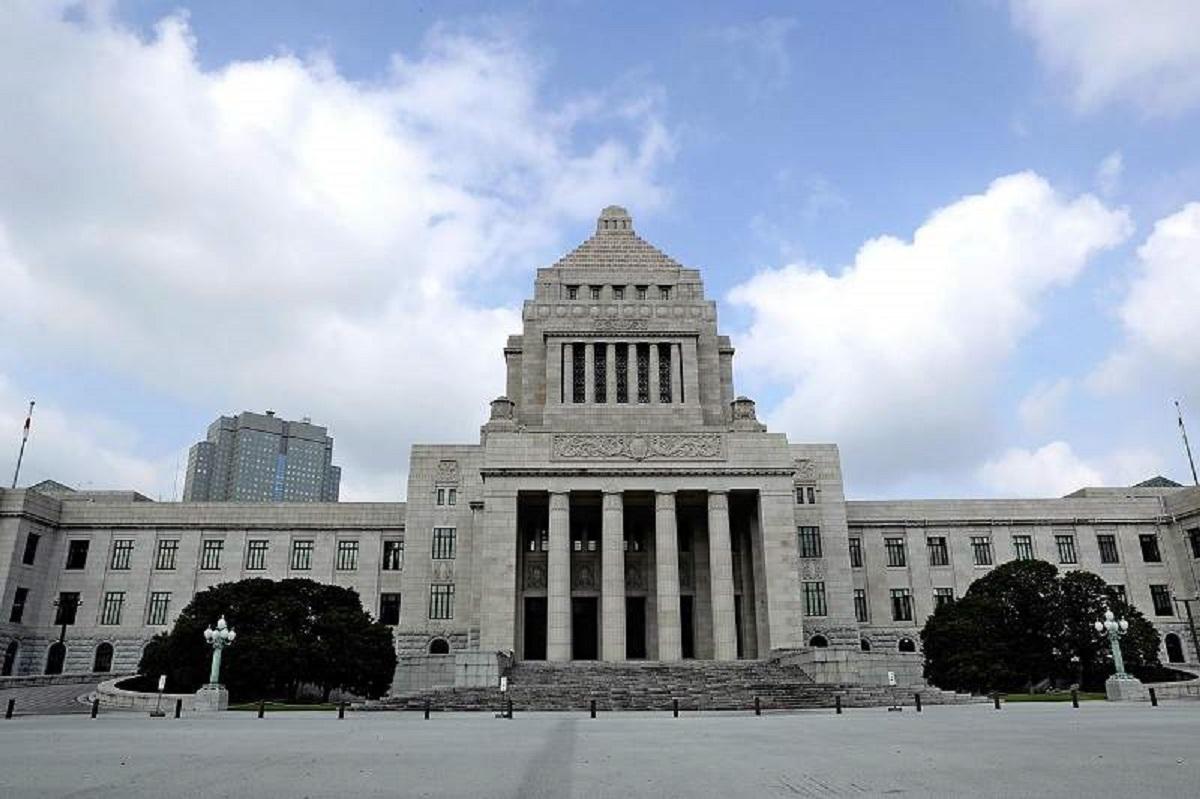
The Diet Building in Chiyoda Ward, Tokyo, Japan.
14:47 JST, February 12, 2026
The government will establish a “designated overseas business projects” system under which the state will assume the risk for any losses from certain projects that Japanese companies invest in abroad and are deemed important for economic security, The Yomiuri Shimbun has learned.
The system was revealed in an Economic Security Promotion Law amendment, which will be submitted during the special Diet session that will be convened Wednesday.
The government aims to support projects such as port development in emerging and developing nations that are considered to be key locations for shipping. The government will also push ahead with assistance for projects including undersea cable laying, and strengthen the defenses of medical institutions against cyberattacks.
This will be the law’s first major revision since it was enacted in 2022. Given the Russia’s aggression against Ukraine and intensifying competition to develop cutting-edge technologies, the government aims to build stronger supply chains for critical materials and strengthen the foundations of the domestic economy. The revised law would constitute one part of the “investment in crisis management” advocated by Prime Minister Sanae Takaichi. The government plans to include the steps together with a growth strategy to be compiled this summer.
The Japan Bank for International Cooperation (JBIC), a government-affiliated financial institution, will provide financial support to designated overseas business projects by Japanese companies. The current law on the JBIC, which stipulates strict investment conditions, will be revised and relatively higher-risk “subordinated capital” will newly be permitted. If a project turns a profit, this would be distributed first to private companies involved. The government will assume any loss that occurs. Lowering the hurdles to getting involved in such projects likely will boost companies’ willingness invest in them.
Concrete examples of such projects are expected to include the development of ports, communications infrastructure and data centers in emerging and developing economies, starting with the Association of Southeast Asian Nations. These projects would help the nations against Chinese economic coercion, and ensure a stable supply of critical materials and energy to Japan.
The revised law would add private company services to the government-funded “specified critical products” that are essential for people’s day-to-day lives. As things stand, semiconductors and critical minerals have been designated as such products, but the government also wants to stably secure the provision of services that support economic activity. It is expected that the laying and maintenance of undersea cables that handle 99% of international communications, and rocket launches would fall under the expanded category of services.
In response to the increased frequency of cyberattacks targeting medical institutions, such facilities will be added to the list of essential infrastructure, which covers sectors including electricity and gas, for which the central government takes the lead in implementing countermeasures. When a critical facility is to be rolled out, the government will conduct a preliminary review and it will become mandatory to report any cyberattacks.
The government also considered strengthening data security to prevent leaks of private sector data important for the nation’s security. However, this will be omitted from the revised law because of reasons such as the many difficulties in aligning this with efforts to promote data use.





Most Read
Popular articles in the past 24 hours
-

Milano Cortina 2026: Ceremony for Winter Paralympic Torch Relay T...
-

WBC to Begin: All the Pieces are in Place for Japan’s Second Stra...
-
Tokyo High Court Upholds Unification Church Dissolution Order
-

How Trump Assassination Attempts Played into His Decision to Atta...
-
PM Sanae Takaichi: Iran Situation Won’t Immediately Affect Electr...
-

CARTOON OF THE DAY (March 4)
-

Trump's Asian Allies Fear Iran War Will Sap Defenses against Chin...
-

Japanese Speedskater Takagi Announces Retirement
Popular articles in the past week
-
Tokyo Spends Big on Children, Wins Over Parents
-
Japan’s Miura, Kihara Announce Withdrawal from Figure Skating Wor...
-

South Korea Tightens Rules on Foreigners Buying Homes in Seoul Me...
-
BOJ Keeping Eye on Economy and Takaichi's ‘Proactive Fiscal Polic...
-
Tokyo Measles Patient Traveled to Fukuoka Aboard JAL Planes; Susp...
-
Nidec Chairman Resigns Amid Accounting Scandal at Major Japanese ...
-
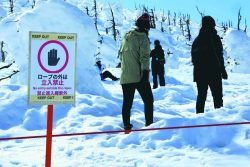
Tourists Ignore Safety Barriers Near Famous Zao ‘Snow Monsters’ i...
-

Strait of Hormuz Closure Shakes Markets; Prolonged Closure Could ...
Popular articles in the past month
-

Producer Behind Pop Group XG Arrested for Cocaine Possession
-

Japan PM Takaichi’s Cabinet Resigns en Masse
-

Man Infected with Measles Reportedly Dined at Restaurant in Tokyo...
-

Israeli Ambassador to Japan Speaks about Japan’s Role in the Reco...
-

Videos Plagiarized, Reposted with False Subtitles Claiming ‘Ryuky...
-

Prudential Life Insurance Plans to Fully Compensate for Damages C...
-

Woman with Measles Visited Hospital in Tokyo Multiple Times Befor...
-

iPS Treatments Pass Key Milestone, but Broader Applications Far f...
Top Articles in Politics
-
Japan PM Takaichi’s Cabinet Resigns en Masse
-

Sanae Takaichi Elected Prime Minister of Japan; Keeps All Cabinet Appointees from Previous Term
-

Japan’s Govt to Submit Road Map for Growth Strategy in March, PM Takaichi to Announce in Upcoming Policy Speech
-

LDP Wins Landslide Victory, Secures Single-party Majority; Ruling Coalition with JIP Poised to Secure Over 300 seats (UPDATE 1)
-

LDP Wins Historic Landslide Victory
JN ACCESS RANKING
-
Producer Behind Pop Group XG Arrested for Cocaine Possession
-
Japan PM Takaichi’s Cabinet Resigns en Masse
-
Man Infected with Measles Reportedly Dined at Restaurant in Tokyo Station
-
Israeli Ambassador to Japan Speaks about Japan’s Role in the Reconstruction of Gaza
-
Videos Plagiarized, Reposted with False Subtitles Claiming ‘Ryukyu Belongs to China’; Anti-China False Information Also Posted in Japan