
Japan Releases Guidelines for Stronger Space Defense as It Looks to Protect Its Satellites from Adversaries

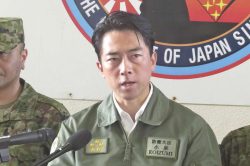
Defense Minister Gen Nakatani holds a press conference in front of a radar facility on Monday at the Hofukita Air Base Radar Area in Sanyo-Onoda, Yamaguchi Prefecture.
1:00 JST, July 30, 2025
The Defense Ministry unveiled on Monday its first-ever guidelines for space defense, meant to lay out the direction for strengthening these defenses. The guidelines clearly state that satellites operated by the Self-Defense Forces will be fully protected, as well as that companies will be ensured safe use of space.
According to the guidelines, the government aims to build security in space through public-private partnerships, incorporating private-sector technology.
The guidelines raise concerns about countries such as China and Russia, which are developing killer satellites that can attack other nations’ satellites, and about the growing militarization of space.
Given the increasingly severe security environment in space, the guidelines stress the need to improve defenses to allow for the safe operation of satellites and other assets run by the government, including the SDF, as well as by Japanese firms.
One of the core tenants of the guidelines is the need for improved space domain awareness for monitoring the operational status, purpose and capabilities of other countries’ satellites. The plan is to build the capacity to detect threats, such as killer satellites and anti-satellite weapons, and to protect Japan’s satellites.
The guidelines also note the importance of stable satellite communications for military intel, including for detecting and tracking missiles launched by enemy countries, and that such intel should be shared within the SDF. Additionally, the guidelines push for an improved ability to jam enemy countries’ communications.
To support these efforts, the guidelines insist on a proactive use of innovative technologies from the private sector, where commercial services have significantly advanced. The guidelines also emphasize the need to cultivate experts in the space field, recruit more outside talent and educate staff in the Defense Ministry and the SDF.




Most Read
Popular articles in the past 24 hours
-

McDonald's Japan Raises Prices; Big Mac to Cost ¥500, Double Chee...
-

Nepal Bus Crash Kills 19 People, Injures 25 Including One Japanes...
-

Japan’s Nikkei Stock Average Rises as AI-Related Stocks Shine; Co...
-

Aggression against Ukraine: Malignant Precedent Must Not Be Set t...
-

Joruri Bunraku Narrative Performed in Honor of Donald Keene by La...
-

Milano Cortina 2026: Gold Medal Olympic Figure Skaters Riku Miura...
-

CARTOON OF THE DAY (February 24)
-

Kanto's 1st Spring Wind Blows as Tokyo Sees Unseasonably High Tem...
Popular articles in the past week
-

Producer Behind Pop Group XG Arrested for Cocaine Possession
-

Sanae Takaichi Elected Prime Minister of Japan; Keeps All Cabinet...
-

Japan's Govt to Submit Road Map for Growth Strategy in March, PM ...
-

Bus Carrying 40 Passengers Catches Fire on Chuo Expressway; All E...
-

Japan, U.S. Name 3 Inaugural Investment Projects; Reached Agreeme...
-

iPS Treatments Pass Key Milestone, but Broader Applications Far f...
-

Riku-Ryu Pair Wins Gold Medal: Their Strong Bond Leads to Major C...
-

Tokyo Skytree's Elevator Stops, Trapping 20 People; All Rescued (...
Popular articles in the past month
-
Producer Behind Pop Group XG Arrested for Cocaine Possession
-

Japan PM Takaichi’s Cabinet Resigns en Masse
-

Japan Institute to Use Domestic Commercial Optical Lattice Clock ...
-

Man Infected with Measles Reportedly Dined at Restaurant in Tokyo...
-

Israeli Ambassador to Japan Speaks about Japan’s Role in the Reco...
-

Videos Plagiarized, Reposted with False Subtitles Claiming ‘Ryuky...
-

Man Infected with Measles May Have Come in Contact with Many Peop...
-

Prudential Life Insurance Plans to Fully Compensate for Damages C...
Top Articles in Politics
-
Japan PM Takaichi’s Cabinet Resigns en Masse
-
Sanae Takaichi Elected Prime Minister of Japan; Keeps All Cabinet Appointees from Previous Term
-
Japan’s Govt to Submit Road Map for Growth Strategy in March, PM Takaichi to Announce in Upcoming Policy Speech
-

LDP Wins Historic Landslide Victory
-

LDP Wins Landslide Victory, Secures Single-party Majority; Ruling Coalition with JIP Poised to Secure Over 300 seats (UPDATE 1)
JN ACCESS RANKING
-
Producer Behind Pop Group XG Arrested for Cocaine Possession
-
Japan PM Takaichi’s Cabinet Resigns en Masse
-
Man Infected with Measles Reportedly Dined at Restaurant in Tokyo Station
-
Israeli Ambassador to Japan Speaks about Japan’s Role in the Reconstruction of Gaza
-
Videos Plagiarized, Reposted with False Subtitles Claiming ‘Ryukyu Belongs to China’; Anti-China False Information Also Posted in Japan