
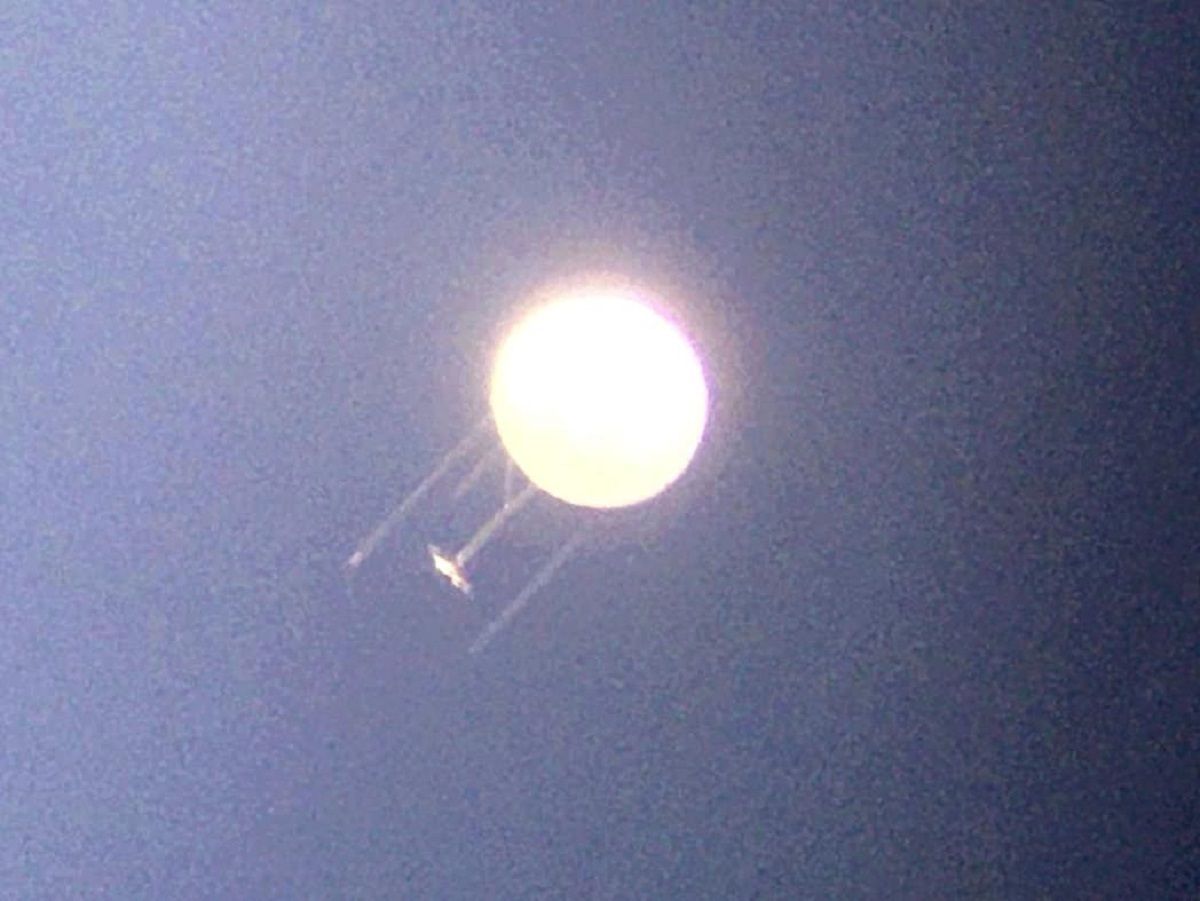
An object is seen in the sky over Satsuma-Sendai, Kagoshima Prefecture, on Nov. 20, 2019.
17:15 JST, February 17, 2023
The Self-Defense Forces will be able to use weaponry to down balloons and drones violating Japanese airspace if such objects pose a safety threat to civilian aircraft, according to new criteria approved by the ruling parties.
The Defense Ministry presented its proposal to the Liberal Democratic Party and its junior coalition partner Komeito on Thursday, with the aim of strengthening the SDF’s ability to respond to such situations. The proposal was approved by the parties the same day.
At least three objects thought to be Chinese unmanned reconnaissance balloons have intruded into Japanese airspace since 2019.
Article 84 of the Self-Defense Forces Law stipulates that if foreign aircraft enter Japanese airspace, Air Self-Defense Force fighter jets can take necessary measures to force the intruders to land or vacate the nation’s skies.
The government’s previous stance was that weapons could be used only as a right of self-defense or an act of necessity. However, this was assumed to pertain to manned aircraft, such as fighter jets. The new criteria cover unmanned aircraft such as balloons and drones.
The SDF will be allowed to use weapons to protect citizens and property on the ground and ensure the safety of civilian aircraft, even in cases that do not fall under the category of self-defense, among others. The ministry also took into account that human life would not be endangered if unmanned aircraft were to be shot down.
The government decided to clarify the criteria for the use of weapons against unmanned aircraft due to the difficulties associated with forcing such aircraft to leave Japanese airspace, compared with manned aircraft. Concerns about unmanned objects intersecting with civilian aircraft flight paths also were taken into consideration.
The SDF will be tasked with improving its technical capabilities for dealing with weaponry. The U.S. military shot down a suspected Chinese spy balloon on Feb. 4 at an altitude of around 60,000 feet (18,000 meters), which is higher than the typical fighter-jet service ceiling of 50,000 feet.
At a meeting of the LDP’s subcommittee on the matter on Thursday, a member said, “Specialized training is necessary.”




Most Read
Popular articles in the past 24 hours
-

WBC to Begin: All the Pieces are in Place for Japan’s Second Stra...
-

Milano Cortina 2026: Ceremony for Winter Paralympic Torch Relay T...
-

How Trump Assassination Attempts Played into His Decision to Atta...
-
Tokyo High Court Upholds Unification Church Dissolution Order
-

CARTOON OF THE DAY (March 4)
-

PM Sanae Takaichi: Iran Situation Won’t Immediately Affect Electr...
-
Trump's Asian Allies Fear Iran War Will Sap Defenses against Chin...
-

Japanese Speedskater Takagi Announces Retirement
Popular articles in the past week
-
Tokyo Spends Big on Children, Wins Over Parents
-

Japan’s Miura, Kihara Announce Withdrawal from Figure Skating Wor...
-
South Korea Tightens Rules on Foreigners Buying Homes in Seoul Me...
-

BOJ Keeping Eye on Economy and Takaichi's ‘Proactive Fiscal Polic...
-
Tokyo Measles Patient Traveled to Fukuoka Aboard JAL Planes; Susp...
-

Nidec Chairman Resigns Amid Accounting Scandal at Major Japanese ...
-
Strait of Hormuz Closure Shakes Markets; Prolonged Closure Could ...
-
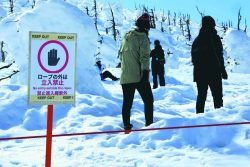
Tourists Ignore Safety Barriers Near Famous Zao ‘Snow Monsters’ i...
Popular articles in the past month
-

Producer Behind Pop Group XG Arrested for Cocaine Possession
-

Japan PM Takaichi’s Cabinet Resigns en Masse
-

Man Infected with Measles Reportedly Dined at Restaurant in Tokyo...
-

Israeli Ambassador to Japan Speaks about Japan’s Role in the Reco...
-

Videos Plagiarized, Reposted with False Subtitles Claiming ‘Ryuky...
-

Prudential Life Insurance Plans to Fully Compensate for Damages C...
-

Woman with Measles Visited Hospital in Tokyo Multiple Times Befor...
-

iPS Treatments Pass Key Milestone, but Broader Applications Far f...
Top Articles in Politics
-
Japan PM Takaichi’s Cabinet Resigns en Masse
-

Sanae Takaichi Elected Prime Minister of Japan; Keeps All Cabinet Appointees from Previous Term
-

Japan’s Govt to Submit Road Map for Growth Strategy in March, PM Takaichi to Announce in Upcoming Policy Speech
-

LDP Wins Landslide Victory, Secures Single-party Majority; Ruling Coalition with JIP Poised to Secure Over 300 seats (UPDATE 1)
-

LDP Wins Historic Landslide Victory
JN ACCESS RANKING
-
Producer Behind Pop Group XG Arrested for Cocaine Possession
-
Japan PM Takaichi’s Cabinet Resigns en Masse
-
Man Infected with Measles Reportedly Dined at Restaurant in Tokyo Station
-
Israeli Ambassador to Japan Speaks about Japan’s Role in the Reconstruction of Gaza
-
Videos Plagiarized, Reposted with False Subtitles Claiming ‘Ryukyu Belongs to China’; Anti-China False Information Also Posted in Japan